
З життя
The Sin of the Stranger

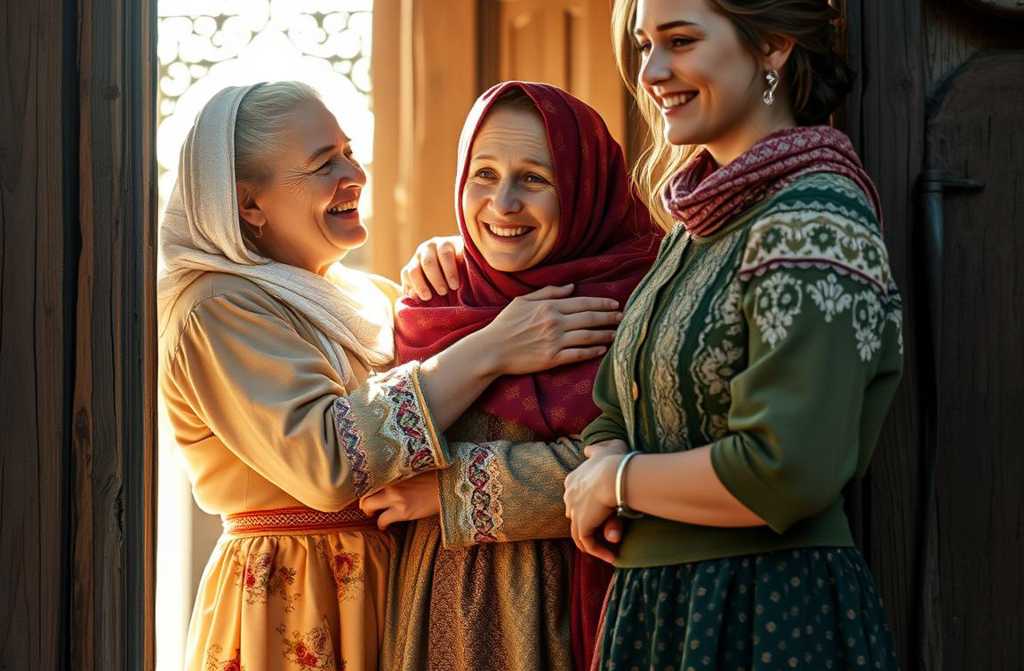
Maggie is condemned in the village the very day a bulge shows under her coat. She is fortytwo, a widow, and the gossip swirls like storm clouds over the old stone well. Whos the man? the women hiss, eyes narrowed. Who could have taken a respectable widow like her? they add, shaking their heads. Maggie pays them no heed. She trudges home from the post office, a heavy satchel slung over her shoulder, eyes fixed on the ground, lips pressed tight. If she had known how it would end, she might have stayed out of it, but how can she turn away when her own blooddaughter is crying herself to sleep?
The trouble does not begin with Maggie but with her daughter Emily. Emily is not just a girl; she is a pictureperfect replica of her late father, John, who was the villages golden boyblond, blueeyed, and admired by every neighbour. The whole hamlet watches Emily grow, while her younger sister Lucydarkhaired, browneyed, quiet, and almost invisiblefollows her mothers footsteps.
Maggie never expects much from her girls, yet she loves them both fiercely, pulling them along like a cursed rope. She works two jobs: by day she delivers letters, by night she scrubs the local farm. Everything she does is for them, for her bloodchildren.
You must get an education, she tells them. I dont want you to spend your lives in the mud with a heavy bag, like me. You need to go to town, make something of yourselves.
Emily seizes the chance and heads for the city, slipping away as if on a feather. She wins a place at the college of commerce, and soon her photos appear in the local newsletterher at a fancy restaurant, in a stylish dress. A suitor arrives: the son of a senior manager. Mum, he promised me a coat! she writes.
Maggie beams with pride, while Lucy frowns. After school Lucy stays in the village, taking a job as a hospital cleaner, hoping to train as a nurse but lacking the money. All of Maggies pension after Johns death, plus her own wages, go to Emily and her city life.
That summer Emily returns, but not with the usual chatter and gifts. She is withdrawn, eyes haunted. She stays in her room for two days, then on the third Maggie finds her sobbing into a pillow.
Mum Ive vanished, she whispers. My fiancéhes a golddiggerditched me. Im four months pregnant.
Its too late for an abortion, mum! Emily wails. What can I do? He wont acknowledge the child. He said if I keep it he wont give a penny, and Ill be thrown out of college. My life is finished!
Maggie sits, stunned. You you didnt protect yourself?
Emily snaps, Whats the point now? Should I send the baby to an orphanage or throw it away?
Maggies heart shatters. That night she cannot sleep, pacing the cottage like a ghost. At dawn she sits on Emilys bed.
Its fine, she says firmly. Well manage.
Mum! How can we? Everyone will know! Itll be a disgrace! Emily cries.
Nobody will find out, Maggie cuts in. Well say its my child.
Emily stares, incredulous. You? Youre fortytwo!
Its mine, Maggie repeats. Ill go to my sister in the district, claim Im helping her, and live there. You return to the city and finish school.
Lucy, sleeping behind a thin partition, hears everything. She lies there, tears streaming down her cheeks, feeling both pity for her mother and bitterness toward her sister.
A month later Maggie leaves. The village forgets her. Six months on she returns, not alone, but with a blue envelope.
Here, Lucy, she says to her pale daughter, meet your brother Tom.
The village gasps. The quiet widow finally has a son. The women at the well hiss again. Whos the father? The council chairman?
No, an old man, Maggie replies. An agronomistwellknown, single.
Maggie endures the gossip, raising Tom as he grows restless and loud. She juggles her postoffice bag, farm chores, and sleepless nights. Lucy helps where she can, silently washing diapers and rocking the brother. Inside, she burns with anger.
Emily writes from the city. Mum, I miss you! Im broke, scraping by, but Ill send money soon. A year later she sends £100 and a pair of jeans two sizes too large for Lucy.
Life spirals for both women. Men glance at Lucy, then discard herwho wants a bride with such a tainted past? Maggie, a mother who once roamed, and a son who is just a boy.
Mum, Lucy says at twentyfive, should we tell anyone?
No, you fool! Maggie snaps. We cant ruin Emilys life. Shes married now, to a good man.
Emily indeed settles. She finishes college, marries a businessman, moves to London, sends glossy photos from Egypt and Turkey, never asking about Tom. Maggie writes, Tom is in first grade, getting top marks. Emily replies with an expensive but utterly useless toy.
Years pass. Tom turns eighteen, tall, blueeyed like his mother, cheerful and diligent. He loves both his mother and his sister. Lucy, now a senior nurse at the district hospital, is called an old maid behind her back, yet she bears the weight of caring for Maggie and Tom.
Tom graduates with a medal. Mum, Im heading to London for university, to study engineering! he declares. Maggies heart leaps. Londonwhere Emily lives.
Maybe a local college? she suggests timidly.
No, Mum, I have to make it on my own! Tom laughs. Ill show you and Lucy what I can do. Youll have a palace!
On the day Tom finishes his exams, a sleek black foreign car rolls up to the cottage gate. From it steps Emily, looking like a magazine coverthin, in an expensive suit, gold jewellery sparkling.
Maggie gasps. Lucy, emerging onto the porch, freezes, a towel clutched in her hand. Emily, almost forty, looks youthful, her hair perfectly styled.
Hello, Mum! Hi, Lucy! she chirps, planting a kiss on Maggies cheek. Wheres Tom?
She spots Tom, wiping his hands on a rag in the barns.
Emilys eyes fill with tears. Good morning, Tom says politely. Are you Marina? My sister?
Your sister, Marina repeats, voice trembling. Mum, we need to talk.
They sit inside. Marina pulls a pack of thin cigarettes from her bag.
Mum I have everythinghouse, money, husbandbut no children. We tried IVF, doctors said its hopeless. My husband is angry. I cant go on.
Why are you here, Marina? Lucy asks, voice low.
For my son, Marina whispers, eyes wet.
Your son? Maggie cries. You mean Tom?
Marinas face turns fierce. Hes mine! I gave birth to him! I have connections; hell get into any university, well buy a flat in London! My husband agrees! Ive told him everything!
Maggie stares, stunned. Everything? About us? About how they shamed me? About Lucy?
Lucys just a village girl, shell stay there! Tom has a future! You saved my life, Mum, now give me my son!
Hes not an object to be handed over! Maggie shouts. Hes my child! Ive nursed him through sleepless nights!
Tom steps forward, pale, as if drawn into a painting. Mum? Lucy? What is she talking about? A son?
Mum, its true, Marina pleads.
Maggie covers her face, sobbing. Lucy, usually silent, rises and slaps Marina hard enough to send her reeling into the wall.
You monster! Lucy yells, every year of humiliation and broken life spilling out. You abandoned him like a stray puppy! You knew my mother would be shunned because of you! You left me aloneno husband, no children! And now you come back to take him?
Mum, stop! Maggie whispers, pleading.
No, Mum! Enough! Lucy shouts at Tom. Shes the mother who pushed you onto my mother so you could chase dreams in London! Shes the old woman who buried her own life for us!
Tom stands silent, then kneels before Maggie, pulling her into his arms. Mum my mother, he murmurs.
He looks at Marina, who clutches her cheek, sliding down the wall. I have one mother. Thats you, Maggie, and a sister, Lucy. I dont need anyone else.
He rises, takes Lucys hand, and says, You, aunt, should go home.
Tom! My son! Marina wails. Ill give you everything!
No, I have everything, Tom replies. I have a mother and a sister. You have nothing.
Marina leaves that night, her husband watching from his car, never stepping out. A year later he abandons her for a younger woman who bears him a child. Marina remains alone, with her money and her faded beauty.
Tom does not move to London; he enrolls at the regional engineering college. Mum, we need a new house, he says. Maggie smiles, tears of relief mixing with the old grief.
Lucy, now thirtyeight, finally finds love with the very agronomist the village women once whispered about. He is a respectable widower, and they plan a quiet life together. Maggie watches them, cryingnot from shame, but from a deep, exhausted joy. The sin of the past still lingers, but a mothers heart can never be fully silenced.



I’ll get married one day, but definitely not to this handsome guy. Yes, he’s wonderful in every way—…
I suppose Ill get married one day, but never to that handsome fellow. Yes, hes quite the charming bloke in...


VIC, PLEASE DON’T TAKE IT PERSONALLY, BUT I WANT MY DAD TO WALK ME DOWN THE AISLE — HE’S MY REAL FAT…
JAMES, PLEASE DONT TAKE THIS THE WRONG WAY. BUT I REALLY WANT MY DAD TO WALK ME DOWN THE AISLE....


A Parent’s Love: Elly’s Heart-Stopping Taxi Mix-Up, Grandparent Hugs, Christmas Comforts, and the Fi…
Parental Love Ellie breathed out, tired but content, as she settled her children into a taxi. Millie was four, and...


The Day I Went to Get Divorced Dressed as a Bride
The day I went to get divorced, dressed as a bride. When my husband told me he wanted a divorce,...


I Discovered My Son Had Abandoned a Pregnant Woman—So I Paid for Her Lawyer Myself When I Learned W…
I found out my son had abandoned a pregnant woman. I paid her solicitors fees myself. When I learned what...


I Miss Him. I’ve Never Missed Anyone Like This—Even Though I Wasn’t Truly Happy With Him and There W…
I miss him. Ive never missed someone like this before. And I dont even know whyespecially when I never truly...


My Aunt Arrived for a Visit with Her Daughter and Son-in-Law, Bringing Expensive Wine and Meat—But M…
My mothers side of the family is quite large. She used to have six siblings, though only three are left...


My Mother-in-Law Called My Children Ill-Mannered, So I Banned Her from Ever Entering Our Home Again
Elbows! Who puts their elbows on the table like that? In polite company, youd have been booted out ages ago,...