
З життя
The Soul with Sapphire Eyes

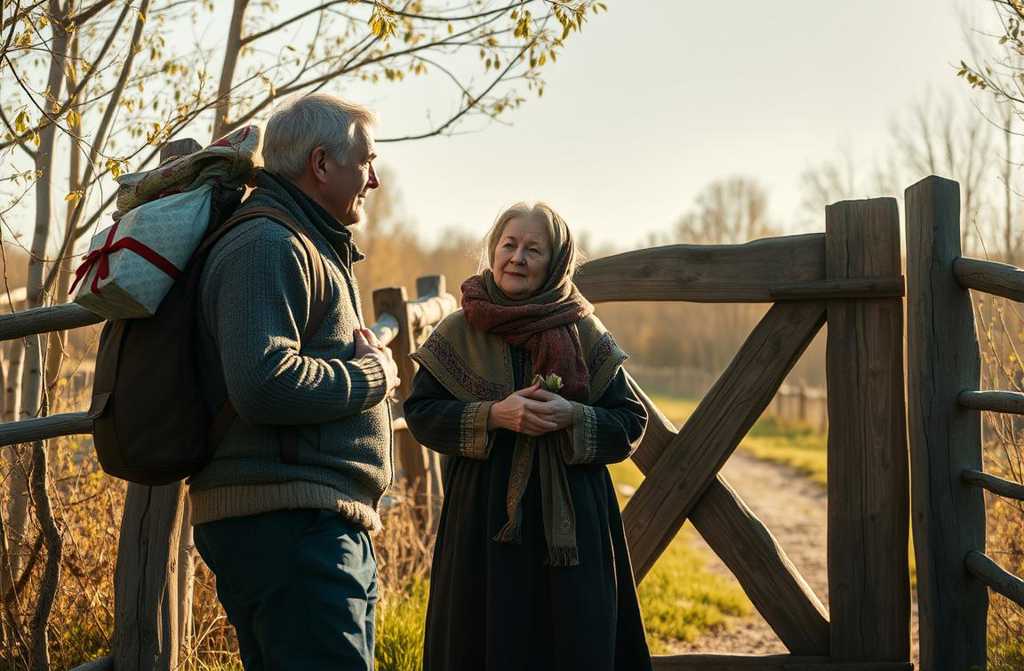
The summer sun beat down mercilessly, the street simmering in heat. Sam hustled away from the bus shelter, a battered gym bag slung over his shoulder, its contents a jumble of secondyear university trinkets. His cheap tracksuit bore the stains of long days spent pulling carts in the railway yardshardearned wages that finally let him buy a few decent things for himself and his family.
He skirted the ramshackle village hall and turned onto the lane that led to his home. As he neared the gate, a neighbour, Mrs. Margaret Hargreaves, stepped out from the hedges, her silver hair whipping in the breeze. Her eyes locked onto his, unblinking, as though she were trying to read his very soul. Sam felt a shiver run down his spine.
Good afternoon, Mrs. Hargreaves, he called.
Afternoon, Sam, she replied, her voice as soft as an autumn rustle. She watched him walk past the ancient birch trees that lined the driveway, her gaze following him to the porch.
His mother threw her arms around him, her younger daughter, tenyearold Emily, squealed and leapt into his embrace. His baby sister, Lily, clutched at his shirt, shrieking with delight.
Look at you, grown up! his mother exclaimed. We barely saw each other a month ago, before exams!
Sam laughed, hoisting Emily onto his shoulders. Did you hand in all your papers? he teased.
Yes, Im a thirdyear now, and my scholarships still on the table, he boasted, puffing his chest.
Handsome lad, his grandmother praised, patting his head. Youve really become a man.
Grandma, Im not a child any more, Sam blushed, pulling a modest brooch from his bag. Wheres Father? he asked, handing over the small gifts.
At work, of course, his mother replied, admiring the delicate piece. Thanks, love.
Emily twirled before the mirror, modelling a new cardigan. Look, Mum! All the girls at school will be jealous. Too bad its holidays already.
Everyones delighted, his grandmother chuckled, wrapping herself in a fresh wool scarf.
They all gathered around the kitchen table for lunch. The chatter was lively, laughter spilling over plates of roast potatoes and peas. Suddenly, Sams brow furrowed.
Mum, he said, turning to his mother, why does Mrs. Hargreaves keep staring at me? Everywhere I go, shes at the gate, her eyes never leave me. She didnt even know I was coming, yet it feels like shes been waiting.
His mother lowered her voice. Thats Aunt Margarets doing. She sees a little of your father in youyour grandfather, really. She loved him dearly.
She went on, recalling how the village had once banded together to build the very house they lived in, how neighbours had helped each other. She spoke of her own marriage to a man named Walter, whod died young, leaving her a widow with no family but the community.
Mrs. Hargreaves, Aunt Margaret, had once been a girl of eighteen, forced into marriage to a man named Tom, who had taken over the farm after her aunts death. The aunt, a stern woman named Mrs. Finch, had raised Margaret as a servant from the age of ten, making her tend the garden, cook, and look after the children while she worked long hours in the fields. The aunts cruelty was legendaryshed beat Margaret for the slightest mistake, and her arms bore old scars from an accident with a stray cow.
Did you ever see your mother? Sam asked, noticing the fresh scars on Margarets arms.
Its a long story, she sighed. I once begged my mother at the cemetery to take me in. She told me Id be killed if I stayed. I ran away, but the world was cruel.
She told him about how her aunt married a man named Charles, who later died in the war, leaving Margaret a widow at twentyfour. With no support, Margaret sold the farm and became a spinster, eventually marrying Walters brother, a richer man who ran the local shop. The house she lived in now was modest, but she tended the garden and the land herself, never once consulting anyone about her wishes.
Dont think of me as frail, Margaret whispered, her voice trembling. I was once a beautiful young womantall, slim, with blue eyes that could pierce the sky and chestnut hair that fell in a braid down to my waist. Men adored me, even though I never loved any of them.
Sam stared at her, feeling the weight of generations pressing down. He remembered the blueeyed girl hed once seen, a girl whose sorrow seemed to stain the very air around her. He thought of his father, Peter, who had vanished in the war, and of the boy they called Nicholas, born after the conflict ended.
Why did my father go off to fight? Sam asked, his voice cracking. Why didnt he stay?
A mans duty, Margaret murmured. But war steals more than lives; it steals hopes.
Later that evening, Sam lingered by the garden gate, watching the birches sway. A soft voice called from behind the lattice: Sam, come here.
He turned to see Margaret, her eyes still a startling shade of blue. She reached out, her wrinkled hand grazing his hair. You look just like him, she said, gratitude softening her features. Thank you.
Sam walked back home, the rustle of leaves echoing his thoughts. He felt a phantom step behind him, as if the soul of a blueeyed girl were still searching the garden for the love shed never found.
Love, he realized, does not age; it merely hides in the shadows, waiting to be remembered.



When the Key Turned in the Lock, His Heart Nearly Leapt from His Chest and His Soul Raced to Meet He…
When the key turned in the lock, my heart nearly leapt out of my chest, and it felt as if...


I Knew My Husband Was Having an Affair—So I Hired His Mistress at My Company and Everyone Called Me …
I knew my husband had a mistress. Instead of confronting him, I hired herI was called mad. When I stumbled...
Well, he was ugly and unwanted. So I threw him out. A mother’s heart nearly stopped. The father went outside to search for the child.
Once upon a time, there was an old woman named Edith who decided she wanted to do a good deed....
When I Was Visiting My Friend Alice, My Husband Suddenly Called Her. I Answered and Heard Something Astonishing. Here Is the Story of Our Relationship, Alice’s Recent Struggles, and an Unexpected Turn of Events
Six months ago, my friend Emily was left by her husband, and I did my best to be by her...


I Thought My Husband Was Supporting His Three Daughters From His First Marriage—But That Wasn’t the …
I used to believe that my husband supported his three daughters from his first marriage, that he fulfilled his duty...


Bride for Hire: The Wedding’s Off! At a Family Dinner, Polly Stuns Her Parents by Announcing She’s C…
A BRIDE FOR HIRE The weddings off! Emily announced over dinner, stunning her parents into silence. Her mum almost choked...


I Grew Up Trying Not to Disappoint My Mum – And Without Realising, I Started Losing My Marriage
I grow up always trying not to disappoint my mum and somewhere along the way, I start losing my marriage....


You Stay Home with the Little One—I’m Going Alone to My Brother’s Wedding Yesterday, my husband cam…
Stay with the little one. Ill go to my brothers wedding on my own. So, my husband came home from...