Connect with us

З життя

— Ти, паразит! Негайно йди сюди!!!

Published

on

— Васько! Шибенику ти, лісовий дияволе! Ану швиденько йди сюди!!!

Баба Ганя звично змітала з підлоги розбиту чашку і продовжувала вичитувати Ваську, знавши, що він до ранку завтра на очі їй не з’явиться. Раніше, коли Василь був ще молодий і дурний, він прибігав на бабині викрики. Але, отримавши декілька разів ганчіркою і віником по задку, став мудрішим. Зараз він по інтонації і силі децибелів безпомилково розпізнавав ступінь небезпеки. Коли можна з’явитися ввечері, а коли краще за день-два.

Цього разу в погоні за мишею він випадково збив зі столу забуту чашку. Минулого разу розсипав пакет з крупою, а до цього ще багато дрібних клопотів натворив. І все через шкідливих мишей. Але баба Ганя чомусь продовжувала дорікати Васьці, хоча, за великим рахунком, він був ні до чого. Він просто виконував свою роботу і старанно звітував, приносячи бабусі на подушку задушених мишей, кротів і щурів.

Зранку, прокинувшись і побачивши черговий “звіт”, баба Ганя тихенько перехрестилася і почала стару пісню:

— Васько! Шибенику! Навіщо ти мені це знову в ліжко несеш? Вижену ж тебе, чортяка!

А побачивши розбиту чашку, завелась іще більше. Але, правду кажучи, на людях господиня хвалила свого кота. Мовляв, і мишолов чудовий, і чистун, і ніжний. Василь старався не підвести і захищав невеликий бабусин урожай з великою старанністю. Інакше миші в погребі знищили б весь картоплю і моркву. Так і крупою не погордили б.

А розбитий посуд та інші негаразди Василь філософськи списував на супутні неминучі втрати.

Того вечора баба Ганя налила в блюдечко молока і довго кликала кота, але він де-небудь зник і відмовлявся виходити:

— Кис-кис-кис, Васю, шибенику. Куди ж ти зник? Молоко ж скисне. Ну й нехай…

Бабця вирішила на вечерю підсмажити собі картоплі. Відкрила кришку погреба і, стогнучи, почала спускатися вниз по сходинках. Схилившись у три загиби і примружуючись, вона дісталася до відділу з картоплею. Коли очі звикли до напівтемряви, баба Ганя побачила Ваську.

Він тяжко дихав. Права передня лапа набрякла, ставши вдвічі товщою за ліву. А поруч на картопляних клубнях лежала здоровенна мертва гадюка.

«Господи! — вигукнула баба Ганя, уявляючи, як в неї впиваються отруйні зуби. Лише від цього одразу підскочив тиск, а серце почало битись хаотично. — Васенька, рятівниче мій. Ти що, вмирати задумав? Я зараз, зараз. Потерпи. Ах ти, шибенику, як же так стається. Як же я без тебе?».

Схопивши кота, баба Ганя вибралася з погреба, схопила сумку з гаманцем і прямо в капцях побігла до сусіди.

— Пашко! Пашко! Рятуй! Терміново відвези мене в райцентр.

— Що сталося, бабцю Ганю? Що за поспіх, у такий час?

— До ветеринарки мені треба. Ваську гадюка вкусила. Відвези, благаю. Я з тобою потім розрахуюсь і за бензин, і за клопоти.

— Зараз, бабцю Ганю. Жені скажу й їдемо.

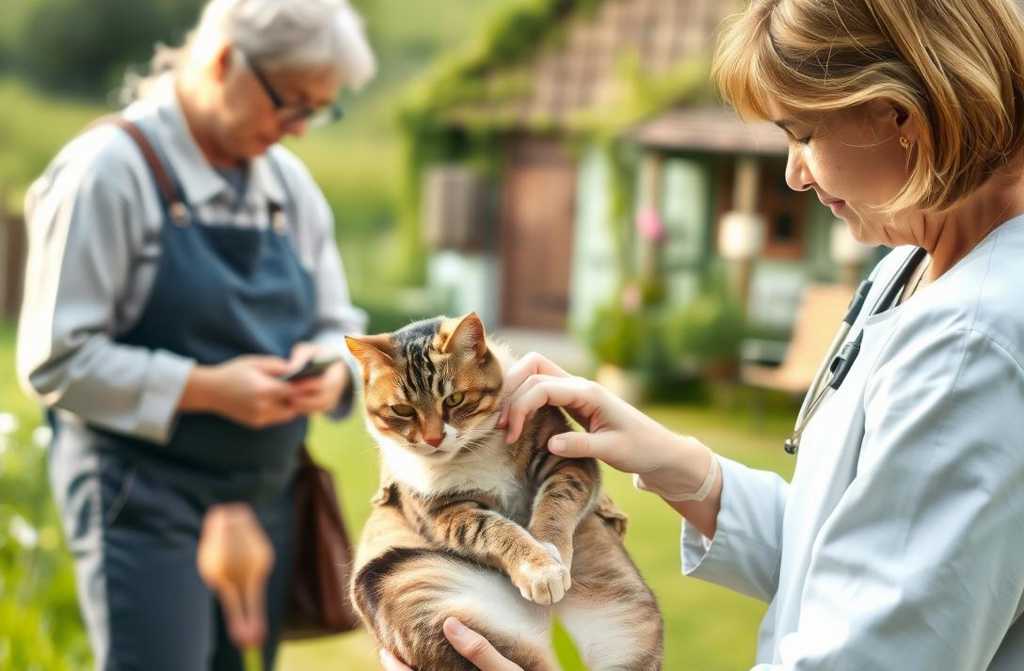
Біля ветеринарної клініки баба Ганя вийшла з машини. Постійно охкаючи і причитаючи, дістала кота, який тяжко дихав і був як ганчірка, й швиденько зайшла у приймальню.

— Дочко, — звернулась вона до чергової. — Допоможи, будь ласка. Врятуйте Васеньку, бо в мене більше нікого нема.

Короткого погляду на нещасного кота вистачило, щоб одразу поставити діагноз.

— Змія? Коли був укус?

— Сьогодні. А точно сказати не можу. Знайшла його в погребі та й одразу до вас.

— Терміново під крапельницю.

Ваську віднесли.

Приблизно через двадцять хвилин лікар вийшла у приймальну і звернулася до баби Гані:

— Давайте оформимо документи. Ви, значить, господиня? Як вас звуть?

— Ганна Степанівна. Смірнова.

— Так, як звуть кота? Скільки йому років?

— Вася, мабуть шість. Врятуйте його, будь ласка. З Васенькою і поговорити можна, і фільм подивитись, а взимку з ним тепліше. Хіба ж де ще я такого мишолова знайду? І від змії ж мене врятував.

Баба Ганя заплакала.

— Спокійно. Ми зробимо все можливе. Його доведеться лишити у нас на ніч у стаціонарі. Завтра приїжджайте, будемо знати: що і як.

— Донечко, скажіть, а дорого це?

— Не хвилюйтеся. Заплатите тільки за ліки. Я впевнена, все буде добре. Ваш кіт — богатир! Видужає.

— А вас-то як звати?

— Віра Анатоліївна.

— Дай вам Бог здоров’я, Вірочко.

В машині баба Ганя запитала Пашу:

— Пашо, ти мене завтра зранку сюди довезеш?

— Бабцю Ганю, я завтра на роботу о сьомій виїжджаю…

— Ось і я з тобою.

— Але ж клініка з дев’ятої.

— Нічого, я почекаю.

— Ну добре. Завтра під’їду.

Наступного дня Віра Анатоліївна, йдучи на роботу, побачила на лавочці біля клініки вчорашню клієнтку. Старенька бабуся з надією піднялася їй назустріч:

— Як там мій шибеник?

— Зараз подивимося.

Через півгодини баба Ганя, притискаючи до грудей кота, йшла до автобусної зупинки, гладила голову Ваську і говорила:

— Ось, Васю, Вірочка сказала, що за три дні будеш як новенький. Я тобі сметани куплю. І не магазинної, а домашньої, і ковбаси. Заслужив. Ти тільки живи довше, шибенику ти такий!

Click to comment

Leave a Reply

Ваша e-mail адреса не оприлюднюватиметься. Обов’язкові поля позначені *

п'ятнадцять + одинадцять =

Також цікаво:

З життя16 хвилин ago

The Closest of Kin: A Heartwarming Family Story of Grandparents Anna and Paul, Their Three Wonderful Grandchildren, Home-Baked Treats, Maths Lessons, and the Unbreakable Bonds That Sustain Them Through Joys and Sorrows

Family Ties. A Story Funny, how life turns out. It could have all been so different. The neighbour, Mrs. Dawson,...

З життя17 хвилин ago

I Did a DNA Test and Instantly Regretted It I Had to Marry My Girlfriend After Finding Out She Was Pregnant. After Our Wedding, We Moved in With My Parents Because We Couldn’t Afford Our Own Place. Time Went By and I Became the Dad of a Wonderful Little Boy. Soon After, We Decided to Get a Mortgage and Start Our Own Family Home. After a While, My Wife Told Me She Was Pregnant Again, and That’s How Our Princess Anna Was Born. The Kids Grew Up Quickly, and Each Year I Noticed They Didn’t Look Like Me at All—not even a little. In Fact, Neither My Son nor My Daughter Looked Like Their Mum Either. Both Were Ginger with Freckles—Where Did That Come From in Our Family? The Thought Crossed My Mind to Take a Paternity Test. Maybe It Wasn’t the Brightest Idea, But I Needed to Be Sure the Kids Were Mine. I Took the Test. I Had to Wait Two Weeks for the Results. As Soon As They Called, I Rushed to the Lab. Thank God—It Turned Out I Was Their Dad. I Went Home and Hid the Documents So My Wife Wouldn’t Find Them. But Why Didn’t I Just Throw Them Away? I Paid for That Mistake. Just a Few Days Later, My Wife Threw Those Papers in My Face. She Caused Such an Uproar the Whole House Trembled. I Understand Why, But Surely There Was a More Peaceful Way to Handle It. She Couldn’t Forgive Me, and Now I’m Alone. Five Years Have Passed Since That Day, and She Still Won’t Let Me See the Kids. That’s How Simple Curiosity Stole the Most Precious Thing I Had—My Family. I Hope One Day She Can Forgive Me…

I remember those days as if they happened in another life. Back then, when I learned my sweetheart was expecting,...

З життя1 годину ago

Don’t Leave, Mum: An English Family Story

Common wisdom says you cant judge a book by its cover. But Barbara Smith thought that was nonsenseshe was sure...

З життя1 годину ago

A Grandson’s Request: An Uplifting Story of Trust, Family, and a Grandmother’s Unwavering Support

Request from my Grandson Gran, I need a favour. I really need some money. A lot. He came to me...

З життя2 години ago

She Was Never Truly Alone: An Ordinary London Morning with Grandma Violet, Filly the Cat, and Loyal Gav the Dog

She Was Never Alone. A Simple Story A slow winter morning dawned over London. Out in the communal courtyard, caretakers...

З життя2 години ago

No One Left to Talk To: A Story “Mum, what are you saying? How can you say you’ve got no one to talk to? I call you twice a day,” her daughter asked wearily. “No, sweetheart, that’s not what I meant,” Nina Anderson sighed sadly. “I just don’t have any friends or acquaintances left who are my age. From my time.” “Mum, don’t talk nonsense. You still have your school friend Irene. And honestly, you’re so modern and you look much younger than you are. Oh, Mum, what’s wrong?” her daughter fretted. “You know Irene has asthma; when she talks on the phone she starts coughing. And she lives all the way on the other side of the city. There were three of us friends, remember I told you? But Mary’s been gone for a long time. Yesterday, Tanya from the flat next door popped in. I made her a cuppa—she’s a lovely woman, often drops by. She even brought over some buns she’d baked for her family. She told me about her children and grandchildren. She’s got grandchildren, even though she’s about fifteen years younger than me. But her childhood, her memories—they’re so different from mine. I just long for a chat with peers, people like me,” Nina Anderson explained, though she realised perfectly well that her daughter wouldn’t understand. She was still young. Her time wasn’t gone—it was just outside the window. She didn’t yet yearn for memories. Sveta was wonderful and caring; it wasn’t about her. “Mum, I got us tickets for a night of classic ballads on Tuesday. Remember you wanted to go? No more sulking—put on your burgundy dress, you look stunning in it!” “All right, darling, everything’s fine. I don’t know what came over me, good night, we’ll speak tomorrow. Go to bed early—you hardly get any sleep,” Nina changed the subject. “Yes, Mum, goodnight. Bye,” and Svetlana hung up. Nina Anderson gazed silently at the glittering evening lights outside… Year Eleven, also spring. So many plans. It seemed so recent. Her friend Irene fancied Simon Mallory from their class. But Simon liked Nina. He’d call her every evening, invite her out. But Nina thought of him as just a friend—why raise his hopes? Later Simon left for the army. He came back, married, lived in Irene’s old house. Back then everyone had a landline. The number… Nina Anderson dialled the number from memory. The tone didn’t come at once—then someone picked up, there was rustling and then a quiet man’s voice: “Hello, I’m listening.” Maybe it’s too late? Why did I call? Maybe Simon doesn’t even remember me, or maybe it’s not him at all! “Good evening,” Nina’s voice rasped a little with nerves. There was more static on the line, then suddenly she heard an astonished voice: “Nina? Is that really you? Of course it is. I’d know your voice anywhere. How did you find me? I’m only here by chance….” “Simon, you recognised me!” A wave of joyful memories swept over Nina Anderson. No one had called her by her name for ages—just “mum”, “granny”, or “Mrs Anderson”. Well, except Irene. But just “Nina” sounded so wonderful, so fresh—as if the years hadn’t passed at all. “Nina, how are you? I’m so glad to hear from you.” Those words made her ridiculously happy. She’d feared he wouldn’t recognise her, or her call would be out of place. “Do you remember Year Eleven? When Simon and Victor took you and Irene out in that rowing boat? He’d blistered his hands on the oars and tried to hide it. Then we ate ice cream on the riverside while the music played,” Simon’s voice was soft and wistful. “Of course I remember!” Nina laughed joyfully, “And that class camping trip? We couldn’t get the tins open, we were so hungry!” “Oh yes,” Simon chuckled, “Then Victor opened them and we sang songs by the campfire. Do you remember? After that, I decided to learn the guitar.” “And did you?” Nina’s voice rang with youthful delight at all these shared memories. It was like Simon was reviving their happy past, recalling detail after detail. “So, how are things now?” Simon asked, but immediately answered himself, “Actually, I can tell from your voice you’re happy. Children, grandchildren? You still writing poems? I remember: ‘To dissolve into the night and be reborn by morning!’ So full of hope! You always were like sunshine, Nina! You bring warmth to everyone, no one could be cold around you. Your family’s so lucky—to have a mum and granny like you is pure gold.” “Oh, come off it, Simon, I’m long past that. My time’s over, I—” He interrupted. “Come on, you give out so much energy I think my phone’s about to melt! Just kidding. I don’t believe you’ve lost your zest for life—not a bit. That means your time isn’t over yet, Nina. So live—and be happy. The sun shines for you. And the breeze chases clouds across the sky for you. And the birds sing for you!” “Simon, you’re still such a romantic. What about you? I’m going on and on about myself…” But suddenly there was a crackle and the call cut out. Nina sat there, phone in hand. She wanted to ring back, but it was late—better not. Another time. What a wonderful chat they’d had—so many memories! The sudden ringtone made Nina jump. Her granddaughter. “Yes, Daisy, hello, I’m still up. What did Mum say? No, my mood’s fine. I’m going to a concert with Mum. Are you coming over tomorrow? Wonderful, see you then. Bye.” In an unexpectedly good mood, Nina Anderson went to bed, head full of plans. As she drifted off, she found herself composing lines for a new poem… In the morning, Nina decided to visit Irene. Just a few stops on the tram—she wasn’t a creaky old nag yet. Irene was delighted: “At last! You’ve been promising for ages. Ooh, is that an apricot tart? My favourite! Well, spill, what’s brought this on?” Irene coughed, pressing her hand to her chest, then waved Nina’s concern away. “It’s all right, new inhaler—I’m better. Come on, let’s have tea. Nina, you look younger somehow—come on, tell me!” “I don’t know—my fifth youth!” Nina laughed as she sliced the tart. “Yesterday I rang Simon Mallory by accident… remember your crush in Year Eleven? We got to reminiscing—I’d forgotten half of it. What’s up, Irene? Not another asthma attack?” Irene sat pale and silent, then whispered: “Nina, you didn’t know? Simon passed away a year ago. He lived in another part of town—he moved from that old place ages ago.” “You must be joking! How? Who was I talking to? He remembered everything about our school days. My mood was terrible before talking to him. But after we spoke, I felt life was carrying on—that I still had strength, and joy for living… How could it be?” Nina couldn’t believe Simon was gone. “But I heard his voice. He said such beautiful things: ‘The sun shines for you. And the breeze chases clouds across the sky for you. And the birds sing for you!’” Irene shook her head, sceptical of her friend’s story. Then she surprised Nina by saying: “Nina, I don’t know how, but it really does sound like it was him. His words, his style. Simon loved you. I think he wanted to support you… from the other side. And it looks like he did. I haven’t seen you so happy and full of energy for ages. One day, someone will piece your tattered heart back together. And you’ll finally remember—what it feels like to be… simply happy.”

No one to even have a chat with. A Reminiscence “Mother, honestly, what are you talking about? How can you...

З життя3 години ago

I Will Always Be With You, Mum: A True-to-Life Story of Love, Loss, and Miracles in an English Village

I shall always be with you, Mother. A story one could believe in Grandma Dorothy could hardly wait for the...

З життя3 години ago

My Daughter-in-Law’s Phone Ringtone Made Me Rethink Helping My Son’s Young Family Find a Home

The ringtone on my daughter-in-laws phone made me reconsider helping the young family find a flat I live alone in...