
З життя
Veterinary Care: Nurturing Our Four-Legged Friends

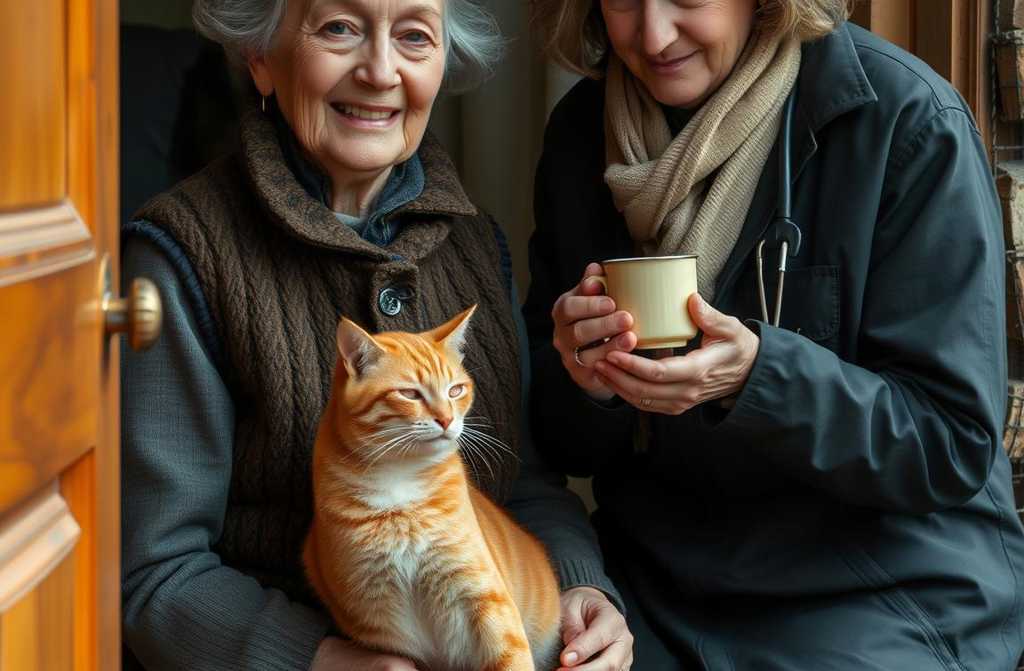
When they ask me to have a look at the cat, in case old age has gone to his head, my first glance is not at the animal but at the people standing nearby. Odd behaviour in a pet almost always points to something in its surroundings rather than the creature itself.
It was Mrs. Eleanor Whitaker, my neighbour on the second floor of a drab council block, who called me that evening. The walls there sigh in winter, letting drafts creep in. She said, Theres an old lady and her cat. People used to visit, now its only the postman. She says everythings fine, but could you have a look The cat sits at the front door at five oclock every day and never moves. He just sits, hour after hour, and she pretends its no big deal.
I walked up the narrow stairwell. The door opened on a petite woman with a tidy bob and a woollen cardigan with long, dangling loops. Behind her, a battered cabinet held a tea set, a little shelf of perfume bottles, and an old BBC Radio that had been playing the same station for decades. The air smelled of buckwheat, mint and something faintly familiar, like a memory of home.
Good afternoon you must be the doctor? she said. Come in, but please keep your shoes onit’s chilly.
Im a veterinarian, I replied. Wheres the cat?
Hes shy. Hes gone under the armchair. He doesnt like visitors, but hell let his own people nap on him. He only ever comes out at night, and at five.
I noted the five without asking whether it was a.m. or p.m., and the cat did indeed curl up beneath the chair a rotund orange tabby, at least ten years old, drynosed, whiskers like tiny antennae, eyes full of bewilderment, as if asking, Who are you and why have you intruded on my den?
I perched on a cushion stuffed with old cotton, the sort we used to sew ourselves in the 1960s, while Mrs. Whitaker talked to herself.
Our days run on a schedule. In the morning we have porridge, then I watch the telly, and he perches on the windowsill. At five, he always sits by the door.
Why five?
The children used to ring the bell at five. They dont any more, but he still waits.
You say hes all right how are you?
Me? I have enough. The telly works, theres porridge. What more could I ask for?
The cat emerged from under the chair, not toward me but toward the door. He tested the handle, then settled on a rug, his head resting not on the floor but on a warm fold of the woollen coat that never seemed to be put away.
Hes waiting, Mrs. Whitaker said. Perhaps he thinks theyll come. I dont interfere. Let him hope.
I didnt lecture him about cats not waiting but simply enjoying routine, nor did I suggest more toys or enrichment. This was not just a cat and not just old age; it was something else, a quiet pact between two lonely souls: We sit here so that no one notices how time slips by.
At parting she said, If youre passing by, drop in. I can bake a scone. Or just come for the cats sake. I nodded, and then thought perhaps I too could use a little waiting.
A fortnight later I was driving through that neighbourhood, a cat on an IV drip after surgery in the back of my van. I realised I thought of Mrs. Whitaker more often than of half the other patients Id seen. Every doctor has those few patients you want to return tonot because theyre challenging, but because the silence they bring is like a library: calming, warming.
When I rang the intercom, she wasnt surprised. The scones arent ready, but tea is, she answered simply. Inside, the cat was already at the door, on the same rug, as if the pause between moments were merely a breath.
Hes now both my clock and my calendar, she said. If he doesnt purr in the morning, it must be Monday. On Mondays I feel poorly. She didnt jest. She spoke plainly.
I understood then that Mrs. Whitaker and her cat were lucky. Their relationship was honest. He didnt promise everything would be fine; he was simply there. She didnt pretend all was perfect; she placed a bowl of milk out each morning.
You know, she said suddenly, I used to have a cuckoo clock. My husband fixed it on our first winter together. Then I took off the handstoo painful to watch time pass when theres nobody to share it with. The clock now hangs without hands, yet every day at five the cat settles by the door.
I stared at the lazy, plump orange tabby on the rug and thought how we humans invent entire systemsreminders, calendars, timersto keep track of what matters. Animals simply sit and wait, and thats enough.
I asked if the children still called.
Rarely, she replied. Theyre busy. I have my porridge, my cat, and you, doctor.
Im not a doctor, I said. I just like listening.
Well then youre better than a doctor.
Before I left, I sat beside the cat. He didnt stir, only his tail twitched like an antenna. I touched the coat; it was cool, yet it still carried the scent of lifeno sadness, just expectation.
Maybe theyll come, Mrs. Whitaker mused.
Maybe, I answered.
The cat will be the first to notice, she said. Hes like a radar. Yesterday he sat by the door at dawn and I spilled my tea, thinking it was a surprise. Turns out it was the neighbour.
We laughed, a laugh that had been dormant for years.
When I stepped outside, the snow began to fallsoft, dry, the kind that crunches underfoot. Within that crunch I heard a whisper: Soon.
I returned later, emptyhanded, without a urine sample or any other medical trinket, simply because some patients call not out of illness but out of loneliness, and as a vet I can only check that the eyes are still bright.
That day Mrs. Whitaker answered the door a little faster than usual. I knew it. Hes been sitting by the door since sunrise, she said. The cat brushed past me like furniture, settled by the cupboard, and made not a sound.
You know, she said, he used to sleep at my husbands feet, right where his knee bent. When he passed She paused. He still goes there. At first I pushed him away, then I realised he was keeping a place for him.
We sat for tea. I found an old album, she offered. There are pictures from when the kids were still small, on the holiday cottage. Want a look?
I said yes, not because I love photo albums, but because when someone pulls out memories, they seem to cleanse themselves, to become more transparent.
One photograph showed her husband in a deck chair, a cat at his feetsame orange, but a brighter hue, a leaner tail, five years younger. The caption read, Summer, dad, Morris and raspberries. Beside it stood a little girl with tightly coiled braids.
Thats Lena, the youngest. She adored the cat most of all. Shes grown up now, with her own children and cats though, Mrs. Whitaker added, I think shed recognise him in a heartbeat.
A few days later my phone rang, a voice tense and unfamiliar.
Excuse me, is this Dr. Peters? I found your number on my mothers fridge. This is Lena, her daughter.
Yes, Im listening.
I wanted to ask is this cat, Morris, still with you?
Hes still here, I replied.
Silence stretched.
I found an old picture and realised hes the only one who never left. Not even to the cottage.
He still sits by the door at five, I said.
Five?
Five.
That weekend Mrs. Whitaker didnt answer the door right away. I grew uneasy until I heard the lock click.
Sorry, my hands were shaking. I was crying yesterday.
The cat lay in the corner with a new red collar and a ribbon.
Lena brought it, she said. She came with her son.
A pause.
The son is much like the catquiet, just listening, then saying, Ill remember you forever.
Mrs. Whitaker wept again, but this time the tears werent painful.
I left later than usual, and as I turned, the cat perched in the window, watching me go, as if it knew that some of us are destined to return again and again, until everything finally falls silent, or perhaps, finally warm.



Thomas Told His Mother That His Wife Was Expecting. Mary Was Overjoyed. She Brought Out the Children’s Clothes She Had Carefully Saved All These Years. But She Certainly Didn’t Expect the Response She Got from Her Daughter-in-Law.
For thirty-two years, Margaret had known only the simple joys of motherhood. She lived with her son, William, who worked...


Mum Keeps a Close Eye on Our Finances and Carefully Checks Our Spending, Making Saving Even More Challenging
For the past two years, my husband and I have been living in a rented flat, and the situation is...
A colleague tried to dump her reports on me, so I forwarded her request to our manager: “Please help Mary, she’s struggling to cope.”
Charlotte tried to dump her reports on me. I forwarded her request to the manager: Please support Charlotte, shes struggling...
“‘You see, at 50 a woman is more of a liability than an asset.’ A 57-year-old man shared his perspective over dinner. Here’s how I responded”
Do you realise, at fifty a womans more of a liability than an asset. That was his explanation at dinner....


My family gathered around the dinner table, but my father was nowhere to be seen. My heart was instantly filled with worry and fear.
I was just three years old when my father and I became the only ones left in our family. I...


Mum Forbids Me from Inviting My Dad’s New Wife to My Wedding, Even Though She Feels Like Family to Me!
So, my wedding is happening in just a few days, and honestly, its turning into a bit of a nightmare...


Monica Fought to Gain Custody of a Young Boy from Her Neighbourhood—Her World Stopped When She Heard the Same Words from Social Services
Margaret, a gentle woman of 67 years, steadfastly maintained her cherished custom of daily strolls through the village green. Yet...


Mum Always Said Dad Never Needed Me, But the Urge to Find Him Haunted Me – And I Finally Did!
My life has always been shaped by the distinct absence of my father. As I grew older, a restless itch...