
Connect with us

З життя

Vitaly Settles in with Coffee and His Laptop to Finish Work—Until an Unexpected Call from the Maternity Ward Changes Everything: A Stranger’s Baby, a Past Affair in Brighton, and the Decision That Will Change His Life Forever

Published

on

Edward settled himself at his mahogany desk, laptop open and a steaming mug of tea beside him. He had a few pressing matters to wrap up before the evening. Out of nowhere, his concentration was shattered by the piercing ring of his mobile. The number flashing on the screen was unfamiliar.

Hello, Edward speaking.

Edward Harris? This is the maternity ward. Do you know a Miss Emily Bennett? The callers accent and tone betrayed his agean older gentleman, by the sound of it.

Edward blinked in confusion. Im sorry, no. I dont know any Emily Bennett. What is this about?

Its about Emily. Shepassed away yesterday in childbirth. We were able to reach her mother. She told us youre the father, came the deliberate, weighted reply.

What? The father? Whose father? I dont understand, Edward stammered, a chill running down his spine.

Emily delivered a baby girl. Yesterday. If you really are Edward Harris, you are the father. We need you at St Georges Maternity tomorrow. There are decisions to be made… The voice on the other end was slow, precise.

Decisions? What sort of decisions? Edwards mind raced.

Just come tomorrow. Ask for Dr Nicholas Carter. Thats me. Well talk it through.

The line went dead. Edward lowered the phone, staring at it as if it might reveal more.

Emily… Who on earth is Emily? he muttered, pacing his sitting room. No. Wait. How long is a pregnancy again? Nine months He grabbed at the thread of memory, pulling it taut. Its May now. So nine months backLast September. What happened in September?

His gaze fell to his tea, then pulled away in revulsion. Something far stronger felt necessary just now, but

September… I was in Brighton, the answer clicked into place, the memory as sharp as a photograph. Two weeks holiday. There it is. Emily!

He could only conjure a vague impression of her faceblonde, blue-eyed, cheerful. Emily. But how many Emilys had there been over the years? Was he expected to remember every brief encounter? Forty years old, never married, never wanted children. Edwards life was just as he liked it, neat and self-contained. He had no intention of disrupting it for some Emily.

But she died, a small voice hammered at his mind.

How could she have died? he said aloud, eyes to the ceiling as if the answer lay among the cobwebs. She must have been barely twenty.

A strange ache twisted beneath his ribswas it regret, sorrow, or mere confusion? It was easier to reach for a cigarette, but hed quit. He could almost feel the lost, unnameable emotion.

A child He said it as if to someone else in the room. Emilys mother can take her. Shes the grandmother, after all. Andwho knows? The child might not even be mine.

Decision made. He would visit the hospital, sign whatever papers were required to absolve himself of responsibility, and continue as before. Yet sleep wouldn’t come. Restlessness gnawed at him, haunting him with relentless questions and the occasional sharp pang of guilt.

That cold, lifeless body couldnt be hers, could it? Edward tried to swallow the lump clawing at his throat, but failed. It grew, invading his chest, stinging his eyes. He remembered her nowher laughter, her sprint down the shingle beach, the way shed gazed at him, all affection and summer sun. Silly thing, forgotten as soon as hed returned to London. Now she was gone, a name on a mortuary report.

In the maternity ward corridor, Edward waved to Dr Carter for a moment of privacy, then stumbled outside to bum a cigarette from a stranger. He inhaled deeply, flicked the butt away, and squared his shoulders for his meeting with the head physician.

Would you like to see your daughter? Dr Carter asked, his kindly eyes steady.

No. Id like to speak to Emilys mother first. Is she here? Edward inquired, searching the doctors face.

Shes waiting just along the hallway. You walked right past her.

Ill go now, Edward said, hurrying out.

He spotted a thin woman, swathed in a black scarf, seated beneath a faded painting of cherubs. He covered the distance between them in a few brisk strides.

Good afternoon, Edward managed, voice tight.

The woman lifted her gaze, and Edward was startled by the naked anguish swimming in her blue eyes.

She looks just like Emilyone and the same, he thought.

My name is Margaret. Margaret Bennett, she said softly. Im Emilys mother.

Im Edward. Edward Harris, he responded, oddly formal.

I know. Emily spoke of you. Margarets control wavered, and tears spilled silently down her cheeks. Shell never tell me anything else, now.

Edward was lost. He stood beside her, blankly, no idea what to say or do.

Margaret dabbed at her tears and declared, Pleasedont turn your back on your daughter! I cant bear for her to end up in a childrens home. Do you understand?

A childrens home? But youre her grandmothertheyll let you take her! Edward insisted, though privately he wondered, She barely looks older than me

They wont. Im not wella heart condition. All you have to do is acknowledge her, just that, and Ill raise her myself. We wont trouble you, I promise! Margarets hands reached out, trembling in supplication.

Come on, Edward muttered, gently drawing her toward the head doctors office.

Papers shuffled as Dr Carter looked up. What do we need to confirm paternity? Edward asked, nervously twirling his ring.

A DNA test, replied Dr Carter, his gaze steady. And have you thought of a name?

For whom?

Your daughterwhat shall we call her? The doctor half-smiled.

Edward hesitated. Idont want to see her. Not just now.

Somehow, the forms and formalities passed in a blur. The DNA test was positive: the baby was his. Edward wandered through his days, adrift, unprepared for parenthood, uncertain what to do. But he couldnt just leave Margaret to cope alone. Ill help out where I can, he decided, send money, buy a pram and whatever else is needed. That should be enough.

Discharge day arrived. Edwards mouth went dry when he saw the nurse bearing a bundle wrapped in shockingly pink lace and ribbons. Margaret took the baby in her arms, then peeled back the lacy edge.

Would you like to see her? she asked.

Edward didnt answerbefore he could, Dr Carter beckoned Margaret into his office.

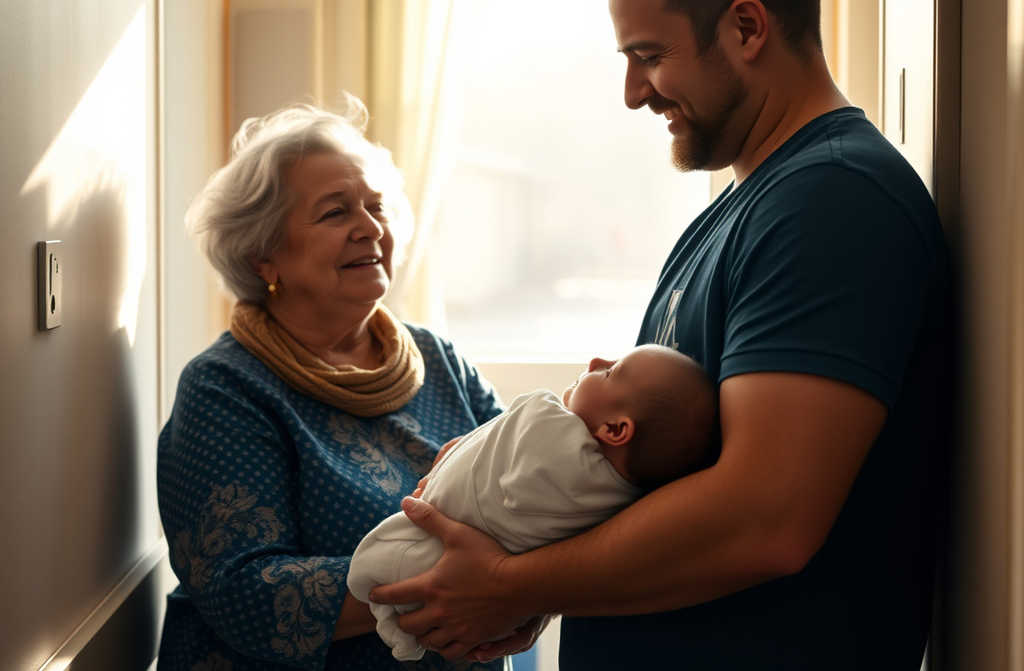
With a hesitant motion, the bundle passed into Edwards arms. He was rooted to the spot. The warmth, the sweet, milky scentthen a tiny, plaintive wail broke out, catlike, insistent. Edward looked down and saw himselfhis own image, miniaturised and impossibly fragile.

The world tilted. He slumped to a chair, rocking the little girl until she quieted. Her eyes seemed to search his, and for a moment, he could have sworn she smiled at him.

Margaret emerged after a minute, hands outstretched.

Ill take her, she offered.

Edward shook his head, grinning the happiest grin of his entire life. NoIll hold her. She just smiled at me! His voice was awed, tender, as he turned to Margaret. Lets go home, Margaret. All of us. Together.They stepped out into pale spring sunlight, the three of themEdward with the baby held tenderly against his chest, Margaret by his side, all held together by invisible threads of grief and trembling hope. The city seemed to hush as they walked, the London traffic softening beneath the weight of that tiny, sleeping bundle. For the first time in years, Edward felt the future opening before him: unknown, unplanned, but not unwelcome.

A breeze ruffled the lace at the babys crown. Edward looked down and whispered, Well call you Hope. Margaret squeezed his arm in grateful astonishment.

At the curb, he paused, heart thundering. Well figure it out, wont we? he asked, uncertain if he spoke to Margaret, the child, or some new, better self emerging inside him.

Margaret nodded, tears shining on her cheeksbut this time, a glint of joy shimmered alongside the sorrow.

The baby stirred, a fist unfurling toward his chin. Edward pressed his lips to her forehead. The world was still unsteady, full of questions and the ache of loss. Yet somehow, as the sun warmed his back and the soft weight of his daughter filled his arms, Edward realized he was exactly where he needed to be.

He smiledtruly smiledfor the first time in years. And together, they turned away from the hospital and toward a future that, for all its uncertainty, finally felt like home.

Click to comment

Leave a Reply

Ваша e-mail адреса не оприлюднюватиметься. Обов’язкові поля позначені *

чотирнадцять − 14 =

Також цікаво:

З життя26 хвилин ago

“My Grandchildren Only See Fresh Fruit Once a Month, But She Buys Expensive Food for Her Cats!”: My Daughter-in-Law Accuses Me of Being Cold-Hearted for Putting My Pets First, but I Won’t Let Her Guilt Me into Supporting Their Growing Family

My grandchildren only see fresh fruit once a month, yet she spends a fortune on fancy cat food, my daughter-in-law...

З життя27 хвилин ago

Oxana, Are You Busy? – A Festive New Year’s Eve Tale of Family, Holiday Hustle, a Mishap in the Snow, and an Unexpected Encounter with a Doctor That Changed Everything

Annie, are you busy? her mum calls, poking her head through the door to her daughters room. Just a second,...

З життя1 годину ago

Vitaly Settles in with Coffee and His Laptop to Finish Work—Until an Unexpected Call from the Maternity Ward Changes Everything: A Stranger’s Baby, a Past Affair in Brighton, and the Decision That Will Change His Life Forever

Edward settled himself at his mahogany desk, laptop open and a steaming mug of tea beside him. He had a...

З життя1 годину ago

Igor Never Came Back from Holiday: “Why hasn’t your husband written or called?” “No word, Vera—not after nine days, not after forty,” Lyuda would joke, adjusting her work apron over her broad waist. “So he’s gone off the rails, or worse, then,” her neighbour nodded sympathetically. “Well, wait and see. Have the police said anything?” “Everyone’s silent, Vera—quiet as fish in that sea of his.” “Life, eh… fate.” That conversation weighed heavy on Lyudmila as she swept the autumn leaves from her doorstep in the dreary fall of 1988. Three years into her well-earned retirement, she’d had to take up work as a council cleaner to make ends meet. Life had always been simple—she and her husband, both dutiful workers, had raised a son, no scandal, no sorrow. Then Igor went on a seaside holiday and never returned. She’d phoned every hospital, every police station, even the morgue. Her son, stationed with the military, helped with inquiries—it was discovered Igor checked out of his hotel but never boarded the train home. Lyudmila wanted to go search for her husband, but her son insisted he’d handle it. Weeks passed, and she kept herself busy to stifle her fears. Then, as suddenly as he’d vanished, Igor reappeared—no suitcase, just the same navy suit and a weary silence. As she fussed to feed him and her son, the truth unravelled: Igor had been living with another woman by the sea, seeking “freedom.” The shock, the ache of betrayal—Lyudmila couldn’t bear it. Igor, shamed and lost, tried to return weeks later, but Lyudmila stood firm. It wasn’t just heartbreak—it was the pain of not knowing, of years shared and suddenly made strange. She swept her pathway, watching leaves collect and blow away, knowing sometimes those who hurt us most have already gone with the wind. (Original Title Adapted for English Culture: Igor Never Came Back from Holiday: The Disappearance, the Heartbreak, and the Road Swept Clean)

Yours hasnt written or rung you yet? No, Vera, not a word after nine days, not after forty either, Lydia...

З життя2 години ago

You Drive Me Up the Wall!… I Can’t Eat Right, Can’t Dress Right, Can’t Do Anything Right! — Pavel’s voice broke into a shout. — You can’t do anything!… Can’t even earn proper money!… We never get any help from you around the house!… — Marina burst into tears, — …And there are no children…, — she whispered. Belka — a white-and-ginger cat of about ten, perched atop the wardrobe, silently witnessed yet another “family tragedy”. She knew, she could sense, that Mum and Dad truly loved each other… But she didn’t understand why they said such cruel words that hurt everyone. Mum, sobbing, locked herself in the bedroom as Dad lit one cigarette after another. Belka, seeing her family falling apart, thought, “There must be happiness in this house… and happiness means children… we need to find some children…” Belka couldn’t have kittens herself — she’d been spayed years ago, and as for Mum… the doctors said she could, but something just wouldn’t work out… The next morning, after her humans left for work, Belka, for the very first time, slipped out the window to visit her neighbour Pawsy — for advice. — Why would you want kids? — scoffed Pawsy. — Ours come with children, and I have to hide from them… they smear lipstick on your face or squeeze you until you can’t breathe! Belka sighed: — We just need normal children… If only we could find some… — Hmmm… That street cat Molly’s had a litter… five of them… — mused Pawsy. — Take your pick… Taking her chances, Belka leapt balcony to balcony to the street. Shivering nervously, she squeezed through the railings of a basement window and called out: — Molly, could you come out for a minute, please… From deep within came desperate squeaks. Carefully crawling through, eyes darting in fear, Belka began to cry. Under the radiator, on the hard gravel, lay five tiny, sightless kittens, nudging the air and wailing for their mum. One sniff told her: Molly hadn’t been back for at least three days. The babies were starving. Fighting tears, Belka gently carried each kitten to the entrance. Trying to calm her hungry, squeaking brood, Belka lay down beside them, anxiously watching the end of the yard, waiting for Mum and Dad. Pavel, silent as he met Marina after work, brought them home. As they reached the doorway, they froze — there was their Belka, (who had never set paw on the street alone), and five multicoloured kittens clambering to nurse from her. — What on earth? — Pavel was stunned. — A miracle…, — echoed Marina, and together they scooped up the cat and kittens and rushed inside… Watching Belka purr happily in a box with her new babies, Pavel asked: — But what do we do with them? — I’ll feed them with a dropper… once they’re bigger, we’ll find them homes… I’ll call my friends…, — Marina whispered. Three months later, still stunned by the turn of events, Marina sat stroking her “cat pack” and murmured, over and over: — Things like this just don’t happen… this just doesn’t happen… Then, she and Pavel broke down in happy tears; he swept her into his arms, and they both laughed and chattered at once: — I’m glad I finished building the house! — Perfect for a child to get some fresh air! — And let the kittens run in the garden! — There’ll be room for everyone! — I love you! — And I love you even more! Wise Belka brushed away a tear — life, it seemed, was finally coming together…

How you get on my nerves! Nothing I do is right not even how I eat, not even what I...

З життя2 години ago

I Called Out the Window: “Mum, Why Are You Up So Early? You’ll Catch Your Death!” — She Turned and Waved Her Shovel Cheerfully: “I’m Doing This for You Lazybones!” — And the Next Day, My Mum Was Gone… I Still Can’t Walk Past Our Garden Gate Without Tears
 Every Time I See That Pathway, My Heart Clenches Like Someone’s Gripped It in Their Fist. I Took That Photo on the Second of January… I Only Stopped When I Noticed Her Footprints in the Snow—Now That Photo Is All I Have Left of Those Days… We’d Spent New Year Together, Just as Always: Mum in Her Favourite Apron I Gave Her at School, the Smell of Fried Burgers, Family Jokes, Dad Arriving with an Enormous Tree, All of Us Decorating, Singing Old Christmas Songs, Laughing Until We Cried… On 2nd January, I Looked Out to See Mum Clearing a Perfect Pathway from the Gate to Our Door, Her Scarf Tied Up, Red-cheeked, Shovelling Snow So We Wouldn’t Have to Struggle Through the Drifts. “It’s for You, My Lazy Lot—Go Put the Kettle On,” She Called, Smiling. That Was the Last Time I Heard Her Voice So Cheerful. The Next Day She Was Gone, So Suddenly It Didn’t Seem Real. Only Her Little Footprints Remain—Marks in the Snow, and In My Heart.

I remember shouting out the window, Mum, what are you doing out there so early? Youll freeze! She turned around,...

З життя3 години ago

THE MOTHER-IN-LAW Anna Petrovna sat in the kitchen, watching the milk quietly simmer on the stove. Three times she’d forgotten to stir it, and each time she remembered too late: the froth would rise and spill over, and she’d wipe the stovetop in irritation. In those moments, she realized: it wasn’t about the milk. Ever since her second grandchild was born, it was as if everything in the family had gone off the rails. Her daughter grew weary, lost weight, and spoke less. Her son-in-law came home late, ate in silence, and sometimes retreated straight to the bedroom. Anna Petrovna noticed all this and thought: how could anyone leave a woman alone like this? She spoke up—first gently, then with more edge. At first to her daughter, then to her son-in-law. But she began to notice a strange thing: after her words, things in the house didn’t get lighter—they got heavier. Her daughter defended her husband, her son-in-law grew more withdrawn, and she herself went home with the feeling she’d once again done the wrong thing. That day, she went to the vicar not for advice, but because she simply had nowhere else to go with these feelings. ‘I suppose I’m just a bad person,’ she said, not looking at him. ‘I do everything wrong.’ The vicar was sitting at his desk, writing. He put down his pen. ‘Why do you think that?’ Anna Petrovna shrugged. ‘I wanted to help. But it seems all I do is make everyone angry.’ He looked at her kindly, without judgment. ‘You’re not a bad person. You’re tired. And very anxious.’ She sighed. That felt like the truth. ‘I’m scared for my daughter,’ she said. ‘She’s so different after giving birth. And him…’ she waved a hand. ‘It’s like he doesn’t even notice.’ ‘And do you notice what he does?’ asked the vicar. Anna Petrovna thought. She remembered last week, when he quietly washed the dishes late at night, thinking no one noticed. Or on Sunday, when he took the pram out for a walk, even though it was clear he just wanted to lie down and sleep. ‘He does things… I think,’ she said uncertainly. ‘But not the way he should.’ ‘And what is “the way he should”?’ asked the vicar calmly. Anna Petrovna wanted to answer right away, but suddenly realized she didn’t know. In her head: more, more often, more attentively. But specifically what, she couldn’t say. ‘I just want it to be easier for her,’ she said. ‘Then say that,’ the vicar responded gently. ‘But say it to yourself, not to him.’ She looked up at him. ‘What do you mean?’ ‘I mean that right now, you aren’t fighting for your daughter—you’re fighting with her husband. And fighting means tension. Everyone gets tired of that. You. Them.’ Anna Petrovna was silent for a long time. Then she asked: ‘So what should I do? Pretend everything’s fine?’ ‘No,’ he said. ‘Just do what helps. Not words, but actions. And not against anyone, but for someone.’ On the way home, she thought about this. Remembered how, when her daughter was little, she didn’t lecture her but just sat beside her when she cried. Why was it different now? The next day she showed up without warning. Brought soup. Her daughter was surprised, her son-in-law awkward. ‘I won’t stay long,’ Anna Petrovna said. ‘Just came to help.’ She watched the children while her daughter slept. Left quietly, without saying a word about how hard things must be or how they ought to live. A week later, she came again. And a week after that. She still saw her son-in-law wasn’t perfect. But she began to notice other things too: how carefully he lifted the youngest, how he tucked a blanket around her daughter at night, thinking no one saw. One day, she couldn’t help herself and asked him in the kitchen: ‘Is it hard for you right now?’ He looked surprised, as if no one had ever asked him that. ‘It’s hard,’ he said after a pause. ‘Really hard.’ And that was it. But after that, something sharp disappeared from the air between them. Anna Petrovna realized: she’d been waiting for him to change. But what needed to change was herself. She stopped discussing him with her daughter. When her daughter complained, she didn’t say, ‘I told you so.’ Just listened. Sometimes she took the children so her daughter could rest. Sometimes she called her son-in-law to ask how he was. It wasn’t easy. It was much easier to get angry. But slowly, the house grew quieter. Not better, not perfect—just quieter. Without the constant strain. One day her daughter said: ‘Mum, thank you for being with us now, not against us.’ Anna Petrovna thought about those words for a long time. She realized something simple: peace isn’t when someone admits they’re wrong. It’s when someone is the first to stop fighting. She still wished her son-in-law was more attentive. That wish didn’t go away. But living alongside it was something more important: wanting peace in the family. And every time the old feelings came up—indignation, bitterness, the urge to say something sharp—she asked herself: Do I want to be right, or do I want life to be easier for them? The answer almost always told her what to do next.

MOTHER-IN-LAW Margaret Brown sat in her kitchen, watching as the milk quietly simmered on the hob. She’d forgotten to stir...

З життя3 години ago

Foolish Anna: For 15 Years Everyone Called Her Simple – Her Husband Cheated Openly Since Their Wedding Day, While She Endured With a Smile. Little Did He Know, the Quiet Toy Factory Accountant Had a Master Plan That Would Turn His World Upside Down on Their Son’s Tenth Birthday

Everyone always said Emma was a simpleton. Shed been married to Tom for fifteen years and they had two kidsEmily...