Connect with us

З життя

When My Father Abandoned Us, My Stepmother Rescued Me from the Nightmare of an Orphanage

Published

on

When my father let us down, my stepmother yanked me from the jaws of an orphanage nightmare.

As a child, my life was a shining fairy talea family, unbreakable and full of love, in a crooked little cottage by the River Thames near the quiet town of Henley-on-Thames. There were three of us: me, Mum, and Dad. The smell of Mums freshly baked scones filled the air, and Dads deep voice spun tales of his adventures on the river at night. But fate is a merciless hunter, striking when you least expect it. One day, Mum fell illher laughter faded, her hands trembled, and soon she lay in a cold hospital bed in London. She slipped away, leaving us drowning in grief. Dad drowned his sorrows in cheap whisky, our home crumbling into a ruin of shattered glass and silent despair.

The pantry stood empty, a silent witness to our ruin. I dragged myself to school in Henley, clothes stained, stomach growling like a bottomless pit. Teachers scolded me for missing homework, but how could I focus when survival was all I could think about? Friends turned away, their whispered judgments sharper than knives, while neighbours watched our misery with pitying glances. Finally, someone called social services. Stern officials stormed in, ready to wrench me from Dads shaking hands. He collapsed before them, sobbing, begging for one last chance. They gave him a single, fragile montha final thread over an endless abyss.

That visit jolted Dad awake. He stumbled to the shop, hauled back groceries, and together we scrubbed the house until it faintly glowed with echoes of warmth. He swore off the drink, and for a moment, I glimpsed the man hed once been. I dared to hope. Then, on a stormy night as wind rattled the shutters, he muttered he wanted me to meet someone. My heart frozehad he forgotten Mum already? He swore she was irreplaceable, but this was our only shield against the authorities cold eyes.

Enter Aunt Clara.

We drove to her little house in Canterbury, a weathered home near the River Stour, ringed by gnarled oaks. Clara was a whirlwindwarm but fierce, her voice an anchor, her gaze a lighthouse. She had a son, Oliver, two years younger than me, a wiry boy with a laugh that melted the chill. We clicked instantly, tearing through cobbled lanes, splashing along the riverbank until we collapsed breathless. On the drive back, I told Dad Clara was like sunshine, and he nodded silently. Weeks later, we packed up our old life by the Thames, rented the cottage to strangers, and put down roots in Canterburya desperate bid for a fresh start.

Life slowly stitched itself back together. Clara mended me with a love that healedshe patched my torn trousers, stirred steaming stews, and at night, wed huddle together while Olivers jokes shattered the quiet. He became my brother, not by blood but by shared scarswe bickered, dreamed, and forgave with a loyalty beyond words. But happiness is a fickle guest, and fate loves to smash it. One frosty morning, Dad never came home. A call cut through the silencehe was gone, crushed by a lorry on an icy road. Grief swallowed me whole. Social services returned, cold and unstoppable. With no legal guardian, they tore me from Claras arms and hauled me to an orphanage in Dover.

That place was a prison of despairgrey walls, iron beds, echoes of lost souls. Time crawled, every minute a lash against my spirit. I felt like a ghost, invisible and abandoned, haunted by nightmares of endless loneliness. But Clara refused to give up. Every Sunday, she came loaded with bread, hand-knitted scarves, and a will of steel to bring me home. She fought like a lionessstorming offices, drowning in paperwork, her tears smudging ink as she battled the bureaucracy. Months dragged on, despair gnawing at me, until one morning, the matron barked, Pack your things. Your mothers here.

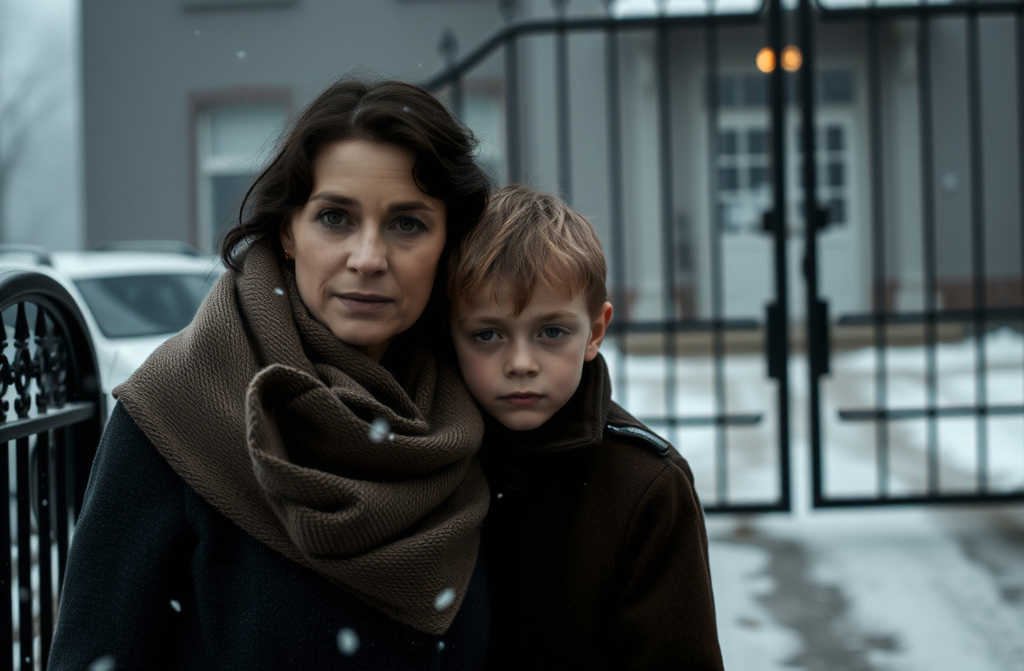
I stumbled outside to see Clara and Oliver at the gate, their faces blazing with hope and defiance. My legs buckled as I fell into their arms, sobs wrenching free like a storm. Mum, I choked, thank you for pulling me out of that grave! I swear Ill make it worth it! In that moment, I understoodfamily isnt just blood. Its the soul that fights for you until the very end.

I returned to Canterbury, to my room, my school. Life settled into a gentler rhythmI finished school, studied in London, found work. Oliver and I stayed inseparable, our bond unshakable. We grew up, started families, but Claraour mumremained our anchor. Every Sunday, we invade her house, where she spoils us with roast beef and Yorkshire pudding, her laughter mingling with our wives, whove become her best friends. Sometimes, when I catch her eye, the grace of it all overwhelms me.

Ill always thank fate for my second mother. Without Clara, Id have been lostbroken in the dark or swallowed by the streets. She was my light in the deepest shadow, and Ill never forget how she dragged me back from the edge.

Click to comment

Leave a Reply

Ваша e-mail адреса не оприлюднюватиметься. Обов’язкові поля позначені *

чотирнадцять + 17 =

Також цікаво:

З життя6 години ago

A Parent’s Love: Family Gatherings, Christmas Surprises, and a Lesson in Protectiveness on a Winter’s Day

Parental Love Mum always said, Children are the flowers of life, shed laugh, and Dad would grin and add, Flowers...

З життя6 години ago

Igor Never Returned From His Holiday: When Your Husband Disappears by the Seaside, a Wife’s Search, Tense Family Reunion, and the Painful Truth That Comes Home

Since his holiday, Stanley never came back Hasnt your husband written or called yet? Not a word, Vera, not after...

З життя7 години ago

“Oh, You Drive Me Mad!… I Eat Wrong, I Dress Wrong, I Do Everything Wrong!”—Pavel’s Voice Broke Into a Shout. “You Can’t Do Anything Right!… Can’t Even Earn a Decent Living… And You’re No Help Around the House, Ever!”—Marina Sobbed, “…And There Are No Children…” She Whispered. Belka, the Ten-Year-Old Ginger-and-White Cat, Watched Silently from Atop the Cupboard as Another Family “Tragedy” Unfolded. She Knew, Even Felt, That Mum and Dad Loved Each Other Dearly—So Why Say Such Hurtful Things? Mum Ran Off Crying, Dad Chain-Smoked by the Window, and Belka Thought to Herself: “What This Home Needs Is Happiness, And Happiness Means Kids… Somehow, We Need to Find Children…” Belka Herself Couldn’t Have Kittens—She’d Been Neutered Long Ago. As for Mum, The Doctors Said It Was Possible, But Something Never Quite Worked Out… The Next Morning, After Mum and Dad Left for Work, Belka Squeezed Out the Window and Went to See Her Neighbour, Whiskers, for Advice. “Why On Earth Would You Want Kids?” Sniffed Whiskers. “Ours Always Come Over—Hide From Them If You Can! They Smear My Muzzle With Lipstick Or Squeeze Me ‘Til I Can’t Breathe!” Belka Sighed, “We Need Proper Children… But Where On Earth Do We Get Them?” “Well… That Stray Molly on the Street Just Had Five… Take Your Pick…” Whiskers Shrugged. On Her Own Daring, Belka Tiptoed Balcony to Balcony Down to the Street, Squeezed Through The Bars of a Basement Window, and Called Out, “Molly, Could You Come Here for Just a Moment?” From Deep Within the Cellar Came the Desperate Squeaking of Kittens. Belka Cautiously Approached. Underneath the Heater, Five Blind, Mismatched Kittens Searched The Air, Wailing Hungrily. Molly Hadn’t Been There for At Least Three Days. The Babies Were Starving… Feeling She Might Cry, Belka Carefully Carried Each Kitten to the Entrance of Her Building. Lying Beside the Screeching, Hungry Bunch, She Waited Anxiously for Mum and Dad to Come Home. When Pavel and Marina Returned from Work, They Were Astonished—There Was Belka, Never Before Out Alone, Being Nursed by Five Noisy Kittens. “How on Earth Did This Happen?” Pavel Stammered. “It’s a Miracle…” Whispered Marina. They Scooped Up Belka and the Kittens and Rushed Inside. As Pavel Watched Their Purring Cat in a Box Full of Babies, He Asked, “So… What Are We Going To Do With Them?” “I’ll Hand-Feed Them… When They’re Grown, We’ll Find Them Homes… I’ll Call My Friends,” Whispered Marina. Three Months Later, Still Stunned By The Miracle, Marina Sat Stroking Her Feline Clan, Repeating to Herself, “This Can’t Be Real… This Can’t Happen…” And Soon After, She and Pavel Wept for Joy, Laughing and Embracing, “I’m So Glad We Finished Building This House!” “Yes! Perfect for a Child to Play Outside!” “And the Kittens Can All Run Around!” “There’s Room for Everyone!” “I Love You!” “Oh, I Love You Even More!” Wise Old Belka Wiped Away a Tear—Life Was Finally Coming Together…

Im so fed up with you! Nothing I do is right for you! The way I eat, what I wearits...

З життя7 години ago

Excuse Me, Sir, Please Don’t Push—Oh, Is That Smell Coming From You? A Chance Encounter, a Perfectly Laid Bathroom Tile, and a Second Wind: How Rita’s Life Changed at 53 When a Homeless Stranger with Sapphire Eyes Built Her Happiness and Challenged Her Son’s Inheritance Plans

– Excuse me, sir, please dont push. Oh, goodness. Is that smell coming from you? – Sorry, the man muttered,...

З життя8 години ago

Mother-in-Law Anna Peters was sitting in her kitchen, watching the milk quietly simmering on the stove. She had forgotten to stir it three times already, each time remembering too late: the milk would froth, spill over, and she would clean the stove irritably with a cloth. In those moments she felt it keenly: it wasn’t really about the milk. Ever since her second grandchild was born, everything in the family seemed to derail. Her daughter grew tired, thinner, and quieter. Her son-in-law came home late, ate in silence, sometimes heading straight to the bedroom. Anna saw this and thought: how can you just leave a woman to cope alone? She spoke up. At first gently, then more sharply. First to her daughter, then to her son-in-law. And then she noticed something strange: after she spoke, the house didn’t feel lighter, but heavier. Her daughter defended her husband, he grew gloomier, and Anna returned home with a sinking feeling that once again, she hadn’t done things right. That day she went to see their vicar, not for advice, but because there was nowhere else to go with this feeling. “I suppose I’m just not a good person,” she said, not meeting his gaze. “I always do things wrong.” The vicar was sitting at his desk, writing. He set his pen aside. “Why do you think that?” Anna shrugged. “I tried to help. Instead, I only seem to make everyone angry.” He looked at her attentively, but without judgment. “You’re not a bad person. You’re just exhausted. And very anxious.” She sighed. That rang true. “I’m so worried for my daughter,” she said. “She’s so different since the baby. And him…” She waved a hand. “It’s like he doesn’t even notice.” “Do you notice what he does?” the vicar asked. Anna thought for a moment. She remembered how, last week, he washed the dishes late at night when he thought no one saw. How on Sunday he took the pram out for a walk, even though he looked as if he’d rather collapse into bed. “He does help… I suppose,” she replied doubtfully. “But not the way he should.” “And what way is that?” the vicar asked gently. Anna wanted to reply at once, but realised she didn’t know. She could only think: more, better, more attentively. But what, exactly, was hard to explain. “I just want things to be easier for her,” she said. “Then say that,” the vicar replied quietly. “Not to him, but to yourself.” She looked at him. “What do you mean?” “I mean you’re not fighting for your daughter — you’re fighting her husband. And fighting means being tense. That exhausts everyone: you, and them.” Anna was silent for a long while. Then she asked, “So what should I do? Pretend everything’s fine?” “No,” he replied. “Just do what helps. Not words, but actions. And not against someone, but for someone.” On her way home, she thought over his words. Remembered how, when her daughter was a little girl, she would just sit beside her quietly if she cried — never lecturing. Why was it different now? The next day, she arrived unannounced. She brought soup. Her daughter was surprised; her son-in-law embarrassed. “I won’t stay long,” Anna said. “Just wanted to help.” She watched the children while her daughter slept. Left quietly, without a word about how hard things were, or what they ought to do. The next week, she came again. And again, the week after. She still noticed that her son-in-law was far from perfect. But she began to see other things: the way he gently picked up the baby, how at night he tucked a blanket around her daughter when he thought no one was looking. One day, in the kitchen, she couldn’t help herself and asked him, “Is it hard for you right now?” He looked startled, as if no one had ever asked before. “It’s hard,” he answered, after a pause. “Very.” And nothing more. But something sharp in the air between them was gone. Anna realised she’d been waiting for him to change. But it needed to start with her. She stopped discussing him with her daughter. When her daughter complained, she didn’t say “I told you so.” She just listened. Sometimes she took the children to give her daughter a break. Sometimes she called her son-in-law to ask how things were. It wasn’t easy. It was much easier to stay angry. But gradually, the house grew quieter. Not better, not perfect — just quieter. Free of endless tension. One day her daughter said, “Mum, thank you for being with us now, not against us.” Anna thought about those words for a long time. She understood something simple: reconciliation doesn’t come from someone admitting they’re wrong. It comes when someone is willing to stop fighting first. She still wanted her son-in-law to be more attentive. That wish hadn’t gone away. But alongside it lived something more important: for her family to have peace. And every time the old feeling — frustration, resentment, the urge to criticise — rose up, she asked herself: Do I want to be right, or do I want to make things easier for them? Almost always, the answer showed her what to do next.

Mother-in-Law Margaret Williams sat in the kitchen, her eyes resting on the saucepan of milk gently simmering on the hob....

З життя8 години ago

Excuse Me, Sir, Please Don’t Push—Oh, Is That Smell Coming From You? A Chance Encounter, a Perfectly Laid Bathroom Tile, and a Second Wind: How Rita’s Life Changed at 53 When a Homeless Stranger with Sapphire Eyes Built Her Happiness and Challenged Her Son’s Inheritance Plans

– Excuse me, sir, please dont push. Oh, goodness. Is that smell coming from you? – Sorry, the man muttered,...

З життя9 години ago

“My Grandchildren Only See Fresh Fruit Once a Month, But She Buys Expensive Food for Her Cats!”: My Daughter-in-Law Accuses Me of Being Cold-Hearted for Putting My Pets First, but I Won’t Let Her Guilt Me into Supporting Their Growing Family

My grandchildren only see fresh fruit once a month, yet she spends a fortune on fancy cat food, my daughter-in-law...

З життя9 години ago

Oxana, Are You Busy? – A Festive New Year’s Eve Tale of Family, Holiday Hustle, a Mishap in the Snow, and an Unexpected Encounter with a Doctor That Changed Everything

Annie, are you busy? her mum calls, poking her head through the door to her daughters room. Just a second,...