
З життя
You Said You Married Me Because I’m ‘Convenient’—So What’s Wrong with That?” He Shrugged.

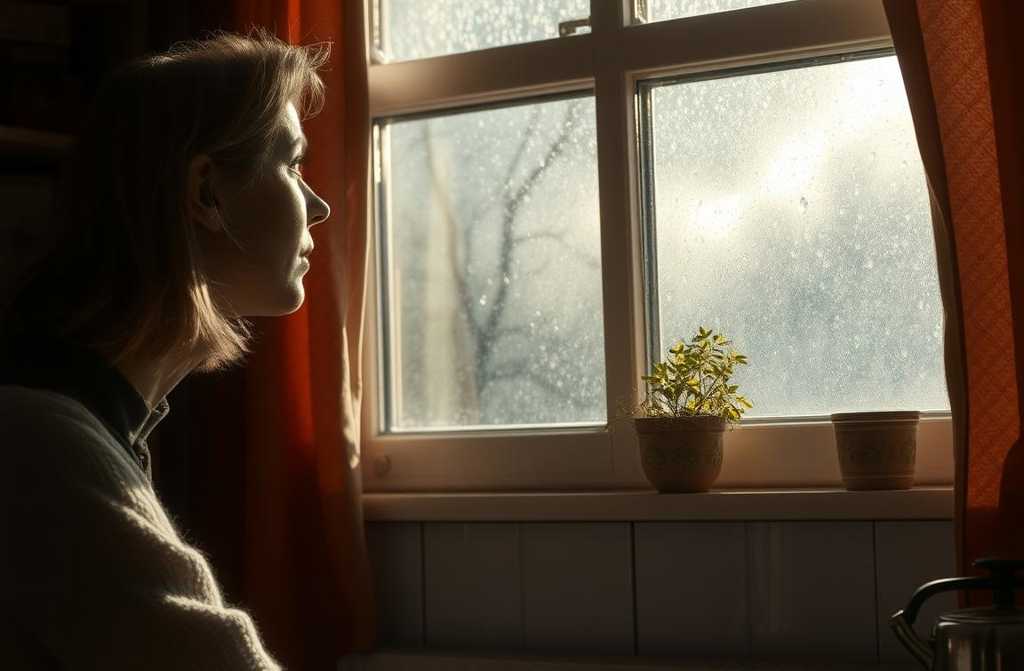
You said today you married me because I was convenient! she exclaimed. He merely shrugged. Whats so bad about that?
Are you wearing that old dressing gown again? Edward sneered, fastening his cufflinks with the precision of a man preparing for battle.
Sophie froze, the cup of tea in her hands. Steam curled upward, scalding her fingers, but she didnt pull away.
He is convenient.
Yes, convenient, he huffed, adjusting his tie before the mirror. Just like everything about you.
Sophie lowered her gaze. The tea had stopped steaming. The surface had darkened, reflecting the ceiling like a shattered mirror.
Ed, you
What? He jangled his keys, the metal clinking against his wedding ring.
Nothing.
The door slammed so hard the porcelain on the shelf trembled.
***
They had met at work. She, a quiet, unassuming accountant who tucked her hair into a careless bun. He, a brash manager whose laughter echoed through the corridors. Edward had courted her grandlyroses with dewdrops on their petals, candlelit dinners where he ordered her steak medium-rare without asking what she liked.
Youre not one of those women who fuss over trifles, are you? hed asked on their third date, smoothing a napkin over her lap.
No, Sophie had smiled, ignoring the warning bells.
Good. My ex was always making scenes
She hadnt thought much of it. Then came the wedding, the children, the house. Everything as it should be.
Only sometimes, when she tried on a dress with bare shoulders, hed say, Something simpler would suit you better.
Or when she applied lipstick before the mirror, hed mutter, Why bother? Youre only staying in.
Once, when she bought a new perfume with a light floral scent, he wrinkled his nose. Smells like a cheap shop. Are you trying to imitate that mousy woman from accounting?
And so she stopped wearing it.
On her birthday, he bought her a vacuum cleaner.
The old ones wheezing, he explained as she unwrapped it. Youre always sighing when you clean.
She thanked him. Then stared out the window until the children called her to cut the cake.
But she stayed silent. Because, all in all, he was a good husband. He didnt drink, didnt hit her, brought home his wages.
Wasnt that enough?
***
Did you ever love me?
The same evening. The same conversation. Edward avoided her gaze, as if checking the latch on the window.
Well youre the perfect wife.
Thats not an answer.
He sighed, as though explaining basic arithmetic to a child. Sophie, why must you make a fuss? Were fine.
Fine?! Her voice shook, not with tears, but with fury finally breaking free. You said today you married me because I was convenient!
So what? He shrugged. Whats so bad about that?
She studied him as if seeing him for the first timethe tan on his neck from tennis with colleagues, not her. The crease between his brows from irritation, not worry.
What about Emily?
His face twitched, as if pulled by an invisible thread.
Whats she got to do with this?
You loved her.
Yes, he admitted sharply, and that single word held more emotion than all their years together. But she wasnt practical.
Sophie felt something inside her snap like a broken heelshe could still walk, but never the same way again.
So I was the obedient replacement.
Dont be dramatic, he waved her off as if swatting a fly. Weve children. A home. What more do you want?
***
She hesitated.
Perhaps he was right? Perhaps love was a luxury, and family mattered more? Sophie stood by the window, watching raindrops smear the glass. Her fingerprints marked where shed stood so often lately, as if waiting for the world outside to give her an answer.
And Edward Edward carried on as if nothing had changed.
A week later, seeing she had endured again, he stopped pretending entirely.
Pasta again? He prodded his fork as if dissecting evidence of her inadequacy. Couldnt you at least add seasoning?
You said you disliked spice, she replied, her voice distant, as if someone else spoke for her.
So what? He pushed his plate away like refuse. Emily always
Sophie stood abruptly. The chair screeched, leaving another scratch on the flooranother invisible crack in their life.
If you want Emily, go to her!
Oh, dont start, he laughed, the sound cutting deeper than any shout. Where would I go? You know Im comfortable with you.
In that moment, she finally understood.
He didnt try to keep her. Not because he trusted her love, but because he trusted her obedience.
She noticed it in everything now.
How he no longer corrected her wrong outfitsjust walked past without looking. How his gaze slid over her as if she were part of the furniturea sofa no longer sat upon. How his calm days stretched into weeksno arguments, no complaints, just nothing.
And the worst part? That nothing was louder than any scream.
Clutching the kitchen counter, she realised: he wasnt even angry. He was waiting for her to submit, as she had with the vacuum cleaner, the perfume, the dresses.
Then something inside her turned over.
Not pain, not angerfreedom.
Because if they stop loving you but still get angry, you still exist.
But when even the anger fades
Youre already gone.
***
A month later, she filed for divorce.
At first, Edward didnt believe her. He stood in the kitchen doorway, watching Sophie pack the childrens clothes into boxes, as if she were a stranger.
Youre serious? His voice held uncertainty for the first time in years.
Sophie didnt look up. Yes.
Over nothing? He stepped forward, and she tensed.
Its not nothing, she said quietly. Im not furniture.
He laughed sharply. Always so dramatic!
Sophie finally met his eyes. His face was painfully familiar, yet different nowthe tight lips, the narrowed eyes. He was angry, not at losing her, but at his convenient world cracking.
Im tired of being convenient, she said.
Edward scoffed, snatching his keys. Fine! Do you think Ill struggle? You cant even cook properly.
The old sting. Once, such words would have made her doubt herself. Now they rang hollow.
Perhaps, she agreed. But someone thinks otherwise.
His face twisted. Ah, so theres someone else? Look at yourselfwhod want you?
The old ache tightened her chest. She almost said, Youre right, Im sorry, as she had countless times before.
But then she realised: she didnt want to anymore.
I do, she said firmly. I want myself.
He stared. Clearly, he hadnt expected that.
Youve lost your mind, he hissed. What about the children? Dont you care?
She closed her eyes for a moment. The children Yes, she thought of them every second.
Theyll learn what self-respect means, she replied.
Oh, stop! He waved a hand. Youre selfish. We have a home, security And youll throw it away over nonsense?
Sophie looked at him and suddenly understood: he truly didnt get it. To him, it really was nonsense.
For youyes, she said. For meno.
He turned away, jingling his keys. Fine. Youll regret this.
On the day she collected her last things, Edward suddenly asked, Do you really think youll find someone better?
Pausing at the door, she felt the breeze brush her face.
Better? She shook her head. I dont know. But at least someone wholl see me, not an empty space.
He said nothing.
And she stepped outside, where the air smelled of rain and freedom.
***
Two years passed.
Sophie married a man who kissed her shoulder each morning, even when she grumbled it was too early. Who whispered, Youre beautiful, when she wore an old dressing gown, her hair a mess, shadows under her eyes. Who once, spotting that same vacuum cleaner on sale, laughed and bought her peonies insteadjust because their pink matched her lips.
She wore perfume again. Painted her lips. Chose dresses with bare shoulders. And whenever she caught her husbands admiring gaze, warmth spread through herlike something long frozen beginning to thaw.
As for Edward
She bumped into him once at a café. He sat alone at a corner table, nursing



“Oh, You Drive Me Mad!… I Eat Wrong, I Dress Wrong, I Do Everything Wrong!”—Pavel’s Voice Broke Into a Shout. “You Can’t Do Anything Right!… Can’t Even Earn a Decent Living… And You’re No Help Around the House, Ever!”—Marina Sobbed, “…And There Are No Children…” She Whispered. Belka, the Ten-Year-Old Ginger-and-White Cat, Watched Silently from Atop the Cupboard as Another Family “Tragedy” Unfolded. She Knew, Even Felt, That Mum and Dad Loved Each Other Dearly—So Why Say Such Hurtful Things? Mum Ran Off Crying, Dad Chain-Smoked by the Window, and Belka Thought to Herself: “What This Home Needs Is Happiness, And Happiness Means Kids… Somehow, We Need to Find Children…” Belka Herself Couldn’t Have Kittens—She’d Been Neutered Long Ago. As for Mum, The Doctors Said It Was Possible, But Something Never Quite Worked Out… The Next Morning, After Mum and Dad Left for Work, Belka Squeezed Out the Window and Went to See Her Neighbour, Whiskers, for Advice. “Why On Earth Would You Want Kids?” Sniffed Whiskers. “Ours Always Come Over—Hide From Them If You Can! They Smear My Muzzle With Lipstick Or Squeeze Me ‘Til I Can’t Breathe!” Belka Sighed, “We Need Proper Children… But Where On Earth Do We Get Them?” “Well… That Stray Molly on the Street Just Had Five… Take Your Pick…” Whiskers Shrugged. On Her Own Daring, Belka Tiptoed Balcony to Balcony Down to the Street, Squeezed Through The Bars of a Basement Window, and Called Out, “Molly, Could You Come Here for Just a Moment?” From Deep Within the Cellar Came the Desperate Squeaking of Kittens. Belka Cautiously Approached. Underneath the Heater, Five Blind, Mismatched Kittens Searched The Air, Wailing Hungrily. Molly Hadn’t Been There for At Least Three Days. The Babies Were Starving… Feeling She Might Cry, Belka Carefully Carried Each Kitten to the Entrance of Her Building. Lying Beside the Screeching, Hungry Bunch, She Waited Anxiously for Mum and Dad to Come Home. When Pavel and Marina Returned from Work, They Were Astonished—There Was Belka, Never Before Out Alone, Being Nursed by Five Noisy Kittens. “How on Earth Did This Happen?” Pavel Stammered. “It’s a Miracle…” Whispered Marina. They Scooped Up Belka and the Kittens and Rushed Inside. As Pavel Watched Their Purring Cat in a Box Full of Babies, He Asked, “So… What Are We Going To Do With Them?” “I’ll Hand-Feed Them… When They’re Grown, We’ll Find Them Homes… I’ll Call My Friends,” Whispered Marina. Three Months Later, Still Stunned By The Miracle, Marina Sat Stroking Her Feline Clan, Repeating to Herself, “This Can’t Be Real… This Can’t Happen…” And Soon After, She and Pavel Wept for Joy, Laughing and Embracing, “I’m So Glad We Finished Building This House!” “Yes! Perfect for a Child to Play Outside!” “And the Kittens Can All Run Around!” “There’s Room for Everyone!” “I Love You!” “Oh, I Love You Even More!” Wise Old Belka Wiped Away a Tear—Life Was Finally Coming Together…
Im so fed up with you! Nothing I do is right for you! The way I eat, what I wearits...


Excuse Me, Sir, Please Don’t Push—Oh, Is That Smell Coming From You? A Chance Encounter, a Perfectly Laid Bathroom Tile, and a Second Wind: How Rita’s Life Changed at 53 When a Homeless Stranger with Sapphire Eyes Built Her Happiness and Challenged Her Son’s Inheritance Plans
– Excuse me, sir, please dont push. Oh, goodness. Is that smell coming from you? – Sorry, the man muttered,...


Mother-in-Law Anna Peters was sitting in her kitchen, watching the milk quietly simmering on the stove. She had forgotten to stir it three times already, each time remembering too late: the milk would froth, spill over, and she would clean the stove irritably with a cloth. In those moments she felt it keenly: it wasn’t really about the milk. Ever since her second grandchild was born, everything in the family seemed to derail. Her daughter grew tired, thinner, and quieter. Her son-in-law came home late, ate in silence, sometimes heading straight to the bedroom. Anna saw this and thought: how can you just leave a woman to cope alone? She spoke up. At first gently, then more sharply. First to her daughter, then to her son-in-law. And then she noticed something strange: after she spoke, the house didn’t feel lighter, but heavier. Her daughter defended her husband, he grew gloomier, and Anna returned home with a sinking feeling that once again, she hadn’t done things right. That day she went to see their vicar, not for advice, but because there was nowhere else to go with this feeling. “I suppose I’m just not a good person,” she said, not meeting his gaze. “I always do things wrong.” The vicar was sitting at his desk, writing. He set his pen aside. “Why do you think that?” Anna shrugged. “I tried to help. Instead, I only seem to make everyone angry.” He looked at her attentively, but without judgment. “You’re not a bad person. You’re just exhausted. And very anxious.” She sighed. That rang true. “I’m so worried for my daughter,” she said. “She’s so different since the baby. And him…” She waved a hand. “It’s like he doesn’t even notice.” “Do you notice what he does?” the vicar asked. Anna thought for a moment. She remembered how, last week, he washed the dishes late at night when he thought no one saw. How on Sunday he took the pram out for a walk, even though he looked as if he’d rather collapse into bed. “He does help… I suppose,” she replied doubtfully. “But not the way he should.” “And what way is that?” the vicar asked gently. Anna wanted to reply at once, but realised she didn’t know. She could only think: more, better, more attentively. But what, exactly, was hard to explain. “I just want things to be easier for her,” she said. “Then say that,” the vicar replied quietly. “Not to him, but to yourself.” She looked at him. “What do you mean?” “I mean you’re not fighting for your daughter — you’re fighting her husband. And fighting means being tense. That exhausts everyone: you, and them.” Anna was silent for a long while. Then she asked, “So what should I do? Pretend everything’s fine?” “No,” he replied. “Just do what helps. Not words, but actions. And not against someone, but for someone.” On her way home, she thought over his words. Remembered how, when her daughter was a little girl, she would just sit beside her quietly if she cried — never lecturing. Why was it different now? The next day, she arrived unannounced. She brought soup. Her daughter was surprised; her son-in-law embarrassed. “I won’t stay long,” Anna said. “Just wanted to help.” She watched the children while her daughter slept. Left quietly, without a word about how hard things were, or what they ought to do. The next week, she came again. And again, the week after. She still noticed that her son-in-law was far from perfect. But she began to see other things: the way he gently picked up the baby, how at night he tucked a blanket around her daughter when he thought no one was looking. One day, in the kitchen, she couldn’t help herself and asked him, “Is it hard for you right now?” He looked startled, as if no one had ever asked before. “It’s hard,” he answered, after a pause. “Very.” And nothing more. But something sharp in the air between them was gone. Anna realised she’d been waiting for him to change. But it needed to start with her. She stopped discussing him with her daughter. When her daughter complained, she didn’t say “I told you so.” She just listened. Sometimes she took the children to give her daughter a break. Sometimes she called her son-in-law to ask how things were. It wasn’t easy. It was much easier to stay angry. But gradually, the house grew quieter. Not better, not perfect — just quieter. Free of endless tension. One day her daughter said, “Mum, thank you for being with us now, not against us.” Anna thought about those words for a long time. She understood something simple: reconciliation doesn’t come from someone admitting they’re wrong. It comes when someone is willing to stop fighting first. She still wanted her son-in-law to be more attentive. That wish hadn’t gone away. But alongside it lived something more important: for her family to have peace. And every time the old feeling — frustration, resentment, the urge to criticise — rose up, she asked herself: Do I want to be right, or do I want to make things easier for them? Almost always, the answer showed her what to do next.
Mother-in-Law Margaret Williams sat in the kitchen, her eyes resting on the saucepan of milk gently simmering on the hob....


Excuse Me, Sir, Please Don’t Push—Oh, Is That Smell Coming From You? A Chance Encounter, a Perfectly Laid Bathroom Tile, and a Second Wind: How Rita’s Life Changed at 53 When a Homeless Stranger with Sapphire Eyes Built Her Happiness and Challenged Her Son’s Inheritance Plans
– Excuse me, sir, please dont push. Oh, goodness. Is that smell coming from you? – Sorry, the man muttered,...


“My Grandchildren Only See Fresh Fruit Once a Month, But She Buys Expensive Food for Her Cats!”: My Daughter-in-Law Accuses Me of Being Cold-Hearted for Putting My Pets First, but I Won’t Let Her Guilt Me into Supporting Their Growing Family
My grandchildren only see fresh fruit once a month, yet she spends a fortune on fancy cat food, my daughter-in-law...


Oxana, Are You Busy? – A Festive New Year’s Eve Tale of Family, Holiday Hustle, a Mishap in the Snow, and an Unexpected Encounter with a Doctor That Changed Everything
Annie, are you busy? her mum calls, poking her head through the door to her daughters room. Just a second,...


Vitaly Settles in with Coffee and His Laptop to Finish Work—Until an Unexpected Call from the Maternity Ward Changes Everything: A Stranger’s Baby, a Past Affair in Brighton, and the Decision That Will Change His Life Forever
Edward settled himself at his mahogany desk, laptop open and a steaming mug of tea beside him. He had a...


Igor Never Came Back from Holiday: “Why hasn’t your husband written or called?” “No word, Vera—not after nine days, not after forty,” Lyuda would joke, adjusting her work apron over her broad waist. “So he’s gone off the rails, or worse, then,” her neighbour nodded sympathetically. “Well, wait and see. Have the police said anything?” “Everyone’s silent, Vera—quiet as fish in that sea of his.” “Life, eh… fate.” That conversation weighed heavy on Lyudmila as she swept the autumn leaves from her doorstep in the dreary fall of 1988. Three years into her well-earned retirement, she’d had to take up work as a council cleaner to make ends meet. Life had always been simple—she and her husband, both dutiful workers, had raised a son, no scandal, no sorrow. Then Igor went on a seaside holiday and never returned. She’d phoned every hospital, every police station, even the morgue. Her son, stationed with the military, helped with inquiries—it was discovered Igor checked out of his hotel but never boarded the train home. Lyudmila wanted to go search for her husband, but her son insisted he’d handle it. Weeks passed, and she kept herself busy to stifle her fears. Then, as suddenly as he’d vanished, Igor reappeared—no suitcase, just the same navy suit and a weary silence. As she fussed to feed him and her son, the truth unravelled: Igor had been living with another woman by the sea, seeking “freedom.” The shock, the ache of betrayal—Lyudmila couldn’t bear it. Igor, shamed and lost, tried to return weeks later, but Lyudmila stood firm. It wasn’t just heartbreak—it was the pain of not knowing, of years shared and suddenly made strange. She swept her pathway, watching leaves collect and blow away, knowing sometimes those who hurt us most have already gone with the wind. (Original Title Adapted for English Culture: Igor Never Came Back from Holiday: The Disappearance, the Heartbreak, and the Road Swept Clean)
Yours hasnt written or rung you yet? No, Vera, not a word after nine days, not after forty either, Lydia...