
EN
Everything at the Belvedere wedding was built to look flawless.

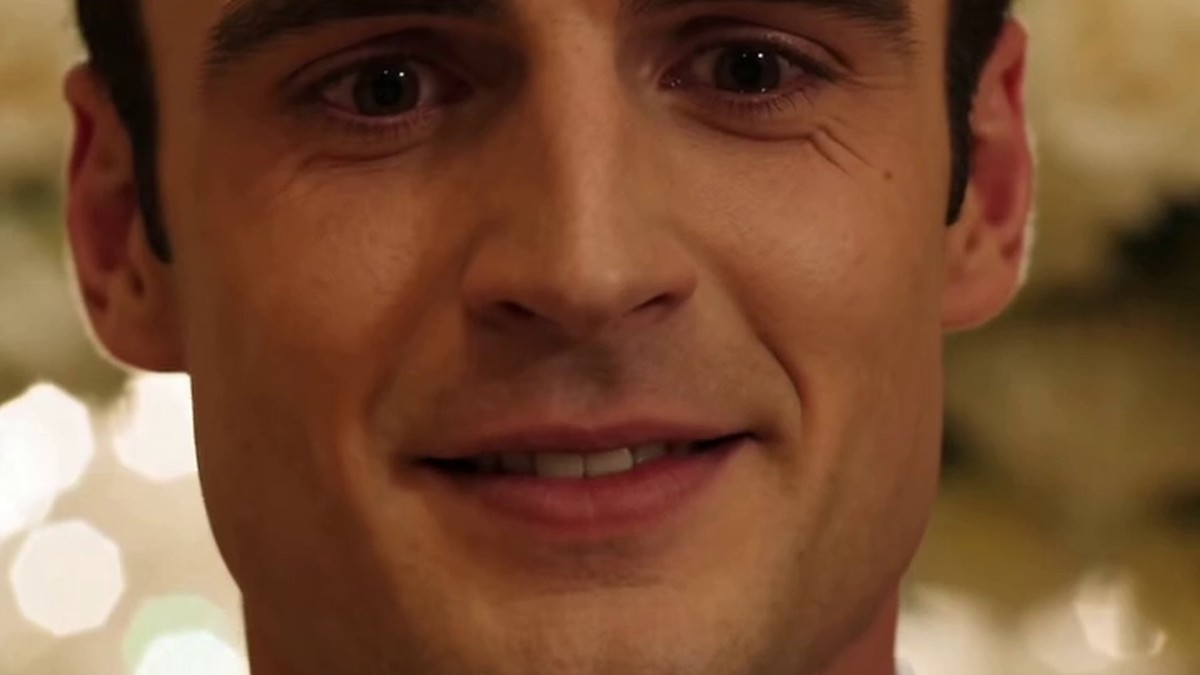
White roses climbed every column in the hall. Chandelier light — warm and golden — caught the glint of diamonds, the shimmer of silk, the slow rise and fall of champagne flutes. Julian stood at the altar, prepared to marry Victoria, the woman his family had selected, before the assembled cream of the city.
Then a little girl stepped into the aisle.
She was small. Poor. Wildly out of place in a room full of billionaires. Her dress was the color of cracked earth. Her hair hadn't seen a brush in days. And clutched between her two small hands was a photograph — old, creased, the edges worn soft.
Victoria's expression curdled.
"Security," she said, barely above a whisper, but the word landed like a blade.
The guards moved. But before any of them could reach her, the child opened her mouth.
"I just don't want my mom to go to heaven."
The hall went absolutely still.
Julian leaned forward from the altar.
The photograph trembled in the girl's grip.
And when he saw the face in that picture, every drop of color left his.
*Yohandra.*
The woman he had loved six years ago. The woman his family had pushed out of his life with cold, deliberate hands. The woman he had never known — not once — was carrying his child when she disappeared.
"What's your mother's name?" His voice came out barely above nothing.
The girl looked directly at him.
"Yohandra."
Victoria's fingers closed around his sleeve. "Sit *down*. You're making a scene."
Julian pulled his arm free.
For the first time in longer than he could count, he stopped doing what his family wanted.
He crossed the aisle, lifted the girl into his arms, and walked straight out of the wedding hall — not slowly, not carefully, but at a dead run — aimed at the hospital like nothing else in the world existed.
Behind him, the perfect wedding came apart at the seams.
What happened when Julian reached Room 412 and found Yohandra again? Read the full story in the comments.
The girl's name was Sofía.
Julian learned that in the back of a taxi, three red lights ignored, the driver glancing in the rearview mirror and deciding not to say a word. Sofía sat against his chest and told him in the flat, steady voice of a child who has already explained terrible things too many times — her mother had gotten sick in the fall, a neighbor had been watching her while Yohandra was in and out of the hospital, and she had found the wedding announcement in a magazine left on a waiting room chair.
She had torn it out. She had memorized the address. She had walked six blocks alone.
"How old are you?" Julian asked.
"Five," she said. "Almost."
He did the math without wanting to. He did it anyway.
—
Room 412 was at the end of a corridor that smelled of antiseptic and old carpet and the particular silence that hospitals manufacture to keep people from understanding how loud dying actually is.
Julian stopped outside the door.
Sofía looked up at him.
"She might be sleeping," the girl said. "She sleeps a lot now."
He pushed the door open.
Yohandra was not sleeping.
She was sitting up against the pillows, a cup of cold tea on the tray beside her, a book face-down in her lap — and the second she saw the door open, she went perfectly still in the way of someone bracing for a blow.
Then she saw Sofía.
Then she saw him.
The book slid off the bed and hit the floor, and neither of them moved to pick it up.
She had changed. Of course she had — six years is six years, and illness takes what it takes. She was thinner. There were shadows under her eyes that hadn't been there before. But the shape of her face was exactly as he had carried it in the part of his memory he'd tried to seal shut and had never quite managed to.
"Sofía." Yohandra's voice was controlled. Barely. "What did you do?"
"I got him," Sofía said, as if this were obvious. As if she had simply gone to retrieve something that belonged to them and had been misplaced.
—
Julian sat in the plastic chair beside her bed for four hours.
He did not make speeches. He did not beg, which was what he had imagined he might do on the taxi ride over — some grand confession, some tearing-open of himself. Instead he listened, because Yohandra had six years of words backed up behind her teeth, and she released them in no particular order, sometimes angry, sometimes exhausted, occasionally so precise and so cutting that he had to look at the floor.
His family had found her.
That was the part he hadn't known. He had believed she left. He had believed what his mother told him — that Yohandra had taken the money offered and moved on, that she had wanted out, that the love story had always been more his than hers.
The truth was colder and simpler and much harder to sit with.
His mother had sent someone to her apartment. Not a threat, nothing so dramatic. Just a woman in a good coat carrying a check and a clear description of what life would look like for Yohandra — and for any child she might be carrying — if she stayed, versus if she went. His father's lawyers. The weight of a name like a hand around a throat.
She had been twenty-three. She had been alone. She had been eight weeks pregnant and absolutely terrified.
She went.
"I hated you," she said. It was not an accusation. It was a statement of fact, offered plainly. "For a long time."
"You had every right to."
"I don't hate you anymore." She looked at Sofía, who had fallen asleep across the foot of the bed like a dropped coat. "I can't afford to."
—
He stepped into the hallway to make the call.
His mother answered on the second ring, which meant she had been waiting. Of course she had.
"Julian." Her voice was the voice she used for damage control — warm, measured, a little disappointed. "Come back. Victoria is humiliated, but it can be salvaged. People will forget. These things —"
"What you did to her." He kept his voice level. He was not level. "What you paid for. What you arranged."
A pause.
"We protected you," his mother said. "She was not suitable. The life you would have had —"
"Sofía is five years old."
The pause this time was longer.
"Julian —"
"She walked across the city alone to find someone to save her mother." His voice broke on the last word and he let it, standing in a hospital corridor in a tuxedo, not caring who heard. "She's five. She did what I should have done six years ago, and she's *five years old.*"
The line was quiet.
"I'm not coming back," he said. "Not to the wedding. Not to the company board until I have lawyers of my own in the room. And if you ever — if anyone representing this family ever contacts Yohandra again, I will burn every secret this family has ever tried to keep, and I will start with the Heller contracts."
He knew about the Heller contracts. He had known for two years and said nothing, because saying nothing was what he was trained to do.
He said goodbye and hung up, and stood there for a moment with the phone warm in his hand, feeling the strange lightness of a man who has just put down something very heavy that he carried so long he forgot it wasn't part of him.
—
Victoria came at nine-fifteen.
Julian had not expected her, and then he had — because Victoria was not a woman who accepted conclusions handed to her by other people. She moved through life renegotiating its terms, and she arrived in the doorway of Room 412 in the dress she had worn to almost become his wife, and she looked at Yohandra in the hospital bed, and she looked at Sofía asleep, and she looked at Julian in the chair with his jacket off and his tie loosened.
Her face ran through several expressions very quickly.
"Tell me you understand what you're throwing away," she said.
"I do," Julian said.
"The life —"
"Victoria." He said her name quietly, not harshly, because she had not done anything wrong except want things the way his family had taught him to want things. "You deserve someone who chose you. I didn't choose you. I arrived at you. There's a difference, and you know it."
She stood in the doorway for a long moment.
She was beautiful. She was formidable. She had done nothing except be the woman placed at the end of the aisle, and the look that crossed her face in that moment was not rage — it was something more honest and more painful than that.
Then she turned, and her heels echoed down the corridor, and she was gone.
—
Yohandra was diagnosed with a treatable infection of the lining of her heart.
*Treatable* — the doctor used that word three times, as though he understood that some families in that room needed to hear it repeated. The illness had been identified late. It had been severe. But with the right antibiotics, the right monitoring, the right time — treatable.
Sofía received the news standing very straight with both hands balled at her sides, in the manner of someone who has been hoping for something so hard for so long that actually getting it requires a moment of adjustment.
Then she sat down on the floor of the corridor and cried in the open, uncomplicated way that only very young children can — fully, without embarrassment, without trying to make the crying look like anything other than what it was.
Julian sat down beside her on the linoleum floor. Not in a chair. On the floor.
After a moment she climbed into his lap and cried there instead, and he held on, and didn't say anything, because there was nothing to say that would improve on the fact of her being held.
—
Weeks later, Yohandra sat up in bed without assistance for the first time, and Sofía made a sound like a small explosion of pure joy.
"Again," Sofía demanded.
Yohandra sat up again.
"Again."
"Sofía."
"*Again.*"
Julian, standing in the doorway with three cups of terrible hospital coffee, watched Yohandra laugh — really laugh, the laugh he remembered, the one that started in her chest and arrived late to her face — and he thought: *this is the thing that was there the whole time. This was the room I was supposed to be in. I just took the wrong door for six years.*
He had a long way to go. He knew that. He knew that love that was interrupted and damaged and buried under betrayal does not simply reconstitute itself because the circumstances change. He was not owed her forgiveness. He had not earned anything yet.
But Yohandra looked at him across the room — past the coffee, past the plastic chairs, past six years of silence and survival and everything she had carried alone — and she held out her hand.
He crossed the room and took it.
And Sofía, between them, immediately demanded to know when they were going to get a dog.



A hűséges kutya titka – Mire bukkant Fehér Zsófia a nyíregyházi sírkertben
A nyíregyházi köztemető ősszel reggelente ezüstös párába burkolózik, és Fehér Zsófia már messziről ismerte az utat a 14-es parcellához: harmadik...


Most, který se stal čtvrtí
Jmenuju se Jarmila Brabcová, jezdím po Jizeře na výletní loď už devatenáct let, a tahle trasa mezi Turnovem a Malou...


Aaron Pap és a hatezer eurós szívességem
Pap Áron és az örökség, amiről senki sem beszélt Nem akartam ott lenni azon az estén, de valahogy mindig én...


בת מהנדס, בלי בעל, ובלי שום בושה
הניילונים מהפארם של רמת-גן עדיין היו על השידה כשאמא שלי פתחה את דלת החדר בבי"ח "איכילוב" ועצרה במקום, כאילו מישהו...


Dopis, který jsem nestihla napsat včas
Mami, nemám pro to žádné hezké ani správné slovo. Jen vím, že mi po tobě chybí – a ta bolest...


Myčka na Rokycanské
Jarmila Dvořáková si otírala ruce o zástěru a dívala se přes sklo mycího boxu, jak její zeť Radek zapojuje nový...


De beton van Han Feenstra
Ik ben al negenentwintig jaar huismeester van een flat aan de Van Oldenbarneveltlaan in Zoetermeer. Loodgieter van opleiding, maar in...


Aaronas sakė: „Mama tave mėgsta, tik dar nepažįsta.
Nuo ketvirto aukšto laiptinės, kur stoviu su šluota rankoje, girdžiu beveik visą pokalbį per ventiliacijos groteles – akustika šiame name...