
EN
SHE STOOD DEFIANT IN CHAINS BEFORE THE KING.

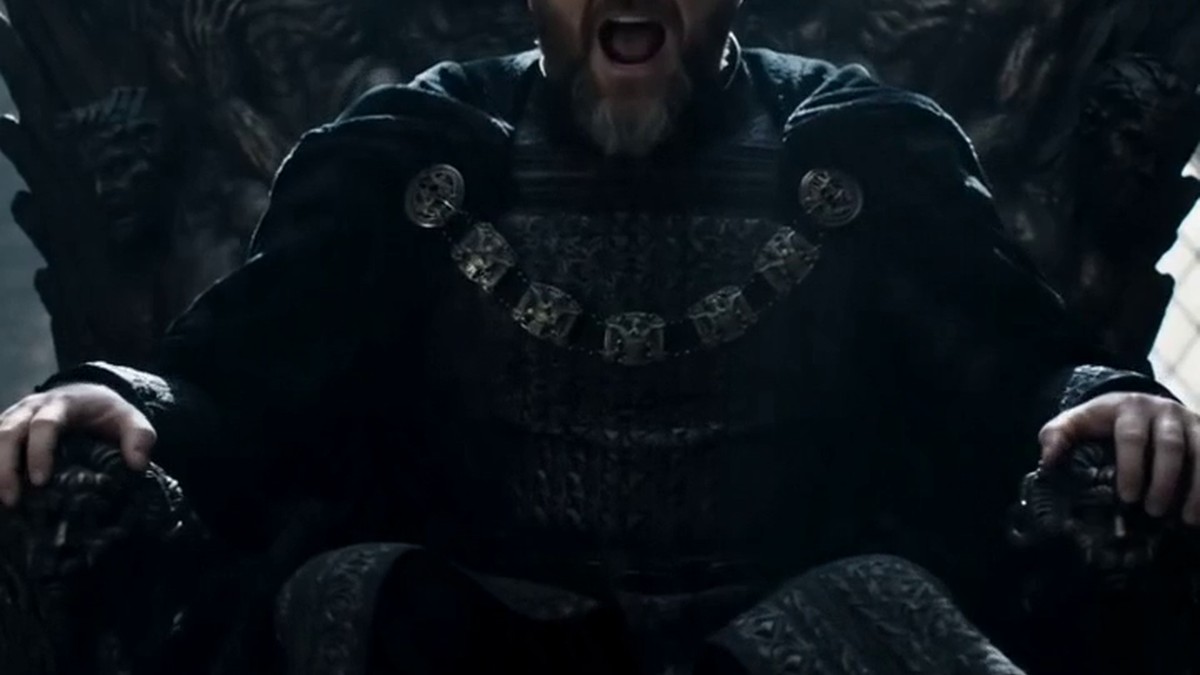
"She won't make it thirty seconds!"
The voices came slithering from the dark — chains clanking, mouths twisted into savage grins.
She knelt before them. Alone. Outnumbered. Unbowed.
The King leaned forward. "Your last words?"
The silence pressed down like a fist.
They wanted her broken. They wanted trembling lips and wet eyes.
They got neither.
She stood.
Her gaze didn't waver — not one tremor, not one crack.
"You already know the truth," she said. Not a shout. A verdict.
The hall erupted — laughter sharp as glass, hollow as a drum.
"She's lost her mind!" the King snarled, each syllable soaked in disgust.
Something moved behind her eyes then. A glint. A blade catching light.
Her voice dropped to barely a breath — and it cut deeper for it:
"You didn't lose it. You buried it."
The laughter died mid-note.
The crowd went still as stone.
The King's composure slipped — just barely, just enough.
"Choose your next words carefully," he hissed. "You're standing at the edge of a grave."
The corner of her mouth pulled into a slow, quiet smile.
Not desperate. Not pleading.
Certain.
This was no act of surrender. This was a detonation.
The truth he'd spent years smothering clawed its way to the surface — and neither of them could push it back down.
The King's eyes went wide. His voice cracked: "What have you done?"
The words landed and bled out across the marble floor.
She let them.
She let the silence do the work she didn't have to.
Her chin lifted — one slow, deliberate degree — and her eyes held his with something that wasn't hatred. Hatred would have been easy for him to dismiss. What she gave him instead was worse. Far worse.
Pity.
"I haven't done anything," she said. "You did it yourself. Nineteen years ago. In a room with no windows and a door you bolted from the inside — with my brother still in it."
The color drained from his face the way water drains from a broken basin — fast, then faster, then gone.
Behind him, his three generals exchanged a glance. The kind that happens between men who suddenly aren't sure whose side will win.
The tallest one — Carrew, the King's enforcer, his architect of silence — took a half step forward. His hand moved to his sword.
She didn't flinch.
"Carrew." She said his name like she owned it. "You were outside that door. You heard what happened. You've been carrying it as long as he has."
The hand froze on the hilt.
"I don't know what she's—" the King started.
"The letter exists," she said.
Three words. They landed like a body hitting stone.
The hall — which had been restless, buzzing, eager for blood sport — went to a different kind of silence now. The kind that comes when the ground shifts underfoot and no one is sure yet how far the crack runs.
"There is no letter," the King said. His voice had dropped an octave. The snarl was gone. What replaced it was something she recognized: the flat, careful tone of a man reaching for control he can no longer locate.
"You wrote it in your own hand," she said. "You told your brother you were going to take the throne. You told him *how.* You asked him to forgive you in advance." She paused. "He didn't."
"She's lying," Carrew said — but he said it to the room, not to her, which told everyone everything.
"His seal is on it." She looked at Carrew directly. "Your countersignature is on the second page."
The enforcer's face went the color of old ash.
The King rose from the throne. Not with authority. With desperation — which looks identical from a distance but feels entirely different up close. He crossed the dais in four strides and stopped three feet from her, close enough that she could smell the wine on his breath and the fear beneath it.
"Where is it," he said. Not a question. A demand dressed in the thin fabric of command he still thought he had.
She smiled again — that same quiet, unhurried curve of the mouth.
"It's already gone," she said. "Copies. Seven of them. Sealed and sent before I walked through your gates this morning." She let that sink in — watched it go down like a stone through dark water. "To the northern lords. To the merchant councils. To the church in Evrath." A beat. "And to your son."
The King's breath stopped.
The room's breath stopped.
She kept going, her voice still barely above a whisper, because volume was for people who needed help being believed.
"He's nineteen years old and he doesn't yet know that the man who raised him killed his real father to take a crown that was never his." She tilted her head. "He knows now."
What happened to the King's face in that moment wasn't rage. Rage would have been survivable. What happened was something deeper and uglier — the collapse of a story a man had told himself so many times he'd mistaken it for memory. His jaw moved. Nothing came out.
Carrew was the one who broke.
"It's enough," he said — and his voice was strange, thin, like ice under pressure. He turned to the King, and in that turning, thirty years of loyalty visibly folded in on itself. "It's enough, my lord. It's *done.*"
"You would dare—" the King spun on him.
"I signed that page." Carrew's voice didn't rise. It didn't need to. "I signed it because you told me it was a private confession. A formality. A moment of weakness you'd never let leave the room." His jaw tightened. "Nineteen years I have held that weight. Nineteen years." He stepped back from his king — one small, irreversible step. "Not one more."
The room fractured along lines that had always been there, invisible until now.
The guards near the far wall shifted. Two of them — young, watching — loosened their grip on their spears. The courtiers in the gallery above began to murmur, and the murmur had a different texture now: not the bloodlust of an audience but the anxious arithmetic of people calculating where they want to be standing when the dust settles.
The King looked at her with eyes that had gone somewhere far away and terrible.
"You've destroyed everything," he said.
"No." She shook her head, almost gently. "You destroyed it. I just refused to let it stay buried."
He lunged.
Not like a king. Like a man — wild and graceless and twenty years too late. His hands reached for her throat, crossed the distance between them in a single desperate motion — and met the crossed spears of two of his own guards who stepped into the gap without a word from anyone.
He stopped.
Breathing hard.
Hands in the air.
Looking at men who wore his colors and would not move for him.
The silence that followed wasn't empty. It was full — packed tight with the sound of something enormous giving way.
She held his gaze for a long moment. No triumph in her eyes. No cruelty. Just the exhausted steadiness of someone who has walked a very long road to reach a very specific door, and has finally put her hand on it.
"Unlock the chains," she said quietly to the guard on her left.
He did.
The iron fell away from her wrists and hit the marble with a sound like a period at the end of a sentence. She rolled her shoulders once, slowly, and stood straighter than anyone in chains had a right to stand.
The King sank.
Not dramatically — not a collapse, not a scene. Just a slow, terrible lowering of a man whose bones had stopped believing in him. He sat down on the steps of his own dais like a man who has walked through a storm and found nothing left standing on the other side.
He didn't weep.
She almost wished he had. Grief would have meant something remained. What she saw instead was the hollowed-out stillness of a man who had traded everything — conscience, brother, truth — for a chair, and had just now finally understood what the chair was worth.
"What happens now," he said. Not to her specifically. To the room. To the air.
It was Carrew who answered.
"The council convenes," he said heavily. "The letters are already out. There's no containing it." He looked at the floor. "Whatever comes next — it comes without me behind you."
She walked toward the great doors. The guards opened them without being asked.
She stepped through into the light — gray morning light, cold and honest and indifferent — and breathed it in like a woman who hadn't truly breathed in a very long time.
Behind her, she heard the sound of the hall in motion: voices rising, boots crossing marble, the first tentative, urgent syllables of men trying to renegotiate their futures before the morning was over.
She didn't look back.
Not because she felt nothing.
Because she had spent nineteen years looking back — at a door bolted from the inside, at a brother who didn't make it out, at a family name ground to dust by a man who needed the world to forget what he'd done.
She was done looking back.
The truth was out in the world now, moving through the hands of seven men who didn't yet know what they were holding. It would land where it landed. It would do what it would do. She couldn't carry it anymore, and she didn't have to.
She had walked into that hall in chains.
She walked out with nothing on her wrists but the raw red marks they left behind.
By the time the city bells began to ring — first one, distant and uncertain, then two, then a sound that seemed to rise from every direction at once — she was already gone.
The truth doesn't need a witness once it's free.
It runs on its own.



A hűséges kutya titka – Mire bukkant Fehér Zsófia a nyíregyházi sírkertben
A nyíregyházi köztemető ősszel reggelente ezüstös párába burkolózik, és Fehér Zsófia már messziről ismerte az utat a 14-es parcellához: harmadik...


Most, který se stal čtvrtí
Jmenuju se Jarmila Brabcová, jezdím po Jizeře na výletní loď už devatenáct let, a tahle trasa mezi Turnovem a Malou...


Aaron Pap és a hatezer eurós szívességem
Pap Áron és az örökség, amiről senki sem beszélt Nem akartam ott lenni azon az estén, de valahogy mindig én...


בת מהנדס, בלי בעל, ובלי שום בושה
הניילונים מהפארם של רמת-גן עדיין היו על השידה כשאמא שלי פתחה את דלת החדר בבי"ח "איכילוב" ועצרה במקום, כאילו מישהו...


Dopis, který jsem nestihla napsat včas
Mami, nemám pro to žádné hezké ani správné slovo. Jen vím, že mi po tobě chybí – a ta bolest...


Myčka na Rokycanské
Jarmila Dvořáková si otírala ruce o zástěru a dívala se přes sklo mycího boxu, jak její zeť Radek zapojuje nový...


De beton van Han Feenstra
Ik ben al negenentwintig jaar huismeester van een flat aan de Van Oldenbarneveltlaan in Zoetermeer. Loodgieter van opleiding, maar in...


Aaronas sakė: „Mama tave mėgsta, tik dar nepažįsta.
Nuo ketvirto aukšto laiptinės, kur stoviu su šluota rankoje, girdžiu beveik visą pokalbį per ventiliacijos groteles – akustika šiame name...