
EN
Travis Hollis’s Last Dog

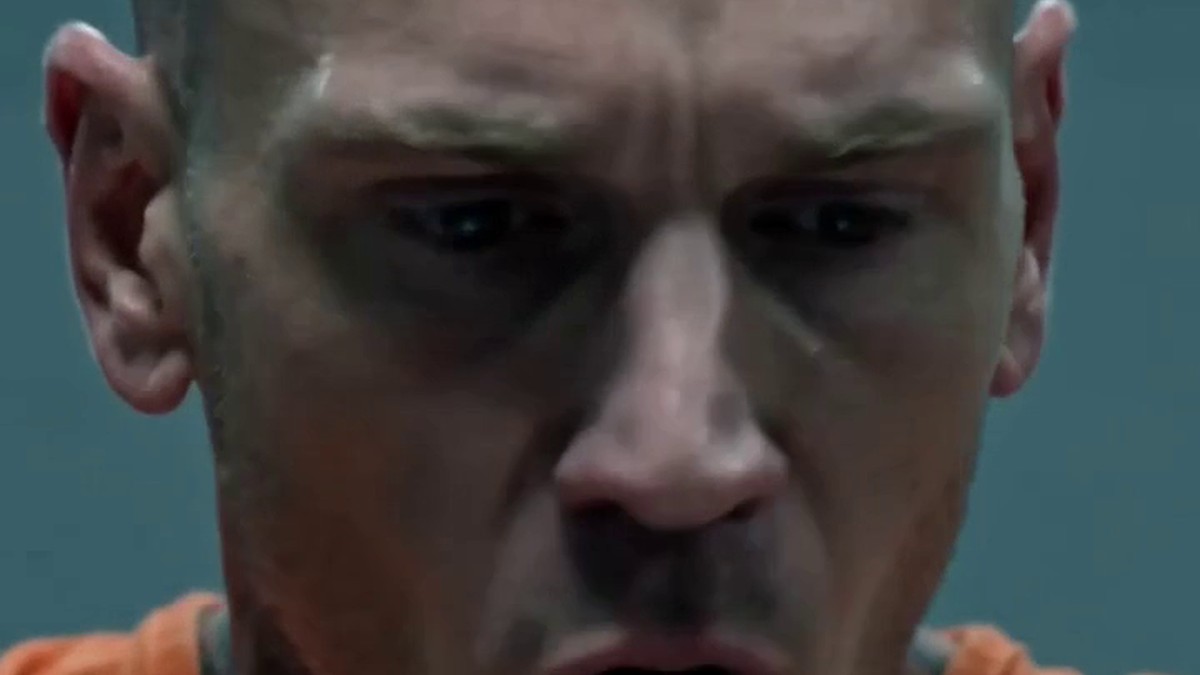
Travis Hollis's Last Dog
The cellblock door slid shut behind Travis with a metallic clang that hung in the air a beat too long. He shuffled into the sterile visitation room in standard-issue orange, shackles dragging a weary rhythm across the linoleum. His arms, laced with faded ink that spelled out a girl's name from another life, rested heavy on the steel table before him. In four hours, a needle would push poison into his veins for the murder of a nineteen-year-old college student from Gunnison, a case that had splashed his mugshot across every TV in the state eight years ago.
His last request, approved after three appeals and a signature from the warden, wasn't a clergy visit or a final meal of fried chicken. Travis wanted to see Duke.
"He's been the only soul that gave a damn about me," Travis had told his lawyer a week earlier, voice flat, eyes fixed on the cinderblock wall. The story was that Duke was a Belgian Malinois he'd raised from a pup before the arrest—a dog that had whimpered outside the precinct the night they cuffed him and had been living with a cousin ever since. The prison chaplain pulled some strings, and a transport was arranged.
The paperwork that came through listed the dog's current handler as Deputy Marcus Aldana of the Fremont County Sheriff's Office, K-9 Division. Nobody on the review committee cross-referenced the name against the trial exhibits from eight years back—the case had been tried two counties over, the original handler had retired to Arizona, and the dog's working name back then had simply been logged as "K-9 unit" in the court transcript, never spelled out. By the time the request reached the warden's desk, it was just a line item: inmate requests visit from family pet, name Duke, breed Malinois, currently boarded with law enforcement K-9 program. Nobody thought to ask why a family pet was boarded with a sheriff's department.
Deputy Aldana, a stocky man with a faded green tattoo of a compass on his forearm, led the dog down the hallway. He'd been told this was a special circumstance: a condemned inmate's final wish to see his old pet. Aldana thought it was odd, but death row had seen stranger things. He'd brought Duke, an eleven-year-old cadaver dog trained to locate decomposed human remains, thinking the animal might just sit and let the man scratch his ears for ten minutes before the transport went back.
Duke padded into the room, nails clicking on the floor. He was a dark sable Malinois, gray around the muzzle, one ear slightly notched from a fight with a barbed-wire fence during a search near Mount Princeton. He halted two steps in, nostrils flaring, head swinging toward the cuffs binding Travis's wrists.
Travis saw the dog and his face softened. "Hey, boy. There you are." He lifted his cuffed hands an inch off the table. "Come here."
Duke didn't move toward him. Instead his nose fixed on Travis's right hand, on the pale ring of scar tissue circling the wrist where a rope had once cut deep. The dog's body went rigid, and a low sound started in his chest—not a growl, not quite a bark. He crept forward on stiff legs, sniffed at the scar for three full seconds, then sat back hard on his haunches and let out one sharp yip, staring at that wrist without blinking.
Aldana's hand tightened on the lead. "That's a trained alert," he said, mostly to himself. "That's his remains alert."
The words didn't fit what anyone was looking at—a living man with two working lungs, breathing hard now, his eyes darting to his own hand as if it belonged to someone else. Warden Sarah Greer, who had just stepped into the doorway, frowned. "Explain that."
Aldana knelt beside the dog, keeping a hand on his flank. "He's cross-trained on scent transfer, not just fresh remains. Grave soil, decomp residue on cloth or skin—if it's been in contact long enough, it holds. He's not telling us this man's dead. He's telling us this man touched something he shouldn't have." He looked at the scar on Travis's wrist. "Recently, maybe. Or it's been buried in the skin a long time and just came back up under stress sweat. Either way, he's never false-alerted. Not once in six years."
Travis had gone the color of the linoleum. He stared at the rope scar like he'd forgotten it was there. "I got that in a shop accident," he said, too fast.
Greer's eyes moved from the scar to the dog to the folder under her arm—the one with Travis's original case file, requisitioned as a formality before any death-row visit. She flipped it open on the table, scanning until she found the line she remembered from the appeals. *Search dog located victim's remains in shallow grave off Route 50, handled by Fremont County K-9.* Below it, a photograph she'd glanced at years ago without really seeing: a sable Malinois with a notched ear, sitting beside a strip of yellow tape.
"That's your dog," she said quietly, turning the photo toward Aldana. "That's Duke. He worked the Holly Parson recovery."
Aldana's jaw went slack for a second. "I got him in a departmental transfer four years ago. Nobody re-tagged the old case files with the new handler roster." He looked down at the dog, who hadn't broken position. "He's not remembering Travis. He's reading what's on him right now."
Travis's hands, still cuffed, curled into fists on the table. Eight years he'd told the story of an innocent man, a planted knife, a bad alibi witness. He had rehearsed it so many times it had worn smooth like a stone in his pocket. But the dog wasn't interested in stories. The dog had put his nose an inch from the scar and told the room the truth in a language nobody could argue with.
"I used the rope to tie the tarp down," Travis said. The words came out flat, like he was reading them off a wall only he could see. "When I moved her. It cut me before I ever thought about what I was doing with it." He looked at his wrist like it belonged to a stranger. "I've had eight years to forget that. He didn't forget."
Greer exchanged a look with Aldana, then straightened. "Get me a pen and the form," she said to the guard by the door. "Voluntary statement."
The guard came back a minute later with a county-issued legal pad and a black ballpoint. Travis took the pen awkwardly between cuffed fingers, the metal scraping the paper. In the corner of the room, Duke stayed down, chin on his paws now, eyes tracking every movement of Travis's hand. Aldana kept his palm flat against the dog's side, not to hold him back, but to steady his own breathing.
Travis wrote. The only sound for nearly fifteen minutes was the scratch of the pen. He detailed where he'd bought the rope—Ace Hardware in Salida, $6.79 plus tax, paid in cash the same night Holly Parson disappeared. He described the tarp, the shovel he'd borrowed from his cousin's garage and never returned, the exact turnout off Route 50 where he'd pulled over. He wrote about the pink hair tie that had snapped and come loose in his hands, how he'd shoved it in his jacket pocket and later, panicking, buried it with her rather than carry it home.
When he finished, he scrawled his name at the bottom and slid the pad across the table. The pen rolled onto the floor and Aldana bent to pick it up.
"Mail it to her mother in Montrose," Travis said, not looking at the warden now but at some point past her shoulder. "Address is in the file. She wrote me letters for six years asking why. Tell her the rope's in there too. Everything's in there."
Greer picked up the pad and scanned the first page. Her jaw tightened; she'd sat across from this man at two parole hearings and listened to him swear on his daughter's name that he'd never touched Holly Parson. Now four pages of blue ink said otherwise, in his own hand, witnessed by a dog that had no reason to lie.
The clock on the wall read 8:47 p.m. Execution was set for midnight. Aldana gave Duke the release word, and the dog stood, shook out his coat from nose to tail, and walked to the deputy's side like the last four minutes had been nothing more than a training run. The guards moved in to take Travis back to holding. He didn't look at the dog again.
Aldana walked Duke out through the side corridor, past the vending machines, and stopped at the break room to buy him a bag of jerky from the machine—$2.25, exact change from his shirt pocket. Duke ate it in three bites, tail giving one loose swing against the wall. Aldana crouched down and scratched behind the notched ear, thinking about the November morning four years before this one when he hadn't even known this dog's name yet, when another handler had walked him along a fence line near Route 50 and he'd sat down hard in the sagebrush and refused to move.
Warden Greer sealed the confession in a clear evidence bag, wrote the date and time on the label in block letters, and carried it to her office. She set it under the lamp on her desk and sat with it for a moment before she picked up the phone and dialed the Montrose number from the file. It rang four times. When a woman's voice answered, tired and wary, Greer said, "Mrs. Parson, this is Warden Greer at the correctional facility. I need about ten minutes of your time, and I think you should sit down first."
Outside her window, the wind kicked dust across the empty yard in slow spirals, and eight hundred miles felt like nothing at all.



Il contratto che Daniele non sapeva di aver già perso
Quella mattina ho fatto una cosa che Chiara non si aspettava: le ho lasciato il caffè pronto prima di uscire,...


Tėvo rankos sode Zarasų pakraštyje
Pro Petro Vilkausko namo langą matosi Zarasų ežeras — rudenį jis pilkas, kaip skalbinių vanduo. Gyventojai sako, kad spalį čia...


Жълто-зелената пътна чанта на Деми
Деси Вълчева остави телефона на плота с екрана надолу, сякаш искаше да му попречи да зазвъни отново. В кухнята на...


Nebylainis mokesčių skolininkas: ką Gabija man pasakė apie savo mamą ir pinigus
Mano uošvė sulaužė dantį pirmadienį, o ketvirtadienį jau nebeturėjau pinigų, kuriuos devynis metus siunčiau be klausimų. Taip tiksliai pasakyčiau, iš...


Dílna po Vladimírovi a mlčení, které Petr neslyšel
Ivana měla čtyřicet sedm let a dvacet tři z nich vedla účetnictví v autoservisu na Dobrovského ulici v Olomouci. Dílnu...


Il bagno delle nove e un quarto a Sabaudia
Faccio il bagnino allo stabilimento da sei stagioni, e di solito alle nove e un quarto del mattino la spiaggia...


Kréta a kapualjban
Pontosan két hete történt, szerda reggel, amikor hazaértem a műszakból, és ott álltam a lépcsőház előtt, mint egy idióta, mert...


Котката на Марин Петков
Тя драска, значи го мрази — така си мислех първите седмици. Казвам се Марин Петков, на четиридесет и три съм,...