
EN
She Threw the Book on the Floor—Then the Real Price Tag Came Out

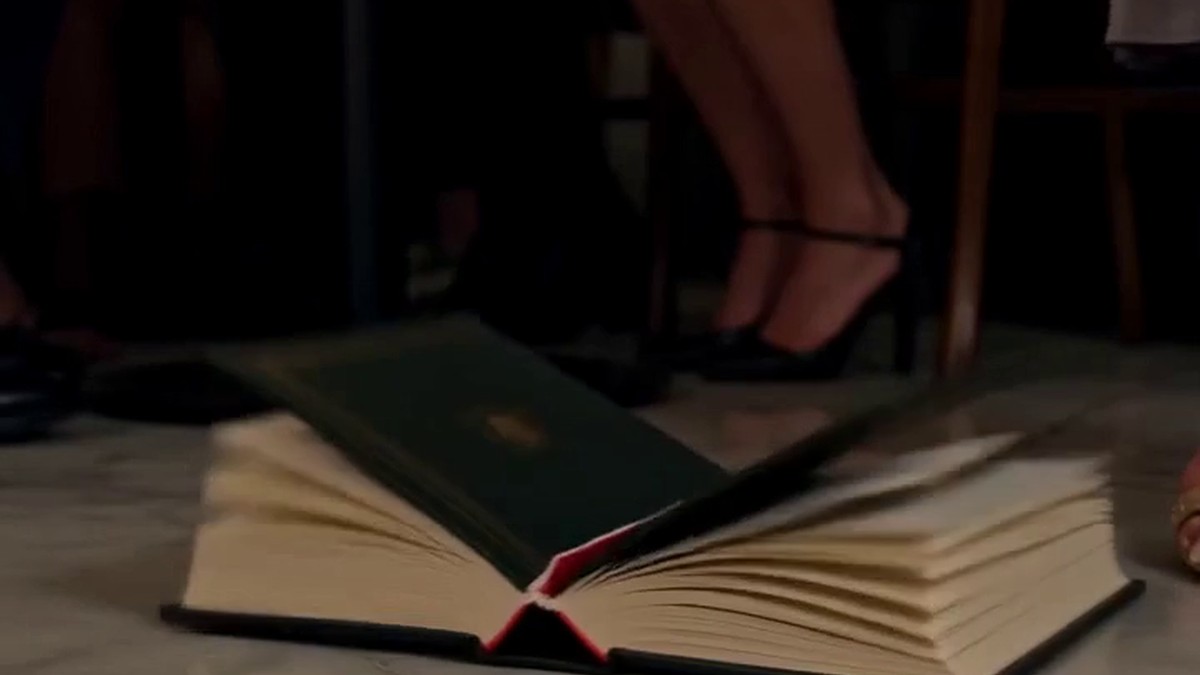
The book hit the marble floor with a sound like a car door slamming shut. The old leather split along the hinge, and a single yellowed page slid across the polished stone until it stopped under a chair. Maya was already out of her seat, hand under the page before some woman's heel could find it. She laid it back inside the cover without a word.
Claudia still had the microphone in her hand, lipstick perfect, eyes bright with the particular glee of a woman who'd just humiliated someone in public.
"This is what you call a family treasure?" she said. "A pile of moldy paper? Derek, what did I tell you about marrying beneath your station?"
Laughter rippled from the next table. Derek stood next to his mother, staring at a bread plate like it owed him money.
Maya didn't raise her voice. She turned to Derek and asked three questions: Did you read the conservator's report? Did you know the book needed to be supported at the spine? Did you prepare anything to say before your mother grabbed it?
Derek didn't look at her. "Maya, not now."
She took the microphone from Claudia's hand.
"Actually," she said, "now is exactly the time."
Ten days earlier, Derek had come home with a jewelry catalog and dropped it on top of Maya's work table, right on a sheet of Japanese tissue she'd been flattening. She moved the catalog to the edge without comment.
"Mom picked out earrings," he said. "Reasonable ones. For her sixtieth."
The photo showed diamond drops. The price was printed small at the bottom: $12,000.
Maya reminded him that their joint savings were earmarked for the bathroom gut renovation and the last payment on the Subaru. Derek waved it off. "We'll take it from there. I get a bonus after the Victor deal closes."
He unbuttoned his cuffs and sat down across from her. "Victor's coming to the party. Mom's seating me next to him. She's going to introduce me as family, not just a project lead. We can't show up with a toaster."
"We could show up with a gift we chose together."
"You're doing the meaning thing again."
"You're doing the impression thing again."
He snapped the catalog shut. "I'm tired of apologizing for wanting to make something of myself."
"Who's asking you to apologize?"
Derek didn't answer. He took the catalog and went into the kitchen. The coffee grinder started, even though he never drank coffee after seven.
That night Maya checked the savings account on her phone. All $14,200 was still there.
Her father's place was a narrow row house on a street where every porch had a different-colored door. Samuel listened to the whole story, set his mug down on the saucer, and disappeared into the back room where he kept his books. He came back with a flat package wrapped in brown paper.
Maya recognized it before he even untied the twine. "The Allegheny Correspondence." First edition, signed on the front endpaper by the author to Dr. Elias Grant, a Union Army surgeon and a distant relative of her mother's family. Samuel had hunted for that book for years, finally found it at an estate sale in Ohio two decades ago.
"I want you to have it," he said.
"Dad, you've been collecting for thirty-eight years."
"That's exactly why I'm giving it to you. You're the only person I trust to keep it safe."
She ran a finger two inches away from a crack in the leather, not touching. "I'll restore it and give it back."
"Take it first. We'll argue about returning it later."
Maya had the book authenticated at a university lab. The paper, ink, binding, signature—all genuine. The appraiser put the value at $9,000, but he said a collector would pay more. Maya had no intention of selling.
Derek read the report twice, tapping the number with his finger.
"Nine grand? And you wanted to wrap it in a towel?"
"I wanted to preserve it. Not sell it."
He shook his head. "Mom will finally see what you bring to this family. Make a nice box. Keep the speech under a minute. She hates lectures."
Maya wanted to argue. She also wanted Derek to stop needling her about her parents. She agreed.
Three evenings later, she'd built a custom clamshell box from walnut, reinforced the weak hinge, and typed a single page describing the book's provenance. Derek brought home flowers on Friday.
"Mom called. I told her the gift would be serious. She calmed down."
"Did you tell her it's a book?"
"I said it was a surprise. Let her see it."
At dinner he mentioned picking out tile for the bathroom after the party. Maya let herself believe the argument was over.
The morning of the event, her banking app buzzed. A withdrawal of $12,000 from the joint savings account, made at 9:42 a.m. from the jewelry store.
She called Derek. He was already at the barber.
"You took the money?"
"I ordered the earrings. Don't start."
"We agreed. The book is the gift."
"Nothing was signed. Half that money is mine."
"The book is from your parents. The earrings are from us. That's fair."
Maya sat on the edge of the bed. Her graphite dress lay over the chair, the walnut box beside it. She opened the bank app, froze Derek's access to the joint account, and transferred the remaining $2,200 to her personal checking. Then she called the jewelry store.
The order had been placed under Derek's name, paid from a joint account. The saleswoman said the box was waiting for a courier.
"Can the purchase be canceled?" Maya asked.
"Only by the cardholder or a joint account holder in person," the woman said.
Maya could have gone to the bank and filed a dispute. Instead, she put on the graphite dress, grabbed the bank statement and the authentication report, and drove to the store herself. She didn't cancel the purchase. She changed the recipient name to "Maya Hartwell" and asked them to hold the box in the safe until Monday. She left the payment alone. She needed proof that Derek had spent joint money solo.
At the restaurant—a converted warehouse in the Strip District, exposed brick, Edison bulbs, the October wind rattling the old windows—Claudia looked Maya up and down.
"Gray," she said. "Of course. I knew it."
"Good evening."
"Where are the earrings?"
Maya looked at Derek, who stood at the entrance holding an empty jewelry-store bag. "Courier mix-up," he said. "They'll be here later."
Claudia's mouth puckered. "My son can't even deliver a gift on my birthday."
Derek pulled Maya aside. "What did you do?"
"I left the earrings in the store safe."
"You had no right."
"Half that money was mine."
"Return the box before the gift table starts."
"No."
He crushed the paper bag in his fist. "Then I'll tell Mom you ruined everything."
"Go ahead."
He glanced toward the dining room. "We'll talk after the party."
That meant he expected her silence again.
Gifts were presented after the main course. The emcee called each donor, the photographer posed the box, the birthday queen thanked everyone with a microphone. When they called "Derek and Maya Hartwell," Derek leaned close.
"Just give her the book. We'll deal with the earrings later."
Maya opened the walnut box and lifted out the book. She got through two sentences about the edition and the family connection.
"A book?" Claudia interrupted. "After everything I've done for you people? That's the gift?"
"You haven't let me finish."
"I don't need a lecture."
Claudia snatched the book, shook it in front of the guests like a dead rat, and hurled it to the floor. The sound of the spine splitting echoed through the room.
Now Maya held the microphone. On the table in front of her lay the bank statement, the authentication report, and the empty bag from the jewelry store.
"This book was appraised at nine thousand dollars," she said, her voice level. "My father didn't sell it. He gave it to me. I chose to offer it to you because Derek convinced me you'd respect a piece of family history."
Claudia glanced at the cracked leather, then back at Maya. "Oh, please. I was being playful. Pick it up and put it back in the box."
"No."
"What do you mean, no?"
"The gift is no longer yours."
Claudia reached for the book. Maya slid the walnut box out of reach.
"And the earrings are also not yours."
Derek stepped forward. "Leave the money out of this."
"You already dragged it in. You took twelve thousand dollars from our joint savings without my consent—money I'd been saving for two years—and bought earrings your mother picked out. Then you told her it was a gift from both of us."
"It was family money."
"Then why did only one person decide how to spend it?"
Derek's eyes darted to a man at a nearby table—Victor, his boss, watching with his arms crossed.
Claudia grabbed the microphone again. "My son supports that woman. She works with old paper for pennies and now she's counting every dollar he brings home."
Maya unfolded the bank statement. "Over the past two years, I deposited more than half the money into that savings account. Transfer records are right here. Rent and car payments were split fifty-fifty."
"You're trying to humiliate your husband in front of his boss?"
"I'm done paying for your lies."
Derek reached for the statement, but Maya folded it back into her folder.
"Effective today, you have no access to my money. The earring payment will be refunded after I file a formal dispute, which I've already submitted to the store. The purchase agreement was still active. The box is in their safe."
She gave Derek one last chance. "Ask me one question. Did you take that money without my permission?"
His jaw worked. But he didn't say it. He didn't say anything.
"Answer the damn question," Maya said. "Did you take twelve thousand dollars out of our joint account without talking to me first?"
He stared at his mother, then at Victor. "I won't discuss private family matters in front of strangers."
Maya pulled out a second document.
"Fine. This is a request to close our joint account. The bank will transfer your share separately. I'm filing for divorce tomorrow."
Claudia slammed her hand on the table. Silverware jumped.
"Derek, stop her!"
Derek didn't move.
"Maya, you're overreacting."
"Say the book is mine. Say the money was yours. One sentence."
He looked at the microphone in her hand. "Don't make me choose."
"You already chose."
Maya packed the documents into her bag. She picked up the broken book, wrapped it in a linen napkin, and closed the walnut box. Her parents stood up from their table, silent.
At the coat check, Derek caught up with her and grabbed the handle of the box.
"Leave the book. Mom will calm down. We'll both apologize later."
"Who's 'we'?"
He let go.
"You're going to destroy my career."
"The project was yours. The work was yours. Answer for it yourself."
"Victor saw everything."
"So did I."
Outside, her parents walked to their car. Maya waited by the entrance until Derek came out, hands in his pockets.
"Come home tomorrow," he said. "We'll talk without my mother."
"I'll be there at noon to pack."
"That's it?"
"Bring the credit card statements from the hall closet. The Subaru is in your name. The payments are yours now."
He had nothing to say to that.
The next day, Maya arrived with two collapsing moving boxes. Derek had made breakfast and left a receipt from the jewelry store on the table.
"I picked up the earrings this morning," he said. "Mom's already wearing them."
Maya stopped at the kitchen doorway. "You knew I was filing a dispute."
"The store couldn't refund without my signature. The money's gone. Think of it as my half of the account."
"There was no 'your half.' That was our savings."
"Gonna sue me over a pair of earrings?"
Claudia emerged from the guest bedroom in a velour tracksuit. Diamonds sparkled at her ears—the very earrings.
"I came to support my son," she said. "He didn't sleep all night because of your little speech."
Maya took out her phone and snapped three photos: the receipt, Claudia's earrings, the two of them together.
"Stop that," Derek said.
"Evidence for the bank dispute and the property settlement."
Claudia pulled one earring out. "Here, take it. If you're that desperate."
"The purchase is in Derek's name. He can return them himself."
Maya walked to the bedroom and started folding clothes into boxes. Claudia followed her, listing everything her son had ever bought: the duvet, the coffee maker, the throw pillows. Maya left all of it. She took only her clothes, her tools, her documents, and a small brass desk lamp her parents had given her for her first job.
When the boxes were stacked by the door, Derek set the car keys on top.
"We'll sell the Subaru. I'll give you half for the earrings."
Maya picked up the keys, then set them back down.
"First, sign a promissory note."
"You don't trust me?"
She turned her phone toward him, the bank app still open, showing the $12,000 withdrawal.
"No."
Claudia sniffed. "Without my son, you'll be back in a month. An archivist can't afford to open her own workshop."
Maya taped the last box shut. "We'll see."
Two weeks later, Maya registered as a sole proprietor in Pittsburgh, built a one-page portfolio, and emailed eleven bookbinders, museums, and private libraries. The first eight never responded. The ninth sent a contract from a small historical society in Ohio: restore a set of Civil War–era letters, $2,400, with a tight deadline. She took it.
She rented a room above a used bookstore on Murray Avenue for $950 a month. The window stuck unless you pushed hard on the left frame. The radiator clanked. There was a beagle named Biscuit in the apartment below that barked every time the mail carrier walked by.
A month later, Victor called.
"Our company has a collection of business correspondence from the early 1900s. I saw how you handled that book at Claudia's party. Would you assess the condition?"
"Send over the inventory and photos. I'll give you a timeline and a price after I inspect them."
She turned down two volumes that needed lab equipment she didn't have. She took the rest. That contract paid $6,800—the biggest of her first year.
Derek eventually transferred $6,000 to her account, half the earring cost. She sent it back with one line: "Per our settlement agreement, this goes through the attorney."
Claudia showed up at the workshop on a damp Tuesday in early March. She looked around at the bare walls, the old press, the stacks of acid-free boxes.
"So this is where my son's wife ended up."
"I'm working."
"Derek lost the lead on the Victor account."
Maya kept smoothing a water-damaged page.
"Why are you telling me this?"
"Victor gave it to someone else. After your little speech, he doesn't trust Derek."
"That was Victor's decision. Not mine."
"But you started it."
"Derek took money without permission. You threw my father's book on the floor. I just stopped helping you both pretend it didn't happen."
Claudia placed the jewelry box on the edge of the worktable.
"Take the earrings. Give Derek back his money. End the lawsuit."
"Returns are handled by the buyer."
"He won't talk to me."
Maya pushed the box back toward Claudia.
"Then that's not my problem anymore."
Claudia didn't move. Then she turned to leave and knocked into a stack of archival folders. Papers slid to the floor. One sheet landed under her foot.
Maya didn't bend down. She waited until Claudia lifted her shoe off the page.
"The door's behind you."
The divorce was final four months after the party. Derek agreed to sell the Subaru and return the remaining $6,000 only after Maya's lawyer submitted the bank statements, the receipt, and the photos of Claudia wearing the earrings. Claudia argued to the very end that she should keep them. Derek eventually returned the earrings to the store for a partial refund—$7,800—and covered the difference from his own pocket.
On the day the papers came through, Maya was at the workshop before eight. The Allegheny Correspondence lay on her bench, the split hinge rebuilt, the loose page reattached. A faint scar remained along the lower edge where it had hit the marble.
Samuel arrived after lunch.
"All done?"
Maya opened the glass-front cabinet and set the book on the middle shelf.
"All done."
Her father didn't take it back. He set an old index card from an estate auction next to the book—the same one that had been inside the original packaging—and then he left.
At three o'clock, the mail carrier buzzed. A package from the Western Pennsylvania Historical Association. Inside: a contract to conserve a set of railroad land deeds, with a payment of $7,200 upon completion, due in six weeks.
Maya signed the last page with a pen her father had given her years ago. She set the pen down on top of the signed contract, picked up the brass desk lamp, and turned it on over the book.



Il contratto che Daniele non sapeva di aver già perso
Quella mattina ho fatto una cosa che Chiara non si aspettava: le ho lasciato il caffè pronto prima di uscire,...


Tėvo rankos sode Zarasų pakraštyje
Pro Petro Vilkausko namo langą matosi Zarasų ežeras — rudenį jis pilkas, kaip skalbinių vanduo. Gyventojai sako, kad spalį čia...


Жълто-зелената пътна чанта на Деми
Деси Вълчева остави телефона на плота с екрана надолу, сякаш искаше да му попречи да зазвъни отново. В кухнята на...


Nebylainis mokesčių skolininkas: ką Gabija man pasakė apie savo mamą ir pinigus
Mano uošvė sulaužė dantį pirmadienį, o ketvirtadienį jau nebeturėjau pinigų, kuriuos devynis metus siunčiau be klausimų. Taip tiksliai pasakyčiau, iš...


Dílna po Vladimírovi a mlčení, které Petr neslyšel
Ivana měla čtyřicet sedm let a dvacet tři z nich vedla účetnictví v autoservisu na Dobrovského ulici v Olomouci. Dílnu...


Il bagno delle nove e un quarto a Sabaudia
Faccio il bagnino allo stabilimento da sei stagioni, e di solito alle nove e un quarto del mattino la spiaggia...


Kréta a kapualjban
Pontosan két hete történt, szerda reggel, amikor hazaértem a műszakból, és ott álltam a lépcsőház előtt, mint egy idióta, mert...


Котката на Марин Петков
Тя драска, значи го мрази — така си мислех първите седмици. Казвам се Марин Петков, на четиридесет и три съм,...