
EN
The Notes I Couldn’t Play

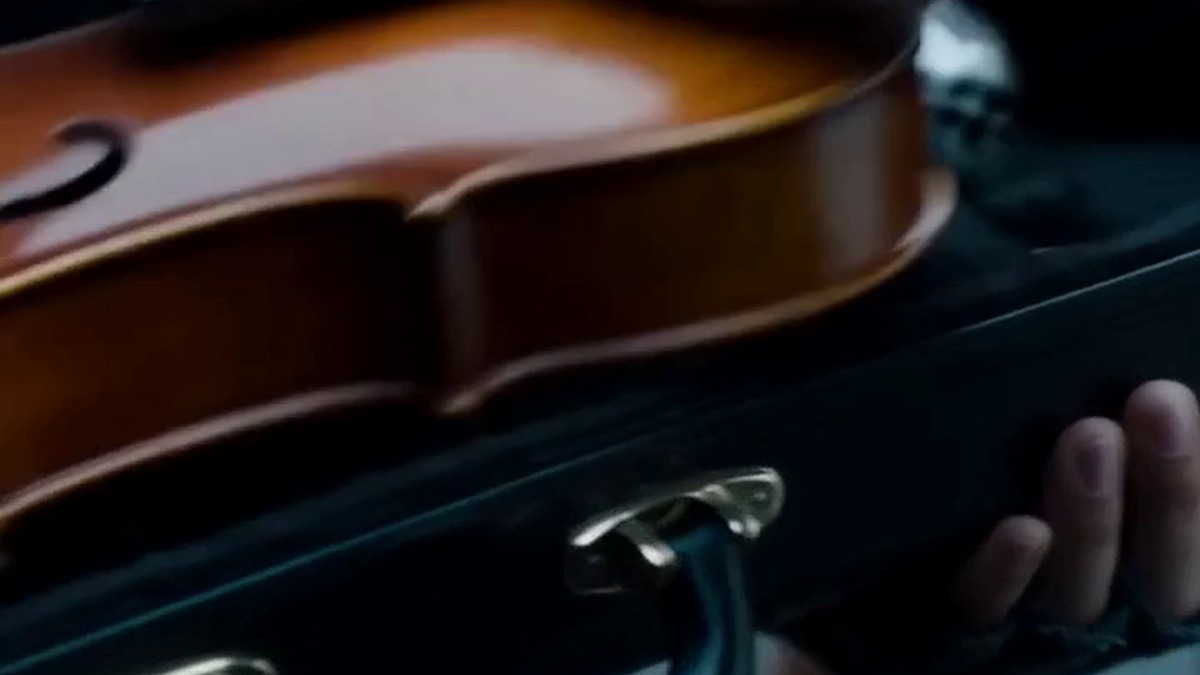
The security footage from that afternoon shows me laughing—not the jittery laugh of someone caught in a prank, but the clean, satisfied laugh of a girl who just watched the thing she hated fall apart. I didn’t know the camera was there. I thought we were invisible, three girls in the drizzle behind the loading dock, and I thought what I did was just a moment, over as soon as the fire flared.
But the fire ate more than the varnish on that handmade violin. It ate the thin, quiet place where I used to believe I was the one who deserved everything. And the camera—nobody told me it had been installed two weeks before, after a break-in at the prop room—kept what I did perfectly still.
I was seventeen, a senior at Oakrose Conservatory in Portland, and I had wanted the winter concert solo since my freshman year. My father, Grant Harrington, had made it clear that anything less than first chair was a failure, and I carried that weight the way my friends carried their instrument cases: as if it were normal. Chloe and Avery and I moved through the halls like we owned the lacquered floors, our bows worth more than some people’s cars, our parents on the donor wall near the auditorium.
Then Mira Ellis won the solo.
Mira was a scholarship student. She had a coat with one horn button that didn’t match the others—I noticed it two days before the concert, when I saw her in the corridor. Her violin case was taped at the corner. She practiced with gloves that had the fingertips cut off, in a practice room that wasn’t heated enough, and her father, a carpenter, had built her instrument from recycled maple instead of buying one. The violin’s scroll had a slight twist. It looked like something you’d find at a yard sale. And yet when she played at the audition, her sound was warmer than anything I had ever pulled from my twelve-thousand-dollar instrument. The committee chose her. I smiled at the announcement and felt something lock tight in my chest.
On the afternoon of the concert, I found her standing alone near the loading dock, waiting for a box of sheet music. The sky was the color of wet cement. A metal barrel stood a few feet away—the custodian burned old set flats and broken music stands in it, and the heat crackled through its grate. Chloe and Avery hung back near the dumpster, and I walked up to Mira and heard myself say, “Is that thing even allowed on a concert stage? It looks like a school project.” She didn’t answer. She just held the case tighter.
What came next happened so fast I almost convinced myself later that someone else was doing it. I grabbed the violin from her hands. She said, “Please, don’t,” and the word *please* caught on something in her throat, but I didn’t stop. I tossed the instrument toward the barrel. It hit the edge and slid inside, and for one ridiculous second I thought it would just sit there, unhurt, but the flames reached up through the scrap wood and the varnish began to blacken and peel. The smell hit me—rosin, burning maple, something sweet and awful. Mira sank onto the damp asphalt. I walked back toward the building, and Chloe and Avery’s nervous laughter trailed after me like a coat I couldn’t take off.
I had a solo to think about. I went to the dressing room and opened my own case, the spruce top immaculate, the bow hair perfectly tightened. The laugh from the loading dock still rang in my ears, but I pushed it down. I had learned young how to push things down.
Twenty minutes later, Dr. Helen Ashby’s assistant came to get me. Dr. Ashby was the director of the conservatory—a small, sharp-eyed woman in her fifties who had once played violin professionally. When I entered her office, the tablet on her desk was already open to a paused video. She didn’t ask me to sit. She just tapped the screen.
I watched myself. The angle was from above the delivery entrance. I saw my hand take the violin, saw Mira’s face, heard her *please* again—on the recording it sounded worse, more alone. And then the fire, and the laugh. My own face on the screen looking not angry, not even jealous, but satisfied. I felt something slide out from under me, the whole story I had told myself—that Mira didn’t deserve it, that her violin was a joke, that I was just being honest—evaporating in the space of that video.
Dr. Ashby stopped the playback and looked at me. “Was there a moment when you thought about stopping?”
I had no answer. There had been no moment.
Before the silence could stretch further, my father walked in. Dr. Ashby had called him separately. He carried a leather portfolio and the easy confidence of a man who had solved problems with his checkbook for twenty years. I could see him take in the tablet, my face, the director’s stillness, and then he did what he always did—he opened the portfolio and placed a check on the desk. “Whatever the cost to replace the instrument,” he said. “We’ll handle it privately. This was a childish mistake.”
Dr. Ashby didn’t touch the check. She pushed it back toward him with one finger. “Your daughter is removed from tonight’s concert,” she said. “She and the two other girls will face a disciplinary review. They will not return to the ensemble until they complete a restorative justice program that includes instrument repair and a supervised apology process. This school does not accept money offered to avoid accountability.”
My father’s jaw tightened. He took my arm and steered me out of the office. In the hallway, he said, “You couldn’t just wait your turn.” Then he walked toward the parking lot, and I was left with the distant sound of the orchestra warming up without me.
The program took four months. I was assigned to the school’s instrument repair workshop under a man named Mr. Kowalski, who had been fixing cellos since before I was born. He didn’t lecture me. He handed me broken bridges, warped bows, strings that had snapped and cut students’ fingers, and he told me to make them whole. I stripped old varnish and sanded tiny grooves. At first I hated the tedium; then I began to notice the smell of the workshop—pine dust, hide glue, tung oil—and something in me settled.
Three weeks in, Mr. Kowalski set a cardboard box on my bench. Inside were the charred remains of Mira’s violin. The body was gone, but the scroll had survived, and the four tuning pegs were still intact, blackened but not burned through. “Someone ought to do something with these,” he said, and walked away.
I didn’t know why I started working on them. I scraped off the ash, sanded each peg down to smooth ebony, rubbed in coat after coat of tung oil until they glowed. I found a piece of cedar in the woodshop and made a small box, lined it with felt, and fitted the pegs inside. My hands learned the weight of wood that had been shaped by someone else’s father.
During those months, I heard pieces of a story I’d been too busy to notice before. Mira now had a new violin—an amber-colored instrument that sang through the practice rooms. Dr. Ashby had given it to her personally. Someone told me it hadn’t been bought with school funds or donor money; Dr. Ashby had once been a scholarship student herself, forty years ago, and had missed an audition because classmates hid her loaned instrument. She’d sold her last valuable violin years later and started a fund for students who were where she had been. Mira was the first recipient.
I saw Mira once, in the corridor by the cafeteria. She had her new case, and she was holding bread wrapped in a napkin—I remembered that her younger brother often waited for her after school. She didn’t look at me; she didn’t need to.
On the day I was cleared to return to the ensemble, I asked Dr. Ashby if I could speak to Mira, with her present. She agreed. I found Mira in practice room seven, warming up with a scale that climbed and fell like breathing. Dr. Ashby stood near the door.
I set the wooden box on the music stand. “These were from your father’s violin,” I said. “I restored the tuning pegs. I… I can’t undo what I did.”
Mira opened the box. She took out one of the pegs and ran her thumb over the oiled surface. She didn’t cry, didn’t thank me. She met my eyes for three full seconds, then placed the peg back into the felt and closed the lid. She picked up her new violin, tucked it under her chin, and started to play a passage from the concerto I had lost.
I stood there a moment longer than I needed to, listening to a sound I no longer had any right to claim. Then I walked out into the hallway where the winter light was turning thin and gray through the high windows, and I could still hear her bow on the strings through the closed door.



Il contratto che Daniele non sapeva di aver già perso
Quella mattina ho fatto una cosa che Chiara non si aspettava: le ho lasciato il caffè pronto prima di uscire,...


Tėvo rankos sode Zarasų pakraštyje
Pro Petro Vilkausko namo langą matosi Zarasų ežeras — rudenį jis pilkas, kaip skalbinių vanduo. Gyventojai sako, kad spalį čia...


Жълто-зелената пътна чанта на Деми
Деси Вълчева остави телефона на плота с екрана надолу, сякаш искаше да му попречи да зазвъни отново. В кухнята на...


Nebylainis mokesčių skolininkas: ką Gabija man pasakė apie savo mamą ir pinigus
Mano uošvė sulaužė dantį pirmadienį, o ketvirtadienį jau nebeturėjau pinigų, kuriuos devynis metus siunčiau be klausimų. Taip tiksliai pasakyčiau, iš...


Dílna po Vladimírovi a mlčení, které Petr neslyšel
Ivana měla čtyřicet sedm let a dvacet tři z nich vedla účetnictví v autoservisu na Dobrovského ulici v Olomouci. Dílnu...


Il bagno delle nove e un quarto a Sabaudia
Faccio il bagnino allo stabilimento da sei stagioni, e di solito alle nove e un quarto del mattino la spiaggia...


Kréta a kapualjban
Pontosan két hete történt, szerda reggel, amikor hazaértem a műszakból, és ott álltam a lépcsőház előtt, mint egy idióta, mert...


Котката на Марин Петков
Тя драска, значи го мрази — така си мислех първите седмици. Казвам се Марин Петков, на четиридесет и три съм,...