
EN
The Loaf on the Floor

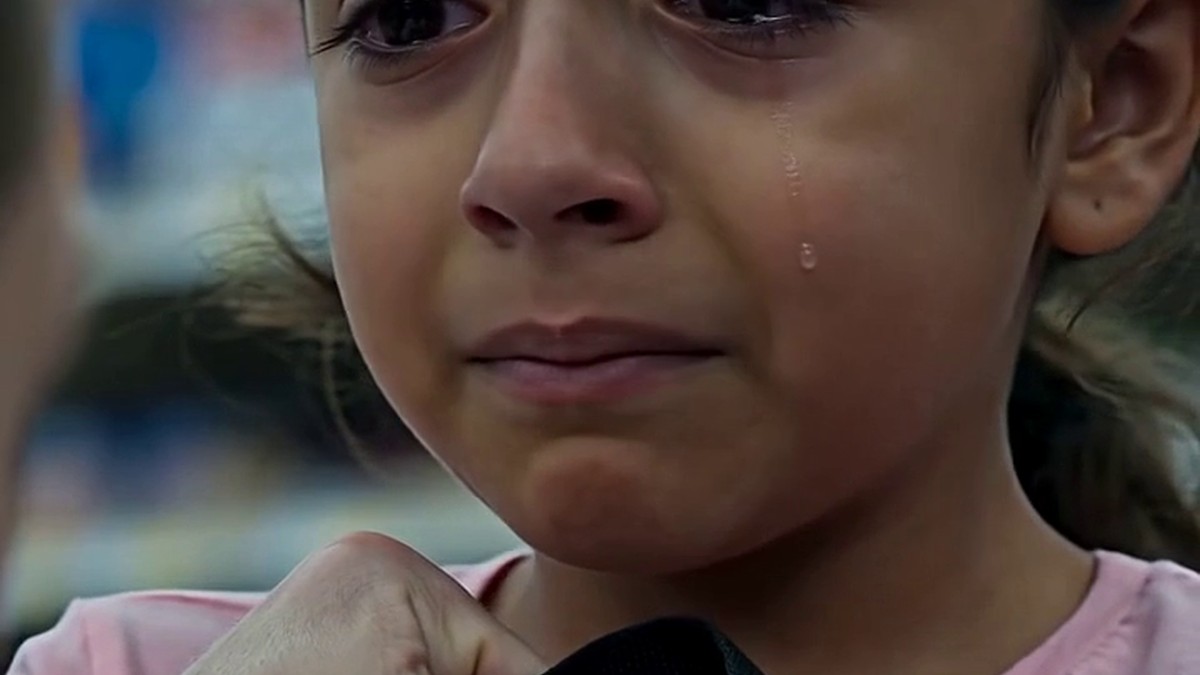
I work security at Mesa Market on Central Avenue, Albuquerque, New Mexico. Weekends, mostly. The store sits right off Route 66, but nobody calls it that anymore. Out back there's a tamale truck that shows up at noon, and the air smells like roasted green chile three days a week. That Saturday in July, the AC died around two-forty. By three, the place was an oven. The light over register four kept flickering, turned the potato chip rack into a strobe light. I was standing by the entrance, tugging at the collar of my uniform shirt, when the bread hit the floor.
A whole loaf, wrapped in blue, bounced once and slid under the candy rack. The sound was soft, but in that hot, dead air it landed like a brick. I turned. A girl, maybe eleven, stood by the end of the produce aisle in a T-shirt with a pink dinosaur on it. Her backpack was pressed against her chest like a life preserver. She didn't look at the bread. She looked at me. Then at the camera above my head.
I picked up the loaf. The wrapper had that label from the local bakery, three ninety-nine. I set it on the counter next to register two. Grant came out of the office, wiping sweat off his forehead with a paper towel. He's the manager. Tall, thin, brown hair, a name tag that said "Grant — Store Manager" in letters so small you'd need binoculars. He saw the girl, saw the bread, put two and two together.
He didn't yell. He knelt down, put his hands on his knees, and asked, "Is that your bread, sweetheart?" She didn't answer. She hugged the backpack tighter. Grant asked if she had anything else in there. She shook her head. Her knuckles were white. I could see the zipper pulling against the fabric.
I stepped closer. My name tag had a sticker on it, a little green alligator with googly eyes. My nephew stuck it there last Sunday. I tapped it. "Hey, I'm Ray. I'm security." I kept my voice low. "I'm not gonna bite. Just show us what's in the bag, and we'll figure it out."
The girl looked at me, then at Grant. She didn't cry. That's what got me. Kids who get caught stealing usually cry or lie. She did neither. She just stood there, holding the backpack like it was full of glass.
Grant's patience ran out. He straightened up, pulled his phone from his back pocket. "Okay. I'm calling the police." His thumb moved over the screen. The girl's breath caught. She fumbled with the zipper, yanked it open.
Grant looked inside. His hand stopped over the phone. He didn't move.
I stepped around to see. Inside the backpack were two things. A box of glucose test strips, the same brand we keep behind the pharmacy counter, forty-two dollars on the shelf. And a photograph of an old woman in a wheelchair, taken on a porch. On the back, in wobbly pencil letters: "Grandma needs bread. We have no money."
Grant's face changed. Not angry anymore. Something else. He put the phone back in his pocket. "Who's this?" he asked, holding up the photo.
"My grandma," the girl said. Her voice was dry, like she hadn't used it all day. "She has diabetes. The strips ran out. The bread is for her toast. She only eats this kind."
Grant stood there. The light over register four kept flashing, bounced off the photo. A customer pushed a cart by, the wheels squeaked. Grant didn't move.
Then he said, "Take me to her."
We went in my pickup. Grant's car was in the shop. The girl sat in the back, her backpack on her lap. The truck smelled like old cheese, that block of cheddar I forgot to take out of the cab last week. I rolled down the windows. Hot air blasted through.
The girl gave directions in small voice. Left on Carlisle, right on Lead, past the empty Kmart. We ended up at a trailer park on the east side, a place called San Pedro Village. Dirt yards, chain-link fences, a dead palm tree in the middle of the lot. Her trailer was number 14, up on cinder blocks. The skirting was dented in one corner, like someone had hit it with a car.
On the porch sat the grandma, in a wheelchair, her head tilted back, eyes closed. A bottle of water on the ground beside her, empty. The girl ran to her, touched her arm. "Grandma, I got the bread."
The old woman's eyes opened. She reached up, grabbed the girl's hand, moved it to her cheek. Didn't say a word.
Grant walked to the porch. He picked up a newspaper on the steps, last week's Albuquerque Journal. On the back, someone had drawn with markers: a stick figure girl with a backpack, a house, a sun with a face drawn in a circle. Under it, in the same wobbly letters: "Mia's Saturday Plan."
Grant turned the newspaper over. His jaw worked. He set it back down on the step, careful, like it was evidence.
Then he went inside. I followed. The trailer was small, hot, smelled like medicine and dust. A mattress on the floor in the corner, two plastic chairs, a card table. On the refrigerator, attached with a chili pepper magnet, was an eviction notice. The print was tiny. I couldn't read the words, but Grant could. He took it off, squinted at it. The debt was three hundred eighty dollars. Due in two days.
Grant didn't say anything. He took out his phone, opened his bank app, typed in the amount. Three eight zero. He hit transfer. Then he put the notice back on the fridge, took a pen from his pocket, and wrote on the paper: "Paid. Grant, Mesa Market."
The girl was standing in the doorway. She watched him. Her mouth opened a little. She didn't know what to say.
Grant turned to her. "The bread's on me. The strips too." He pointed at the notice. "That's so you don't have to leave."
She didn't thank him. She just looked at the fridge, then at her grandma, then back at Grant. Then she did something I won't forget. She reached into her backpack and took out the loaf of bread — the stolen one. She extended it to Grant. "You take it. Grandma and I will manage."
Grant blinked. Then he laughed, but not a mean laugh. A tired one. "Keep it. Eat it." He pushed the bread back toward her. She placed it on the table.
We left. Grant sat in the passenger seat, looking out the window at the dirt. I drove without talking. At the light on Central, he said, "My mom had diabetes. Before she died." Then he turned his face to the window again. I didn't ask more.
A week later, I saw the girl at the store. She was pushing her grandma in the wheelchair, a loaf of the same bread in the basket. The girl walked to the register, placed the bread on the belt, and paid with a five-dollar bill. She got change. She didn't look at me, didn't show any expression. She just took the receipt, folded it once, and put it in her pocket. Grant was at the service desk. He had a new sticker on his name tag, a red heart. He didn't say anything either.
I went back to my post. The light over register four had been fixed.



Il contratto che Daniele non sapeva di aver già perso
Quella mattina ho fatto una cosa che Chiara non si aspettava: le ho lasciato il caffè pronto prima di uscire,...


Tėvo rankos sode Zarasų pakraštyje
Pro Petro Vilkausko namo langą matosi Zarasų ežeras — rudenį jis pilkas, kaip skalbinių vanduo. Gyventojai sako, kad spalį čia...


Жълто-зелената пътна чанта на Деми
Деси Вълчева остави телефона на плота с екрана надолу, сякаш искаше да му попречи да зазвъни отново. В кухнята на...


Nebylainis mokesčių skolininkas: ką Gabija man pasakė apie savo mamą ir pinigus
Mano uošvė sulaužė dantį pirmadienį, o ketvirtadienį jau nebeturėjau pinigų, kuriuos devynis metus siunčiau be klausimų. Taip tiksliai pasakyčiau, iš...


Dílna po Vladimírovi a mlčení, které Petr neslyšel
Ivana měla čtyřicet sedm let a dvacet tři z nich vedla účetnictví v autoservisu na Dobrovského ulici v Olomouci. Dílnu...


Il bagno delle nove e un quarto a Sabaudia
Faccio il bagnino allo stabilimento da sei stagioni, e di solito alle nove e un quarto del mattino la spiaggia...


Kréta a kapualjban
Pontosan két hete történt, szerda reggel, amikor hazaértem a műszakból, és ott álltam a lépcsőház előtt, mint egy idióta, mert...


Котката на Марин Петков
Тя драска, значи го мрази — така си мислех първите седмици. Казвам се Марин Петков, на четиридесет и три съм,...