
EN
The Ninety-First Candle

Ruth Kowalski counted the candles twice before she trusted the number. Ninety-one. She'd bought two boxes at the Hy-Vee on Route 9 in Cedar Falls, Iowa, because one box only had seventy-five, and there was no way she was sticking a stray novelty "9" candle shaped like a number next to a fistful of birthday-cake pink ones. Her grandfather, Walt Bregman, didn't care much for fuss, but he cared about things being done right, and a mismatched cake was not done right.
The kitchen smelled like burnt sugar and coffee — she'd scorched the first batch of frosting trying to answer her sister's phone call at the same time, and now there was a black pan soaking in the sink that nobody was allowed to touch until she got to it. Through the window over the sink she could see the Hendersons' garage sale signs still zip-tied to the stop sign from Saturday, flapping a little in the wind. Somewhere down the block a dog she didn't recognize was barking at nothing.
Ruth was thirty-four, a dental hygienist at a practice off University Avenue, and she was not, by nature, a sentimental person. She didn't cry at commercials. She'd sat through two divorces — her parents', then her own — without much more than a clenched jaw. But when she thought about carrying that cake out to the folding table in Walt's backyard tonight, she felt her throat tighten in a way she didn't have a name for.
Because Walt wasn't just her grandfather. He was the reason she'd had a childhood at all.
Her father, Dennis, had been a mostly absent name on a court document by the time Ruth was six — in and out of the house in Waterloo, then just out, chasing a job in Tulsa that turned into another job in Reno that turned into silence. Her mother worked doubles at the hospital laundry service to keep the lights on, and it was Walt — her mother's father, a retired lineman for the power company with hands like weathered leather gloves — who showed up. Every single time.
He was the one who taught her to change a tire on the shoulder of Highway 20 when she was sixteen, kneeling next to her in the gravel in his work boots, saying "again" every time she loosened the lug nuts wrong, until she got it right without thinking. He was the one who sat in the metal folding chairs at every band concert, every softball game, clapping loud enough that she could pick his voice out of the crowd. He co-signed her first car loan — a used Chevy Cavalier, four thousand two hundred dollars, paid off in eleven months because she didn't want to owe him a day longer than she had to.
When she'd finally left her husband three years ago, it was Walt's guest room she slept in for six weeks, on a mattress that dipped in the middle, with his old service dog Biscuit snoring on the floor beside the bed. He never once asked her to explain herself. He just made coffee every morning and left it on the counter with a mug already poured.
Now Walt was ninety-one, and the last two years had not been kind. A stroke the previous spring had taken some of the strength out of his left hand, so buttoning a shirt took him twenty minutes some mornings. He'd stopped driving after Ruth found a dent in the mailbox post that he swore had "always been there." And six months ago, his son — Ruth's uncle Carl — had sat him down at his own kitchen table and told him it might be time to "simplify things," which turned out to mean signing over power of attorney and, not incidentally, the deed to the little brick ranch house on Ellsworth Street that Walt had owned outright since 1987.
Ruth hadn't known about the deed until last week, when she'd stopped by to drop off his mail and found a manila envelope from a title company sitting open on the table, Carl's name typed in as sole owner, contingent on Walt's death — except the effective date on the transfer was already past. It wasn't a will. It was a done deal.
She hadn't said anything to Walt that day. She'd photographed every page with her phone, said something about the frosting she still needed to buy, and left before her hands started shaking too badly to hold the steering wheel straight.
Now it was seven in the evening, and the backyard on Ellsworth Street was strung with the same string lights Walt had put up every summer since Ruth could remember, half of them burned out, nobody willing to throw out a strand of lights that still worked in some places. Her cousins were setting up the folding table. Her mother was arguing quietly with Aunt Denise about whether the potato salad needed more mustard. And Carl was standing by the grill in a golf shirt, flipping burgers like a man who had nothing on his conscience at all.
Ruth carried the cake out at eight, all ninety-one candles lit in a nervous, uneven blaze, and the whole yard sang off-key while Walt sat in his lawn chair with Biscuit's replacement, a scruffy terrier mix named Copper, asleep against his shoe. He made a joke about the fire department getting called, and everybody laughed, and for a second Ruth almost let it go. Almost decided that tonight wasn't the night.
But then Carl leaned over Walt's shoulder to help him blow out a stray candle near the edge, and said, loud enough for half the yard to hear, "Don't strain yourself, Dad, you got people to take care of that now" — and something in the offhand ownership of that sentence, *people to take care of that now*, made the decision for her.
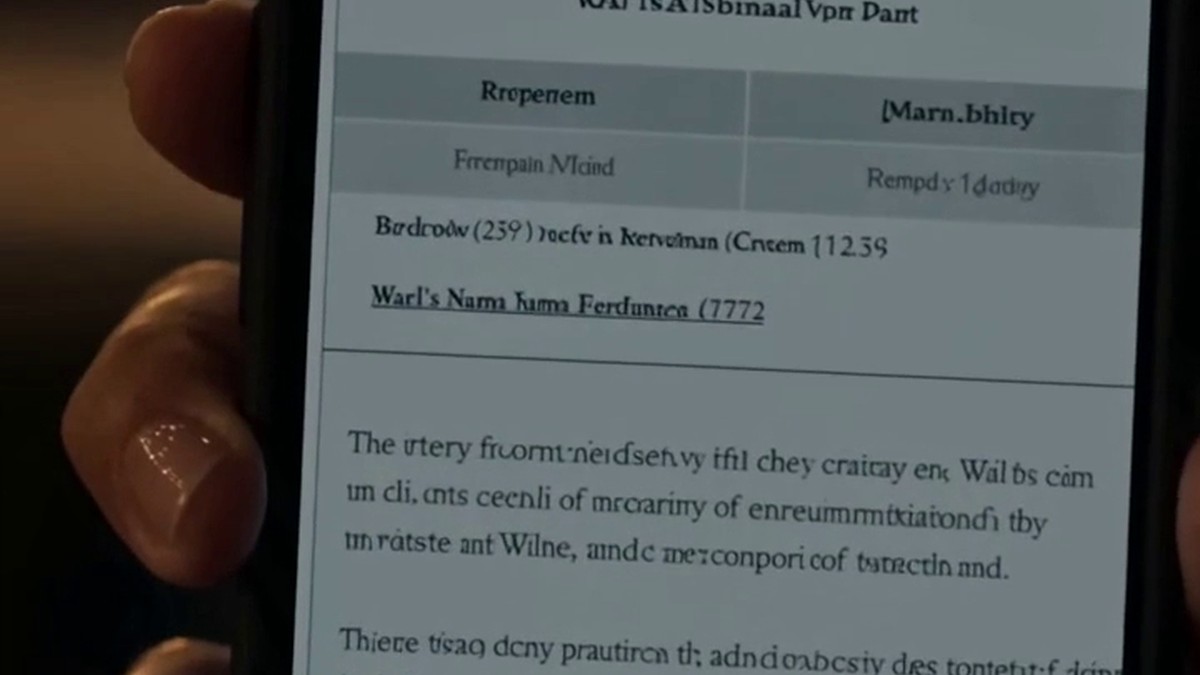
She waited until the cake was cut and the paper plates were going around. Then she walked over to where Carl stood by the cooler, pulled her phone out of her back pocket, and held the screen up so only he could see it — the title company letterhead, the transfer date, Carl's name typed under "grantee."
"We need to talk about this before Dad's lawyer does," she said. Not loud. Just clear enough that Carl's face changed color anyway.
"Ruth, that's not — Dad wanted —"
"Then Dad can tell me that himself." She looked past him, toward the lawn chair, where Walt was watching them over the rim of a plastic cup, his eyes sharper than his hands had been in a year.
They walked over together. Ruth knelt down next to the chair the way she used to kneel next to him at the roadside all those years ago, and she showed him the same photos on the phone screen, slow enough for him to read every line. She watched his jaw work the way it used to when a lug nut wouldn't budge.
"I signed papers," Walt said finally. "Carl told me it was for taxes."
"It's not for taxes, Grandpa. It's the deed. The whole house."
The yard had gone quiet around them, the way a room does when it senses something real happening in the corner of it. Carl started to say something about doing what was best, and Walt held up his good hand — just lifted it an inch off the arm of the chair — and Carl stopped talking.
"Get me Denise's boy," Walt said. "The one that does the real estate closings."
Ruth's cousin Marcus, twenty-nine and three years into a paralegal job at a firm downtown, was already halfway across the yard with a burger in his hand, because he'd been listening the whole time, the way everyone eventually was. Within the hour, sitting at the same kitchen table where Carl had first laid out his "simplify things" pitch, Walt signed a notarized revocation of the power of attorney — Marcus had a blank form saved on his laptop from a closing that morning, and a mobile notary two streets over who owed him a favor and was willing to drive over on a Saturday night for a case of beer. The house transfer itself would take a lawyer and a few weeks to formally undo, but the revocation stopped Carl cold that night — no more authority to sign, spend, or move a single thing in Walt's name.
Carl didn't stay for the rest of the cake. He said something about an early morning and left with his golf shirt still smelling like the grill, and nobody in the yard tried very hard to talk him into staying.
Later, after most everyone had gone home and the paper plates were bagged up by the back step, Ruth sat with Walt on the porch, Copper curled between their feet, the string lights buzzing faintly overhead. Down the street, somebody's sprinkler kicked on, ticking against a fence in the dark.
"Ninety-one candles," Walt said, "and I still can't get anything past you."
"You taught me that," Ruth said. "The lug nuts. Remember?"
He didn't answer. He just reached over, without a word, and rested his hand — the good one — on top of hers on the arm of the chair, and they sat like that until the sprinkler shut off.



Il contratto che Daniele non sapeva di aver già perso
Quella mattina ho fatto una cosa che Chiara non si aspettava: le ho lasciato il caffè pronto prima di uscire,...


Tėvo rankos sode Zarasų pakraštyje
Pro Petro Vilkausko namo langą matosi Zarasų ežeras — rudenį jis pilkas, kaip skalbinių vanduo. Gyventojai sako, kad spalį čia...


Жълто-зелената пътна чанта на Деми
Деси Вълчева остави телефона на плота с екрана надолу, сякаш искаше да му попречи да зазвъни отново. В кухнята на...


Nebylainis mokesčių skolininkas: ką Gabija man pasakė apie savo mamą ir pinigus
Mano uošvė sulaužė dantį pirmadienį, o ketvirtadienį jau nebeturėjau pinigų, kuriuos devynis metus siunčiau be klausimų. Taip tiksliai pasakyčiau, iš...


Dílna po Vladimírovi a mlčení, které Petr neslyšel
Ivana měla čtyřicet sedm let a dvacet tři z nich vedla účetnictví v autoservisu na Dobrovského ulici v Olomouci. Dílnu...


Il bagno delle nove e un quarto a Sabaudia
Faccio il bagnino allo stabilimento da sei stagioni, e di solito alle nove e un quarto del mattino la spiaggia...


Kréta a kapualjban
Pontosan két hete történt, szerda reggel, amikor hazaértem a műszakból, és ott álltam a lépcsőház előtt, mint egy idióta, mert...


Котката на Марин Петков
Тя драска, значи го мрази — така си мислех първите седмици. Казвам се Марин Петков, на четиридесет и три съм,...