
EN
Silence Over the Rio Grande

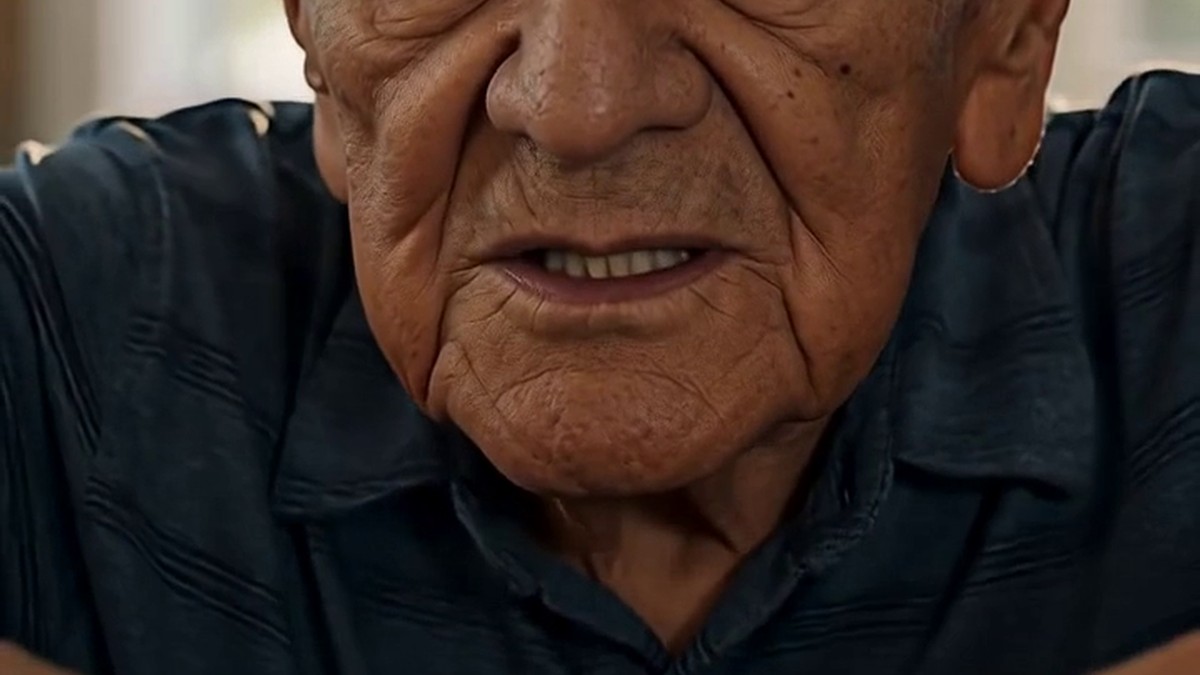
The name on the manifest wasn't mine. Not really. It was my mother's maiden name—Reyes—stamped on papers we'd paid a man in Ciudad Juárez to arrange, because the last name my father had carried since Guadalajara had already caused us trouble at two checkpoints that spring of 1943. I was nineteen, and I crossed the border into El Paso as Marco Reyes, when I had been born Marco Alcántara.
I tell people now, when they ask why an old man keeps a shoebox of ration cards on his nightstand, that a name is just a coat you put on to survive the weather. You take it off later. But you remember every button.
My father, Ernesto Alcántara, ran two movie houses in Guadalajara—the Cine Bolívar and the Cine Roma—and had them wired for sound before most theaters in Jalisco even bothered. He built us a house on Avenida Chapultepec with a flat roof and glass block windows, the kind of place neighbors called "the modern one" like it was an insult. He was gone from six in the morning until past midnight most days, and I knew him better from the movie posters he brought home than from conversations. We had a housekeeper named Consuelo who raised me more than either parent did. Summers, we went to Chapala, and once, before everything changed, to Acapulco, where my twin sister Rosa and I learned to spot dolphins from the hotel balcony.
Rosa and I were born four minutes apart in November 1923. We didn't look alike—she took after our mother, dark-eyed and quick to laugh—but we thought alike, which was worse, because we got into the same kinds of trouble at the same time.
My father wasn't a religious man, but he was proud, loudly and specifically, of being the grandson of a man who'd fled Spain during a wave of anti-Basque persecution in the 1890s. That pride became a liability once the war started swallowing Europe and rumors crossed the Atlantic about who got stopped, questioned, and disappeared at borders depending on what name was stitched into your coat lining. My father wasn't Jewish, but there had been a mix-up with a distant cousin's paperwork in 1940—a bureaucratic tangle involving a shared surname and a customs official in Nuevo Laredo who decided we matched a list he'd been handed. It got my father blacklisted from importing film reels for eight months. That was enough. He decided the family name was a liability at any border crossing, for any reason, and he wasn't going to explain himself to a man with a stamp.
My older sister Inés left for Los Angeles first, in 1937, sponsored by a cousin who worked in the wardrobe department at a studio lot. My mother, Rosa, and I stayed behind two more years, waiting on paperwork that kept sliding sideways every time we got close. We finally got out in the spring of 1943, not by ship—there wasn't a ship left that felt safe—but by bus and then by a hired truck bed, sitting on top of two trunks of my father's film canisters, north through Chihuahua toward the crossing at El Paso.
The bus broke down outside Jiménez. We sat on the shoulder of the highway for six hours in the heat, sharing three oranges between four people, while my mother recited the Lord's Prayer under her breath like a metronome keeping the whole family from coming apart. When another bus finally came, it was already full, and the driver let us stand in the aisle the last hundred miles, gripping the seat backs, my sister's hand locked around my wrist the entire way like she thought I might fall out the door.
At the border, an officer looked at the papers stamped "Marco Reyes" and asked me my mother's maiden name. I said it correctly, because it was true, and that was the whole secret of a good lie—keep as much of it real as you can. He waved us through. My mother didn't cry until we were three blocks past the checkpoint, standing outside a diner on Texas Street where the smell of frying onions hit us before anything else did, and she put her hand flat against the brick wall like she needed it to hold her up.
We settled first in El Paso, then followed my father's old business contacts to Los Angeles, where he'd already scraped together enough capital to buy into a small distribution outfit near Sunset Boulevard. I turned nineteen that November and, six weeks later, walked into a recruiting office and enlisted, still carrying the name Reyes on my draft card because nobody had bothered to correct it and, frankly, neither had I. Some habits from running keep running even after the danger's gone.
I trained at Fort Benning, then shipped out with the 90th Infantry Division. We landed at Utah Beach in the second wave, not Omaha—I want to be precise about this, because men who weren't there get sloppy with the geography and it does a disservice to the ones who were. I carried a BAR through the hedgerows of Normandy, through towns whose names I still say out loud sometimes just to prove to myself I remember them: Périers, Avranches, the slow grinding push toward the German border that took most of a year and left me deafer in one ear than I ever admitted to a medic.
In April 1945, my unit reached a camp outside Weimar. I won't describe what we found there in the kind of detail that turns it into spectacle. I'll say this: I had grown up thinking a name could protect you or expose you, depending on who was reading it and what list they were holding. At that gate, I understood the idea went further than I'd let myself imagine. A name, a number tattooed on a forearm, a category stamped on a card—these things had decided, methodically, over years, who got to keep breathing. I was twenty-one years old and I sat down on the running board of a jeep and did not get up for a long time.
I came home to Los Angeles in the winter of 1945 a different weight than I'd left, in every sense. My father had died of a heart attack that October, three months before I made it back, and I never got to tell him I understood, finally, why he'd made us all carry a different name across that border. Rosa met me at the train station alone—our mother couldn't manage the crowd—and she didn't say anything for the whole drive home. She just kept one hand on the wheel and one hand reaching over every few minutes to touch my sleeve, checking, I think, that I was actually sitting there.
I went into the film business because it was the only trade I'd grown up watching, working first as a script reader, then a production assistant, then, by the late 1950s, a junior producer at a studio that specialized in exactly the kind of glossy, escapist pictures that men my age wanted after what we'd seen. I spent three years in the early sixties on the production side of a spy franchise that turned into one of the most successful in American film history, and another stretch helping shepherd a bumbling-detective comedy series that made audiences laugh at a kind of chaos that had nothing to do with the chaos I actually remembered.
I never changed my name back. Reyes stayed on my driver's license, my studio contracts, my son's birth certificate. Somewhere along the way it stopped being a disguise and became, simply, mine—the name that got the family across a river and a war and out the other side.
My mother lived until 1979, in a small house in Sherman Oaks with a lemon tree in the backyard that dropped more fruit than she could ever use, so she left crates of it on the porches of neighbors she'd never formally met. Rosa stayed in Los Angeles too, three miles from me for the rest of her life, and every November 4th, without fail, she called at exactly the hour we were born and said nothing for the first ten seconds, just breathing into the receiver so I'd know it was her before she said a word. That was our whole ritual. No card, no cake. Just the silence, and then her voice.
The lemon tree is gone now—the house sold twice since my mother's time—but I planted a smaller one behind my own place in Studio City twenty years ago, mostly because I wanted something in the yard that remembered her without my having to explain it to anyone who visited. I'm a hundred and three next November, if I make it, which is not a thing I take for granted and never have, not since a gate outside Weimar taught me at twenty-one exactly how thin the membrane is between a life and a number on a list.
I still have the shoebox. Ration cards, a photograph of the Cine Bolívar marquee the week it reopened after the war, a border stamp with the name Reyes pressed into a paper that's gone soft and brown at the folds. My daughter asked me once if I wanted it buried with me. I told her no. I told her I wanted it left on the kitchen table where somebody would eventually have to ask about it, because a name that saved a family shouldn't get to disappear quietly into a box in the ground. It should keep doing what it was built to do—get somebody, one more time, safely to the other side of the question.



Dceřina bouda u Orlíku
Jmenuju se Radek Vomáčka, je mi padesát čtyři a nejradši bych vám řekl, že žádná z těch šesti ztracených dětí...


Il nonno che ha pagato i miei debiti con la pensione e non me l’ha mai detto
Mi chiamo Enzo Ricci, ho diciannove anni e faccio il terzo anno all'istituto tecnico di Pordenone, sezione meccanica. Se oggi...


Прежда, която не лъже
Инвентарният номер беше четиристотин шейсет лева — цялото ѝ спестяване, което остана след погребението на Румен. Яна Бакалова стоеше в...


Non ti dico niente io, racconto solo quello che ho visto da vicino
Mi chiamo Edoardo Ferretti, ho trentaquattro anni e per sei anni sono stato il direttore operativo della Lindqvist Energia, una...


Pes ze Smíchovského hřbitova
Každou neděli ráno jsem jezdila tramvají číslo 12 až na konečnou a odtamtud pěšky na hřbitov, s kyticí žlutých sedmikrásek...


Il contratto che Daniele non sapeva di aver già perso
Quella mattina ho fatto una cosa che Chiara non si aspettava: le ho lasciato il caffè pronto prima di uscire,...


Tėvo rankos sode Zarasų pakraštyje
Pro Petro Vilkausko namo langą matosi Zarasų ežeras — rudenį jis pilkas, kaip skalbinių vanduo. Gyventojai sako, kad spalį čia...


Жълто-зелената пътна чанта на Деми
Деси Вълчева остави телефона на плота с екрана надолу, сякаш искаше да му попречи да зазвъни отново. В кухнята на...