
EN
The Garnet Ring Went Back in the Box

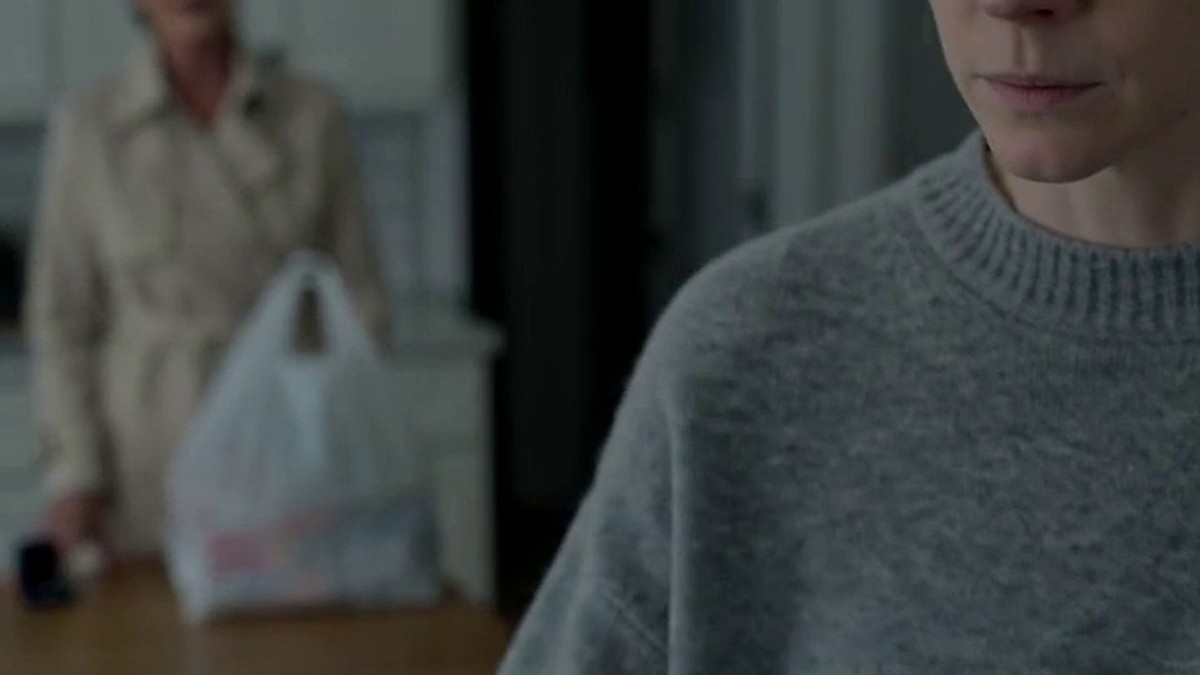
The doorbell rang at exactly noon on Saturday. Two short jabs, same rhythm she’d heard for six years. I stood in the hallway of my rented two-bedroom in Sacramento, wiping my hands on a dish towel, and didn’t move for a solid ten seconds.
The box was on the kitchen table behind me. Navy blue velvet, corners worn white, the way fabric goes when it’s been opened a thousand times.
I’d found it Wednesday night. Top shelf of the hall closet, behind the winter blankets I hadn’t touched since February. Inside was everything. The gold chain with the teardrop pendant. The sapphire studs. The garnet ring that Frank’s mother, Dolores, had slid onto my finger at the reception, in front of a hundred and forty people, like she was crowning me.
And the bracelet. Wide, heavy, twisted rope pattern. I’d worn it exactly twice in six years: the wedding and Maya’s christening.
The doorbell again. Two more jabs.
I opened the door.
Dolores stood there in a cream trench coat with brass buttons, hair set, lipstick fresh. Sixty-eight years old and she looked sixty. Straight back, sharp chin, eyebrows penciled with the precision of a draftsman. She had a plastic grocery bag in one hand.
“Karen,” she said, not waiting for an invitation, stepping past me and placing her pumps neatly against the wall, toes pointing at the door. “Vitamins for Maya. And tights. The good ones, not that Target garbage.”
She walked to the kitchen like she owned the place. She didn’t. The apartment was mine, leased last month after I moved out of Frank’s condo on 19th Street. But Dolores had never needed an invitation.
“Tea?” I asked.
“Green, if you have the loose kind. Tea bags taste like dust.”
I filled the kettle. Dolores sat at my kitchen table, hands folded in front of her, and I noticed she’d lost weight. The collar of her blouse gaped at the neck. Or maybe I was just seeing her differently now.
“Karen,” she said, no preamble. “I’m going to be direct. The gold I gave you at the wedding. The chain, the earrings, the garnet ring, the bracelet. I want it back.”
I didn’t react. I set the kettle on the burner and turned to face her.
“Those are family pieces,” she said, voice level, businesslike. “They belong in this family. My mother’s bracelet. Earrings from my first real paycheck. The ring — my father brought it back from Prague in 1974. Since the marriage is over, the pieces should return.”
I let the silence sit there. Outside the kitchen window, the neighbor’s German shepherd barked twice at a squirrel. The clock on the stove read 12:07. I had a headache building behind my left eye.
I thought about the gold. I didn’t want it. I’d never wanted it. I wasn’t a gold person. I was a silver person — one pair of small hoop earrings I’d bought myself at a farmer’s market in Davis seven years ago. The chain had gone in the box after a month. The ring didn’t match a single thing I owned. The bracelet was so heavy it left marks on my wrist.
But it wasn’t about the gold.
It was about the way she said it. *Since the marriage is over.* Like I’d been a storage unit. Like six years of driving her to physical therapy every Tuesday, of hosting Thanksgiving at my table because Frank’s condo was too small, of sitting with her in Urgent Care when she slipped on ice — all of it was just rent. And the lease was up.
“Dolores,” I said. “You remember when you put that ring on my finger?”
Her jaw tightened, just barely.
“At the reception. You said, ‘This is for you, Karen. Wear it in good health. Now you’re one of us.’”
“Circumstances change,” she said.
“They do.”
I could have argued. I could have reminded her that in California, gifts given in contemplation of marriage are revocable — I’d looked it up, stayed up till two a.m. reading family law forums. I could have told her I’d already called an attorney and knew exactly what my rights were. The gold was mine by law, and we both knew it.
But that wasn’t the point either.
I walked out of the kitchen, down the short hallway, opened the closet. The box was exactly where I’d left it. I carried it back and set it on the table in front of her.
“Take it,” I said.
She looked at the box. Then at me. Then back at the box.
“Is everything here?”
“Everything. The chain, the earrings, the ring, the bracelet. Count it if you want.”
She lifted the lid. Her fingers hovered over the bracelet — her mother’s bracelet — and for one second her whole face changed. The mask slipped. She was just an old woman missing her mother. Then the second passed, and the lid snapped shut.
“I expected this to be harder,” she said.
“Why?”
“Because it usually is.”
I sat down across from her. “Dolores, I don’t want your gold. It was never mine. I was just holding it for you. But I need to tell you something. Not about the gold.”
She didn’t interrupt. Her hands were still, folded on top of the box.
“For six years, I was your daughter-in-law,” I said. “I drove you to every appointment. I made that lemon ricotta cake you like for every birthday. I listened to you talk about the Waltons from church and how everyone should be more like them. I did it because I thought we were family. And in family, that’s what you do.”
The kettle started to shriek. I got up, turned off the burner, poured the water into the teapot. The steam fogged the window for a second.
“But here’s what I noticed,” I said, sitting back down. “In six years, you never once asked me how I was. Not once. Not ‘how are you doing, Karen.’ Not ‘you look tired, can I help.’ Not a single question about me. Not as a person. As the *function* — Frank’s wife, Maya’s mother. That you asked about. But me? Never.”
Dolores’s right hand moved to her left ring finger. She twisted the wedding band there — plain gold, the one from her dead husband. A habit. I’d seen it a hundred times.
“So here’s your gold,” I said. “I’m not bargaining. I don’t want something that was given to me with conditions. A gift you can take back isn’t a gift. It’s a deposit. And I’m returning the deposit, because the transaction is closed.”
She opened her mouth. Closed it.
“You…” she started.
“Karen,” I said. “My name is Karen.”
The kitchen went quiet. Maya was at a friend’s house — I’d arranged it two days ago, knowing how this would go — so there was no noise from the back room. Just the refrigerator humming and the drip of the faucet.
Dolores stared at a spot on the wall behind me. The wallpaper in this apartment was ugly — beige with a faded floral pattern — but she was looking at it like it held answers.
“My Harold never asked me how I was feeling either,” she said, so quietly I almost missed it.
I waited.
“Forty-one years. Not once.” She turned to face me. Her eyes were dry but red at the rims. “I thought that was normal. That marriage was just… you do your job, and nobody bothers you. He didn’t hit me. He didn’t drink. He brought home a paycheck every Friday. That was a good husband.”
She laughed, but it came out wrong. Like a cough.
“My mother told me that. ‘Dolores, as long as he doesn’t drink or hit you, you can live with the rest.’ So I lived with the rest. Forty-one years. And then Harold died, and I was alone with my mother’s advice and my mother’s bracelet, and I realized I’d never once asked myself what *I* wanted.”
She twisted the ring again. Harder now.
“I didn’t know how to ask you,” she said. “How to ask anyone. Demanding is easier. When you demand, you don’t have to be afraid someone will say no.”
I watched her. The teapot was getting cold between us.
“The gold,” she said, not looking at me. “I don’t want it back.”
“Take it anyway,” I said.
“Why?”
“Because I don’t want any reminders that I was part of something on credit. I need a clean start.”
She was quiet for a long time. Then she reached into her purse and pulled out a folded piece of paper. She smoothed it on the table — same motion she used to smooth napkins at family dinners.
“I brought the receipts,” she said, not looking at me. “From 1989. The bracelet. I was going to show them to you. Prove the pieces were worth more than you thought. I was ready for a fight.”
She pushed the paper toward me. It was yellowed at the edges, folded so many times the creases were white. I didn’t touch it.
“I was ready for a negotiation. For screaming. For lawyers.” Her voice cracked. “I wasn’t ready for you to just… give it back.”
The timer on the stove beeped — I’d set it for the chicken I was thawing and forgotten. I stood up, turned it off, and stayed at the counter with my back to her.
When I turned around, Dolores was crying.
Not the way you see on television — no sobs, no dramatic wiping. Just silent tears running down through her foundation, leaving streaks. Her hands were in her lap, and her shoulders were shaking.
I didn’t go to her. I wanted to. But I didn’t.
I sat back down and waited.
“Karen,” she said, and the name came out hoarse. “Karen. I’m sorry. I’m sorry for all of it. For the way I treated you. For never asking.” She took a breath. “For teaching you that love has conditions. That’s what my mother taught me. And I passed it on to you. And to Frank. And I’m sorry.”
I was not prepared for the apology. I’d walked into that kitchen with a box and a speech, and now I was sitting across from this woman I’d resented for six years, watching her face collapse, and I didn’t know what to do with my hands.
So I did the only thing that made sense. I picked up the receipts and tore them in half. Once, twice, four times, until the pieces were the size of confetti. I dropped them in the trash under the sink.
“The transaction is closed,” I said. Not to hurt her. To close it. For both of us.
Dolores watched me tear the paper. When I dropped the pieces in the trash, she let out a breath I think she’d been holding since she walked through the door.
“I’d like to still see Maya,” she said, her voice small.
“Of course you’ll see Maya. The divorce is between me and Frank. Not you and her.”
She nodded, then reached into her bag again. This time she pulled out a small velvet pouch — not the blue box, a different one, green, with a drawstring.
“This is for Maya,” she said, pushing it across the table. “Not now. When she’s older. When she can understand.”
I didn’t open it. I already knew what was inside.
“It’s the bracelet,” I said.
“It’s the bracelet. I want it to stay in the family, but not as a debt. Not as a condition.” She swallowed. “As a gift. For real this time.”
I looked at the green pouch. Then at Dolores. Her foundation was ruined, and her lips had no color left on them except a thin line of red at the edges. She looked older than sixty-eight. She looked her age.
But for the first time since I’d known her, she also looked honest.
“It’ll wait in the bank box,” I said. “Until Maya’s ready.”
Dolores nodded. She picked up the blue velvet box from the table, opened it one more time, closed it. Then she stood.
“Can I come next Saturday?” she asked. “I’ll bake that lemon ricotta cake. Maya likes it.”
“She does.”
“Can I bring it at noon?”
“Noon works.”
She put on her coat, buttoned it slowly, and turned at the hallway. “Karen,” she said.
“Yes?”
“How are you feeling? Really.”
The question hung in the air. Six years. Six years, and it took six minutes of tears at my kitchen table to get that question.
“Tired,” I said. “But okay.”
She nodded, once. Then she left, closing the door gently behind her.
I stood in the hallway for a long time. Then I went to the kitchen and picked up the green pouch. The bracelet inside was heavy, solid, hers. Her mother’s. And now Maya’s, someday. There was no receipt in the pouch. No condition. Just gold, and a woman who had started learning, at sixty-eight, how to give without taking back.
I put the pouch in the top drawer of my dresser, under my winter socks.
That Sunday, my cousin Marcus called. He’d heard — Frank’s sister relays everything.
“Karen, you seriously gave back the gold? Do you know what that bracelet is worth? My buddy at a pawnshop in Folsom said easy three grand.”
“I know.”
“So why?”
I was standing at my bedroom window, watching the crows fight over something in the parking lot below. “Because it was never mine to keep, Marcus. It was always conditional. I’m done with conditional.”
He was quiet for a second. “Frank’s mother told her sister that you were smarter than the whole family.”
“I’m not smarter,” I said. “I’m just done being in debt for things I never asked for.”
The line went quiet, then he said, “You sound different.”
“I feel different,” I said. And I did.
That evening, I walked to the drugstore on the corner and bought a pair of silver earrings. Small, with tiny moonstones. Twenty-one dollars with tax. I put them on in the bathroom mirror.
They matched the hoop earrings I already had. They matched me.
Maya came home from her friend’s house, took one look at me, and said, “Mom, you look pretty. Are those new?”
“They are,” I said.
“Where’d you get them?”
“Target.”
She laughed. “You never buy yourself anything nice.”
“I’m starting,” I said.
The next Saturday, Dolores showed up at noon exactly. She brought the lemon ricotta cake in a glass dish with a bead pattern around the rim. She stayed for two hours. Sat on the floor with Maya and colored. Asked me twice how I was feeling — and didn’t wait for the answer.
When she left, I stood at the door and watched her walk to her car. A 2014 Camry, the same car she’d had forever. She moved slower now. But she moved.
That night, before bed, I opened the hall closet. The top shelf was empty where the blue box had been. Just blank space, and the smell of cedar from the wood.
I closed the door, leaned my forehead against it for a second, and listened to Maya breathing in the next room. The apartment was quiet, but it wasn’t the heavy quiet I’d felt before. It was a lighter quiet. A cleaner one.
I don’t know what happens next with Dolores. I don’t know if she’ll ever be warm, or if the lemon cake visit was a one-time thing, or if she’ll spiral back into demands. But I know this: the gold is gone. The receipts are in the trash. And for the first time in six years, I don’t owe anyone anything.
In the morning, I’ll take the green pouch to the bank. Maya won’t understand it for years. That’s okay. It’ll be there when she does — not as a debt, but as a gift from her grandmother, given with no strings and no conditions.
And I’ll be here too. On my own terms. In my own silver. With nothing in the closet but space.



Dort, kde slunce vypaluje louky u Blatné
Grilujeme, kde slunce vypaluje louky u Blatné Vypadal jsem jako idiot, s tím kleštěmi na uhlí v ruce, zatímco Hanka...


Le pendentif qui s’est ouvert devant tous les invités
Sur le front de mer de Biarritz, face à une plage où les vagues brisent la dernière lumière du jour,...


Pokoj, kde čeká kufr
Jmenuju se Marek Vorel, je mi čtyřicet dva a dvanáct let jezdím jako údržbář výtahů po celé Praze. Ten den...


Matka se mu ohlásila ve čtyřicíti — a to, o co ho poprosila, ho ohromilo
Matka se mu ohlásila ve čtyřiceti — a to, o co ho poprosila, ho ohromilo Nevím, proč právě teď. Možná...


Dvaadvacetiměsíční poznámka, která mě málem udržela ve svazku, který neměl žít
Moje advokátka mi zavolala v sedm ráno, tři týdny po tom, co jsem odešla od manžela. Jmenovala se Jitka Marešová...


Pavel a plot u Chomutova
Jmenuju se Pavel, mám třicet osm a vlastním autoservis na okraji Chomutova, kousek od řeky Chomutovky. S Danou jsme manželé...


Svatba v Kroměříži
Catering jsem dělala přes patnáct let a myslela jsem si, že mě už nic nepřekvapí. Pak přišla ta zakázka na...


Le bracelet de la salle 114
Le tapis rouge du Grand Rex scintillait sous les flashs. Ce soir-là, Clémence Auvray présentait son dernier film, et les...