
EN
Riverfront Reckoning

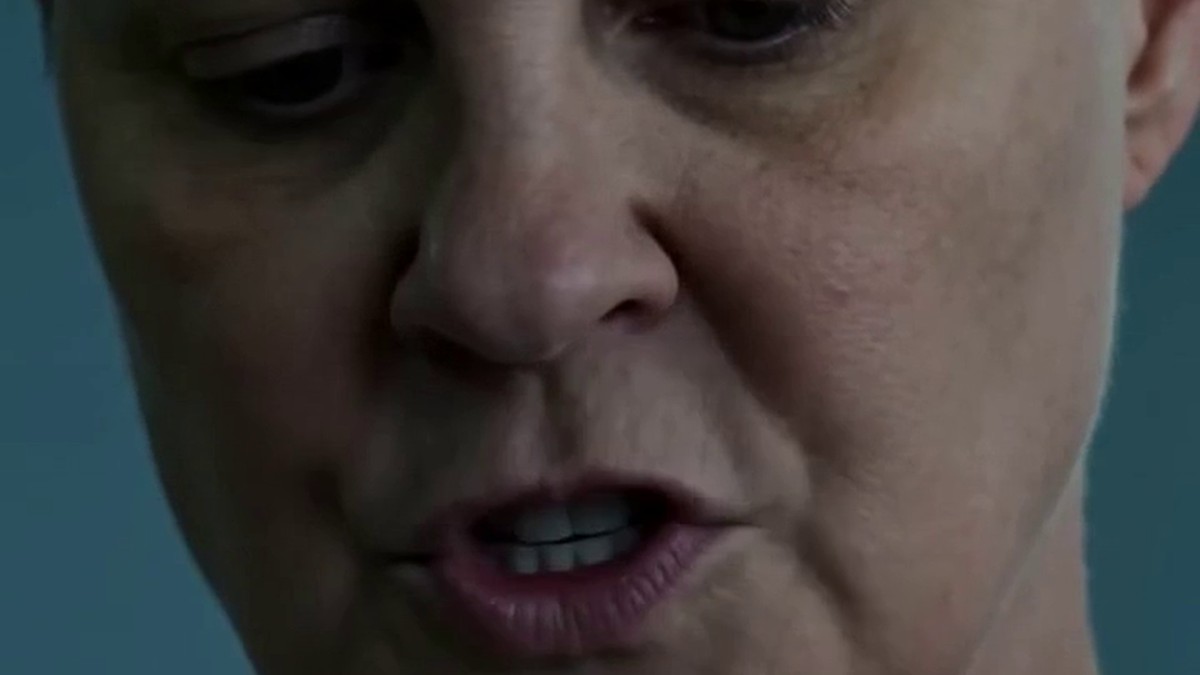
The first thing Priya Deshmukh noticed about Danvers Correctional wasn't the smell of bleach over old grease, or the buzz of fluorescent tubes that never quite stopped flickering. It was the woman two tables over with a sleeve of ink running from her wrist to her collarbone, eating alone, saying nothing.
Nobody knew her name for the first two days. Then it went around the block like it always did — Marisol Ortiz, thirty-one, transferred in from a facility upstate. She kept her head down at count, folded her laundry in neat squares nobody had asked her to fold, and didn't flinch when the guards barked at her. She wasn't cold, exactly. She was somewhere else.
Priya had been at Danvers eleven months by then, in for a wire fraud charge she still couldn't quite believe had landed her here instead of in some white-collar minimum-security camp with a garden. She'd learned the rules fast, mostly by watching who got left alone and who didn't. And there was one name that came up before any other, said low, like saying it any louder might summon her.
Deb Halloran.
Deb ran D-Wing the way a landlord runs a slum — not because anyone voted her in, but because nobody had the stomach to challenge her. Six-two, arms like a linebacker's, eleven years into a twenty-two-year sentence for aggravated assault that everyone said should've been murder if the other guy hadn't been lucky. She collected things. Commissary snacks. Phone minutes. Loyalty. Fear, mostly. Two women on the wing did her laundry. One did her hair. If you crossed her, you learned about it in the shower, where the cameras had blind spots everybody knew about and nobody fixed.
Marisol hadn't crossed anyone. She'd barely spoken. That should have kept her invisible. It didn't — because invisible, to Deb, looked a lot like weak, and weak was Deb's favorite flavor.
It happened on a Tuesday in October, the kind of gray Ohio afternoon where the light through the cafeteria's wire-mesh windows turns everything the color of dishwater. Meatloaf day. Marisol had her tray — the good corner seat, back to the wall, the way she always sat — and she was working through her food in that quiet, mechanical way she had, like eating was just another item to check off before lights-out.
Deb clocked her from across the room. Smiled the way a shark smiles, if a shark could smile. Walked over slow, letting the whole room watch her walk, because that was half the point.
She stopped at Marisol's table and looked down at the tray like she was reading a menu.
"That looks better than mine." A pause. "Push it over."
Marisol looked up. Didn't rush it. "I'm eating it."
A ripple went through the tables nearby — heads turning, forks stopping halfway to mouths. Nobody talked to Deb Halloran like that. Nobody who'd been here longer than a week, anyway.
Deb's jaw tightened. "You new, so I'll say it once. Give me the tray. You'll live."
"No."
The cafeteria went the kind of quiet where you could hear the ice machine cycling in the corner. Priya, three tables down, put her fork on her tray without meaning to, the way you do when you sense something's about to happen and your body wants both hands free.
Deb didn't wait for a third round. She grabbed the tray and wrenched it sideways. Meatloaf and canned green beans slid across the tile in a gray-brown smear, the tray clattering under a table two rows over.
"You know who I am?" Deb said, leaning in.
Marisol hadn't moved from the bench.
"On your knees," Deb said. "Since you want to learn things the hard way."
Nothing. Marisol just watched her, hands loose on the table, like she was waiting out a bad weather forecast.
That was the part that broke something in Deb — not the refusal itself, but how little it seemed to cost the woman refusing. She grabbed a fistful of Marisol's jumpsuit at the shoulder and yanked, trying to haul her off the bench. Two COs near the serving line started moving, too slow, the way they always were when it actually mattered.
They didn't need to hurry.
Deb swung — an open hand, fast, meant to knock Marisol sideways off the bench in front of everybody. It caught air. Marisol had tipped her head maybe four inches, no more, and the hand sailed past close enough to stir her hair.
Deb's face did something ugly. She swung again, harder this time, and again found nothing but the space Marisol had just occupied.
Priya realized she was holding her breath. Around the room, forty women had stopped pretending to eat.
Deb lunged with both arms, trying to close the gap and use her size — the thing that had always worked before, the thing that had built her whole reputation. Marisol let her come. Caught the forearm, turned her hip into it, and used the momentum that was already there. Deb hit the floor on her back with a sound that seemed to come up through the tile.
Nobody laughed. A woman near the trash cans dropped her spork.
Deb got up — furious now, blood in her face — and came again, sloppier. Same result, faster this time, like Marisol had simply run out of patience for the demonstration. Deb stayed down on the second fall, chest heaving, staring up at a woman who hadn't so much as raised her voice.
"Who *are* you," Deb said, not really a question anymore.
Marisol crouched, picked up her ruined tray from under the neighboring table, and looked at the green beans scattered across the floor like she was doing quiet math about lunch options now unavailable to her.
"Somebody who used to teach this for a living," she said, and left it there.
She never explained further, not that day and not for weeks after, though the guessing started immediately — army, she'd trained special ops guys, she'd been a bodyguard for somebody famous, on and on, each version wilder than the last. What actually surfaced, eventually, through a caseworker who talked too much to the wrong person, was less dramatic and somehow heavier: nine years as a Krav Maga instructor at a gym outside Pittsburgh, six of those years also doing close-protection work for a security firm that mostly guarded executives nobody had heard of. She was in on a manslaughter charge from a bar fight that went sideways — a man twice her size who hadn't believed the warning either.
Deb didn't come near Marisol's table again. Word does what word does in a place with nowhere to go, and by the following week nobody was testing her, either — not over food, not over the good spot in the yard, not over anything. She kept sitting alone. Kept folding her laundry into squares nobody asked for.
Priya, for her part, started sitting one table closer.
It took her another four months to work up to actually saying anything, and when she did, it wasn't about the fight. She sat down across from Marisol on a Sunday with her own tray and just said, "I've got eight months left. I don't know how to file for early release credit and the paperwork makes no sense to me."
Marisol looked at her for a second — the same unhurried look she'd given Deb, minus the edge — and said, "I filed mine wrong the first time too. Bring it tomorrow, I'll show you where you're messing it up."
She never touched Priya's food. Never asked her to fold anything. She just showed her, the next day, exactly where the form wanted a signature Priya hadn't known to give — and slid the paper back across the table without another word, like that had been the whole transaction all along.



Der Zaun von Bad Elster
Marlene Vogt hatte sich schon lange nicht mehr so lebendig gefühlt wie in diesen zwei Wochen im Vogtland. Die Tierschutzstation...


Riverfront Reckoning
The first thing Priya Deshmukh noticed about Danvers Correctional wasn't the smell of bleach over old grease, or the buzz...


Бабуся Ярослава і онук Тимко
— Бабо, ви колись перестанете казати, що мало для мене зробили? Та якби не ви — не було б мене...


Le Testament du Cap Ferret
Bertrand Aunay avait quarante-huit ans quand il a compris que sa femme comptait sur sa mort. Pas sur un divorce....


Загублений гаманець Оксани
Я познайомився з Оксаною у найгіршому місці на землі — у реанімації міської лікарні швидкої допомоги. Вона сиділа на дерматиновому...


# Пересолена котлета і сім сходинок
Скажу прямо: перед Різдвом мене охопив страх. Не той, що минає після чарки медовухи. Такий, що вгвинчується в хребет і...


Jej córka przyniosła nad morze obcego faceta
W sobotę rano zadzwoniła do mnie Grażyna z pracy. Wiesz, że widziałam twoją córkę? — pyta, a ja już czuję,...


Elke Vogtmann trägt seit siebenundzwanzig Jahren die Kittelschürze im Café Sonnenblick in Bad Kissingen, und in dieser Zeit hat sie so ziemlich jede Familiendrama gesehen, das sich an einem Frühstückstisch abspielen kann. Aber das, was am dritten Tag der Klapp-Runde im Gästehaus “Rosenhof” passierte, wo sie seit vier Jahren aushilfsweise das Frühstücksbuffet betreut, hat sie nicht vergessen.
Sie kannte die Familie Brandmeier vom Vorjahr her. Nette Leute, immer höflich, der Sohn Tobias mit seiner Frau Franziska, dazu...