
EN
**Trees Aren’t Decoration**

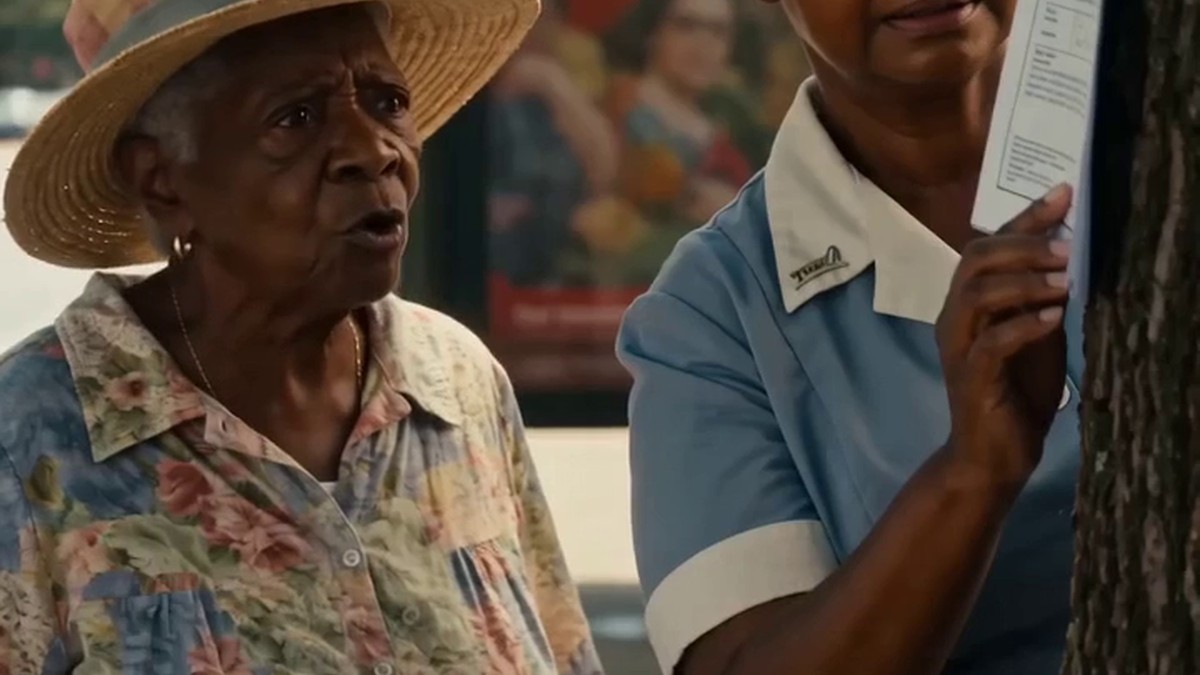
Last Thursday, around noon, I was standing at the bus stop on Peachtree Street in Atlanta. The thermometer outside the pharmacy read ninety-seven degrees. The asphalt burned through my sandals. Next to me, an older man in a Braves cap fanned himself with a folded newspaper, and his wife kept saying, "Lord, why are we dying out here."
Three steps away grew an old oak. Massive, sprawling, bark cracked like my grandfather's hands. At least ten people stood under it. Not by accident. In the oak's shade, you could actually breathe.
I ducked under it too. That's when I saw it.
Someone had stapled a metal notice to the trunk. White, laminated, with the city seal and a case number. Nobody but me seemed to notice it. Fine print, official language:
"Removal Permit — Tree in Conflict with Road Widening Project."
I pulled out my phone and took a picture. Good thing I did, because three days later the notice was gone.
I'm not a forester. I'm not an activist. I run a small flower shop on Highland Avenue. Thirty-eight years old, a son in eighth grade, a mortgage on the house I inherited from my grandmother. I don't make a habit of poking my nose into city business. But this oak wasn't just "city business." That oak had given shade to people at that bus stop every single day. In June and July. In April the bees on it hummed so loud you could hear them through the open window of our third-floor apartment across the street.
That evening I opened my laptop and started digging.
The company name on the notice meant nothing to me. "Meridian Roadworks LLC." I checked the state business registry, then the city's public records site. The contract for the avenue's reconstruction had been awarded in May. The scope included widening the road by one lane. And widening the road by one lane meant the row of oaks on the west side would be gone. Not one tree. Twelve.
That night I made my first post in the neighborhood Facebook group. "Did you know they're cutting down the oaks on Peachtree? Attaching a photo of the notice."
I figured maybe somebody already knew about this. Maybe somebody was already on it.
By morning I had forty-eight comments. People wrote the usual things: "This is criminal," "typical," "who does this benefit." A few asked what we were going to do. Nobody wrote, "I'll handle it."
Saturday I went to check if the oak was still standing. It was. But orange stakes now ringed the base of the trunk. Surveyors with a level were measuring the sidewalk.
Next scene: Monday, the county planning office, room 116 on the ground floor. The air conditioning was broken; a desk fan turned with an irritating squeak. A clerk with the face of someone who'd never once heard good news slid a form across to me.
"You want to file an objection?"
"I do."
"You've got fourteen days from the environmental determination to file. You're coming in…" she checked her screen "…on day forty-two after publication. Deadline's passed."
I felt the blood drain from my face. Forty-two days. Fourteen to object. The notice had hung there eight days before I saw it. Three days I spent searching online. Four days I spent working up the nerve.
"So what do I do?" I asked.
The fan squeaked. The clerk shrugged.
"You could write to the building inspector's office. Or the historic preservation board. But honestly…" she lowered her voice by half a register, "…that avenue's only on the historic register for the northern stretch. That bus stop's in the southern section. Unfortunately."
Unfortunately. In her mouth, the word landed like a verdict.
I called the local news website. A bored voice on the other end said they'd take the tip but couldn't promise a story. He asked if I had pictures. I had one, taken that July afternoon. He asked if I knew anyone on the neighborhood council. I didn't.
Then Miss Loretta walked into the shop, my regular customer of thirty years. An older woman who buys carnations from me every Friday because her husband, gone twelve years now, never liked anything else.
"Why so pale, honey?" she asked.
I told her in three sentences about the oak and the fourteen days that had already slipped by. Miss Loretta set her grocery bag on the floor and said something I hadn't once considered.
"You know me and my husband planted that tree?"
Turned out Miss Loretta and her Walter had belonged to a garden club decades back. In 1983, during a city beautification drive, they'd planted a row of oaks along the avenue. She dug the hole, he held the sapling steady. They were thirty years old.
"Walter always said that oak was our daughter," she added. "We never had kids of our own."
Miss Loretta is eighty-one. Her husband's been gone twelve years. The oak has stood for forty-two.
After that conversation, this stopped being about "trees." It became about two people with a shovel and a sapling, about the shade you stand in during August, about ninety-seven degrees and asphalt burning through your soles.
That evening I did something out of character. I opened a spreadsheet. Started listing names. I found a roster of the planning commission members online. Found phone numbers for city council members and a list from the public records portal. Late into the night I copied down sections of the state's tree preservation ordinance and the zoning code — sections 23, 27, 48. I knew I had no legal standing to demand a halt to the felling just because I didn't like the reason. But I found a loophole nobody had thought to check: none of the twelve trees on that side of the avenue were listed in the county parcel records as "trees" — old surveys classified them as part of the right-of-way. The same went for some of the root systems running under the bus stop.
It was a technicality. Thin as a thread. But it's exactly the kind of thread a government office will use to freeze a project, not sentiment.
Tuesday morning I filed a request at the planning office to halt the work, citing an outdated parcel survey that hadn't been legally updated. It sounded ridiculous even to me. But Miss Loretta's daughter, a paralegal, dug up two court rulings where that exact argument had stalled a project for six months.
Six months. In this kind of bureaucratic war, that's an eternity.
The following Thursday, a crew showed up at the bus stop with chainsaws. Five guys, yellow hardhats, a truck with the company logo on the door. It was seven-thirty in the morning. I stood across the street holding a folder with the county's stamped paperwork inside. I don't remember exactly what I shouted. I know I showed them the papers, and the foreman got on the phone with his office. He talked to someone for eleven minutes. Then he put the phone away and told the crew:
"Pack it up. Client's putting the job on hold."
They lingered by the truck a while, smoking. One of them, a young guy with a beard, asked me, "What's this even got to do with you?"
I didn't answer. I didn't have to. Right then Miss Loretta was making her way over from my shop, slow, gripping the metal railing. She stopped under the oak. Put her hand flat against the trunk. And stayed there.
It wasn't a victory. It was only "six months."
Over the following months I dug through archives and consulted the historic preservation office. Turns out that in 1983 the trees along the avenue had been planted as public space improvements, funded by the city. And a 1995 zoning plan listed that stretch of the avenue as designated green space. That was enough for the preservation board to open its own case to have the entire row of oaks listed as protected heritage trees.
A year has passed now. The oaks still stand. The road never widened by a single inch, but the developer signed an amendment and rerouted the whole project two hundred yards east. I don't know what to call it — maybe luck, maybe just the result of twelve weeks of official letters sent to four different agencies, until somebody up the chain finally gave up and changed the route.
The company still got paid. Just on a different stretch of road. And under the oaks, while the sun hangs over the bus stop, people still gather — the same man in the Braves cap, someone with a stroller, two girls with backpacks. None of them know that six months ago, a flower shop owner stood by that trunk with a folder full of government paperwork.
This morning Miss Loretta came by the shop again, a bag full of little pots in her hand. She set them on the counter — mint cuttings, roots wrapped in damp newspaper.
"Here, take a few. Plant them on your balcony."
I picked up one pot, turned it over in my hands, caught the smell of crushed mint between my fingers.
"A person ought to have something they planted," she said, reaching for another pot to set it beside the first, just so.



Dort, kde slunce vypaluje louky u Blatné
Grilujeme, kde slunce vypaluje louky u Blatné Vypadal jsem jako idiot, s tím kleštěmi na uhlí v ruce, zatímco Hanka...


Le pendentif qui s’est ouvert devant tous les invités
Sur le front de mer de Biarritz, face à une plage où les vagues brisent la dernière lumière du jour,...


Pokoj, kde čeká kufr
Jmenuju se Marek Vorel, je mi čtyřicet dva a dvanáct let jezdím jako údržbář výtahů po celé Praze. Ten den...


Matka se mu ohlásila ve čtyřicíti — a to, o co ho poprosila, ho ohromilo
Matka se mu ohlásila ve čtyřiceti — a to, o co ho poprosila, ho ohromilo Nevím, proč právě teď. Možná...


Dvaadvacetiměsíční poznámka, která mě málem udržela ve svazku, který neměl žít
Moje advokátka mi zavolala v sedm ráno, tři týdny po tom, co jsem odešla od manžela. Jmenovala se Jitka Marešová...


Pavel a plot u Chomutova
Jmenuju se Pavel, mám třicet osm a vlastním autoservis na okraji Chomutova, kousek od řeky Chomutovky. S Danou jsme manželé...


Svatba v Kroměříži
Catering jsem dělala přes patnáct let a myslela jsem si, že mě už nic nepřekvapí. Pak přišla ta zakázka na...


Le bracelet de la salle 114
Le tapis rouge du Grand Rex scintillait sous les flashs. Ce soir-là, Clémence Auvray présentait son dernier film, et les...