
З життя
Двоюродная сестра забрала Наташку из онкологии: история успешного художника

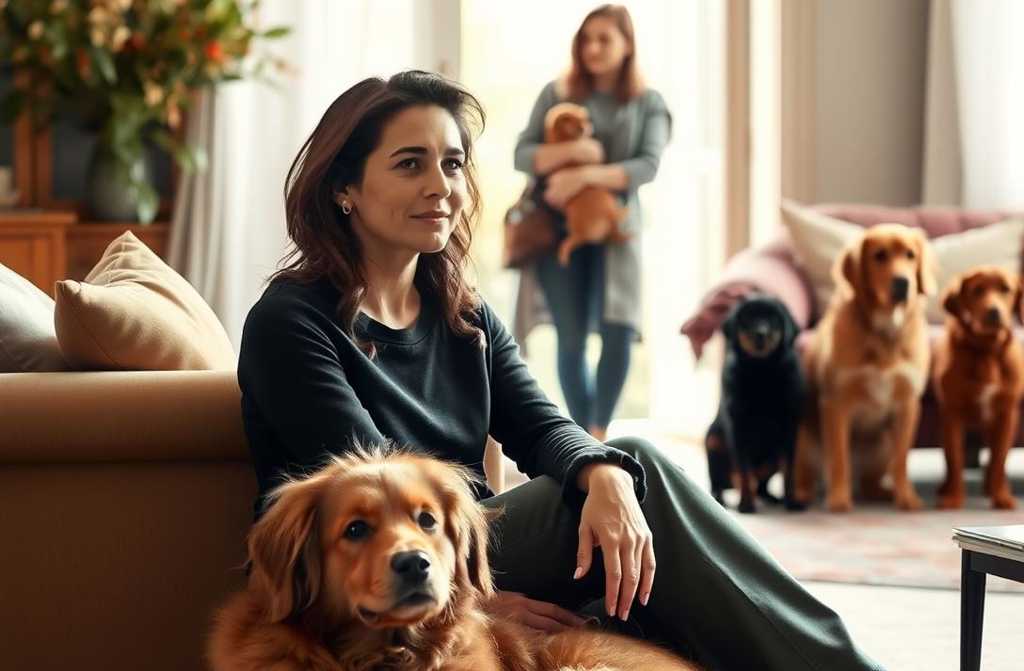
Из больницы Наташу забирала её двоюродная сестра Ольга. Ольга — успешный художник. Человек она открытый, добрый, весёлый, никогда не лукавит и не скрывает. Поэтому, поддерживая Наташу, сразу сказала:
— Наташ, понимаешь, твой Вадик уже с другой живёт. Но ты не переживай. Тебе есть где жить, я тебе помогу, чем смогу.
Наташа после операции и нескольких курсов химии, лысая, худая и бледная, думала: в классических фильмах в таком случае обычно падают в обморок или рвут на себе волосы, но волос у меня и так нет.
Можно, конечно, изобразить обморок и упасть в грязь, но жалко было белого Ольгиного пальто, которое она на неё надела, потому что осень на дворе и холодно.
В машине было тепло, но Ольга укутала сестру в плед, пристегнула ремнём и повезла в новую жизнь. Пока они ехали, Ольга объясняла:
— Купила дом два года назад, думала летом там жить и рисовать, но пожила — поняла, не моё. Привыкла к удобствам, большим магазинам и людям вокруг.
Тишину не люблю. Вчера в доме была, отопление работает, вода есть, остальное — сама разберёшь. Продуктов я привезла. Буду навещать…
Во дворе сидела большая рыжая собака. Со всех сил махая пушистым хвостом, она подбежала к Наташе и уткнулась носом в её колени. Наташа погладила лохматую голову и спросила взглядом Ольгу:
— Наташ, я её из приюта вчера забрала. Тебе друг нужен. Как ты одна будешь? Не переживай, я корм купила, на месяц хватит. Вдвоём повеселее будет. Его Джони зовут.
В небольшом доме было тепло. В столовой стояли коробки с консервами, крупой, макаронами, мукой, печеньем.
— Сама разложишь, так лучше будешь знать, где что лежит. Холодильник забит. В шкафу найдешь одежду на все сезоны, у нас одинаковый размер. Попьём чай — и я поеду.
Надевая пальто, Ольга подошла к Наташе, заглядывая ей в глаза. Но Наташа отвела взгляд.
— Наташ, эта собака три года в клетке жила. Её никто не брал, она большая и не молодая. Всё понимаю, тебе трудно, плохо, но у тебя есть я. А у собаки — ты. Надо за что-то цепляться, чтобы жить. На Вадика забудь.
Всё будет хорошо. И ещё — это теперь твой дом, всё на тебя оформила, бумаги и деньги в спальне. Наташ, будем жить! Приеду через неделю, если что — звони.
Ольга поцеловала Наташу и уехала…
Уже вечерело, а она всё ещё сидела в кресле, обняв колени. Сначала плакала, потом ругала Ольгу за навязанную собаку. Думая, что сил нет жить, решила: хоть накормила бы собаку.
Одела куртку, посмотрела на свою лысую голову в зеркало и, сказав себе “Не будем пугать собаку”, надела шапку. Найдя корм, насыпала его в миску и вышла на улицу.
Джони, съев корм, вылизал миску, затем слизал с лица Наташи солёные слёзы, лёг рядом на крыльцо и положил голову ей на колени.
На ночном небе вокруг яркой луны загорались звёзды. Наташа нашла Большую Медведицу, улыбнулась и послала поцелуй. Обняла собаку и сказала:
— Ладно, Джони, завтра сварю нормальную кашу с мясом.
Всю неделю Наташа, глядя в зеркало, вздрагивала и говорила:
— Аэлита…
И иногда думала: а может всё бросить? Кому я нужна? Но встречая взгляд Джони, уютно лежащего у камина, решала: ладно, ещё поживу.
Жизнь Наташи изменилась, когда приехала Ольга через неделю, как и обещала. Внесла коробку, поставила на диван и сказала:
— Наташ, не знаю куда девать. Кошка бездомная, в подъезде родила. Привезла и корм…
В коробке была рыжая кошка, обнимающая двоих котят. Вечером Ольга уезжала. На пороге, помолчав, протянула листок:
— Наташ, Вадик приходил, спрашивал о тебе. Я не сказала. Это его новый номер. Тебе решать.
Наташа проводила сестру до машины, вернулась в дом. Погладила кошку:
— Будешь Муркой. Молока принесу, всё будет хорошо.
Проходя мимо камина, бросила листок в огонь…



After Telling My Wife That Her Daughter Isn’t My Responsibility, the Truth About Our Family Was Finally Revealed
After I told my wife that her daughter wasnt my responsibility, the truth about our family finally came to light....


“I Had to Get a Separate Fridge So Mum Would Stop Taking My Shopping” — says Anna. “It’s a ridiculous situation, but there’s no other way. I’m not against selling the flat and sharing the money, but she refuses”. Anna recently turned 24. She’s earned her university degree and found work, but hasn’t settled down yet. Living in her own home isn’t easy. Anna owns half of the flat. It used to belong to her father. She and her mother inherited equal shares when Anna was 14. Ten years ago, things were tough for the family—they lost their breadwinner. Anna’s mum quit her job when Anna was small, deciding against maternity leave because her husband earned well and they were comfortable. She focused on being a homemaker. After Anna’s father died, her mother sobbed, “Who’s going to hire a forty-year-old like me now? What, as a cleaner?” Anna continues: “I was getting a family pension, but Mum couldn’t resist trips to the salon and shopping, even though we were barely scraping by. Her brother helped at first, but then he’d had enough. My uncle told Ali (my mum) she’d have to find work. He has his own kids — he can’t support everyone. After about a year, Ali brought a new man home. His name was Derek. She announced he’d be living with us. Mum tried to solve the money problem by getting married again. Derek did earn good money, but he didn’t get along with me at all. Derek would say: ‘All you do is eat. You’d be better off with a load of laundry or cleaning. Why do you have to do homework? University? Forget it—you should work instead. Or do you think I’ll just keep feeding you?’ I couldn’t say anything. Yes, I was getting a pension, but Mum had control of the money. She never defended me from my stepdad. She was afraid of losing her breadwinner. ‘How will we cope without him?’ she asked me. ‘Don’t argue so much, just do what he says. He provides for the family.’ I made it to university and found a job. Even so, Derek thought of me as another mouth to feed and was always counting what he spent on me. “Six months after I started work, I could afford my own fridge,” Anna says. “I put it in my bedroom because Derek locked the kitchen fridge.” ‘You’ve got a job now? Feed yourself,’ Derek said. Ali fell silent again. Even when Derek showed me the utility bills and demanded I pay for everything he’d ever spent on me. Eventually, Derek lost his job. He and Mum began raiding my fridge. The bills all landed on me. At first, I paid. But Derek sat around unemployed for nearly a year. I’d had enough, so I put a padlock on my fridge. Of course, Mum objected, claiming Derek had kept us fed all this time. I said, ‘Help me out, if you want. I’m not the first one sharing everything in this house. Go get a job.’ Derek recently moved out. Mum’s had enough of a man who brings in no money. But I’m still not taking the padlock off my fridge. I believe Mum should work too. What do you think—is she right?
I had to bring in my own fridge just so Mum wouldnt keep taking my groceries. I had no choice...


You Simply Don’t Know What Happiness Is – A Story of Half a Million Pounds, a Mother-in-Law’s Interference, and Escaping a Controlling Marriage for a Second Chance at Love in London
You Just Dont Realise Your Own Luck Half a million? I read the notification on my phone three times before...


Husband Refuses to Give Apartment Inherited from His Aunt to Our Daughter, Sparking a Family Dispute Over Fairness to Our Sons and the Future of Our Children
My husband inherited a small flat in the heart of London from his aunt years ago. The flat isnt spacious,...


You’re the Big Brother, So You Must Help Your Little Sister—You’ve Got Two Flats, Give One to Your Sister! Not long ago, we celebrated my sister-in-law’s birthday. Alina has never had any friendly feelings towards me, and I’ve always felt the same about her. The celebration brought together all our relatives: grandparents, nephews, and of course the birthday girl. Each relative felt obliged to congratulate my husband on his sister’s birthday, while also admiring his generosity. My husband and I graciously accepted the congratulations, but couldn’t grasp what was happening. In my hand was an envelope containing £100 as a present. I thought it was a decent gift for the occasion, though hardly a display of extraordinary generosity. Everything became clear when my mother-in-law began her birthday speech for Alina. “Mark,” she said, “it’s your sister’s birthday today. She’s still single and without a partner, so as her older brother you should look after her and guarantee her security. Now that you own two flats, you’ll give one to Alina.” The room burst into applause while I nearly fell off my chair at the cheekiness of it all. But it didn’t end there. “Brother, make sure you give me the one in the new build! So, when can I move in?” Alina pressed, and I decided it was time for some clarification. My husband and I actually have two flats. One I inherited from my grandmother; we did a bit of redecorating and now rent it out. The money from that pays the mortgage for our flat in the new building—where we actually live. My husband has no rights to the flat I inherited; I’ve always planned to pass it on to our child—my sister-in-law isn’t even in the picture. “Forget it, the rented flat is mine and the one you’re dreaming about is our home.” “Child, you’re quite mistaken. You’re my son’s wife, so all your assets are jointly owned and should be managed by your husband,” my mother-in-law chimed in. “I have no issue with you helping, but not with my assets!” I said. “Mark, do you have anything to add?” “Darling, you and I will earn more money and buy another flat. Let’s just give this one to Alina; it’s her birthday today.” “Are you serious?” I asked, astonished. “If it ever comes to that, you can give her half of our flat after we file for divorce!” “Aren’t you ashamed to speak to your husband like that? If you want a divorce, you’ll get one! Son, pack your things and come home. And you—you’re vile and greedy!” my mother-in-law snapped. After that, I left that crazy house. I wasn’t going to stick around with people who think they have the right to dispose of my property.
You are the elder brother, so you must help your younger sister. You own two flats, give one to your...


My Thrifty Friends Invited Me to a Birthday Party—But I Went Home Hungry
My frugal friends invited me to a birthday party. I came home hungry. I have a particular group of friends...


You Simply Don’t Know What Happiness Is – A Story of Half a Million Pounds, a Mother-in-Law’s Interference, and Escaping a Controlling Marriage for a Second Chance at Love in London
You Just Dont Realise Your Own Luck Half a million? I read the notification on my phone three times before...


Never Fully Forgotten Every day, Prokhor commuted home from work—first the London Underground, then the bus, until finally arriving at his flat. The journey took over an hour each way. His car spent more time parked than driven, as morning and evening traffic in London was so dreadful that taking the tube was much quicker. About two years ago, his family life changed—he and his wife quietly separated. Their daughter, who was seventeen at the time, stayed with her mother. Prokhor wasn’t one for loud arguments—he’d always disliked drama. He noticed his wife had changed for the worse; she grew irritable without reason, disappeared for hours, sometimes coming home late, always claiming she’d been with a friend. One day, Prokhor asked: “Where do you go so late? Most wives are home by this hour.” “None of your business. Those ‘normal wives’ are hens. I’m different—clever and sociable. Being home all the time suffocates me. And I’m not a country bumpkin like you. You were born that way and never changed.” “Then why did you marry a country boy?” “I chose the lesser of two evils,” she snapped, refusing to elaborate. After filing for divorce, she kicked Prokhor out of their flat, so he rented a place instead. He’d gotten used to it, wasn’t in a rush to remarry, but kept his options open. Prokhor travelled by tube, never wasting time, scrolling through his phone just like everyone else. He browsed the usual news, laughed at jokes, watched short clips—until an image made him stop and go back. He peered closer at the advert: “Folk Healer Mary—herbal remedies.” Prokhor stared into the eyes of his first love, gazing out from his mobile. An unrequited, hopeless first love—impossible to forget. He remembered the girl well from their school days. She was a bit eccentric, but beautiful. He nearly missed his stop, hurried off the train, walked home instead of waiting for a bus—he was driven by sudden nostalgia. When he got home, he left his coat in the hallway and sat on the low bench, still staring at his phone screen in the dark. He quickly scribbled down the number from the advert before his phone demanded charging. While waiting for his phone to charge, he tried to eat dinner, but had no appetite. Sitting in his lounge, old memories began to well up. Mary always stood out from day one. A quiet, modest girl with long braids and a skirt below the knee—unlike other girls. In their small village, everyone knew everyone, but nobody really knew anything about her. Mary lived with her grandparents just outside the village, in a beautiful, unusual timber house with ornate windows. As soon as Prokhor saw her, he fell for her—childishly, but seriously, or so he thought. Everything about her was unique. Mary would wear a headscarf outdoors, and had a small, hand-embroidered rucksack, which no one else owned. Instead of “Hello,” she’d say, “Good health to you,” as if from an old fairy tale. She never shouted on break, never ran in the halls; always polite, always calm. One day Mary didn’t come to school—the kids went to check on her after class, worried she might be ill. Prokhor went with them. As they turned the lane, they saw her fairy-tale house, but also a crowd—Mary’s grandmother had passed away. Mary stood, headscarf on, wiping away tears. Her grandfather stood beside her, somber and silent. The procession headed to the cemetery, and the children followed, even joining them for tea afterwards. That day stuck in Prokhor’s mind; it was the first funeral he’d ever attended. Mary returned to school after a day. Time marched on. The girls blossomed, wore makeup, competed with clothes—but Mary remained the same, upright, never painted, radiantly blushing. Boys began courting the girls, and Prokhor tried his luck with Mary. At first, she didn’t react, but at the end of Year 9, he asked: “Let me walk you home from school?” Mary looked at him seriously and quietly replied so no one else could hear: “I’m promised, Prokhor. It’s tradition.” He was disappointed, but didn’t understand the tradition, nor who “they” were. Later, he found out Mary was raised by her Old Believer grandparents—her parents had died long ago. Mary was an excellent student, never wore jewellery. Her classmates whispered behind her back, but Mary never cared and held herself with dignity. She grew more beautiful every year. By Year 10, she was striking. The boys admired her quietly, but never teased. After graduation, everyone scattered. Prokhor left for London to attend university. He knew only that Mary had married—never came home in holidays, went off to work on summer crews. Mary married her betrothed and moved to a rural area, living as a farmer’s wife, raising cattle and hay, running the household. She had a son—none of their classmates saw her again. “So that’s what Mary does,” thought Prokhor, sitting in the lounge. “She heals with herbs. She’s even more beautiful now.” He barely slept that night. At work, memories wouldn’t leave him—Mary’s beauty lingered in his mind. First love really does stir the heart. It never, ever fades. For days, he wandered in a haze, until he couldn’t help himself—he messaged her. “Hi, Mary.” “Good health to you,” she replied, unchanged in this. “What’s on your mind, or is something troubling you?” “Mary, it’s Prokhor—your old classmate. Remember, we used to sit together at school. I saw you online and wanted to write.” “Yes, I remember you, Prokhor. You were the best of the boys in class.” “Mary, your phone’s here—can I call?” “You may. I’ll answer.” That evening, he rang her. They talked, caught up on each other’s lives. “I live and work in London,” he explained. “You’d better tell me about yourself, Mary. Big family? Is your husband good to you? Where are you now?” “I live in my old house—the one I walked to school from. I came back after my husband died. A bear in the woods… And Grandfather passed long ago.” “I’m so sorry, Mary, I never knew…” “That’s alright, it was years ago. I’m at peace about it now. We don’t know about each other’s lives, do we? And you’re only calling as a friend, not looking for herbs? I sometimes advise…” “Just as a friend. I don’t need herbs. I saw you online and nostalgia hit me. I miss our village—mum’s been gone for years.” They talked of this and that, remembered old classmates, and said goodbye. Then silence—work, home, and after a week, Prokhor grew lonely and called Mary again. “Hello, Mary.” “Good health, Prokhor! Missing me, or are you unwell?” “Missed you, Mary. Please don’t be cross, but may I visit you?” he asked, quietly but hopefully, his heart racing. “Come along,” she said, unexpectedly. “Come whenever you wish.” “I’ve got holiday next week,” he said, delighted. “That’s great—come! You know the address.” He sensed she was smiling. He spent the week preparing, buying gifts for Mary, anxious—wondering if she’d changed, or if she was the same. After a week, he set off from London for his childhood village. Six hours on the road, but he didn’t mind—he loved a long drive. He was surprised by the changes when he arrived—new houses, a bustling town centre. He pulled over near a shop. “Wow, I thought our village was like so many others—run down. But it’s thriving!” he said aloud, looking around. “We’re not just a village—it’s a proper borough now,” said an elderly man proudly. “Been that way a while. You mustn’t have visited in years.” “Years, mate. Years,” replied Prokhor. “We’ve got a good mayor—cares about the place. That’s why the old village has blossomed.” Mary waited for Prokhor in the garden—he’d rung her as he approached the borough. Soon, as his car turned into the lane, Mary’s heart thumped wildly. Nobody ever knew she’d secretly loved Prokhor since schooldays. She’d kept it hidden; if he hadn’t come back, it would have remained buried forever. Their reunion was joyful; they talked for hours in the gazebo. The timber house had aged, but was still warm and inviting. “Mary, I’ve come to see you for a reason,” he said, and she looked at him seriously, a little afraid. “I’m listening—what is it?” she asked, tense. “I’ve loved you my whole life. Won’t you answer my love now?” he said, at last. Mary jumped up and hugged him tightly. “Oh, Prokhor—I’ve loved you since childhood, too!” Prokhor spent his holiday with Mary, promising as he left: “I’ll sort everything at work, go remote, and return. I’m never leaving here again. I was born here—here’s where I belong!” he laughed.
Completely letting go was impossible Every evening, Peter heads home from his job in London by Tube, then hops on...