
З життя
Feeding strangers every night for fifteen years — until…

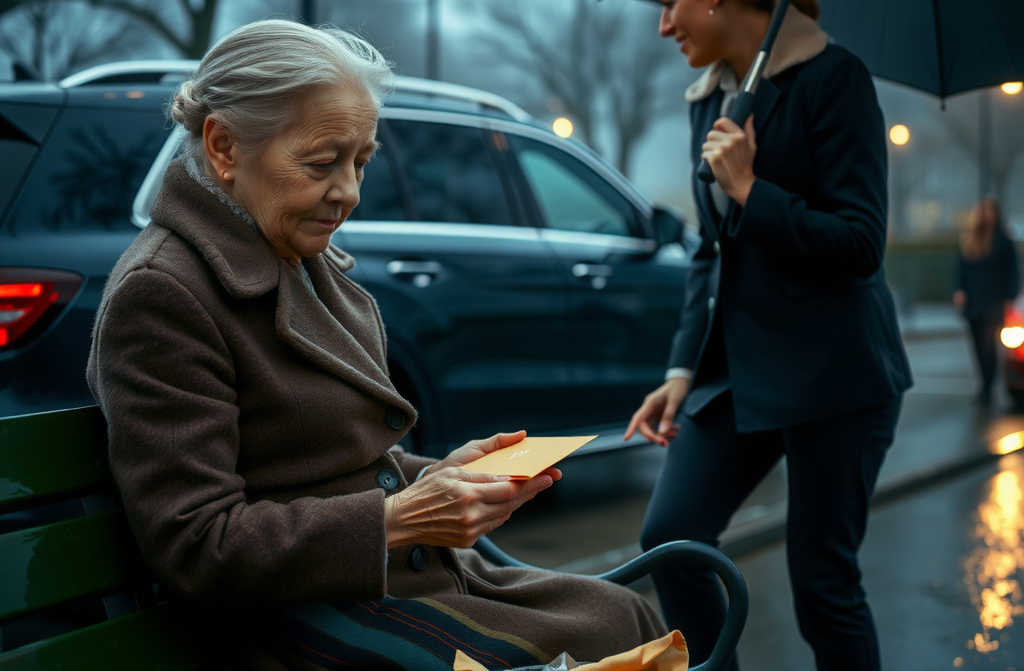
For fifteen years, every evening at precisely six oclock, Margaret Shaw placed a steaming dish on the same greenpainted bench in Bramley Park.
She never lingered to see who might take it, never left a note, and never told anyone.
It had begun as a quiet habit after her husband dieda way to fill the silence that haunted her empty house. Over time the act became a solitary ritual known only to her and to the hungry strangers who found a brief respite in her modest generosity.
Rain or shine, summer heat or winter gale, the plate was always there. Sometimes it held soup, other times a stew, and on occasion a sandwich wrapped carefully in waxed paper and slipped into a brown paper bag.
No one knew her name; the townsfolk simply called her the Lady on the Bench.
One Tuesday evening the sky was heavy with rain. Margaret, now seventythree, pulled her coat tighter as she crossed the park. Her knees ached and her breath came in short bursts, but her hands stayed steady around the stillwarm platter.
She set it down gently, as she always did. Before she could turn away, the headlights of a sleek black SUV cut through the drizzle and halted at the edge of the path.
For the first time in fifteen years, someone waited.
The rear door opened and a woman in a navy suit stepped out, clutching an umbrella and a sealed envelope sealed with gold wax. Her shoes sank lightly into the sod as she approached.
Mrs. Shaw? she asked softly, her voice trembling.
Margaret blinked. Yes do I know you?
The woman offered a faint smile, tears glistening in her eyes. We met oncemaybe not by name. Im Eleanor. Fifteen years ago I used to eat the food you left here.
Margarets hand flew to her chest. You you were one of the girls?
There were three of us, Eleanor replied. We were runaways. We hid by the swings. Those meals saved us that winter.
A lump rose in Margarets throat. Oh, my dear
Eleanor drew closer and placed the envelope in Margarets trembling hands. We wanted to thank you. What you did fed us, but it also gave us a reason to believe that kindness still exists in the world.
Inside were a letter and a cheque. As Margaret read, the words blurred with tears:
> Dear Mrs. Shaw,
>
> You gave us food when we had nothing. Today we want to give back what you gave ushope.
>
> We have established the Margaret Shaw Scholarship Fund for homeless youth. The first three recipients will start university this autumn. We used the name you once wrote on a lunch bagMrs. Shaw. We thought it was time the world knew who you are.
>
> With love,
>
> Eleanor, June and Claire
Margaret lifted her eyes, rain tracking rivulets down her cheeks. Did you you three do this?
Eleanor nodded. We all did. June runs a shelter in Bristol. Claire works as a social worker in Manchester. And I well, Im a solicitor now.
Margaret let out a chuckle edged with sighs. A solicitor. I never imagined that for myself.
The three of them sat together on the rainslick bench, the umbrella forgotten. For a moment the park seemed to come alive againlaughter mingled with the patter of rain, memories floated on the damp air.
When Eleanor departed, the SUV vanished into the grey, leaving only the scent of wet earth behind.
Margaret lingered a little longer, her hand resting on the stillwarm plate.
That evening, for the first time in fifteen years, she did not lay food on the bench.
But the next morning the bench was not empty.
Someone had placed a single white rose on the seat, and beneath it lay a card written in neat, flowing script.
The gesture reminded Margaret that a single act of kindness, no matter how small, can blossom into a legacy that nourishes many. In giving and receiving, we discover that the true nourishment of life is the compassion we share.



A jászberényi diófa, amelyik hatszázezer forintot ért meg egy családnak
A jászberényi diófa, amelyik örökre megmentett egy udvart Negyedik éve dolgozom a jászberényi piacon zöldséges standnál, pont szemben azzal a...


Žentas, kuris liko: Birutės akys devynerius metus
Mane vadina nedėkingu žentu. Taip sako uošvienės draugės prie bažnyčios Pasvalyje, kai aš parvežu ją iš poliklinikos ir padedu išlipti...


האלמנה מרחוב הדקלים
היה סוף אוקטובר, בבאר שבע עוד נשבה החמסין המאוחר שחודר דרך כל בד, לא משנה מה לובשים מתחתיו. אני לבשתי...


Свекървата ми изхвърли дрехите, а мъжът ми мълчеше
Стоях във всекидневната с разкъсан найлонов плик до краката и гледах празния рафт в гардероба. — Къде е ризата ми...


Dvě stě padesát hodin, matko
Tereza seděla v kuchyni na sídlišti Lesná v Brně, byla půl čtvrté ráno, a za oknem svítila jediná rozsvícená lampa...


Konvice, co nikdy nevystydla
Jmenuji se Radka Bartošová, bydlím na sídlišti v Pardubicích, ve stejném paneláku už osmadvacet let, a naproti přes chodbu, ve...


מאה חמישים מטר על מגרש הכדורגל של בית הספר בעפולה
אני עובדת בבית הספר התיכון כבר שתים עשרה שנה, מזכירה במשרד המנהלת, ורואה הרבה דברים שהורים לא רואים. אבל את...


Il quaderno di ricette di mia suocera
Mi chiamo Massimo, ho quarantatré anni e faccio il ragioniere a Bergamo. Per dodici anni ho vissuto nella stessa palazzina...