
З життя
I’m 58 – at the ticket counter I recognized a woman whose husband I ran off with, and saw the price she paid for my happinessShe stared at me, tears glistening, as the weight of my secret finally settled between us, sealing the silence that would haunt the rest of our lives.

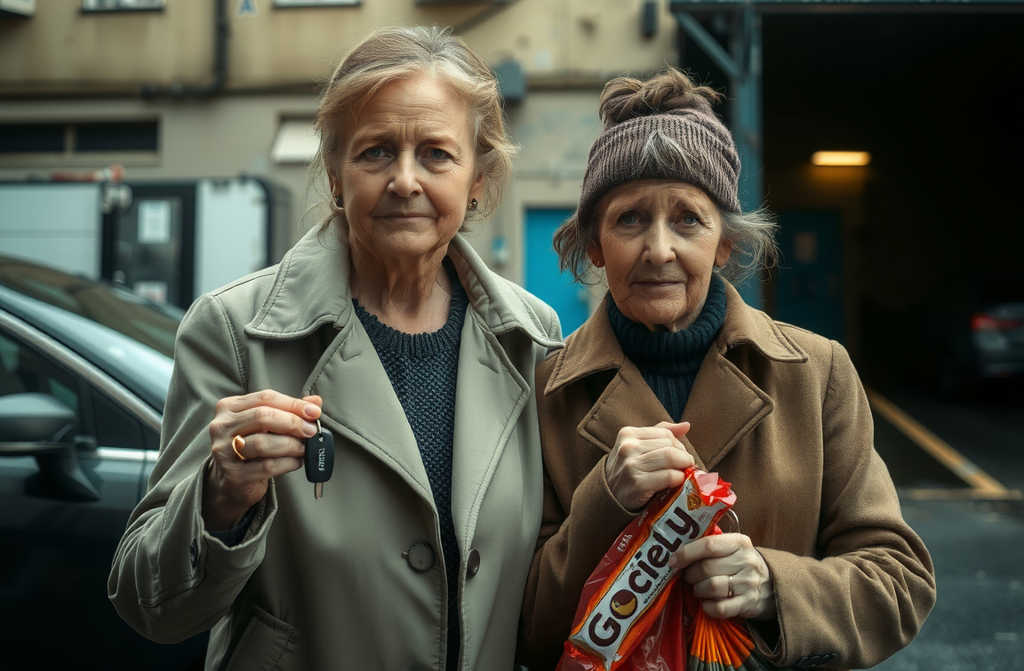
I am fiftyeight now, but the memory of that day at the corner shop still burns fresh, as if it were a scene from a longago play. I was standing at the till, watching a woman lay out her purchases: a loaf of brown bread, a carton of milk, a packet of rice, a few chicken legs, a cheap tub of cottage cheese and a small chocolate bar. She placed the chocolate bar on the belt and then, after the cashier announced the total, slipped her wallet out, counted the notes and whispered, No need for the chocolate. She tucked the bar away.
When she turned, I recognised her.
Eleanor.
The first wife of my husband. The woman I had spent thirty years telling myself, Love doesnt ask permission.
It was thirty years ago that I was twentyeight, working in the project office, glossy red lipstick on my lips, feeling that life was only just beginning. Andrew was nine years my senior. He wasnt a covermodel type, but he had a steadiness about him, a confidence that made you feel you were the only woman in the room when he listened. He was already married. I knew it from the starthis wedding ring, the photograph of his daughter tucked into his wallet, the familiar male patter of the house has been empty for ages, we live like neighbours, Eleanor never understands me, Im only staying for the child.
I now cringe at how easily I believed those lies. Back then it seemed we had a special story, not sordid, not the other woman, just two people destined to meet. Eleanor, to me, was never a living person but a barrier, a cold, exhausted wife spoken of in his anecdotesalways dissatisfied, never taking care of herself, unable to grasp the subtlety of a man yearning for warmth. Id never seen her, yet I already blamed her. It was convenient: if the wife was terrible, I was not the one breaking the home; I was the rescuer.
A year later Andrew left me. The scandal was huge, but I only heard his version. Eleanor wept, screamed, their daughter locked herself in her room, his mother cursed him over the phone. He arrived at my flat with two suitcases, his face the picture of a man who had finally chosen a life. I felt victorious inside, though I never voiced it.
We married eight months later. And, honestly, there was happiness. We truly loved each other. We drove to the coast, renovated the house, welcomed a son. Andrew earned a steady wage, built a modest cottage in the countryside, repaired the car, bought me new boots when the old ones flooded. His relationship with his firstborn daughter grew poorer: Sunday visits turned into occasional calls, then silence. I would say, She needs time, while secretly rejoicing that Sundays were now ours.
We rarely spoke of Eleanor; when we did, it was in passing. She would ask for money, try to sway the child, refuse to accept that life had moved on. I nodded, telling myself it was easy to call her a spiteful exwifeif she were spiteful, I wasnt at fault.
Thirty years slipped by. Andrew died two years ago, a sudden heart attack at home one crisp morning. I still set two mugs on the kitchen table and then remove one. My son is grown and lives elsewhere. I have a flat, a cottage, a modest pension and a parttime job. Not lavish, but a decent lifethe one Andrew and I built together.
One ordinary afternoon I walked into the shop for milk and saw Eleanor at the till. Age had settled heavily on her; we were near the same age, yet she seemed older, not from years but from a weariness that knotted her shoulders, slowed her gait, dulled her eyes. She took the chocolate bar back, gathered her bag and was about to leave. I wanted to turn away, honestly, to pretend I hadnt recognised her, to walk out and forget. But she met my gaze and, instantly, knew.
Good afternoon, Marilyn, she said.
I was taken aback.
Good afternoon, I managed.
We stood by the exit while shoppers drifted past with their trolleys, a boy begged his mother for a chew, someone cursed at an ATM. I looked at the woman whose life I had once split in two, unsure of what to say.
How are you? I asked, the most foolish question I could think of.
She offered a faint smile. Alive, she replied, then mentioned hearing of Andrews death from his daughterhis daughter, the same girl who had shut herself in a room when he left with his bags.
I asked after Eleanors own wellbeing. She studied me and said, Do you really want to know? I didnt answer.
She went on: Shes disabled after a crash. Its been yearsshe walks badly, cant work properly. We live together. I had never heard this from Andrew; perhaps he never mentioned it, or perhaps I never asked in a way that would let it reach me.
I offered her a lift, not sure whyperhaps to smooth something, perhaps to feel, for once, not the victor but just a person. At first she refused, then, seeing my fatigue, she accepted. In the car we rode in silence. I kept glancing at her faded coat, the torn bag, the hair coiled in a knot. I recalled Andrews words from three decades ago: Shes no longer a woman, shes only the house and the complaints. Now I wondered if she had truly ceased to be a woman, or if she had simply shouldered a home, a child and a husband whose attention had already turned elsewhere.
We pulled up at her block, a grim fivestorey council tower with peeling doors and a little shop at the ground floor where two elderly ladies lingered. I said, almost on impulse, I often thought I should have spoken to you.
She didnt turn. When? she asked.
I dont know. Then, perhaps.
She answered evenly, Back then you didnt want to talk. You wanted to win.
Her words struck me so true that I fell silent. She opened the door, closed it again, and faced me. I hated you for a long time, she said.
I nodded. I understand.
No, she corrected, clutching the bag with both hands. You didnt take a man away. You stole my ordinary life.
Those words knocked the wind out of me. I wanted to arguethat a person cannot be taken if they choose to leave, that he was an adult, that he walked out because the marriage was broken. I had rehearsed those defenses for thirty years. Yet here sat a woman who had just put the chocolate bar back because she couldnt afford it, and my rehearsed lines felt pathetic.
Eleanor spoke calmly, without raising her voice, which made it cut deeper. She told me how she had cared for his mother after a stroke, shuttled her daughter to doctors, worked double shifts, while he came home smelling of my perfume, expecting her to be lighthearted and understanding. When he left, she was thirty, not an old crone, just a woman with a child, a mortgage and a sick motherinlaw that he had also abandoned for six months while we built a new life.
I whispered, I didnt know.
She snapped, Did you want to know?
I said nothing. I didnt want the answer.
I needed a version where love triumphed over circumstance, where I was blameless, where the first wife ruined everything herself, where the man left not out of duty but for happiness.
Eleanor got out of the car, and so did I, though I still didnt understand why.
Eleanor, Im sorry, I said.
She looked weary. Dont.
Why?
Because thats what you need, not me.
I stood there with the keys in my hand like a schoolgirl before a stern headmistress. She lowered her voice, Ive survived as best I could. I raised my daughter, cared for his mother. Imagineshe kept calling me stepdaughter to the end. He turned up once a month with money and guilty eyes, then less often.
Andrew had told me he was helping. I never asked how much. He said the daughter was difficult, that she was under her mothers influence. I never asked why. He said Eleanor was strong, she would manage. I believed him, because if she could manage, I could be happy without her pain.
At the landing, Eleanor paused and said, Youre not the only one at fault, Marilyn. He was more, but you werent blindyou just didnt look.
She entered the hallway. I sat in the car for twenty minutes, then drove home. For the first time in many years I saw my life not as a romantic saga but as a house built partly from other peoples broken pieces.
Everything at home was as usual: my kitchen, my curtains, a photo of Andrew on the shelfsunkissed, holding a fishing rod, smiling. I used to stare at that picture and think, My husband, my love, my destiny. Now I wondered how many people had paid the price to make him mine.
That evening my son called.
Mum, how are you?
I almost answered fine, but the words caught in my throat. I told him Id met Eleanor, that she was struggling, that his sister was disabled. He sighed, Mum, why bring it up now? That was a hundred years ago.
A hundred yearsso it no longer hurt, so I could ignore it.
For her its not a hundred, I said, then fell silent.
From that day I began to recall the things I had neatly sidestepped. How Andrew delayed child support yet bought me a new coat, how we drove to the coast while he said his daughter didnt need a holiday, how I irritated myself when Eleanor called in the evenings, how once I said, Maybe we should stop giving her extra money beyond the support? We have a child too. He looked at me oddly and said nothing. Now the shame sits heavy, not the kind that can be soothed, but a sticky, latecoming guilt.
I cannot give Eleanor her youth back, nor restore her daughters father, nor grant myself a spotless version of happiness. All I can do is stop lying, at least now.
A week later I found Eleanors number, stared at the phone for ages, then typed, Eleanor, Im not asking for forgiveness again. Youre right, it would mean something to me. But if your daughter needs help with doctors or medicine, Im willing to assistno strings attached.
She replied the next day, Ill think about it.
And that was all. She may never write again, and she may be right. I have no right to wade into her life with charity as if it could amend the past. Yet I can no longer pretend nothing ever happened.
The strangest part of this whole tale is that I truly loved Andrew. I cannot claim our life was a lie. There was tenderness, a son, good years, evenings when he held my hand and I felt content. But now, forever beside that contentment, stands the other woman at the till, putting the chocolate bar back because she cant afford it, and I can no longer whisk her away.
Perhaps this is the delayed reckoning: not that something is taken from me, but that at last the full price of what I once seized is laid bare.
If a woman, many years ago, ran off with a married man and built a happy life, does she have the right, decades later, to ask forgiveness from the woman whose life she shattered? Or should remorse, in the end, belong only to the one who claimed anothers pain as her own destiny?



A jászberényi diófa, amelyik hatszázezer forintot ért meg egy családnak
A jászberényi diófa, amelyik örökre megmentett egy udvart Negyedik éve dolgozom a jászberényi piacon zöldséges standnál, pont szemben azzal a...


Žentas, kuris liko: Birutės akys devynerius metus
Mane vadina nedėkingu žentu. Taip sako uošvienės draugės prie bažnyčios Pasvalyje, kai aš parvežu ją iš poliklinikos ir padedu išlipti...


האלמנה מרחוב הדקלים
היה סוף אוקטובר, בבאר שבע עוד נשבה החמסין המאוחר שחודר דרך כל בד, לא משנה מה לובשים מתחתיו. אני לבשתי...


Свекървата ми изхвърли дрехите, а мъжът ми мълчеше
Стоях във всекидневната с разкъсан найлонов плик до краката и гледах празния рафт в гардероба. — Къде е ризата ми...


Dvě stě padesát hodin, matko
Tereza seděla v kuchyni na sídlišti Lesná v Brně, byla půl čtvrté ráno, a za oknem svítila jediná rozsvícená lampa...


Konvice, co nikdy nevystydla
Jmenuji se Radka Bartošová, bydlím na sídlišti v Pardubicích, ve stejném paneláku už osmadvacet let, a naproti přes chodbu, ve...


מאה חמישים מטר על מגרש הכדורגל של בית הספר בעפולה
אני עובדת בבית הספר התיכון כבר שתים עשרה שנה, מזכירה במשרד המנהלת, ורואה הרבה דברים שהורים לא רואים. אבל את...


Il quaderno di ricette di mia suocera
Mi chiamo Massimo, ho quarantatré anni e faccio il ragioniere a Bergamo. Per dodici anni ho vissuto nella stessa palazzina...