
З життя
I Suggested a Separate Budget, but She Saved for a Holiday Without Asking and Left Me Solo. Steve, 52

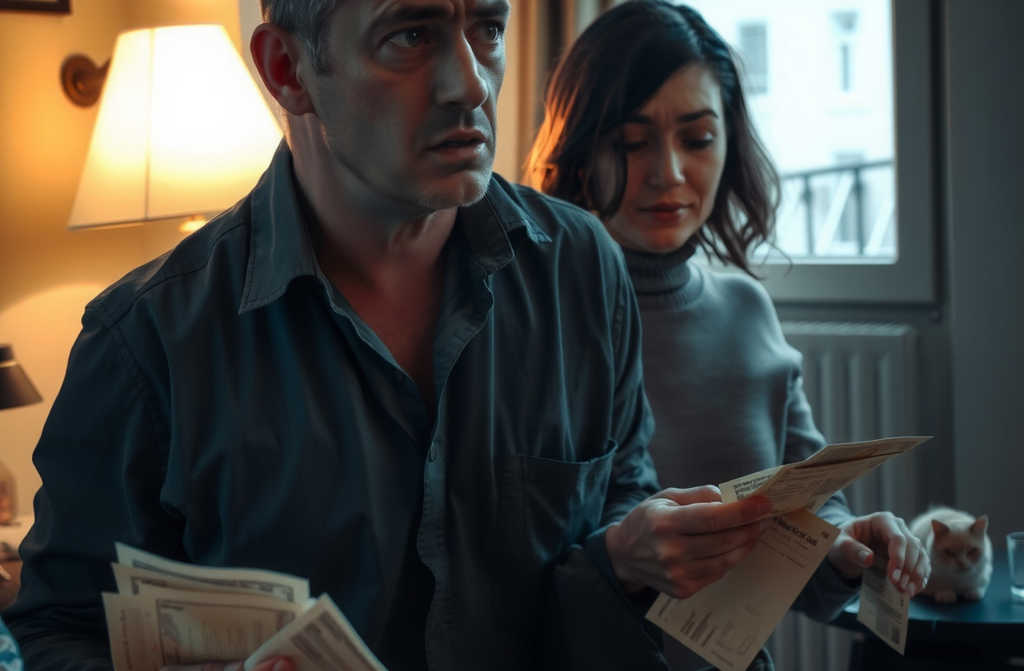
I suggest a separate budget, and she saves up for a holiday without even asking me first and leaves me on my own.Simon, 52.You wanted a separate budget, Simon
But not *that* separate!
How separate? So I keep saving while you decide what Im allowed to spend on?
Honestly, I still dont know exactly when my brilliant plan turned against me. At first everything seemed logical, convenient and, above all, fair at least in my head, where I always cast myself as the chief strategist of the relationship and my woman as the tidy executor with no extra initiatives or independent decisions.
Im 52, not a teenager. Ive been married, divorced, made mistakes, learned a few lessons, and when I met Emily, 46, eight years ago I was convinced I had finally found a woman with whom I could live peacefully, without drama, without all these modern fusses about personal boundaries, financial independence and the like things I used to think only complicate a proper manwoman partnership where everything is simple and clear: the man is the head, the woman stands by his side.
We live in my flat in London; I always make a point of reminding her, subtly, that the comfort she enjoys comes from me. In principle everything is fine until the idea that later proves to be the beginning of the end of the system I liked so much pops into my head.
Separate finances.
I put the suggestion out calmly, without pressure, feeling almost noble, explaining that its modern, honest, transparent, that every adult should be responsible for his own money, that it would erase complaints, misunderstandings and endless who contributed what talks. To my surprise Emily agrees instantly, without debate, without conditions, without hysteria; she just nods and says:
Alright, lets give it a go.
Thats when, looking back, I should have raised an eyebrow.
Because a woman who says yes far too quickly isnt always just compliant; sometimes shes already decided everything inside, and you just havent caught up yet.
The first months are perfect. We split the grocery bill, the council tax, the household expenses; each of us pays for ourselves, and I feel everything finally runs on an honest, even keel no longer the nagging feeling that Im being taken for granted. Honestly, I used to get irritated when I paid more, even though I tried not to show it; a man should be generous, but within sensible limits.
And then the beauty of it.
Each to his own.
But, as I later discover, each to his own isnt only about money. It also means freedom. And I didnt factor that in.
After about six months I notice Emily has changed. Not outwardly she still cooks, cleans, looks after the flat but theres a new calm, confidence, independence about her that starts to unsettle me. I used to feel she relied on me to some degree; now she doesnt.
She stops asking for advice. She stops checking in. She stops getting my approval. At first its little things, then bigger ones. I see new handbags, shoes, purchases that, to my eyes, look unnecessary, and I cant figure out where the money is coming from, since weve been saving for a holiday together.
Yes, we agreed to save for a summer trip, both of us contributing, planning responsibly, adultstyle, and I assumed shed be as diligent as I am.
Well not quite.
Truth be told, my own money has been drifting. Ive lent it to a friend, settled a few debts, bought a few small things here and there nothing serious, but the sum I was supposed to set aside for the vacation never quite adds up.
Im not panicking because I tell myself were a team; if something comes up, Ill chip in, shell chip in relationships arent bookkeeping, after all.
Emily, however, sees it differently. She sees it as bookkeeping.
One evening she says, completely calmly, I bought the tickets.
Im taken aback. Tickets for what?
A fourweek seaside break, with a friend.
I feel as if Ive been punched.
With a friend? What about me?
You said it was a waste of money.
I remember her. A couple of months earlier she suggested we go together, but I dismissed the idea as frivolous, claiming we could have a cheaper break in the countryside or at a cottage the usual normal people thing.
I said it, she heard it, drew her conclusions, and then went ahead without me.
You could at least have asked!
Ask about what? This is my money.
Inside, everything flips.
Yes, formally its her money. But it feels wrong. Not marital, not manly.
I start explaining that decisions in a partnership arent made in isolation, that you cant just up and leave me alone as if my opinion doesnt matter.
She looks at me, unflustered, no shouting, no hysteria, and says:
You were the one who suggested separate finances. Im just following the rules.
In that moment I realise Ive walked into a trap of my own making.
My version of separate finances carried a tiny, unspoken clause: I decide, she merely participates. In reality she became an equal partner and that equality is the most uncomfortable part.
Equality isnt just about duties; its also about rights. I wasnt prepared for that.
She flies off, leaving me with the cat, the bills, a house that suddenly feels empty and foreign, even though it used to feel like my domain, my world, everything under control. The control is gone. For the first time in ages I am truly alone not physically, but in the deeper sense.
She calls, texts, sends photos of the sea, talks about how relaxed she is, how wonderful the break is, and every message contains the thing that irritates me most she isnt missing me. She doesnt beg to come back, she doesnt feel guilty. And then I start to wonder whether the problem lies not with her, but with me. Still, I resent that conclusion; its easier to label her as overreacting, spoiled, enjoying too much freedom than to admit I wanted a convenient model where a woman is independent only as far as it doesnt inconvenience me.
When independence becomes genuine, I feel uncomfortable.
She returns after a month tanned, serene, a stranger to me.
We live together again, but the relationship isnt the same. We no longer raise the budget issue; she doesnt either. Yet an invisible, palpable line now runs between us a boundary.
The most unsettling realization is that it wasnt about the money, not even the holiday. It was about seeing equality in practice, not just in words, and not liking what I saw.
Psychologists take
This story illustrates a classic clash between proclaimed equality and an unspoken need for control. The man proposes separate finances as a fairness tool, yet expects an informal hierarchy to stay intact, where his opinion remains decisive and the woman is a participant, not an autonomous decisionmaker.
When the woman interprets the rule literally and starts acting as an independent agent, cognitive dissonance erupts: outward equality, inward loss of authority. That breeds irritation, resentment and attempts to restore the old structure through blame and moral pressure.
The key lesson is that equality cant be halfhearted. You cant split expenses while keeping decisionmaking power in one partners hands. Financial independence inevitably brings autonomy in other choices where to travel, what to buy, who to spend time with.
The protagonists crisis stems not from his partners actions but from the collapse of a familiar dynamic that made him feel like the lead. Until he revises his expectations of a convenient woman, any venture toward genuine partnership will likely trigger internal conflict and disappointment.



A jászberényi diófa, amelyik hatszázezer forintot ért meg egy családnak
A jászberényi diófa, amelyik örökre megmentett egy udvart Negyedik éve dolgozom a jászberényi piacon zöldséges standnál, pont szemben azzal a...


Žentas, kuris liko: Birutės akys devynerius metus
Mane vadina nedėkingu žentu. Taip sako uošvienės draugės prie bažnyčios Pasvalyje, kai aš parvežu ją iš poliklinikos ir padedu išlipti...


האלמנה מרחוב הדקלים
היה סוף אוקטובר, בבאר שבע עוד נשבה החמסין המאוחר שחודר דרך כל בד, לא משנה מה לובשים מתחתיו. אני לבשתי...


Свекървата ми изхвърли дрехите, а мъжът ми мълчеше
Стоях във всекидневната с разкъсан найлонов плик до краката и гледах празния рафт в гардероба. — Къде е ризата ми...


Dvě stě padesát hodin, matko
Tereza seděla v kuchyni na sídlišti Lesná v Brně, byla půl čtvrté ráno, a za oknem svítila jediná rozsvícená lampa...


Konvice, co nikdy nevystydla
Jmenuji se Radka Bartošová, bydlím na sídlišti v Pardubicích, ve stejném paneláku už osmadvacet let, a naproti přes chodbu, ve...


מאה חמישים מטר על מגרש הכדורגל של בית הספר בעפולה
אני עובדת בבית הספר התיכון כבר שתים עשרה שנה, מזכירה במשרד המנהלת, ורואה הרבה דברים שהורים לא רואים. אבל את...


Il quaderno di ricette di mia suocera
Mi chiamo Massimo, ho quarantatré anni e faccio il ragioniere a Bergamo. Per dodici anni ho vissuto nella stessa palazzina...