
EN
He Saw Our Twins Four Years After I Vanished

It was our fifth anniversary. I’d snagged a table at Kurota, the tiny sushi bar in Belltown where we used to cram into a corner booth back when Nathan was still coding in a rented garage and I was managing a bookstore in Fremont. I picked up the whole spread myself: toro sashimi, crispy shrimp tempura, a roll they used to call the “Sleepless in Seattle,” and a slice of yuzu cheesecake in a cardboard box. I even rewrote the anniversary card I’d bought two weeks ago: *To five more. And then forever.*
I still believed the early version of us was in there somewhere.
Nathan’s office sat on the forty-first floor of the Nexus Tower, a glass spear he’d moved into after his AI logistics platform went public eighteen months ago. I rode the private elevator with his birthday code—I’d memorized it, he’d never changed it—the insulated bag swinging against my leg. I was going to surprise him. No assistant, no heads-up. Just me and the memory of the man who once proposed with a ring pop because he’d spent every last dollar on our first shared apartment.
Instead, the elevator doors opened onto silence and a slice of light from the conference room.
Nathan stood by the floor-to-ceiling window. Meredith Yu, his executive strategist—the woman who’d been “just a colleague” for the better part of nine months—had her hands pressed flat against his chest. Her lips were sealed over his like a deal being finalized.
I didn’t make a sound. I just watched for five full seconds while the city glittered behind them.
Nathan’s eyes flickered open. The color drained from his face in a single, almost theatrical wave. “Charlotte…”
Meredith stumbled backward so fast her heel caught the edge of the rug and she nearly went down.
I looked at her once. Not hatred. Not jealousy. I saw a woman who’d been sold a version of my husband that was never real, and I almost pitied her for it.
Then I found Nathan’s gaze. “I saw you.”
I set the bag on the polished stone floor right beside the doorframe and walked back into the elevator. I heard him call my name twice before the steel sealed shut.
No tears. Not then. I just stood perfectly still and watched the floor numbers tick down.
When he came home to our Ballard penthouse near 4 a.m., I was already gone.
Not a single shirt remained in the closet. The gallery wall of our hiking trips in the Cascades was bare. I’d even taken the ridiculous clay mug he’d made me at a pottery class in Fremont, the one that listed to the left. The drawer full of concert stubs and handwritten notes was empty. No letter. No “we need to talk” sticky note on the fridge. I’d discovered that if you really want to leave, you take everything that belonged to you, and you don’t leave a forwarding address.
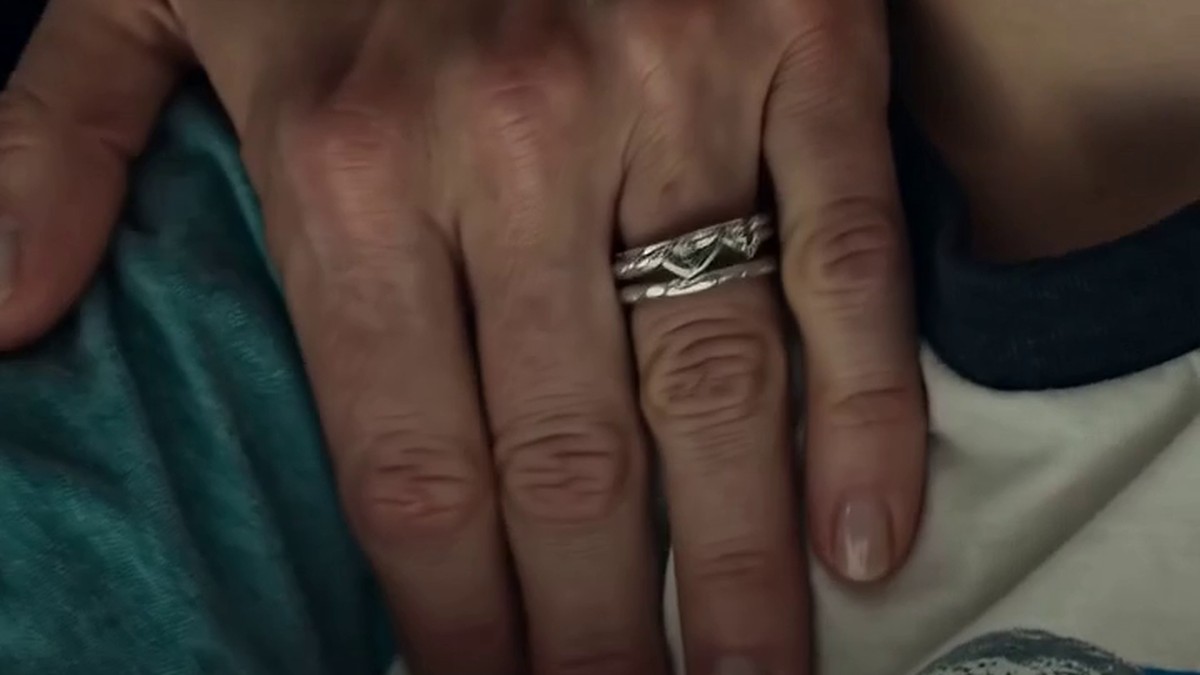
Over the next month, his calls rang through to a disconnected line. Flowers arrived at my parents’ place outside Tacoma. My mother sent them all back with a single line on a notecard: *She asked you not to look for her.* My father drove out to meet him once, handed him a sealed envelope containing only his grandmother’s wedding ring—the one thing I couldn’t bring myself to keep—and walked away without a word.
I didn’t disappear to be cruel. I disappeared because I knew exactly what would happen if I stayed. He’d promise therapy. He’d blame the stress of the IPO. He’d buy me a trip to Paris and call it a fresh start. And I’d cry on a hotel balcony in the eighth arrondissement while he took a business call from Meredith about quarterly projections.
So I rebuilt everything in a narrow little house on the Oregon coast, just outside Cannon Beach. The sound of the Pacific was better than any apology he could have scripted.
Then, three months after I left, the nausea hit.
I sat on the bathroom floor in that drafty little rental at six in the morning, staring at a plastic stick with two pink lines, and I whispered, “No. No, no, no…”
A week later, a soft-spoken OB-GYN with gray-streaked hair turned the ultrasound monitor my way and smiled. “I hope you’re ready for a surprise.”
“What do you mean?”
She tapped the screen. “Here’s one heartbeat. And here’s the second.”
Twin boys.
I cried for two hours straight after that appointment—not grief, exactly, more like the terrifying weight of knowing I was about to raise two human beings entirely alone, while four hundred miles north, my ex-husband was probably ordering a Macallan 18 in his corner office and telling himself I was a chapter he could close.
I never told him.
That’s the part people judge. But I’ll say this: I grew up watching my own mother stay with a man who never loved her, only because she was pregnant with me. I promised myself at eleven years old that I would never, ever chain someone to me by obligation. And Nathan… Nathan would have shown up with duty shining in his eyes like polished silver. He’d have provided. He’d have stood there in the delivery room looking terrified and noble. And I would have spent every birthday, every Christmas, every ordinary Tuesday wondering if he was kissing someone else in a conference room while telling himself he’d done the honorable thing.
I wanted my sons to be wanted for themselves, not for the guilt of their father.
I named them Leo and Eli. They arrived wailing in a Portland hospital on a snowy February morning, six weeks early, small as bread loaves but stubborn from the first breath. Four years later, they were freckled, messy-haired, and permanently attached to their favorite things: Leo to a stuffed octopus named Squish, Eli to a library card he refused to let me replace even though the lamination had peeled off in one corner.
I had a job editing grant proposals remotely. I’d painted the kitchen cabinets a reckless shade of yellow. I’d learned to bake bread from a sourdough starter a neighbor gave me. It wasn’t the life I’d imagined at twenty-six on my wedding day, but it was real, and every inch of it belonged to me.
Then, on a random Saturday in mid-October, I took the boys to the Oregon Museum of Science and Industry in Portland. There was a dinosaur exhibit they’d been begging to see. Leo wore his bright green rain boots. Eli wore one red sock and one blue one because he was “testing the theory of color alignment,” his exact words.
We were in the physics lab, elbows deep in a sand table demonstrating erosion, when I heard a coffee cup hit the floor behind me.
I turned.
Nathan stood ten feet away, frozen beside a display on tectonic plates, his perfectly pressed button-down now splattered with Americano. He wasn’t looking at me. He was staring at the two four-year-olds with dark curls and his exact same gray-green eyes, side-by-side, building a sand castle that kept collapsing.
The world went muffled, as if someone had thrown a blanket over the entire room.
“Charlotte…” His voice cracked on the second syllable.
Leo looked up first. “Mom, why is that man crying?”
I put a hand on each of my boys’ shoulders. “Give Mommy one minute, okay? Stay right here with Mr. Bennett.” I gestured to the volunteer supervising the table, a college kid who’d been helping Eli measure sand ratios. The kid nodded, clearly confused but game.
I walked toward Nathan, and he took a step back like I was about to hit him. But I wasn’t angry. I was just empty of all the things I’d imagined I’d feel.
“Can we talk outside?” I said quietly.
He followed me into the courtyard near the river. The wind off the Willamette was sharp. He kept opening his mouth and shutting it again, and I realized I’d never seen the man speechless in the entire decade I’d known him. Not during the crash of ’08. Not during the SEC audit. Not even during the boardroom coup that almost ousted him before the IPO. But now, here, he was undone by two small boys and a sand table.
“They’re mine.” It wasn’t a question.
“Yes.”
“Twins.” He said it like he was confirming a weather report. “How— how long?”
“They turned four in February. I found out I was pregnant three weeks after I left. There were two.”
He pressed both hands against his face and stood there a long time. I heard him breathe—ragged, uneven. “You didn’t tell me. All this time, you never— Charlotte, I could have been there.”
“I know.” I leaned against the railing. “And you would have been there. You’d have showed up with a post-nup and a college fund and a carefully scheduled visitation calendar. And every time you picked them up, Meredith would’ve been in the car, or some event would’ve come up, or you’d have sent a driver instead. I’d have spent the next eighteen years explaining to them why Daddy didn’t come to the school play, and then one day they’d be old enough to realize Daddy chose his assistant over their mother on his fifth anniversary. And they’d learn to settle for part of a person the way I did.”
His face crumpled. “That’s not fair.”
“It’s exactly what happened to your father, Nathan. You told me yourself he spent your entire childhood making you feel like a quarterly target. I wasn’t going to let that be my sons’ inheritance.”
A long silence. A ferry horn moaned somewhere downriver.
Then he said, almost too softly to hear, “I haven’t been with anyone since you left. Not after that night. I ended it with Meredith within a week. Sold the penthouse. I’ve been alone.”
That hit me harder than the kiss ever had. Because he wasn’t saying it to win me back—I could tell from the way his voice kept breaking in the middle of sentences. He was just confessing, the way you do when there’s nothing left to salvage.
I hadn’t expected that.
I looked back through the glass door. Eli was now explaining something to Leo, waving a plastic dinosaur in the air while the volunteer pretended to be eaten alive. Leo was cackling, that ridiculous, bubbling laugh he’d had since he was nine months old.
“Do you want to meet them?” I asked.
Nathan stared at me like I’d just handed him a key he didn’t deserve. “You’d let me?”
“You’re standing here. They’re here. I’m not going to drag them out the back entrance while you watch.” I swallowed. “But I need you to hear me. If you walk through that door, you’re not the CEO. You’re not the man with the empire and the assistant who made you feel important. You’re just a guy who once promised me a ring pop and meant it. That’s the only version of you I’m willing to let near them. At least for now.”
He nodded, and I saw his jaw tighten—the same way it used to right before he’d solve an impossible technical problem. “Okay.”
I led him back inside. The boys turned at the same time, and Eli tilted his head, that curious cock to the left he definitely got from Nathan.
“Who’s that?” Leo asked, clutching Squish.
I knelt down between them. “This is someone who knew Mommy a long time ago. His name is Nathan. And he’d really like to see this sand castle you’re building, if that’s okay.”
Eli considered this seriously, then held out a blue plastic shovel. “You have to dig from the bottom first. Otherwise the moat collapses.”
Nathan took the shovel. His hand was trembling. “Bottom first. Got it.”
He crouched down on the museum floor in his thousand-dollar trousers and started digging a trench in the wet sand beside his sons. Nobody said anything profound. There were no big speeches, no grand reunions. Just a man and two boys and a collapsing moat and a woman standing a few feet away, watching, letting herself wonder for the first time in four years if some things could be rebuilt from ruins.
Leo looked up at me after a moment and said, “He’s got the same eyes as us, huh?”
“He does,” I said quietly.
Eli shrugged. “Cool.” And then he directed Nathan to add more water.
I didn’t promise him tomorrow. I didn’t promise anything. But I let him stay until the museum closed, and when the boys asked if “that man” could come see the dinosaur bones at the nature center next week, I didn’t say no.



Прощання на пероні в Ніжині
Мене звати Тарас Ковальчук, мені сорок три, і вісімнадцять років я працюю провідником на потязі "Ніжин-Київ". Того ранку я саме...


Браслет Каспара: сім років брехні під одним дахом
П'ятирічна дівчинка тицьнула пальцем у великий портрет у передпокої й запитала так, ніби це найзвичайніше питання на світі: — А...


Вінстон і хлопчик, що навчив собаку довіряти знову
Собака-бульдог лежить у самому кутку вольєра, на сірій ковдрі, притиснувши голову до бетонної підлоги, і слухає кроки в коридорі притулку...


Коробка з книжками на Раневській, або чому батько мовчав три роки
Мене звати Тарас Коваленко, мені сорок два, і я керую мережею автосервісів у Дніпрі. Того четверга мені скасували переговори з...


Автомийка на Богунській, три роки мовчання
Мене звати Максим Ковальчук, мені тридцять шість, і я власник автомийки на Богунській у Житомирі. П'ять постів, компресорна станція, яку...


Колесо від воза
Пам'ятаю той звук ще до того, як розплющила очі, — метал, що б'ється об тверду глину подвір'я, рівний, ніби хтось...


Тато продав овець, щоб я мав диплом
Мар'ян Ковальчук приїхав до Залісся в середу вранці, двадцять другого липня. Вийшов з "Тойоти" на краю ґрунтової дороги, там, де...


Ранкова зміна в кав’ярні на розі Дерибасівської
Мене звати Оксана Гриценко, я двадцять третій рік працюю в невеликій кав'ярні "Затишок" неподалік Привозу в Одесі. Бачила за цей...