
З життя
Кіт спостерігав за жінкою біля колонки, вловлюючи аромати.

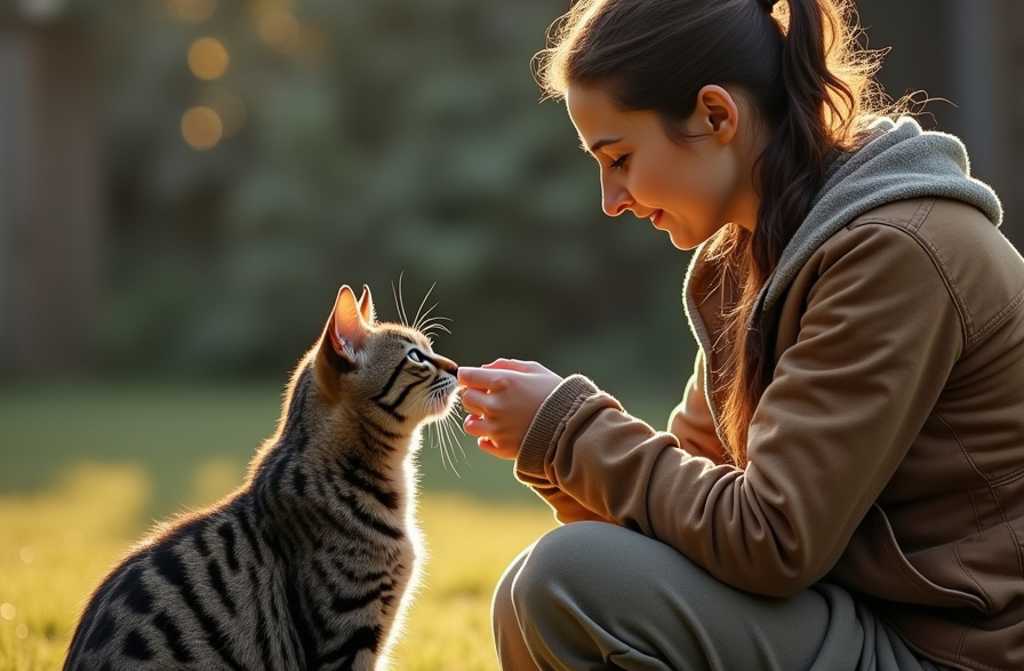
Кіт дивився на жінку, яка набирала воду з колонки, і принюхувався. Навідуватися до цих сараїв він вже звик, ганяв тут щурів та ловив мишей сім’ями, проте до переднього двору ще не наважувався підійти. Його шкіра, заживше око, зранене ще в молодості, обрубок хвоста і залишки вух, що відмерзли якоїсь зими, говорили про те, що без дому він не переживе наступних холодів.
Кіт дивився на жінку вже не перший день, у її дворі був особливий запах. Ну, можливо, для когось цей запах і не особливий, проте для Кота — якраз підходящий, пахло лише нею. Жінка була нетовариською, і Котові це подобалось, адже любов’ю до людей він теж не відзначався. Багато чого в його котячому тілі було побито і зламано через людей.
Кіт думав, як підійти до жінки, і чи варто взагалі намагатися. Може, прошмигнути у двері, коли вона буде заходити в будинок, раніше він так заходив до теплої корівні. Але раніше його кістки так не боліли, зараз, якщо знайде пару зазівавших щурів, уже радів, а колись клав штабелями. Кіт не знав слова “штабелі”, проте бачив, як це виглядає.
Кіт підійшов до її ноги, повільно вильнув обрубком хвоста, кліпнув здоровим оком і сказав “Мур”. Якось він бачив, як робила симпатична кішечка з сусіднього села. Звичайно, муркотіла вона більш ніжно і довше, але це було перше “мур” з дитинства, Кіт тільки мамі так муркотів.
— Приємно познайомитись, – посміхнулася жінка. Вона теж спостерігала за Котом цього тижня, раніше звертала увагу, як поживає дворовий кіт, підкидала йому залишки їжі, коли до весни миші та щури під’їдалися. — Отже, кажеш, Мур тебе звати, ну і прекрасно, стільки років поруч, а ніяк не познайомимось. Серйозний ти котик, Мур, — вона знову посміхнулася і попрямувала додому. Кіт погодився на ім’я Мур і пішов слідом.
У будинку жінка налила для Мура молока, він понюхав і невдоволено скривився, чому люди так люблять молоко? Вонюче, біле, незрозуміле що. Мур пройшовся будинком, освоюючи територію.
До Нового року вони вже разом дивилися серіали. Мур полюбив теплі пиріжки, які жінка пекла на кефірі. Ні ловити не треба, ні гризти, ням, і вже проковтнув. Шерсть у нього засяяла, набряк з ока спав. Мур ніби помолодів. В новорічний день Мур не знав, що це новорічний день, просто на столі стояла гілочка ялини.
Жінка раптом впала посеред хати. Колись вона просто впала у коморі, але тут! Почався запах. Мур знав цей запах — так пахла щуря в капкані, і так пахла його мати, яка наїлася отруєного щура. Прикрий, затяжний нудотний запах наближення “нічого”.
Мур заметався навколо жінки, запанікував, раніше б не наважився, та тут, тут саме рвонуло, і він полоснув її по нозі, так що струменіла кров. Жінка застогнала, слабкою рукою дістала телефон з кишені, написала сусідці «допоможи» і знову розлилася по підлозі.
Потім прибігла сусідка, прийшли ще якісь лікарі, жінку поклали на носилки і відвезли. «Мур, мур, мур…» — говорила вона сусідці. Та спочатку подумала, що жінка марить, але жінка настійливо кивала в бік Кота, тож сусідка пообіцяла: «Так нагодую я твого страшидла, не хвилюйся».
Потім, через кілька днів, лікар сказав жінці, що її кіт допоміг зробити інсульт мінімальним, бо кровопускання знизило тиск, та ще багато розумних слів. Жінка це зрозуміла, вона досить швидко одужала, і її виписали на домашній режим, чесно попереджена не братися за справи мінімум місяць.
— Мур! Мур!
Кажуть, що коти йдуть “на Веселку” не через те, що не хочуть травмувати психіку господаря. Ба більше, коти навіть не знають нічого про цю психіку. Кажуть, вони просто йдуть куди завгодно, бо не розуміють, що біль приходить зсередини, що вона сидить в них самих, і вони йдуть, щоб сховатися від цієї самої болі.
Мур сховався в корівню, засунув голову під годівничку, і біль пішла. Пішла разом з життям.
А ще кажуть, що якщо в сім’ї захворів кіт, то значить хтось із жителів родини врятований, і треба обов’язково звернути увагу на те місце, яке боліло у кота, можливо, там засіла якась хвороба. Ось такі вони, самовіддані…



Winter had blanketed Andrew’s garden in a soft layer of snow, but his loyal dog Duke, a giant German Shepherd, was behaving strangely. Instead of curling up in the spacious kennel Andrew had lovingly built for him last summer, Duke stubbornly insisted on sleeping outside, right on the snow. Watching from his window, Andrew felt a pang in his chest—Duke had never acted like this before. Each morning, when Andrew went out to him, Duke fixed him with a tense stare. Every time Andrew neared the kennel, the dog wedged himself between Andrew and the entrance, growling softly and gazing at him pleadingly, as if to say, “Please, don’t go in there.” This behaviour—so out of character after years of close friendship—left Andrew unsettled. What was his best friend hiding? Determined to get to the bottom of things, Andrew came up with a plan—he lured Duke into the kitchen with a tempting steak. While the big dog, locked indoors, barked at the window in protest, Andrew carefully approached the kennel and crouched down to take a look inside. His heart skipped a beat as his eyes adjusted to the darkness and he saw something that chilled him to the bone… …Inside, huddled in a blanket, was a tiny kitten—dirty, frozen, and barely breathing. Its eyes opened with difficulty, and its little body trembled from the cold. Duke must have found it somewhere—and instead of chasing it off or leaving it to fend for itself, he had taken it in. He’d slept outside so as not to frighten the kitten, guarding the entrance as though the kennel sheltered a precious treasure. Andrew held his breath. He reached in gently and gathered the little creature to his chest. At that moment, Duke rushed over and pressed himself by Andrew’s shoulder—no longer growling, just quietly, ready to help. “You’re a good dog, Duke…” Andrew whispered, holding the kitten tight. “Better than many people I know.” From that day on, there weren’t just two friends living in the garden, but three. And the kennel, lovingly built, regained its purpose—as a tiny house for rescued souls.
Winter had draped my garden in a thick, sparkling blanket of snow, but my loyal dog Max, a massive old...


Every Love Has Its Own Shape On a blustery September day, little Annie stepped outside into the chill without her coat, shivering as the wind slipped right through her thin jumper. She stood at the garden gate, casting quiet glances around, not even noticing the silent tears streaming down her cheeks. “Annie, why are you crying?” came a gentle voice. She jumped, finding Mikey, the boy from next door, a little older, with his hair sticking up at the back. “I’m not crying, it’s just…” Annie fibbed, wiping her eyes. Mikey watched her for a moment, then dug three sweets from his pocket. “Here—don’t tell anyone, or all the kids will come running. Off you go, get inside,” he said firmly, and Annie obeyed. “Thank you,” she whispered, “but I’m not even hungry… just…” Mikey understood and simply nodded, walking off. Everyone in the village knew Annie’s dad, Andrew, drank too much. He often went to the only shop in the village to ask the shopkeeper, Val, for credit until payday. Though she scolded him, she still gave him what he asked for. Annie returned home, her stomach rumbling. The house was quiet—her father was out cold on the sofa, empty bottles on the kitchen table and floor, a heaviness filling the air. She opened the cupboard, but there wasn’t a crumb of bread. Weak with hunger, Annie ate the sweets Mikey had given her and moved to her homework, perching on a stool and pulling her knees to her chest. Numbers blurred in her maths book as she gazed at the wind whipping golden leaves around the yard. Out the window stood the vegetable patch—once lush and green, now grey and unkempt, the strawberry bed empty and even the old apple tree withered. Her mum used to care for it all, making sure every sprout thrived. The apples, always sweet, were picked early this summer by her dad, and sold at market with a muttered, “Need the money.” Once, life had been full of laughter—her dad cheerful, her mum baking apple jam buns and magic heart-shaped rolls that granted a wish if eaten warm from the oven. But when her mum’s heart failed, she vanished into the hospital and never came home. “Mum’s watching from above now,” her father cried, clutching Annie tight, before he started to drink, drifting away, and letting strangers fill the house. Clutching her battered old bunny, Timmy—her mum’s last gift—Annie whispered, “Do you remember Mum, Timmy?” She thought he must—just as she did—and closed her eyes to comforting memories of her mother in her apron, hair tied back, making heart-shaped rolls and promising that “every love has its own shape.” On weekends Annie wandered to the edge of the woods, to the long abandoned gardener’s cottage, where she would gather fallen apples and pears from the late old Mr. George’s garden, reassuring herself, “I’m not stealing, they’re only rotting on the ground.” This time, as Annie picked up an apple, a woman’s voice stopped her short. “Oi, who’s that over there?” The lady in the long coat approached. “Who are you?” “Annie… I was just picking up fruit from the ground. I thought no one lived here anymore. I didn’t mean any harm…” “I’m George’s granddaughter, Anna. I just moved in. How long have you been collecting fruit here?” “Since Mum died,” Annie’s voice broke and her tears fell. Anna wrapped an arm around her. “Come inside, love. Let’s get you warm. I’m Anna, just like you—but when you grow up, everyone will call you Anna too.” Inside the tidy kitchen, bowls of steaming chicken soup and thick slices of bread revived Annie, followed by a basket of heart-shaped vanilla rolls, just like the ones her mother made. “They’re just like Mum’s buns,” Annie said, tears stinging her eyes. Anna insisted on walking her home. Annie pleaded, “Please don’t tell anyone what our house is like. Dad’s good—he just can’t pull himself together, not since Mum left. If they find out, they’ll take me away, and I couldn’t stand to leave him.” “I promise, love,” Anna said and hugged her close. Time passed. Annie, now with neat plaits, a smart new coat, and shiny boots, hurried to school, friends asking if it was true her dad had remarried. “It’s true,” Annie smiled proudly. “Now I have another mum—Auntie Anna!” Her dad, Andrew, finally stopped drinking with Anna’s help, and their house became warm and cheerful again. Annie grew up, went off to university, and always came home at holidays, rushing through the door with a shout, “Mum, I’m back!” Anna would greet her with a tight hug: “Welcome home, my clever girl!” And in the evening, Andrew would join them too, all of them happy—and Annie knew indeed: every love has its own shape.
Every Love Has Its Own Shape Annie steps out into the garden and shivers as a biting wind cuts straight...


To See With Her Own Eyes After a devastating tragedy in which Ksenia lost her husband and six-year-old daughter in a car accident, she struggled to recover. She spent nearly six months in a clinic, refusing to see anyone, with only her patient mother by her side. One day, her mother gently told her: “Ksenia, your husband’s business may be on the brink of collapse—Yegor is barely managing. He called me and asked that I tell you. Thankfully, Yegor is an honest man, but…” These words finally sparked something in Ksenia. “Yes, Mum, I need to keep busy; my Denis would have been glad to see me continue his work. Thankfully, I understand the business—he must have sensed it, bringing me into the office.” Ksenia returned to work and managed to save the struggling family business. Yet, despite her professional success, she missed her late daughter terribly. “My dear, I want to suggest you consider adopting a little girl from an orphanage—someone who has it even harder than you. You can help her, and someday, you’ll understand that this is your salvation.” After careful thought, Ksenia realised her mother was right. Soon she visited the orphanage, knowing she could never replace her own child but hoping to help another. Arisha had been almost completely blind since birth. Her parents, both well-educated and from respectable families, abandoned her when they learned of her diagnosis, unwilling to shoulder the responsibility. Even the most upstanding can succumb to cowardice and betrayal. Thus Arisha came to the nursery, where she was named Arina. She grew up hardly able to see, perceiving only faint shadows. At the orphanage, she learned to read, adored fairy tales, and believed that one day a kind fairy godmother would come for her. On the eve of her seventh birthday, her fairy arrived—a beautiful, striking, wealthy, but deeply unhappy woman. Arina couldn’t see her clearly but sensed her kindness. When Ksenia came to the orphanage, the director was surprised that anyone would ask for a child with health issues. Ksenia avoided explaining, fearing misunderstanding, and gave the usual assurances that she had the resources and desire to help a disabled child. A caretaker led Arina out by the hand. Ksenia, upon seeing her, instantly knew—this was her child. She was angelic, with golden curls and huge blue eyes—pure, deep, and sightless. “And who is this?” Ksenia asked, unable to tear her eyes away. “Our Arisha—such a lovely, gentle soul,” the caretaker replied. “She’s mine. That’s certain,” Ksenia decided at once. Ksenia and Arina became devoted to each other, filling essential roles in each other’s lives. After Arina joined the family, Ksenia’s world changed and gained new purpose. Upon consulting doctors, she learned that an operation might restore Arina’s sight, though she’d need glasses. Clinging to hope, Ksenia arranged the operation before school started. Though Arina’s vision saw little improvement, another chance awaited when she was older. Time passed. Ksenia lavished love on her daughter, while her business flourished; though young and beautiful, she had no interest in men—her life revolved solely around Arina. Arina blossomed into a rare beauty and graduated from university. Grateful and unspoilt, she began working for her mother’s company. Ksenia guarded her daughter’s circle warily, fearing that some opportunist would prey on Arina’s naivety and covet her dowry—ample though it was—and always made it clear such schemes would never succeed. Then, Arina fell in love. Ksenia met Anton and, seeing nothing amiss, approved of their relationship. Before long, Anton proposed, and wedding preparations began. Six months after the wedding, Arina was scheduled for her final eye operation. Anton was affectionate and attentive, though occasionally Ksenia sensed something off, which she dismissed. The young couple visited the countryside restaurant where their wedding would be held to discuss décor. It was nearly empty that afternoon. Seated at a table, Anton placed his phone down, but then the alarm on his car went off, prompting him to step outside. While Arina waited, his phone rang persistently. At first, she hesitated to answer, but the ringing continued. She picked up and, before she could speak, heard the booming voice of Anton’s mother, Inna Sergeevna. “Son, I’ve figured out how we can rid ourselves of that blind girl quickly. My friend at the travel agency has two tickets held back for you. After the wedding, tell your little wife you want to see the mountains together. Go hiking, just the two of you, and arrange a little ‘accident’—she slips, she falls. Then go to the police and say your wife’s missing. Say you argued and she stormed off alone. Cry, act devastated, demand a search. When they find her, they’ll think she fell. Who’s going to investigate a foreign tourist’s accident? I know you can play the grieving husband—everyone will believe you, even her mother. If they restore her sight, it’ll be harder to get rid of her—don’t lose all that money, son. Think about it. I’ll hang up now.” Inna Sergeevna disconnected. Arina, shaking, dropped the phone as if it had burned her. “So Anton and his mother want me dead,” Arina thought in horror. A moment ago, she’d been a blissful bride-to-be. Now, the people she and her mother had come to trust were plotting her murder. Arina realised Anton hadn’t overheard the call and tried to keep her composure as he returned. “That’s odd—the alarm must’ve been a cat, but there’s no sign of damage,” Anton said, picking up his phone as it rang again. “Yes, Roman, I’ll be right there,” he said into the phone. Hanging up, he added, “Bad luck—Roman needs me urgently at the office.” “Go ahead,” Arina whispered, “I’ll wait for Mum and we’ll sort everything out.” “Right, I’ll head off. See you.” Arina sat weeping at the table. The restaurant manager, Katya, came over, recognising her. “Arina, are you all right? Where did Anton dash off to—you were just discussing—?” “It’s okay, Katya. Mum’s on her way, just a misunderstanding. Anton was called into work.” “Shall I bring you some tea? You seem shaken.” Arina nodded. Ksenia knew her daughter was meeting Anton at the restaurant and was surprised by Arina’s call. “What could have happened? My poor girl sounded distraught,” she thought, driving over. Twenty minutes later, she joined Arina at the table. “Arina, I was worried sick driving here.” “Mum, Mummy—” Arina’s tears flowed. “They want to kill me.” “Who?” her mother asked, bewildered. “Anton and Inna Sergeevna. I heard it myself. She called, and he’d left his phone on the table when he went outside. She told him to take me to the mountains and push me off a cliff. She pushed him to hurry, so we wouldn’t have time for the operation.” “Darling, what are you saying? Are you sure? Are you okay?” “Mum, please believe me, I heard it myself. Inna Sergeevna never realised she was speaking to me instead of Anton. I hung up before she suspected. Anton was called in to work.” Ksenia was in shock. Had they been so wrong about Anton? What now? As they discussed their next move, Anton phoned Arina. “Well, Arisha, did your mum arrive? Have you sorted out the décor?” Ksenia took the phone. “Hello, Anton. Good thing we learned about your and your mother’s plans in time. Listen carefully—your trips, your plans in the mountains…” “What plans? What trips?” Anton either truly didn’t understand, or he was playing the part very well. “You know—the mountains, where Arina was meant to die in a tragic accident. You realise if your phone goes to the police, they can retrieve everything, even deleted messages. Understand?” There was a pause. “I understand, but it wasn’t me, it was my mother…” “Right. Not only a scoundrel, but a coward too. Goodbye, Anton.” The next day, Anton fled town, blaming his mother for ruining their scheme, grabbing her money, and disappearing, terrified that Ksenia and Arina would go to the police. Inna Sergeevna left as well, rushing to a friend in another city. Shocked by What She Saw With Her Own Eyes At the eye clinic, Arina underwent another operation. Ksenia remained by her side, the bandages still covering her daughter’s eyes. Dr. Dmitry Igorevich, a young surgeon, took great care of Arina—the surgeon who’d performed her operation—and gently supported his beautiful patient. Dmitry blushed when speaking to her, obviously taken. Ksenia watched protectively, yet he seemed sincere and smitten. When Arina’s bandages were finally removed, he brought her a huge bouquet of roses. Arina was overwhelmed when she could truly see for the first time—she wept, finally able to take in the beauty of the flowers and the handsome, tall blond man with grey eyes. “Oh, I’m so happy—I can finally see everything!” Arina sobbed as Dmitry rushed to console her. Arina needed glasses for life, but that hardly seemed a hardship now. Time passed. Arina and Dmitry’s wedding was beautiful. A year later, they had a lovely daughter with her father’s grey eyes. Arina is truly happy—with a caring, reliable husband who will never let harm come to her. Thank you for reading, subscribing, and for your support. Wishing you happiness in your own life!
Seeing it With My Own Eyes After that terrible tragedy losing her husband and six-year-old daughter in a car accident...


My Son Skipped My 70th Birthday Claiming He Was Busy at Work—That Evening I Saw Him on Social Media Celebrating His Mother-in-Law’s Birthday at a Restaurant
The phone rang at precisely midday, slicing through the strained anticipation in my kitchen. I grabbed the receiver, running a...


Aunt Rita I’m 47 years old. Just an ordinary woman—a bit of a wallflower, not attractive, not blessed with a great figure. Lonely. Never been married, never wanted to be, because I believe most men are all the same—interested only in stuffing their faces and lounging on the sofa. Not that anyone’s ever proposed or asked me out, for that matter. My elderly parents live up in Newcastle. I’m an only child—no brothers or sisters. I do have cousins, but I don’t keep in touch. Nor do I want to. I’ve lived and worked in London for 15 years, in a regular office job. Each day is work and home, work and home. I live in a standard block of flats in a typical residential neighbourhood. I’m bitter, cynical—I don’t love anyone. I don’t like children. At Christmas, I went to visit my parents in Newcastle, as I do once a year. When I got back, I decided to clean out my fridge, throwing away old frozen food—dumplings, burgers, things I’d bought and never liked. I bundled it all up in a box to toss it out. In the lift, there was a little boy, maybe seven; I’d seen him with his mum and a baby sibling before. I even thought, “Some people—she’s gone and had another one!” The boy stared at my box. When we got out, he quietly followed me to the bins and asked in a timid voice if he could have the food. I warned it was old, but let him take it—none of it was rotten, after all. As I turned to leave, I watched him gently pick up the packets, close them up, and clutch them to his chest. I asked where his mum was. He told me she and his sister were ill—couldn’t get out of bed. I went back home and started cooking dinner, but couldn’t get that boy out of my mind. I’m not usually inclined to help, but something nudged me. I grabbed what I had in the kitchen: sausage, cheese, milk, biscuits, potatoes, onions, even some meat from the freezer. I realised I hadn’t a clue what floor their flat was on, but knew it was above mine, so I worked my way up, floor by floor. I got lucky; after two flights, the boy opened the door. He hesitated, but let me in. The flat was poor but spotless. His mum lay curled up on the bed next to her youngest, a bowl of water and cloths on the table. High fever, trying to cool her daughter down. The medicine they had was long out-of-date. I felt her mum’s forehead—hot as a stove. She woke and stared at me in confusion, then suddenly sat up, asking where her son was. I explained I was a neighbour and quickly got the details before calling for a paramedic. While we waited, I gave her tea and sausage—she wolfed it down, must have been starving. Barely able to feed herself, yet still breastfeeding her baby. The ambulance came, checked them over, wrote out a long list of medicines and injections needed for the little girl. I went out, picked up everything from the pharmacy and groceries for them, plus—on a whim—a ridiculous neon yellow monkey toy. I’ve never bought a child a present before. Her name’s Anna, she’s 26. She grew up in Manchester’s outskirts. Her mum and gran were Londoners, but her mum married a local and moved up there to work in a factory. Anna’s dad died in an accident at work. Her mum was left alone, jobless, and quickly spiralled into trouble. By the time Anna was three, neighbours contacted her granny in London, who took her in. When Anna was 15, her gran told her the truth—her mother died of tuberculosis. The gran hardly spoke, was miserly, and chain-smoked. At 16, Anna took a job at the nearest shop, first as a shelf-stacker, then at the till. Her gran died a year later. At 18, Anna dated a boy who promised everything but disappeared as soon as she became pregnant. She kept working, saving up, knowing there was no one to help. When her son was a month old, she’d started leaving him on his own so she could clean stairways and make ends meet. As for her daughter—the shop owner she went back to, when her son was older, raped her repeatedly and threatened to have her fired so she could never work again. When he found out she was pregnant, he gave her £100 and told her never to come back. Anna told me all this that night—thanked me, said she’d repay me by cleaning or cooking. I stopped her, said goodnight, and left. I couldn’t sleep at all, thinking, “Why do I live like this? Why am I so cold? I don’t care for anyone, not even my own parents. I have all this money saved with no one to spend it on, and here’s a little family with nothing—not even enough to get well.” The next morning, the little boy, Anton, brought me a plate of homemade pancakes and dashed off. I stood there, plate in hand, feeling warmth coming from the food, spreading through me as if I were thawing out. Suddenly, I wanted everything at once: to cry, to laugh, to eat. Not far from our block is a small shopping centre. The owner of a children’s shop there, after some confusion over sizes, even offered to come with me to Anna’s flat. I don’t know if she wanted the business, having seen I’d buy a lot, or was just moved by my mission. An hour later, four huge bags of clothes for the kids stood in Anna’s hallway. I bought bedding, food, vitamins, even toys. I wanted to buy everything—I finally felt needed. It’s been 10 days now. They call me Aunt Rita. Anna is quite the crafty homemaker—my flat feels cosier already. I’ve started calling my parents. I even text ‘KINDNESS’ to children’s charity fundraisers. I can’t believe how I lived before. Every day after work I hurry home, because I know someone’s waiting. And this spring, we’re all heading up to Newcastle together—tickets have already been bought.
Aunt Rita I’m 47 years old. Just an ordinary woman, nothing remarkable about me. You could say Im a bit...


My Husband and I Came to the Countryside to Meet His Parents for the First Time — The Warm Welcome, Home-Cooked Meals, and Tall Tales Around the Kitchen Table Would Change Everything
My husband and I have just arrived in the countryside to meet his parents for the first time. Harrys mum...


Michael Froze: From Behind the Tree, a Dog He’d Recognise Anywhere Watched Him with Sad, Knowing Eyes
I frozepeering from behind an old oak tree, a dog watched me with a sadness Id have recognised anywhere. Dust...


DO I REMEMBER? I CAN’T FORGET! “Polly, listen… Remember my illegitimate daughter, Anastasia?” My husband spoke in riddles, making me uneasy. “Do I remember? I can’t forget! Why?” I sat down, bracing for bad news. “Well… Anastasia is begging us to take in her daughter—my granddaughter,” he mumbled. “And why on earth should we, Alex? Where’s Anastasia’s husband? Disappeared into thin air?” I was intrigued. “The thing is, Anastasia doesn’t have much time left. She never had a husband. Her mother remarried and lives in America. They’re estranged, and she has no other family. That’s why she’s asking…” Alex couldn’t meet my eyes. “So, what’s your plan?” I had already decided. “Well, I’m asking you, Polly. Whatever you say, that’s what we’ll do,” he finally looked at me. “How convenient. You made mistakes in your youth, and now I’m to shoulder the burden of a stranger’s child? Isn’t that right?” My husband’s feebleness made me furious. “Polly, we’re a family. We should decide together,” Alex pushed back. “Oh, you remembered now! Yet, when you fooled around, did you consult me? I’m your wife!” Tears welled up and I stormed out… In school, I dated a boy named Peter, until a new boy, Alex, arrived and swept me off my feet. I broke up with Peter. Alex noticed me, walked me home, kissed my cheek, and picked flowers for me. A week later, he led me to his bed. I didn’t protest—I fell head over heels for Alex. After we graduated, he went off to serve in the army in another city. We wrote to each other for a year. Then Alex returned on leave. I was overjoyed. He promised we’d marry when he came back for good—already considered me his wife. His sweet words melted me every time, even years later: one loving look from Alex, and I’d melt like chocolate in the sun. Alex went back to the army. I waited, confident I was a betrothed bride. Six months later, a letter arrived: Alex had found “real love” in his garrison town and wasn’t coming back. But I was already carrying Alex’s baby. So much for a wedding—just as my gran warned me. When the time came, I gave birth to my son, Ivan. Peter, my old boyfriend, stepped in to help. Desperate, I accepted. Yes, Peter and I became intimate. I’d long given up hope of seeing Alex again. Then he turned up, surprised to see Peter there. “Can I come in?” Alex asked. “Come on in, since you’re here,” Peter reluctantly allowed. Sensing the tension, Ivan clung to Peter, wailing. “Peter, why don’t you take Ivan for a walk?” I was at a loss. When they left, Alex asked, “Is he your husband?” “What’s it to you? Why are you here?” I was angry and confused. “I missed you. I see you’ve made a life with Peter—you didn’t wait for me. Well, I’ll go—sorry to intrude on your happy family,” he said, heading for the door. “Wait, Alex. Why have you come—just to hurt me? Peter helps me cope with loneliness. He’s been raising your two-year-old son, by the way,” I tried to keep him there. My love for him hadn’t died. “I’ve come back for you, Polly. Will you have me?” Alex asked, hope in his voice. “Come in, dinner’s ready,” my heart leapt—he came back, so he hadn’t forgotten. Why resist? Peter was shoved aside. My Ivan needed his real father. Later, Peter married a lovely woman with two children. A few years passed. Alex could never love Ivan as his own—he was convinced Ivan was Peter’s son. Alex never really cared for Ivan. He always had an eye for the ladies. He was forever chasing after women, easily smitten, just as easily moving on—including some of my own friends. I cried but kept loving him, determined to hold my family together. It was easier for me than for him—the one who loves is always blinded by hope. I never needed to lie or invent excuses; I just loved him. He was my sun. Sometimes I wanted to leave, but then I’d scold myself: Where would I go, who could compare? Besides, Alex would be lost without me. I was wife, lover, and mother to him. Alex lost his own mother at fourteen—she died in her sleep. Maybe that’s why he always looked for lost affection elsewhere. I forgave everything. Once, after a bitter argument, I threw him out. He moved in with his relatives. Months passed—I forgot why we argued—but he didn’t return. At last, I went to his family’s house. His aunt was surprised to see me. “Polly, why do you want Alex? He said you’d divorced—he has a new girlfriend now.” I found out where she lived and paid them a visit. “Hello! Could I see Alex, please?” I asked politely. She just smirked and slammed the door in my face. I left in silence. A year later, Alex came back. By then the girl had given birth to his daughter, Anastasia. To this day, I blame myself for throwing him out—maybe that girl wouldn’t have scooped him up otherwise. I tried harder to please and adore Alex. We never talked about his illegitimate daughter. It seemed if we did, our family would fall apart. We let sleeping dogs lie. After all, what’s one stray child? It happens. I blamed the “temptresses” instead. In time, Alex settled down. Flings ended. He stayed home watching TV. Our son married early, gave us three grandkids. Then, out of nowhere… Anastasia, Alex’s daughter from long ago, reappeared—asking us to take in her daughter. How would I explain a new little girl to Ivan? He never knew about his father’s youthful escapades. In the end, we took legal guardianship of five-year-old Alina. Anastasia passed away, gone at thirty. Graves grow over with grass, but life goes on. Alex spoke to Ivan man-to-man. After hearing his father’s confession, Ivan said, “What’s done is done, you don’t answer to me. But the girl should stay—she’s family.” Alex and I breathed easier. We’d raised a kind son. Now, Alina is sixteen. She adores her Grandpa Alex, whispers secrets to him, calls me Granny, and says she’s my spitting image at her age. I never argue…
DO I REMEMBER? I COULD NEVER FORGET! Polly, darling, theres something I must tell you Well, do you recall my...