
З життя
— Mike, we’ve been waiting five years. Five. The doctors said we’d never have children. And now…

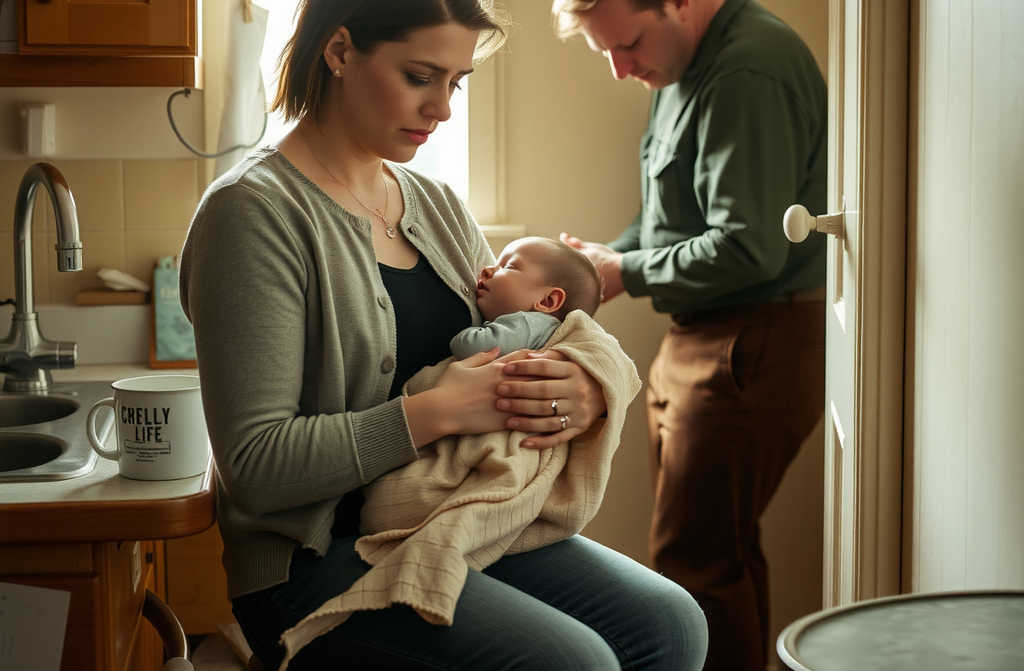
Mick, weve been waiting five years. Five. The doctors said wed never have children. And now
Mick, look! I froze at the gate, unable to trust my own eyes.
My husband clumsily stepped over the threshold, bent under the weight of a bucket of fish. The July chill seeped to the marrow, but what I saw on the bench made me forget the cold entirely.
Whats that? Michael set the bucket down and came over.
On the old wooden bench by the hedge sat a woven wicker basket. Inside, swaddled in a faded blanket, lay a baby.
His huge hazel eyes stared straight at meno fear, no curiosity, just plain staring.
Lord, Michael breathed, where did he come from?
I slipped a finger through his dark hair. The little one didnt stir, didnt cryjust blinked.
Clutched in his tiny fist was a crumpled scrap of paper. I gently unfolded it and read the note:
Please help him. I cannot. Forgive me.
We need to call the police, Michael muttered, scratching his scalp. And report it to the council.
But Id already scooped the infant into my arms, pressing him close. He smelled of road dust and unwashed hair. His overalls were threadbare yet clean.
Emma, Mick said, eyes widening, we cant just take him.
We can, I met his gaze. Mick, weve been waiting five years. Five. The doctors said no kids. And now
But the law, the paperwork Parents could show up, he protested.
I shook my head. They wont. I could feel it.
The boy suddenly broke into a wide grin, as if he understood our whole debate. That was enough. Through a few acquaintances we arranged foster care and the paperwork. 1993 wasnt a simple year.
Within a week odd things began to surface. The child Id named Charlie didnt react to sounds. At first we chalked it up to him being deep in thought.
Then the neighbours tractor rumbled past the window and Charlie didnt flinch a muscle. My heart lurched.
Mick, he cant hear, I whispered that evening, laying him in the old cradle Id inherited from my brotherinlaw.
Michael stared at the fire for a long while, then sighed. Well see a specialist in Brampton. Dr. Nicholas Parker.
The doctor examined Charlie, waved his hands, and said, Congenital total deafness. No surgery will helpnot this case.
I sobbed all the way home. Michael sat mute, gripping the steering wheel until his knuckles whitened. Later, when Charlie was asleep, he slipped a bottle from the cupboard.
Mick, maybe we shouldnt?
No, he poured half a glass and downed it in one gulp. We wont give him away.
Give away who?
His. We wont hand him over to anyone, he said firmly. Well manage ourselves.
How? How do we teach him? How?
Michael cut me off with a hand gesture.
If we must, youll learn. Youre a teacher, after all. Youll figure something out.
That night I lay staring at the ceiling, eyes wide. How do you teach a child who cant hear? How do you give him everything he needs? I thought.
Morning brought realization: he has eyes, hands, a heart. So, he has everything essential.
The next day I fetched a notebook and began drafting a plan. Hunt for books, invent ways to teach without sound. From that moment our lives changed forever.
By autumn Charlie turned ten. He sat by the window, sketching sunflowers that werent just flowersthey twirled, danced in a private ballet.
Mick, look, I nudged my husband as I entered the room.
Another yellow one. He seems happy today.
Over the years Charlie and I learned to read each other. I first mastered fingerspelling, then a fullhand sign language.
Michael learned more slowly, but the crucial wordsson, love, proudwere in his repertoire long ago.
There were no special schools for children like him, so I taught him myself. He learned to read fast: alphabet, syllables, whole words. Numbers came even quicker.
But the real magic was his drawing. He doodled on anything within reachfirst on a fogged window, then on a board Michael had hastily built for him, later with paints on paper and canvas.
I ordered the paints by post from the city, pinching pennies so Charlie could have decent supplies.
Your mute lad scribbling again? neighbour Sam peeked over the fence. Whats his point?
Michael lifted his head from the vegetable patch. And you, Sam, what useful thing do you do? Besides flapping your gums?
Village folk werent easy. They didnt get us. They teased Charlie, called him namesespecially the kids.
One day he came home with a torn shirt and a scratch on his cheek. He silently showed me whod done itKolya, the bosss son from the village.
I wept, tending the wound. Charlie brushed away my tears with his fingers and smiled, as if to say, Dont worry, itll be fine.
That evening Michael returned late, silent, a bruise blooming under his eye. After that, no one dared touch Charlie again.
As he entered his teens, his art evolved into a distinctive style that seemed to hail from another world. He painted a silent world, yet the depth of those pieces took your breath away. Every wall in our cottage was now an exhibition.
One day a regional education inspector arrived to check my homeschool setup. A sternlooking elderly lady stepped inside, stared at the paintings, and froze.
Who painted these? she asked in a hushed tone.
My son, I replied, proud.
You should show them to specialists, she said, removing her glasses. Your boy has a genuine gift.
We were terrified. The world beyond our little village felt huge and dangerous for Charlie. How would he cope without our familiar signs?
Well go, I urged, gathering his things. Theres an artists fair in the district. He needs to see his work.
Charlie was now seventeentall, lanky, longfingered, with an observant gaze that seemed to catch everything. He gave a reluctant nod; arguing with me was pointless.
At the fair his pieces were hung in the far corner: five modest canvasesfields, birds, hands cradling the sun. People walked past, glanced, but kept moving.
Then a silverhaired woman with a straight back and sharp eyes stood before them, unmoving. She turned to me abruptly.
Are these yours? she asked.
My sons, I said, pointing to Charlie, who stood stiffly with his hands clasped over his chest.
He cant hear? she noted, noticing our silent conversation.
Born deaf, I replied.
She nodded. Im Vera Sinclair, from the London Gallery. This piece she paused, inhaling deeply as she examined the smallest canvas, a sunset over a fieldhas something many artists chase for years. Id like to buy it.
Charlie froze, eyes locked on my face while I translated Veras words with clumsy gestures. His fingers twitched, distrust flickering in his eyes.
Are you serious about not selling? Veras tone was that of a seasoned professional who knew the worth of art.
I we never thought about selling, I stammered, cheeks flushing. Its just his soul on canvas.
She slipped a leather wallet from her bag and, without haggling, wrote a sum that matched what Michael earned in six months of his woodworking shop.
A week later she returned, taking a second piecethe one with hands holding the morning sun.
In late autumn the post arrived with a letter: Your sons work possesses a rare sincerity, an understanding of depth without words. True connoisseurs are seeking exactly this now.
The capital greeted us with grey streets and cool stares. The gallery turned out to be a tiny space in a converted mill on the outskirts. Yet day after day, people with keen eyes drifted in, studying the paintings, discussing composition and colour.
Charlie lingered at the back, watching lips move, studying gestures. Though he heard nothing, facial expressions spoke for themselvessomething extraordinary was happening.
Grants, residencies, magazine features followed. They dubbed him The Silent Artist. His canvaseswordless screams of the soul resonated with everyone who saw them.
Three years later, Michael could not hold back tears as he escorted Charlie to his solo exhibition. I tried to stay composed, but inside I was a whirlwind.
Our boy was an adult now, no longer dependent on us. Yet he returned one sunny afternoon, bearing a bouquet of wildflowers. He embraced us, took our hands, and led us through the village, past curious glances, to a brandnew white house with a balcony and towering windows. The locals had long whispered about the mysterious wealthy builder, but no one knew his name.
What is this? I whispered, eyes wide.
Charlie smiled and produced a set of keys. Inside were spacious rooms, a workshop, shelves of books, fresh furniture.
Son, Michael stared, bewildered, is this your house?
Charlie shook his head, gesturing: Our. Yours and mine.
He led us to the garden where a massive painting dominated the wall: the wicker basket by the gate, a woman with a radiant face holding a baby, and above it, a simple sign in signlanguage style: Thank you, Mum. I stood frozen, unable to move. Tears streamed down my cheeks, but I didnt wipe them away.
A usually restrained Michael stepped forward and enveloped his son in a bear hug so tight the boy could barely breathe.
Charlie returned the embrace, then reached out to me. The three of us stood, hand in hand, in the middle of the field beside the new house.
Today Charlies paintings adorn the worlds finest galleries. He founded a school for deaf children in the county seat and funds numerous support programmes. The village swells with prideour Charlie, who hears with his heart. Michael and I still live in that white house. Each morning I step onto the porch with a mug of tea, eyes drawn to the painting on the wall.
Sometimes I wonderwhat if we hadnt stepped out that July morning? What if Id never seen him? What if fear had held us back?
Charlie now lives in the city, in a spacious flat, but returns every weekend. He hugs me, and all doubts melt away.
Hell never hear my voice, yet he knows every word. He wont hear music, but he creates his ownthrough pigment and line. And looking at his joyous grin, I realise: sometimes the most important moments happen in utter silence.



A jászberényi diófa, amelyik hatszázezer forintot ért meg egy családnak
A jászberényi diófa, amelyik örökre megmentett egy udvart Negyedik éve dolgozom a jászberényi piacon zöldséges standnál, pont szemben azzal a...


Žentas, kuris liko: Birutės akys devynerius metus
Mane vadina nedėkingu žentu. Taip sako uošvienės draugės prie bažnyčios Pasvalyje, kai aš parvežu ją iš poliklinikos ir padedu išlipti...


האלמנה מרחוב הדקלים
היה סוף אוקטובר, בבאר שבע עוד נשבה החמסין המאוחר שחודר דרך כל בד, לא משנה מה לובשים מתחתיו. אני לבשתי...


Свекървата ми изхвърли дрехите, а мъжът ми мълчеше
Стоях във всекидневната с разкъсан найлонов плик до краката и гледах празния рафт в гардероба. — Къде е ризата ми...


Dvě stě padesát hodin, matko
Tereza seděla v kuchyni na sídlišti Lesná v Brně, byla půl čtvrté ráno, a za oknem svítila jediná rozsvícená lampa...


Konvice, co nikdy nevystydla
Jmenuji se Radka Bartošová, bydlím na sídlišti v Pardubicích, ve stejném paneláku už osmadvacet let, a naproti přes chodbu, ve...


מאה חמישים מטר על מגרש הכדורגל של בית הספר בעפולה
אני עובדת בבית הספר התיכון כבר שתים עשרה שנה, מזכירה במשרד המנהלת, ורואה הרבה דברים שהורים לא רואים. אבל את...


Il quaderno di ricette di mia suocera
Mi chiamo Massimo, ho quarantatré anni e faccio il ragioniere a Bergamo. Per dodici anni ho vissuto nella stessa palazzina...