
З життя
“Mom, sign over the country house and get out — it’s mine now.” The daughter didn’t know I haven’t been her legal mother for two months.

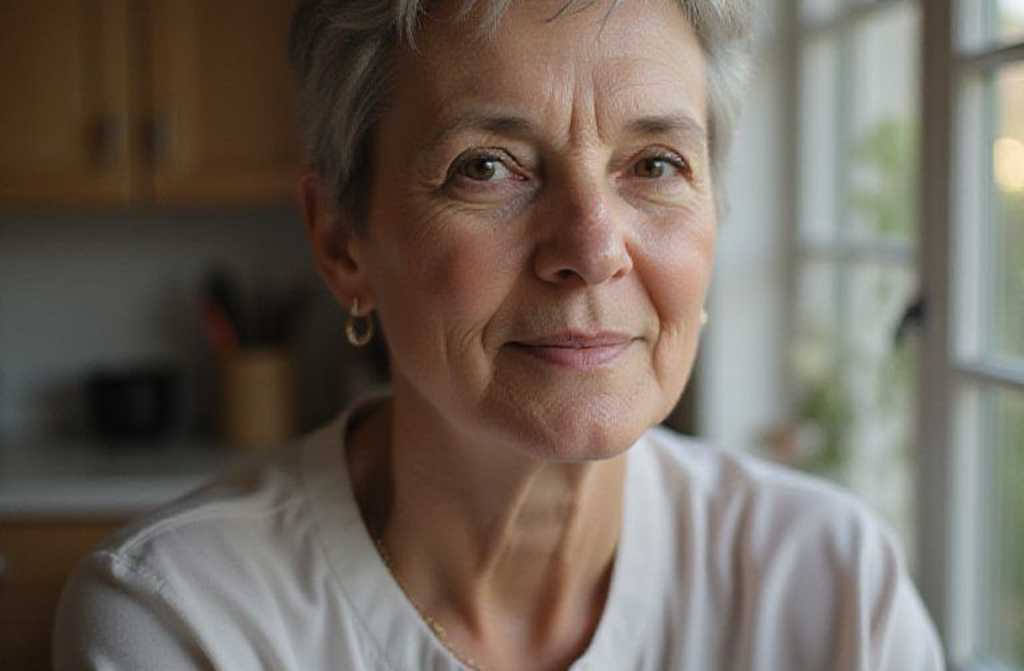
“Mum, what are you frozen for? Just sign here and here—and free up the cottage by Sunday. It’s mine now.”
Emma shoved the papers under my nose with a look like I’d short-changed her at the checkout. Not a daughter—a tax inspector. I slowly wiped my hands on my apron—it smelled of dill and blackcurrant leaves, I’d been bottling cucumbers—and gave her a long stare.
But inside I thought: “Finally. I’ve been waiting.”
Because I had papers in my dressing-gown pocket too. My own. And they were a lot more interesting than hers.
It all started six months ago…
In February, the solicitor phoned—Valerie, known her for twenty years, ever since I nursed her late husband in the clinic. Forty years I’d worked as a nurse.
“Helen, are you sitting down? Your brother Sam left a will. I’ve only just got round to sorting his safety deposit box.”
Sam—my older brother. Died three years ago, a bachelor, no children. I thought all he’d left was a two-bed flat in Manchester, which we’d split legally—a third to me, the rest to cousins.
“Val, what will? We’ve already done everything.”
“Are you sitting down or not? His cottage in Little Hampton. Two acres. With a house. He left it solely to you, by a separate will, back in 2020. I’m stunned myself—it was in a different folder, my old receptionist mixed things up.”
I sat down on the stool in the hallway. My ears rang. A cottage in Little Hampton—right next to the new bypass they built last year. Land there goes for fifty thousand an acre. Two acres—do the maths.
“And… why didn’t he tell me?”
“Read the note. He left one.”
I drove to Valerie’s that same day. In Sam’s envelope was a scrap of squared paper, his crooked handwriting:
“Helen, this is for you. Only you. Not Emma. She never visited me once in hospital in two years, even though I asked. But you fed me with a spoon. Don’t share the money with her—she’ll spend it without a second thought. Let it be your nest egg for old age. Sam.”
I sat there and cried. Not for the money. Because my brother had noticed. My brother, lying there with tubes, had noticed that I’m a person, not a servant.
I’d raised Emma alone since she was six. Her father ran off with a checkout girl from Tesco—good luck to them. I supported two—her and my bedridden mother. Then I buried Mum, Emma grew up, married Jack—a decent enough bloke, but she wears the trousers.
And you know how it goes? Once a mother isn’t needed every day, she’s needed “on demand.” Babysit the grandchildren. Make meatballs. Lend money “until payday” (they paid me back twice in ten years).
My cottage—the one I’d built with my late husband—Emma considered hers. Obviously. “Mum, we’re coming for the bank holiday weekend, light the sauna.” “Mum, we’re leaving Charlie for the whole summer.” “Mum, touch up the fence for Jack, he’s busy.”
I never argued. I’m quiet. Forty years as a nurse—you don’t fight there, you smile and give injections.
I didn’t tell Emma about Sam’s inheritance. Not a word. Don’t know why—my heart gave a lurch. I handled it all through Valerie—quietly, no fuss. I hid the documents in the sideboard, behind the china set Emma can’t stand.
Then, a month later, the strange phone calls started.
“Mum, did you know Uncle Sam had another cottage?”
I froze with my mobile at my ear. I was standing in the kitchen, peeling potatoes.
“What makes you think that, Em?”
“Jack was chatting to a bloke at work who lives in Little Hampton. He says Uncle Sam’s plot still isn’t registered. Mum, that’s inheritance! That’s—we need to sort it out before someone grabs it!”
Key word—”we.” Not “you, Mum.” We.
“Emma, I’ll handle it.”
“Mum, you don’t understand paperwork! I’ll do it all. Just sign a power of attorney—let me manage the probate. My friend’s a solicitor, she says it’s easier that way.”
That’s when something clicked in my head. Quietly. Like a lock on a safe.
I’m her mother. I know her. A “power of attorney” in my name—so she can register everything and transfer it to herself. I’m no lawyer, but I’d listened to hospital gossip for forty years—they pulled scams you wouldn’t believe.
“All right, love. Come on Saturday. I’ll sign.”
I hung up. Sat down. Looked at the potatoes. And for the first time in years, I laughed—to myself, out loud, in my empty kitchen.
On Saturday, Emma didn’t come alone. With Jack and her “solicitor friend”—a girl about twenty-five, sharp as a tack, in an ill-fitting suit.
“Mum, this is Laura. She’ll help with the documents.”
Laura fanned papers across my table like playing cards.
“Helen, so here’s a general power of attorney, here’s a consent form for registration, here’s a waiver of right of first refusal…”
“A waiver—from what?” I asked slowly, studying my work-worn hands.
“Oh… it’s just a technical formality,” Emma smiled at me with that smile I’d taught her as a child—charming, for teachers.
“Emma,” I looked up. “Tell me honestly. Do you want Sam’s cottage to go to me or to you?”
A pause. Jack coughed, buried in his phone. Laura pretended to look for a pen.
“Mum, what difference does it make? It’ll all come to me after you anyway. Why do you need the hassle of taxes at your age?”
“At your age.” Fifty-five, I’ll remind you. I’m still on part-time at work because the young nurses can’t give old folks injections without leaving bruises.
“How about this,” I said quietly. “Let me think about it. Until next weekend.”
Emma pursed her lips. But she didn’t show it.
“Fine. But don’t take too long. Probate can drag on for six months.”
After they left, I took my own documents from the sideboard. Stroked the embossed seal. And dialled Valerie.
“Val. How about we draw up one more document?”
Then came what I still remember with a chill.
Three days later, Emma called with steel in her voice:
“Mum, I found out everything. Uncle Sam made a will in your favour. You knew?!”
“I knew,” I said calmly, stirring jam.
“And you kept quiet?! Mum, have you lost your mind? That’s millions! Did you want to grab it all for yourself?!”
“Emma. My brother left it to me. Personally. With a letter.”
“What letter?! Show me!”
“No.”
One word. Short. “No.” I don’t think I’d ever said it to my daughter.
“You… you’ve gone mad. We’re coming on Saturday. And you’ll sign it all over to me. Like a normal mother, not a selfish cow!”
Dial tone.
My hands shook, I won’t lie. I sat and stared out the window for a long time. I thought—maybe I’m wrong? She is my own flesh and blood, maybe she…
Then I remembered Sam in hospital. Holding my hand and saying: “Helen, you’re good. Everyone uses you, and you’re good.”
And I stopped shaking.
On Saturday, the three of them turned up—Emma, Jack, and Laura. Emma walked in without a “hello,” slapped her papers on the table.
I wiped my hands on my apron. Took my folded document from my dressing-gown pocket. Unfolded it. Set it next to her pile.
“What’s that?” Emma squinted.
“That, Em, is a deed of gift. From me. For the cottage in Little Hampton.”
Her cheeks actually flushed.
“To me?!”
“No, love. To the Manchester Children’s Hospice. Already registered with the Land Registry. Two weeks ago. Call to check—Valerie, solicitor, her number’s in the book.”
Silence. The kind, you know, so thick you could hear a fly buzzing against the window.
“You… you’re joking.”
“You… you gave it away… to strangers… MILLIONS?!”
“I gave it to children who are dying. Not to a grown woman who remembers her mother once a month when the pickles run out.”
Jack, behind her, suddenly covered his face with his hand. At least someone in this family felt shame.
“You… you’re mad! You crazy old woman! I’ll… I’ll take you to court! I’ll have you declared incompetent!”
I smiled. Quietly. The corner of my mouth.
“Go ahead, love. I’ve got a psychiatrist’s certificate too—Valerie made me get one before the transaction. As a precaution. You know, just in case. For situations like this.”
Laura the solicitor silently started gathering her papers. She understood faster than anyone.
“Emma, let’s go,” she muttered. “There’s… nothing to be done now.”
“And THIS cottage,” I said to their backs, “I’ll also transfer. To Charlie. My grandson. With the condition that he comes into it at eighteen. Until then, it’s mine. If you want to bring him for the summer, bring him. Decently. Not ‘Mum, take the kid, we’re off to Spain.'”
Emma turned at the door. Her face was white as my kitchen tiles.
“You’re not my mother anymore.”
“Fine,” I said. “And you’re not my cashier anymore.”
The door slammed. The car revved in the drive. I stood for a minute. Then I went and finished my jam. Blackcurrant. Sam’s favourite, actually.
Three months have passed. Emma doesn’t call. Jack texts sometimes—quietly, saying “forgive us, Helen, she’ll come round.” Charlie came for autumn half-term—to cook pancakes with his gran, me. Without his parents. Jack dropped him off and picked him up.
There’s been no court case. She didn’t dare. She knows she’d lose—certificates, witnesses, solicitor, and above all, Sam’s letter, which I did eventually show. To Valerie. Under protocol.
The hospice sent me a photo—there’s a new playground on the grounds now. A plaque: “Thank you, Helen M. and Sam M.”
I stuck that photo on the fridge. Next to Charlie’s drawing.
And the cottage… the cottage is still there. Mine. For now, mine. Apple trees in bloom, blackcurrants fruiting, the sauna heated.
Only now I heat it for myself.
Can you believe? For the first time in fifty-five years—for myself.
The lesson I’ve learned is this: blood doesn’t give anyone the right to drain you dry. Sometimes the best thing you can do for your family is to know your own worth—and not let them use you up.



A jászberényi diófa, amelyik hatszázezer forintot ért meg egy családnak
A jászberényi diófa, amelyik örökre megmentett egy udvart Negyedik éve dolgozom a jászberényi piacon zöldséges standnál, pont szemben azzal a...


Žentas, kuris liko: Birutės akys devynerius metus
Mane vadina nedėkingu žentu. Taip sako uošvienės draugės prie bažnyčios Pasvalyje, kai aš parvežu ją iš poliklinikos ir padedu išlipti...


האלמנה מרחוב הדקלים
היה סוף אוקטובר, בבאר שבע עוד נשבה החמסין המאוחר שחודר דרך כל בד, לא משנה מה לובשים מתחתיו. אני לבשתי...


Свекървата ми изхвърли дрехите, а мъжът ми мълчеше
Стоях във всекидневната с разкъсан найлонов плик до краката и гледах празния рафт в гардероба. — Къде е ризата ми...


Dvě stě padesát hodin, matko
Tereza seděla v kuchyni na sídlišti Lesná v Brně, byla půl čtvrté ráno, a za oknem svítila jediná rozsvícená lampa...


Konvice, co nikdy nevystydla
Jmenuji se Radka Bartošová, bydlím na sídlišti v Pardubicích, ve stejném paneláku už osmadvacet let, a naproti přes chodbu, ve...


מאה חמישים מטר על מגרש הכדורגל של בית הספר בעפולה
אני עובדת בבית הספר התיכון כבר שתים עשרה שנה, מזכירה במשרד המנהלת, ורואה הרבה דברים שהורים לא רואים. אבל את...


Il quaderno di ricette di mia suocera
Mi chiamo Massimo, ho quarantatré anni e faccio il ragioniere a Bergamo. Per dodici anni ho vissuto nella stessa palazzina...