
З життя
Nature’s EnigmaIn the heart of the ancient forest, the enigma revealed itself not as a creature of legend, but as a silent, glowing flower that bloomed only under the light of a blood moon.

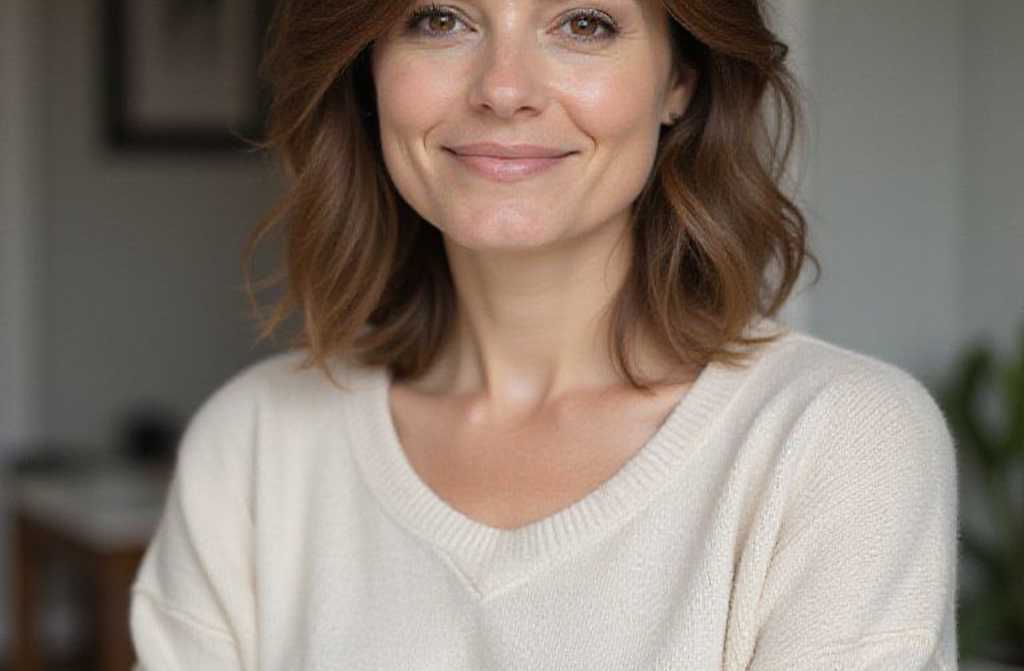
They got married in May, when the lilacs were in bloom. Emma and Tom were the perfect couple—tall, slim, with matching hazel eyes. At the wedding, guests clinked glasses and predicted “twins within a year.” Emma smoothed her veil and smiled shyly, leaning into her husband’s shoulder. She could already picture a nursery with mobiles, a pram in the hallway, and tiny socks.
A year passed. Emma quit morning coffee, watched her diet. Tom understood her little quirks. He started bringing home flowers more often, as if apologising for something he wasn’t at fault for.
Two years went by. Emma’s friends one by one posted bump photos on social media, then bundles of babies. She liked them, typed “so cute!”, then put her phone down and stared into space. Her parents hinted delicately: “Darling, time to think about grandchildren.” Emma waved them off: “Plenty of time.”
Deep down, a quiet dread grew. The worst part wasn’t the possibility that something might not work. It was the thought of going to the hospital. She’d think: *What if it’s me? What if I’m the broken part? And what if treatment doesn’t help?*
Tom looked at his wife’s sad face and thought the same. He was a problem-solver, but here he felt helpless. If he went for tests and turned out to be “not up to scratch”, he’d lose not just the chance to be a dad, but Emma’s respect too. How could you look a woman in the eye when you couldn’t give her a child?
They lived in a city with three shiny private fertility clinics. But they took different walking routes to avoid them. A silent taboo hung in the air. Conversations about children dwindled to nephews and friends’ kids. Neither feared the diagnosis—they feared being the one to blame.
Only love saved them. A strange, grown-up love that, despite their fears, grew quieter and deeper. Tom held Emma at night, and she felt his fear matched hers. They were both afraid to admit they’d already run the scenarios in their heads: *What if it’s incurable? Could we stay together if one of us is the cause of this emptiness?*
Three years. Their personal anniversary of silence. One rainy morning Emma woke and said firmly, “Tom, I made an appointment. Tomorrow at nine.”
He flinched, but nodded. His mouth went dry.
“I’ll come with you,” was all he said.
At the clinic Emma sat gripping her handbag, Tom holding her hand. They didn’t look at each other, afraid to see the fear. The doctor, a tired-looking woman in her forties, peered over her glasses. “Well, lovebirds, three years you’ve dragged your heels? No need. Let’s get you tested.”
The two-week wait was the longest of their lives. They pretended life was normal—movies, sushi, arguments over unwashed dishes. But every evening when Tom came out of the shower, Emma was checking her phone for results.
Then the results came.
Emma opened the email with trembling fingers. Tom stood behind her, heavy hands on her shoulders, not breathing. She scanned dry medical terms, numbers, markers… then spun around on the chair. Her eyes were wet.
“Tom,” she breathed, “we… we’re fine. Both of us.”
For a second the room was dead silent. Then Tom did something he hadn’t done in three years. He laughed—loudly, wholeheartedly—grabbed Emma by the waist, spun her around the room, set her down and hugged her tight.
“You hear that?” he whispered into her hair. “We’re not to blame. Nobody is. It just… wasn’t the right time yet.”
Emma sobbed into his chest. Relief, tenderness, the absurdity of it all. Three years hiding from fear, terrified of breaking their family, and it turned out their family was rock-solid—couldn’t be cracked by anything, not even emptiness.
That evening they bought champagne, ordered pizza, and made grand plans: a holiday to Cornwall in a month, then a less stressful job, then a cot, walks in the park, choosing a name. They felt that now the barrier was gone, everything would just happen—snap of the fingers.
But a month passed. Then three. Then six months, then more. Time flowed, months ticked by.
Optimism melted like morning mist. Now they *knew* they could, but somehow that knowledge didn’t bring the miracle. It was like knowing the combination to a safe, but the safe was empty.
“Maybe we just need to stop thinking about it?” Tom suggested one evening, watching Emma stare into space again.
“Easy to say,” she smiled sadly. “You try not thinking…”
They stopped discussing it. Carefully, like fine china, they tucked baby talk into the back drawer. Life went on: work, dinners, telly, rare weekends. And each year it grew greyer. Not black—they still loved each other. But grey, like a rainy November sky. Colours faded, leaving only outlines.
The seventh year of their marriage came. One evening Tom came home from work not alone. Something was wriggling under his jacket, whimpering and poking a wet nose at the zip.
“Emma,” he said sheepishly, pulling out a trembling fluffy bundle. “Mike gave him to me. His dog had puppies, the last one nobody wanted. I saw those eyes… I couldn’t leave him there. Could he stay with us?”
Emma stepped back. She’d never liked animals indoors. Dogs belonged in kennels, cats chased mice in basements. Hair, puddles, smell—why bring that into their quiet, albeit too quiet, nest?
“Tom, are you serious?” she said coolly. “We already have…”
She meant to say “enough emptiness”, but stopped. She looked at the puppy. He was tiny, with enormous caramel-coloured eyes. He trembled and gazed at her with the same hope she’d once had while staring at pregnancy tests. He was looking for a home.
Emma opened her mouth to say “take him back”, but the words stuck. She looked at Tom—his eyes held the same plea as the puppy’s. She felt that if she said no, she’d break something vital in their marriage. Something that kept them afloat.
“Fine,” she sighed. “He stays. But you’re cleaning up after him.”
Tom beamed like a schoolboy and hugged the puppy to his chest.
“Buster!” he said. “You’ll be Buster!”
Those words began a new life. Emma didn’t notice how she got drawn in. First she fed Buster on schedule because Tom was late from work. Then she walked him in the park because it was raining and Tom had a cold. Then she bought him a bed, then a bowl that said “Best Friend”, then a real leather collar, then a raincoat, then a winter jumpsuit.
Buster looked at her with adoration, wagged his tail so hard it seemed it might fall off, and followed her everywhere. He waited by the door when she came home, jumped up and knocked things over. He brought her slippers, shoved his head under her hand, poked his nose into her palm.
One day, watching Buster chase a ball down the hall with pure joy, Emma caught herself smiling. A genuine smile, for the first time in months. She realised she loved this scruffy monster. Loved his goofy walk, his devoted eyes, his warm tongue licking her hands. She bought him toys—more than in a children’s shop. She bought him clothes and washed his bedding.
Buster indeed became their child. They talked to him, scolded him for gnawed chair legs, praised him for learning commands. At Christmas they dressed him as a reindeer and piled him with presents. On his birthday they baked a beef-and-rice cake. Their life regained bright, warm, puppyish colours.
But colours, it turned out, could be deceptive. It started when Buster stopped eating. He just lay on his bed, head on paws, looking at them with sad eyes. Emma panicked first. She rang vets, begged for an emergency appointment.
“Probably nothing serious,” Tom reassured her. “He might’ve eaten something outside.”
But Buster was visibly losing weight. His glossy coat dulled; his nose turned dry and hot. When he tried to get up to greet Emma at the door and couldn’t, she burst into tears. The vet clinic was bright and sterile. An older man with a grey beard examined Buster, felt his belly, shook his head.
“Looks like an infection—picked it up somewhere. Could be a growth, but we’ll start with treatment. Injections, strict diet, drips.”
They jabbed Buster every day. Emma learned to hold the syringe steady even as everything inside her shook. She sat up with him at night, stroking his head and whispering, “Hold on, my love, hold on.” Buster gave a weak tail wag, but he had almost no strength left.
One morning she woke up and saw he wasn’t breathing. He lay curled on his bed, just like the first day they brought him home. He looked asleep, but his chest didn’t rise. Emma touched him—he was already cold.
She didn’t scream. She just sat on the floor beside his bed and howled—a low, drawn-out sound, like a wolf who’d lost her cub. Tom ran out of the bedroom, understood without words, and dropped to his knees beside her. He hugged her together with Buster, and they sat there a long, long time until dawn.
They buried Buster in the woods outside town.
“Oh God,” Emma whispered that night, face buried in Tom’s shoulder. “So empty. I never imagined I could love a dog so much. Or lose her like this.”
Tom said nothing. He stroked her hair and stared at the ceiling. A lump in his throat he couldn’t swallow. Buster had been their little furry miracle, giving them three happy years. Three years when they forgot the emptiness. But now it was back—and twice as big.
Emma lost her appetite. She forced down a couple of spoonfuls of soup, then felt queasy. Especially in the mornings. She blamed it on stress—they say grief can make you sick. At work the air felt suffocating. She’d sit at her desk, stare at the screen, and feel the walls closing in, stealing oxygen. She’d dash outside, breathe cold air, lean against the building, and close her eyes.
“Emma, you look awful,” her colleague Lucy said. “Caught a bug or something?”
“Probably an infection,” Emma shrugged. “From Buster. He had something… maybe a virus.”
The idea stuck. She almost welcomed it: logical—the dog had inflammation, so it could have passed to her. Weakened by grief, she’d caught something nasty. She’d see a GP, get some blood tests, find out what.
She booked an NHS appointment, took a day off. Sat in the waiting room, arms wrapped around herself, feeling the nausea rise again. The GP, a tired-looking woman, listened to her complaints, shook her head, and said, “Let’s start with a full blood count. But just in case…” She frowned, looked over her glasses, “I’ll book you an ultrasound.”
Emma left with a referral.
The sonographer was quiet, moving the probe, frowning, clicking things on the screen. Emma lay staring at the ceiling, counting tiles to avoid hope.
“Well, what a surprise. Did you know there’s a baby in there?”
“What?” Emma didn’t believe her ears.
“Pregnancy,” the sonographer repeated clearly. “Around eight weeks. Everything looks fine—no abnormalities.”
Emma stared at the screen. She didn’t know you could cry so silently. Tears just streamed down her cheeks, into her ears, onto the hospital couch.
“How… how is that possible?” she whispered. “We’ve been trying for nine years…”
“It happens,” the sonographer smiled softly. “Sometimes nature waits. When you stop obsessing. Looks like your body finally relaxed and decided it was time. A mystery of nature.”
Emma walked out of the clinic on rubbery legs. Eight weeks. Eight weeks a new life had been growing inside her, and she hadn’t had a clue. She’d grieved for Buster, while another little heart was already beating.
She wanted to wait for Tom at home, light candles, cook dinner, make it a surprise. But she couldn’t hold it. Standing at the bus stop, phone in hand, fingers trembling, she dialled his number.
“Tom,” she said, her voice breaking. “Can you talk?”
“Em? What’s wrong—you sound ill?” His voice was worried.
“No,” she breathed. “I went to the GP. Tom… I don’t know how to say this… I’m pregnant.”
Silence on the line. So long Emma feared the call had dropped.
“What?” Tom said so quietly she barely heard. “Em, don’t joke. Please. It’s not funny.”
“I’m not joking,” she sobbed into the phone, not caring about passers-by. “Eight weeks. Tom… our baby’s been inside me for two months and I didn’t know. I thought it was an infection, but it’s… it’s our little one.”
“I’m coming,” he said at last. “Right now. Wait for me. At home. Don’t move. I’ll be there.”
She got home. Tom arrived half an hour later, burst in without taking off his shoes, clutching an enormous bunch of white roses in one hand and a cake in the other. The roses were so huge they barely fit through the door, and the cake read “Happy Birthday”—he’d grabbed the first thing he saw, just so he wouldn’t come empty-handed.
Tom held her tight, like he was afraid she’d evaporate, dissolve like a mirage.
“I was scared to believe it,” he whispered into her hair. “I stood in the office thinking it’s a dream. I pinched myself, Em. Colleagues saw me—thought I’d lost it. I couldn’t believe that after everything, after nine years, after Buster, after we’d given up… it happened.”
“I don’t believe it either,” Emma sniffled into his shoulder. “I stopped waiting. I just… lived.”
He pulled back, cupped her face, looked into her eyes. His own were red and wet, a wide, happy, slightly crazy smile trembling on his lips.
“So we just needed to stop waiting,” he said. “Get a dog, lose him, grieve, burn out… and then life finds its own way. You’ve just given me the biggest miracle. I don’t know how to thank you. I’ll be the best dad ever—I swear it on Buster. I’ve got a purpose now.”
Emma stroked his hair and suddenly felt that the nausea that had plagued her was gone. Or maybe she just stopped noticing it. Because inside her there was no more emptiness. Inside her, a heart was beating—their shared, tiny, future.



Šuo bijojo, kad tai vėl bus vaikas, kurio nepavyks išsaugoti
Vilkšunė net nepasisuko į grotas, kai Rasa dar kartą pastatė dubenėlį su sudrėkintu pašaru. Šuns akyse nebuvo nei alkio, nei...


Šuo bijojo, kad tai vėl bus vaikas, kurio nepavyks išsaugoti
Vilkšunė net nepasisuko į grotas, kai Rasa dar kartą pastatė dubenėlį su sudrėkintu pašaru. Šuns akyse nebuvo nei alkio, nei...


Куче на име Вихър и двор на улица “Струма” 14, Перник
Вихърът тук духа откъм каменоломната, чак до двора на баба Цвета го носи, и мирише на прах и на изгоряло...


Куче на име Вихър и двор на улица “Струма” 14, Перник
Вихърът тук духа откъм каменоломната, чак до двора на баба Цвета го носи, и мирише на прах и на изгоряло...


Ръцете на дядо Пенчо
Пловдив, отделение по неонатология, болница „Свети Георги", февруари. Санитарката Мила Дренска работи там от единайсет години и разказва тази история...


Кутията с учебници на улица „Раковски
Кутията с учебници на площад „Славейков" Симеон отвори вратата с ключа, който майка му държеше още от неговото детство, и...


Кутията с учебници на улица „Раковски
Кутията с учебници на площад „Славейков" Симеон отвори вратата с ключа, който майка му държеше още от неговото детство, и...


Spiżarnia, której się wstydziła
Nazywam się Halina, mam sześćdziesiąt siedem lat i mieszkam w Radomiu, w domu z ogródkiem, który zostawił mi mąż razem...