
З життя
Невеликий сільський куточок.

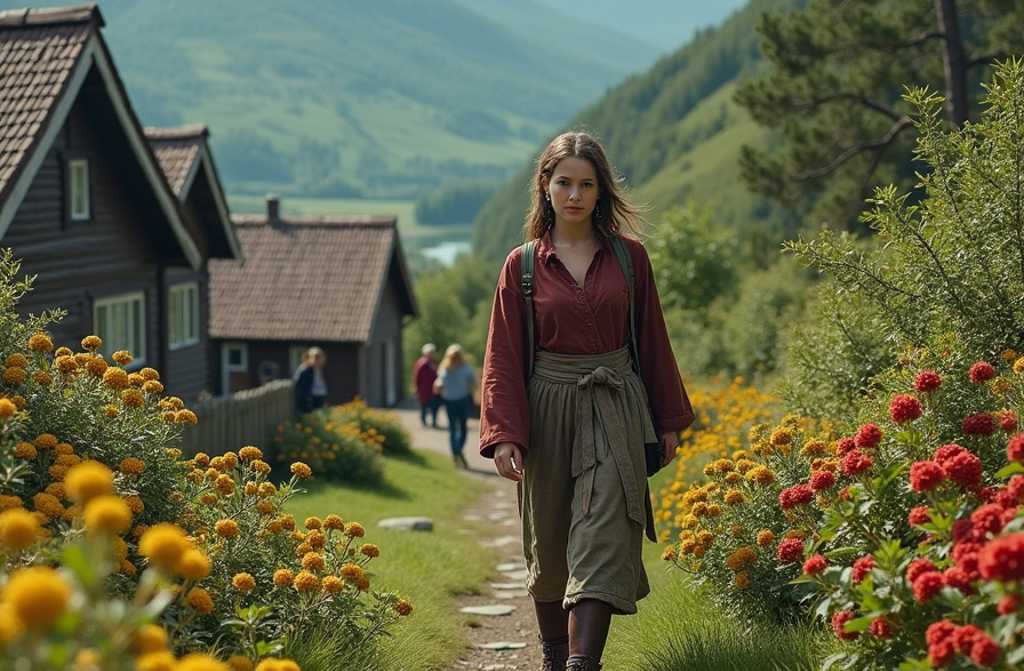
В українській невеликій, майже хуторі, розкинулось селище на пагорбі серед моху та журавлини. У селі всього чотири двори, дахи яких від дощів стали сірими, криті дранкою, притулилися під могутніми дубами, через що й назвали село Дубки.
У Дубках жило лише одинадцять душ. Люди тут жили завдяки господарству, полюванню та рибальству. Найзаможнішим в селі був Іван Трохимович. Він був скупий і роботящий чоловік. Йому вже під шістдесят, але сили ще в ньому є. Цієї осені назбирав п’ятнадцять пудів журавлини, звісно, не сам, а з Петром. Це його син. Петро — молодший, йому вісімнадцять. Двоє старших синів живуть у Києві і вже три роки не були вдома. Петро поки що в місто не тягнеться, але й до сільської праці не дуже пристосований. Одного ранку, прийшовши додому, Петро сказав батькові: — Засилайте, батьку, сватів в Озірці. — Куди саме? — похмуро запитав Іван. — До Дем’янових, до їхньої Павлинки. І знаючи сувору вдачу батька, додав: — Якщо не пошлете сватів, піду з нею в місто до братів. Не знайшлось Івану відради від молодшого. Він не дурень, легковажний. І господар з нього ніякий, але ж останній він. Піде в місто, а залишуся я на самоті з господарством. Марфа, стара його, зовсім слабка стала, хвороба її звела. Василь Дем’янов сам собі п’яниця та ледар, а дівчина у нього красуня. Бачив її Іван влітку на косовицях. Висока, статна, руса коса до пояса. Величезні сірі очі. І що ж вона знайшла в Петрі? Так!
Дівчина така будь-яку хату прикрасить, і Марфі давно помічниця потрібна. Довго чи коротко, але на Покрови справили весілля. А ще через місяць у Дубки приїхав представник і забрав Петра в армію. На проводах Павлинка плакала за Петром, як за покійником. З від’їздом Петра життя Павлини в Дубках стало нестерпним. Свекор перестав її пускати. Спочатку, ніби жартуючи, то ущипне, коли йде повз, то спробує обійняти, коли вона доїть корову. А як мила підлогу у світлиці, нахабно заліз їй під спідницю. Вона нічого не могла відповісти, їй було соромно перед свекрухою, яка лежала за ширмою. Якось, коли набирала сіна на сіннику, Іван підкрався до Павлини ззаду, повалив її в сіно і ліз цілувати, дихнувши на неї часниковим перегаром. Колючий, мохнатий бородатий закрив усе її обличчя, не даючи крикнути. Павлина стала задихатися, а свекор копирсався під її спідницею. Як їй вдалося вибратися з-під важкого Івана, вона не пам’ятає, але вибравшись, схопила вила, націлила їх у груди свекра і важко дихаючи прошипіла: «Заколю! Кобель старий! Прости мене, Господи!»
З цього дня свекор перестав чіплятися до Павли, але став обзивати її за кожну дрібницю: то не так вона робить, то це не так. Врешті-решт життя у дівчини стало нестерпним. І плакала Павлина і жалкувала. Ходила в Озірці до матері, скаржилася їй. А що мати? Пожаліла, поплакала і відправила назад. «Терпи», сказала. «Прийде Петро, все налагодиться». Перед поверненням у Дубки Павлина зайшла в сільский магазин, щоб купити сірники і приправи для кухні. Взяла лавровий лист, червоний перець, порошок гірчиці — свекор наказував. З малою охотою пішла в Дубки. Павлина йшла, скриплячи валянками по снігу, і роздумувала над своєю нелегкою долею. Вже третій місяць, як поїхав Петро.
Подобався їй цей веселий, бешкетний хлопець. Хоча в селі були й красивіші хлопці. Але грубі всі, безсоромні, а цей ніжний, грубого слова від нього не почути. Полюбити ж як слід не встигли. А тепер свекор норовить замість сина потішитися. «Не буде цього! Треба відвадити старого зіграча! Але як?» Поглиблена в свої думки, Павла навіть не помітила, як дійшла до Дубків. Свекор зустрів її з бурчанням, що довго ходила і не те купила. Попивши молока, Павла пішла в свою кімнату і замкнула двері на засув. Наступного дня топили баню. Баня стояла далеко від дому, біля маленького ставка. Павлина натягала води, розтопила піч. Потім, коли поралася по господарству, поклала в кишеню фартуха пакетик з червоним перцем. Вирішивши, що цього мало, додала гірчиці. Через деякий час, коли зібралася приби|ратися в бані, натерла полок перцем і гірчицею, щедро насипала адської суміші в тазик з вологим віником. Від запаху перцю і гірчиці в неї защипало в носі. Павла чмихнула і вискочила з лазні. Вискочила вона якраз вчасно, на зустріч уже йшов свекор з вузликом білизни під пахвою. — «Навіщо баню студиш, шмаркачко», — накинувся він на неї. Переступивши з тропи у снег, Павла мовчки пропустила свекра і побігла в хату. Зачинивши за собою двері, вона притулилася до стіни, серце її було готове вискочити з грудей. «Що буде?» Страшно Павлинці і радісно на душі, що вирішила покарати негідника. «Зараз тобі, старий, буде спекотно». «Ах ти, шмаркачка» — подумав Іван. Напевно, погано провітрила баню? Або головешка в каменці ще тліє». Поковирявши з пічкою кочергою і заливши водою тліючий вугіль, Іван виліз на полок і із задоволенням розтягнувся на ньому. Полок був гарячий і трохи обпалював шкіру. Іван пом’явся спиною і задом, звикаючи до спеки, але спека поступово перейшла в печіння.
Нічого не розуміючи, Іван сів на полок. Пробіг рукою по дошках полока. Нічого не знайшов. Інстинктивно почухав, цією ж рукою, своє «господарство» і тут же майже звалився на підлогу. Відчуття було таке, ніби передом вкусила оса, а ззаду накрили кропивою. Вревнувши від болю, як поранений ведмідь, Іван вскочив, як мати народила, з лазні, і плюхнувся в сніг. Печіння трохи вщухло, але сидіти на снігу стало холодно, і він побіг назад у баню. На підлозі, подавляючи ледве стримуваний сміх, качалася Павла. З кута свого вилізла Марфа і здивовано втупилася на Павлу, від якої зі дня від’їзду Петра, сміху не чула.
Марфа давно помічала, що її чоловік чіпляється до невістки, але захистити її сил не було, а тепер Павлина, взяла так і розказала свекрусі, як покарала старого. Марфа спершу насупила молочні брови — стало жаль чоловіка, але потім зі сміхом і сказала: «Так тому кабелю і потрібно». Увійшовши знову в баню, Іван став міркувати, що ж з ним сталося. Може на полок що потрапило? Зачерпнувши ковш гарячої води, він рясно змив полок і заліз на нього. Наче нічого не обпалювало. Піддавши в каменку, Іван взяв з шайки віник і став ганяти ним по спині і зав’язках, але тут у нього защипало в носі і в очах, тіло знову запалало вогнем, а в залі свербило так, ніби він сів у мурашник.
Зкотившись з полока на підлогу, він повзком доповз до дверей і майже вибивши її, викотився з лазні в знайомий сніг. Додому Іван прийшов мовчки, коли вже стемніло, вечері не захотів, одразу пішов спати, але заснути йому не вдалося. Все тіло палало. Він крутився на скрипучій ліжку, як в’юн на сковороді і едва не вив від болю, ледве стримуючи стони. Коли стало нестерпним, він розчинив вікно, зняв кальсони і виставив палаючу задню на мороз. Стало легше, але Івану здавалося, що від його сяїни можна прикурити цигарку. Слава богу ніч, якби хто побачив цю картину: Іван — відлюдний гордій, що сидить на підвіконні з голою задницею, як ворон на сучку, важко сказати, що б про нього подумали.
По-своєму оцінив що відбувається вірний пес Васка, чиї будка стояла під цим вікном. Пес встав на задні лапи і лизнув хазяїна за…. Від несподіваної ласки в Івана в грудях похолоділо і він, розм’якнувши, грюкнувся на підлогу. Від гуркоту встала Марфа, вийшла з своєї кімнати Павла зі свічкою в руці. Від малюнка, побаченого ними, хочеться і плакати, і сміятися. З голою ягодицею, без свідомості, на підлозі лежав Іван, а в відкрите вікно зазирала руда морда Васки. З цього дня Іван перестав чіплятися до Павли, так нічого і не сказавши їй. А незабаром Павла отримала від Петра листа і поїхала до нього, де він служив.
Хоча бабуся Дарина в своєму оповіданні і назвала невістку Павлиною, а я думаю, що це вона про себе. На неї схожий, хоча їй і за вісімдесят, а в очах досі пробігають іскри нечестиві…



To See With Her Own Eyes After a devastating tragedy in which Ksenia lost her husband and six-year-old daughter in a car accident, she struggled to recover. She spent nearly six months in a clinic, refusing to see anyone, with only her patient mother by her side. One day, her mother gently told her: “Ksenia, your husband’s business may be on the brink of collapse—Yegor is barely managing. He called me and asked that I tell you. Thankfully, Yegor is an honest man, but…” These words finally sparked something in Ksenia. “Yes, Mum, I need to keep busy; my Denis would have been glad to see me continue his work. Thankfully, I understand the business—he must have sensed it, bringing me into the office.” Ksenia returned to work and managed to save the struggling family business. Yet, despite her professional success, she missed her late daughter terribly. “My dear, I want to suggest you consider adopting a little girl from an orphanage—someone who has it even harder than you. You can help her, and someday, you’ll understand that this is your salvation.” After careful thought, Ksenia realised her mother was right. Soon she visited the orphanage, knowing she could never replace her own child but hoping to help another. Arisha had been almost completely blind since birth. Her parents, both well-educated and from respectable families, abandoned her when they learned of her diagnosis, unwilling to shoulder the responsibility. Even the most upstanding can succumb to cowardice and betrayal. Thus Arisha came to the nursery, where she was named Arina. She grew up hardly able to see, perceiving only faint shadows. At the orphanage, she learned to read, adored fairy tales, and believed that one day a kind fairy godmother would come for her. On the eve of her seventh birthday, her fairy arrived—a beautiful, striking, wealthy, but deeply unhappy woman. Arina couldn’t see her clearly but sensed her kindness. When Ksenia came to the orphanage, the director was surprised that anyone would ask for a child with health issues. Ksenia avoided explaining, fearing misunderstanding, and gave the usual assurances that she had the resources and desire to help a disabled child. A caretaker led Arina out by the hand. Ksenia, upon seeing her, instantly knew—this was her child. She was angelic, with golden curls and huge blue eyes—pure, deep, and sightless. “And who is this?” Ksenia asked, unable to tear her eyes away. “Our Arisha—such a lovely, gentle soul,” the caretaker replied. “She’s mine. That’s certain,” Ksenia decided at once. Ksenia and Arina became devoted to each other, filling essential roles in each other’s lives. After Arina joined the family, Ksenia’s world changed and gained new purpose. Upon consulting doctors, she learned that an operation might restore Arina’s sight, though she’d need glasses. Clinging to hope, Ksenia arranged the operation before school started. Though Arina’s vision saw little improvement, another chance awaited when she was older. Time passed. Ksenia lavished love on her daughter, while her business flourished; though young and beautiful, she had no interest in men—her life revolved solely around Arina. Arina blossomed into a rare beauty and graduated from university. Grateful and unspoilt, she began working for her mother’s company. Ksenia guarded her daughter’s circle warily, fearing that some opportunist would prey on Arina’s naivety and covet her dowry—ample though it was—and always made it clear such schemes would never succeed. Then, Arina fell in love. Ksenia met Anton and, seeing nothing amiss, approved of their relationship. Before long, Anton proposed, and wedding preparations began. Six months after the wedding, Arina was scheduled for her final eye operation. Anton was affectionate and attentive, though occasionally Ksenia sensed something off, which she dismissed. The young couple visited the countryside restaurant where their wedding would be held to discuss décor. It was nearly empty that afternoon. Seated at a table, Anton placed his phone down, but then the alarm on his car went off, prompting him to step outside. While Arina waited, his phone rang persistently. At first, she hesitated to answer, but the ringing continued. She picked up and, before she could speak, heard the booming voice of Anton’s mother, Inna Sergeevna. “Son, I’ve figured out how we can rid ourselves of that blind girl quickly. My friend at the travel agency has two tickets held back for you. After the wedding, tell your little wife you want to see the mountains together. Go hiking, just the two of you, and arrange a little ‘accident’—she slips, she falls. Then go to the police and say your wife’s missing. Say you argued and she stormed off alone. Cry, act devastated, demand a search. When they find her, they’ll think she fell. Who’s going to investigate a foreign tourist’s accident? I know you can play the grieving husband—everyone will believe you, even her mother. If they restore her sight, it’ll be harder to get rid of her—don’t lose all that money, son. Think about it. I’ll hang up now.” Inna Sergeevna disconnected. Arina, shaking, dropped the phone as if it had burned her. “So Anton and his mother want me dead,” Arina thought in horror. A moment ago, she’d been a blissful bride-to-be. Now, the people she and her mother had come to trust were plotting her murder. Arina realised Anton hadn’t overheard the call and tried to keep her composure as he returned. “That’s odd—the alarm must’ve been a cat, but there’s no sign of damage,” Anton said, picking up his phone as it rang again. “Yes, Roman, I’ll be right there,” he said into the phone. Hanging up, he added, “Bad luck—Roman needs me urgently at the office.” “Go ahead,” Arina whispered, “I’ll wait for Mum and we’ll sort everything out.” “Right, I’ll head off. See you.” Arina sat weeping at the table. The restaurant manager, Katya, came over, recognising her. “Arina, are you all right? Where did Anton dash off to—you were just discussing—?” “It’s okay, Katya. Mum’s on her way, just a misunderstanding. Anton was called into work.” “Shall I bring you some tea? You seem shaken.” Arina nodded. Ksenia knew her daughter was meeting Anton at the restaurant and was surprised by Arina’s call. “What could have happened? My poor girl sounded distraught,” she thought, driving over. Twenty minutes later, she joined Arina at the table. “Arina, I was worried sick driving here.” “Mum, Mummy—” Arina’s tears flowed. “They want to kill me.” “Who?” her mother asked, bewildered. “Anton and Inna Sergeevna. I heard it myself. She called, and he’d left his phone on the table when he went outside. She told him to take me to the mountains and push me off a cliff. She pushed him to hurry, so we wouldn’t have time for the operation.” “Darling, what are you saying? Are you sure? Are you okay?” “Mum, please believe me, I heard it myself. Inna Sergeevna never realised she was speaking to me instead of Anton. I hung up before she suspected. Anton was called in to work.” Ksenia was in shock. Had they been so wrong about Anton? What now? As they discussed their next move, Anton phoned Arina. “Well, Arisha, did your mum arrive? Have you sorted out the décor?” Ksenia took the phone. “Hello, Anton. Good thing we learned about your and your mother’s plans in time. Listen carefully—your trips, your plans in the mountains…” “What plans? What trips?” Anton either truly didn’t understand, or he was playing the part very well. “You know—the mountains, where Arina was meant to die in a tragic accident. You realise if your phone goes to the police, they can retrieve everything, even deleted messages. Understand?” There was a pause. “I understand, but it wasn’t me, it was my mother…” “Right. Not only a scoundrel, but a coward too. Goodbye, Anton.” The next day, Anton fled town, blaming his mother for ruining their scheme, grabbing her money, and disappearing, terrified that Ksenia and Arina would go to the police. Inna Sergeevna left as well, rushing to a friend in another city. Shocked by What She Saw With Her Own Eyes At the eye clinic, Arina underwent another operation. Ksenia remained by her side, the bandages still covering her daughter’s eyes. Dr. Dmitry Igorevich, a young surgeon, took great care of Arina—the surgeon who’d performed her operation—and gently supported his beautiful patient. Dmitry blushed when speaking to her, obviously taken. Ksenia watched protectively, yet he seemed sincere and smitten. When Arina’s bandages were finally removed, he brought her a huge bouquet of roses. Arina was overwhelmed when she could truly see for the first time—she wept, finally able to take in the beauty of the flowers and the handsome, tall blond man with grey eyes. “Oh, I’m so happy—I can finally see everything!” Arina sobbed as Dmitry rushed to console her. Arina needed glasses for life, but that hardly seemed a hardship now. Time passed. Arina and Dmitry’s wedding was beautiful. A year later, they had a lovely daughter with her father’s grey eyes. Arina is truly happy—with a caring, reliable husband who will never let harm come to her. Thank you for reading, subscribing, and for your support. Wishing you happiness in your own life!
Seeing it With My Own Eyes After that terrible tragedy losing her husband and six-year-old daughter in a car accident...


My Son Skipped My 70th Birthday Claiming He Was Busy at Work—That Evening I Saw Him on Social Media Celebrating His Mother-in-Law’s Birthday at a Restaurant
The phone rang at precisely midday, slicing through the strained anticipation in my kitchen. I grabbed the receiver, running a...


Aunt Rita I’m 47 years old. Just an ordinary woman—a bit of a wallflower, not attractive, not blessed with a great figure. Lonely. Never been married, never wanted to be, because I believe most men are all the same—interested only in stuffing their faces and lounging on the sofa. Not that anyone’s ever proposed or asked me out, for that matter. My elderly parents live up in Newcastle. I’m an only child—no brothers or sisters. I do have cousins, but I don’t keep in touch. Nor do I want to. I’ve lived and worked in London for 15 years, in a regular office job. Each day is work and home, work and home. I live in a standard block of flats in a typical residential neighbourhood. I’m bitter, cynical—I don’t love anyone. I don’t like children. At Christmas, I went to visit my parents in Newcastle, as I do once a year. When I got back, I decided to clean out my fridge, throwing away old frozen food—dumplings, burgers, things I’d bought and never liked. I bundled it all up in a box to toss it out. In the lift, there was a little boy, maybe seven; I’d seen him with his mum and a baby sibling before. I even thought, “Some people—she’s gone and had another one!” The boy stared at my box. When we got out, he quietly followed me to the bins and asked in a timid voice if he could have the food. I warned it was old, but let him take it—none of it was rotten, after all. As I turned to leave, I watched him gently pick up the packets, close them up, and clutch them to his chest. I asked where his mum was. He told me she and his sister were ill—couldn’t get out of bed. I went back home and started cooking dinner, but couldn’t get that boy out of my mind. I’m not usually inclined to help, but something nudged me. I grabbed what I had in the kitchen: sausage, cheese, milk, biscuits, potatoes, onions, even some meat from the freezer. I realised I hadn’t a clue what floor their flat was on, but knew it was above mine, so I worked my way up, floor by floor. I got lucky; after two flights, the boy opened the door. He hesitated, but let me in. The flat was poor but spotless. His mum lay curled up on the bed next to her youngest, a bowl of water and cloths on the table. High fever, trying to cool her daughter down. The medicine they had was long out-of-date. I felt her mum’s forehead—hot as a stove. She woke and stared at me in confusion, then suddenly sat up, asking where her son was. I explained I was a neighbour and quickly got the details before calling for a paramedic. While we waited, I gave her tea and sausage—she wolfed it down, must have been starving. Barely able to feed herself, yet still breastfeeding her baby. The ambulance came, checked them over, wrote out a long list of medicines and injections needed for the little girl. I went out, picked up everything from the pharmacy and groceries for them, plus—on a whim—a ridiculous neon yellow monkey toy. I’ve never bought a child a present before. Her name’s Anna, she’s 26. She grew up in Manchester’s outskirts. Her mum and gran were Londoners, but her mum married a local and moved up there to work in a factory. Anna’s dad died in an accident at work. Her mum was left alone, jobless, and quickly spiralled into trouble. By the time Anna was three, neighbours contacted her granny in London, who took her in. When Anna was 15, her gran told her the truth—her mother died of tuberculosis. The gran hardly spoke, was miserly, and chain-smoked. At 16, Anna took a job at the nearest shop, first as a shelf-stacker, then at the till. Her gran died a year later. At 18, Anna dated a boy who promised everything but disappeared as soon as she became pregnant. She kept working, saving up, knowing there was no one to help. When her son was a month old, she’d started leaving him on his own so she could clean stairways and make ends meet. As for her daughter—the shop owner she went back to, when her son was older, raped her repeatedly and threatened to have her fired so she could never work again. When he found out she was pregnant, he gave her £100 and told her never to come back. Anna told me all this that night—thanked me, said she’d repay me by cleaning or cooking. I stopped her, said goodnight, and left. I couldn’t sleep at all, thinking, “Why do I live like this? Why am I so cold? I don’t care for anyone, not even my own parents. I have all this money saved with no one to spend it on, and here’s a little family with nothing—not even enough to get well.” The next morning, the little boy, Anton, brought me a plate of homemade pancakes and dashed off. I stood there, plate in hand, feeling warmth coming from the food, spreading through me as if I were thawing out. Suddenly, I wanted everything at once: to cry, to laugh, to eat. Not far from our block is a small shopping centre. The owner of a children’s shop there, after some confusion over sizes, even offered to come with me to Anna’s flat. I don’t know if she wanted the business, having seen I’d buy a lot, or was just moved by my mission. An hour later, four huge bags of clothes for the kids stood in Anna’s hallway. I bought bedding, food, vitamins, even toys. I wanted to buy everything—I finally felt needed. It’s been 10 days now. They call me Aunt Rita. Anna is quite the crafty homemaker—my flat feels cosier already. I’ve started calling my parents. I even text ‘KINDNESS’ to children’s charity fundraisers. I can’t believe how I lived before. Every day after work I hurry home, because I know someone’s waiting. And this spring, we’re all heading up to Newcastle together—tickets have already been bought.
Aunt Rita I’m 47 years old. Just an ordinary woman, nothing remarkable about me. You could say Im a bit...


My Husband and I Came to the Countryside to Meet His Parents for the First Time — The Warm Welcome, Home-Cooked Meals, and Tall Tales Around the Kitchen Table Would Change Everything
My husband and I have just arrived in the countryside to meet his parents for the first time. Harrys mum...


Michael Froze: From Behind the Tree, a Dog He’d Recognise Anywhere Watched Him with Sad, Knowing Eyes
I frozepeering from behind an old oak tree, a dog watched me with a sadness Id have recognised anywhere. Dust...


DO I REMEMBER? I CAN’T FORGET! “Polly, listen… Remember my illegitimate daughter, Anastasia?” My husband spoke in riddles, making me uneasy. “Do I remember? I can’t forget! Why?” I sat down, bracing for bad news. “Well… Anastasia is begging us to take in her daughter—my granddaughter,” he mumbled. “And why on earth should we, Alex? Where’s Anastasia’s husband? Disappeared into thin air?” I was intrigued. “The thing is, Anastasia doesn’t have much time left. She never had a husband. Her mother remarried and lives in America. They’re estranged, and she has no other family. That’s why she’s asking…” Alex couldn’t meet my eyes. “So, what’s your plan?” I had already decided. “Well, I’m asking you, Polly. Whatever you say, that’s what we’ll do,” he finally looked at me. “How convenient. You made mistakes in your youth, and now I’m to shoulder the burden of a stranger’s child? Isn’t that right?” My husband’s feebleness made me furious. “Polly, we’re a family. We should decide together,” Alex pushed back. “Oh, you remembered now! Yet, when you fooled around, did you consult me? I’m your wife!” Tears welled up and I stormed out… In school, I dated a boy named Peter, until a new boy, Alex, arrived and swept me off my feet. I broke up with Peter. Alex noticed me, walked me home, kissed my cheek, and picked flowers for me. A week later, he led me to his bed. I didn’t protest—I fell head over heels for Alex. After we graduated, he went off to serve in the army in another city. We wrote to each other for a year. Then Alex returned on leave. I was overjoyed. He promised we’d marry when he came back for good—already considered me his wife. His sweet words melted me every time, even years later: one loving look from Alex, and I’d melt like chocolate in the sun. Alex went back to the army. I waited, confident I was a betrothed bride. Six months later, a letter arrived: Alex had found “real love” in his garrison town and wasn’t coming back. But I was already carrying Alex’s baby. So much for a wedding—just as my gran warned me. When the time came, I gave birth to my son, Ivan. Peter, my old boyfriend, stepped in to help. Desperate, I accepted. Yes, Peter and I became intimate. I’d long given up hope of seeing Alex again. Then he turned up, surprised to see Peter there. “Can I come in?” Alex asked. “Come on in, since you’re here,” Peter reluctantly allowed. Sensing the tension, Ivan clung to Peter, wailing. “Peter, why don’t you take Ivan for a walk?” I was at a loss. When they left, Alex asked, “Is he your husband?” “What’s it to you? Why are you here?” I was angry and confused. “I missed you. I see you’ve made a life with Peter—you didn’t wait for me. Well, I’ll go—sorry to intrude on your happy family,” he said, heading for the door. “Wait, Alex. Why have you come—just to hurt me? Peter helps me cope with loneliness. He’s been raising your two-year-old son, by the way,” I tried to keep him there. My love for him hadn’t died. “I’ve come back for you, Polly. Will you have me?” Alex asked, hope in his voice. “Come in, dinner’s ready,” my heart leapt—he came back, so he hadn’t forgotten. Why resist? Peter was shoved aside. My Ivan needed his real father. Later, Peter married a lovely woman with two children. A few years passed. Alex could never love Ivan as his own—he was convinced Ivan was Peter’s son. Alex never really cared for Ivan. He always had an eye for the ladies. He was forever chasing after women, easily smitten, just as easily moving on—including some of my own friends. I cried but kept loving him, determined to hold my family together. It was easier for me than for him—the one who loves is always blinded by hope. I never needed to lie or invent excuses; I just loved him. He was my sun. Sometimes I wanted to leave, but then I’d scold myself: Where would I go, who could compare? Besides, Alex would be lost without me. I was wife, lover, and mother to him. Alex lost his own mother at fourteen—she died in her sleep. Maybe that’s why he always looked for lost affection elsewhere. I forgave everything. Once, after a bitter argument, I threw him out. He moved in with his relatives. Months passed—I forgot why we argued—but he didn’t return. At last, I went to his family’s house. His aunt was surprised to see me. “Polly, why do you want Alex? He said you’d divorced—he has a new girlfriend now.” I found out where she lived and paid them a visit. “Hello! Could I see Alex, please?” I asked politely. She just smirked and slammed the door in my face. I left in silence. A year later, Alex came back. By then the girl had given birth to his daughter, Anastasia. To this day, I blame myself for throwing him out—maybe that girl wouldn’t have scooped him up otherwise. I tried harder to please and adore Alex. We never talked about his illegitimate daughter. It seemed if we did, our family would fall apart. We let sleeping dogs lie. After all, what’s one stray child? It happens. I blamed the “temptresses” instead. In time, Alex settled down. Flings ended. He stayed home watching TV. Our son married early, gave us three grandkids. Then, out of nowhere… Anastasia, Alex’s daughter from long ago, reappeared—asking us to take in her daughter. How would I explain a new little girl to Ivan? He never knew about his father’s youthful escapades. In the end, we took legal guardianship of five-year-old Alina. Anastasia passed away, gone at thirty. Graves grow over with grass, but life goes on. Alex spoke to Ivan man-to-man. After hearing his father’s confession, Ivan said, “What’s done is done, you don’t answer to me. But the girl should stay—she’s family.” Alex and I breathed easier. We’d raised a kind son. Now, Alina is sixteen. She adores her Grandpa Alex, whispers secrets to him, calls me Granny, and says she’s my spitting image at her age. I never argue…
DO I REMEMBER? I COULD NEVER FORGET! Polly, darling, theres something I must tell you Well, do you recall my...


Winter had blanketed Andrew’s garden with soft snow, but his loyal dog Duke, a massive German Shepherd, was acting strangely. Instead of curling up in the large kennel Andrew had lovingly built for him last summer, Duke stubbornly insisted on sleeping outside, right in the snow. Watching from his window, Andrew felt a pang of worry—Duke had never behaved like this before. Each morning, as he stepped outside, Andrew noticed Duke watching him tensely. Whenever he approached the kennel, Duke positioned himself between Andrew and the entrance, growling softly and looking at him pleadingly, as if to say: “Please, don’t go in there.” This odd behaviour was so out of character for their years of friendship, it made Andrew uneasy—what was his best friend hiding? Determined to get to the bottom of it, Andrew came up with a plan—he lured Duke into the kitchen with a tempting piece of steak. While the dog, locked inside, barked desperately at the window, Andrew crept towards the kennel and crouched down to peer inside. His heart skipped a beat as his eyes adjusted to the darkness and he saw something that froze him on the spot… …There, curled up in a blanket, was a tiny kitten—dirty, freezing, and barely breathing. Its eyes barely opened, and its frail body shivered with cold. Duke had found it somewhere, and instead of chasing it away or leaving it to its fate, he had sheltered it. He had slept outside to avoid scaring it and guarded the entrance as if there was treasure inside. Andrew held his breath. He reached out, gently lifted the tiny creature and pressed it to his chest. In that moment, Duke raced over and nestled beside his shoulder—not growling, but gently, eager to help. “You’re a good dog, Duke…” Andrew whispered, clutching the kitten. “Better than most people.” From that day on, there were no longer just two friends living in the garden, but three. And the lovingly built kennel found its purpose again—as a little home for souls in need of saving.
Winter had blanketed Davids garden in a soft layer of snow, but his loyal dog Byron, a huge English Mastiff,...


The Little Girl Who Wouldn’t Eat: The Night My Stepdaughter Found Her Voice and Our Family Was Forever Changed
A Little Girl Who Couldn’t Eat: The Night My Stepdaughter Finally Found Her Voice and Everything Changed 8 December 2025...