
З життя
Never Fully Forgotten Every day, Prokhor commuted home from work—first the London Underground, then the bus, until finally arriving at his flat. The journey took over an hour each way. His car spent more time parked than driven, as morning and evening traffic in London was so dreadful that taking the tube was much quicker. About two years ago, his family life changed—he and his wife quietly separated. Their daughter, who was seventeen at the time, stayed with her mother. Prokhor wasn’t one for loud arguments—he’d always disliked drama. He noticed his wife had changed for the worse; she grew irritable without reason, disappeared for hours, sometimes coming home late, always claiming she’d been with a friend. One day, Prokhor asked: “Where do you go so late? Most wives are home by this hour.” “None of your business. Those ‘normal wives’ are hens. I’m different—clever and sociable. Being home all the time suffocates me. And I’m not a country bumpkin like you. You were born that way and never changed.” “Then why did you marry a country boy?” “I chose the lesser of two evils,” she snapped, refusing to elaborate. After filing for divorce, she kicked Prokhor out of their flat, so he rented a place instead. He’d gotten used to it, wasn’t in a rush to remarry, but kept his options open. Prokhor travelled by tube, never wasting time, scrolling through his phone just like everyone else. He browsed the usual news, laughed at jokes, watched short clips—until an image made him stop and go back. He peered closer at the advert: “Folk Healer Mary—herbal remedies.” Prokhor stared into the eyes of his first love, gazing out from his mobile. An unrequited, hopeless first love—impossible to forget. He remembered the girl well from their school days. She was a bit eccentric, but beautiful. He nearly missed his stop, hurried off the train, walked home instead of waiting for a bus—he was driven by sudden nostalgia. When he got home, he left his coat in the hallway and sat on the low bench, still staring at his phone screen in the dark. He quickly scribbled down the number from the advert before his phone demanded charging. While waiting for his phone to charge, he tried to eat dinner, but had no appetite. Sitting in his lounge, old memories began to well up. Mary always stood out from day one. A quiet, modest girl with long braids and a skirt below the knee—unlike other girls. In their small village, everyone knew everyone, but nobody really knew anything about her. Mary lived with her grandparents just outside the village, in a beautiful, unusual timber house with ornate windows. As soon as Prokhor saw her, he fell for her—childishly, but seriously, or so he thought. Everything about her was unique. Mary would wear a headscarf outdoors, and had a small, hand-embroidered rucksack, which no one else owned. Instead of “Hello,” she’d say, “Good health to you,” as if from an old fairy tale. She never shouted on break, never ran in the halls; always polite, always calm. One day Mary didn’t come to school—the kids went to check on her after class, worried she might be ill. Prokhor went with them. As they turned the lane, they saw her fairy-tale house, but also a crowd—Mary’s grandmother had passed away. Mary stood, headscarf on, wiping away tears. Her grandfather stood beside her, somber and silent. The procession headed to the cemetery, and the children followed, even joining them for tea afterwards. That day stuck in Prokhor’s mind; it was the first funeral he’d ever attended. Mary returned to school after a day. Time marched on. The girls blossomed, wore makeup, competed with clothes—but Mary remained the same, upright, never painted, radiantly blushing. Boys began courting the girls, and Prokhor tried his luck with Mary. At first, she didn’t react, but at the end of Year 9, he asked: “Let me walk you home from school?” Mary looked at him seriously and quietly replied so no one else could hear: “I’m promised, Prokhor. It’s tradition.” He was disappointed, but didn’t understand the tradition, nor who “they” were. Later, he found out Mary was raised by her Old Believer grandparents—her parents had died long ago. Mary was an excellent student, never wore jewellery. Her classmates whispered behind her back, but Mary never cared and held herself with dignity. She grew more beautiful every year. By Year 10, she was striking. The boys admired her quietly, but never teased. After graduation, everyone scattered. Prokhor left for London to attend university. He knew only that Mary had married—never came home in holidays, went off to work on summer crews. Mary married her betrothed and moved to a rural area, living as a farmer’s wife, raising cattle and hay, running the household. She had a son—none of their classmates saw her again. “So that’s what Mary does,” thought Prokhor, sitting in the lounge. “She heals with herbs. She’s even more beautiful now.” He barely slept that night. At work, memories wouldn’t leave him—Mary’s beauty lingered in his mind. First love really does stir the heart. It never, ever fades. For days, he wandered in a haze, until he couldn’t help himself—he messaged her. “Hi, Mary.” “Good health to you,” she replied, unchanged in this. “What’s on your mind, or is something troubling you?” “Mary, it’s Prokhor—your old classmate. Remember, we used to sit together at school. I saw you online and wanted to write.” “Yes, I remember you, Prokhor. You were the best of the boys in class.” “Mary, your phone’s here—can I call?” “You may. I’ll answer.” That evening, he rang her. They talked, caught up on each other’s lives. “I live and work in London,” he explained. “You’d better tell me about yourself, Mary. Big family? Is your husband good to you? Where are you now?” “I live in my old house—the one I walked to school from. I came back after my husband died. A bear in the woods… And Grandfather passed long ago.” “I’m so sorry, Mary, I never knew…” “That’s alright, it was years ago. I’m at peace about it now. We don’t know about each other’s lives, do we? And you’re only calling as a friend, not looking for herbs? I sometimes advise…” “Just as a friend. I don’t need herbs. I saw you online and nostalgia hit me. I miss our village—mum’s been gone for years.” They talked of this and that, remembered old classmates, and said goodbye. Then silence—work, home, and after a week, Prokhor grew lonely and called Mary again. “Hello, Mary.” “Good health, Prokhor! Missing me, or are you unwell?” “Missed you, Mary. Please don’t be cross, but may I visit you?” he asked, quietly but hopefully, his heart racing. “Come along,” she said, unexpectedly. “Come whenever you wish.” “I’ve got holiday next week,” he said, delighted. “That’s great—come! You know the address.” He sensed she was smiling. He spent the week preparing, buying gifts for Mary, anxious—wondering if she’d changed, or if she was the same. After a week, he set off from London for his childhood village. Six hours on the road, but he didn’t mind—he loved a long drive. He was surprised by the changes when he arrived—new houses, a bustling town centre. He pulled over near a shop. “Wow, I thought our village was like so many others—run down. But it’s thriving!” he said aloud, looking around. “We’re not just a village—it’s a proper borough now,” said an elderly man proudly. “Been that way a while. You mustn’t have visited in years.” “Years, mate. Years,” replied Prokhor. “We’ve got a good mayor—cares about the place. That’s why the old village has blossomed.” Mary waited for Prokhor in the garden—he’d rung her as he approached the borough. Soon, as his car turned into the lane, Mary’s heart thumped wildly. Nobody ever knew she’d secretly loved Prokhor since schooldays. She’d kept it hidden; if he hadn’t come back, it would have remained buried forever. Their reunion was joyful; they talked for hours in the gazebo. The timber house had aged, but was still warm and inviting. “Mary, I’ve come to see you for a reason,” he said, and she looked at him seriously, a little afraid. “I’m listening—what is it?” she asked, tense. “I’ve loved you my whole life. Won’t you answer my love now?” he said, at last. Mary jumped up and hugged him tightly. “Oh, Prokhor—I’ve loved you since childhood, too!” Prokhor spent his holiday with Mary, promising as he left: “I’ll sort everything at work, go remote, and return. I’m never leaving here again. I was born here—here’s where I belong!” he laughed.

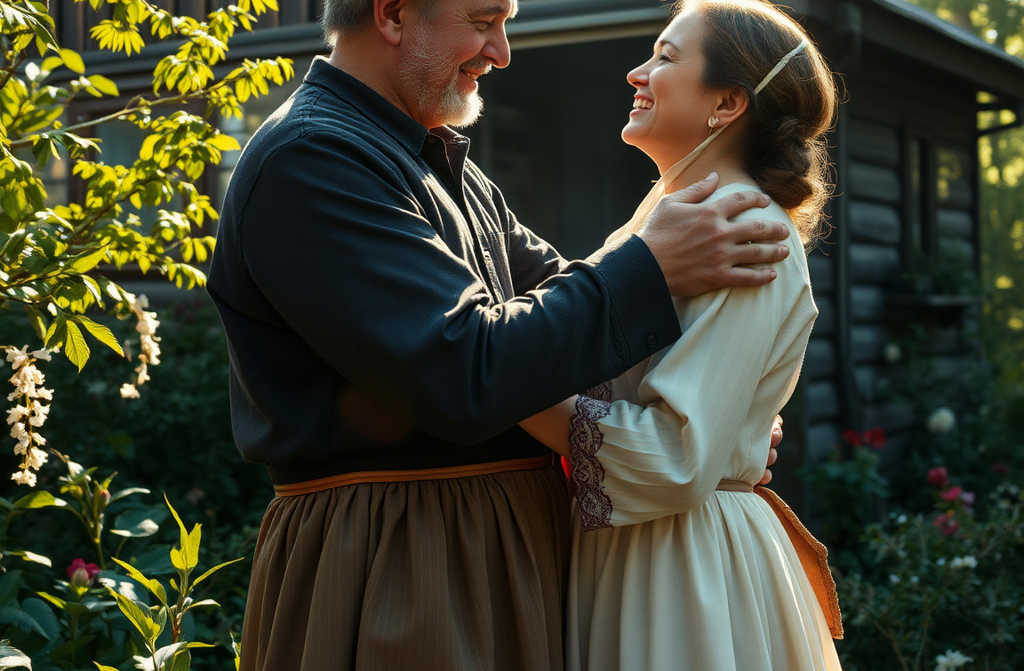
Completely letting go was impossible
Every evening, Peter heads home from his job in London by Tube, then hops on the bus for the final stretch. The commute, there and back, takes over an hour. His car sits idle more often than not. With Londons morning and evening traffic so dreadful, the Tube is nearly always the faster choice.
About two years ago, his family life shiftedPeter and his wife split up. His daughter stayed with her mother; she was seventeen at the time. The breakup was calm and civil, since Peter loathes drama. Hed noticed his wife changing for the worse: snapping for no reason, leaving the house without explanation, sometimes returning late and always blaming her absence on a friend.
One evening, he asked her:
Why are you out so late? Most wives are home at this hour.
Thats none of your concern. Those normal wives are boring hens. Im completely differentIm clever, sociable, and this house feels too small for me. Besides, Im not some country bumpkin like you. You grew up on a farm and you havent changed one bit.
So why did you marry a bumpkin?
She shrugged. Picked the lesser of two evils, and left it at that.
Soon after, she filed for divorce and sent Peter packing. He rented his own flat and has gotten used to the single life, not eager to remarry just yet, but open to possibilities.
Peter is sitting on the Tube, and like everyone else, he fills his commute scrolling through his mobilereading the headlines, chuckling at jokes, watching silly videos. He scrolls further but then is jolted, as if struck by lightning. He scrolls back, stares at the picture, and reads the advert:
Herbal Healer, Martha. Natural treatments.
Staring at him from his phone screen is his first love. The love never returned, not even close, but unforgettable all the same. He remembers Martha, that odd but beautiful girl from his class.
He almost misses his stop, rushing off the Tube and skipping the bus, walking briskly through the dusk, drawn by memories. He lets himself into his flat, drops his coat, and sits right there in the hallway on a low stool, staring at his phone. He quickly saves her number from the advert, just as his phone dies and needs charging.
While his phone charges, he tries to eat but barely picks at his dinner. He ends up slouched on his sofa, swamped by nostalgia.
From day one, Martha stood out: quiet, modest, with a thick plait down her back, her school dress always a bit longer than the others. Their small town was the sort where everyone knew everyone, but Martha was a mystery. She lived with her grandparents in a pretty, old house near the woodsa house that looked almost like something from an English fairy tale, with intricate carving around the windows.
Peter fell for her at first sight. Childish at first, but to him, it felt deep. Everything about her was unusualshe wore a kerchief in all weathers and carried an embroidered homemade satchel, unlike anything the other children had.
Instead of the usual Hello, Martha would say, Good health to you, almost as if shed stepped straight out of folklore. She never rushed about at break, never shouted, always polite and calm.
One day, Martha didnt come to school. After lessons, a group of classmates went to check on her. Peter went too. They walked out past the edge of town, turned down the lane, and there was her storybook house.
Look, theres a crowd outside, whispered lively Victoria.
They drew near and saw a funeral. Marthas grandmother had passed away. The girl stood weeping beside her grandfather, who stared silently into space. The procession moved towards the cemetery, and the children followed. Afterward, they were invited back for tea.
Peter never forgot thishis first funeral. Martha came back to school a couple of days later. Time passed; the girls blossomed into sixth-form beauties, painting their faces and competing over their looks. Only Martha remained dignified, with her back straight, cheeks glowing, never a touch of makeup.
The boys started flirting with the girls. Peter finally plucked up the courage to speak to Martha at the end of Year 11.
Let me walk you home from school?
Martha looked at him seriously and spoke quietly, so no one else would hear:
Im spoken for, Peter. Its our tradition.
Peter sulked but didnt understand what tradition she meant or who our was. He eventually learned her grandparents were devout Anglicans; her parents had died long ago, leaving the grandparents to raise her.
Martha always got top marks. She wore no jewellery and ignored the whispers and gossip behind her back, behaving with poise.
She grew lovelier every year, and by Year 12 she was stunningtall and elegant. The boys secretly admired her but never teased or mocked.
After finishing school, people went their separate ways. Peter moved to London for university, knowing nothing of Martha except that she had married. He hardly went back home, always off working over the holidays.
Martha married the man shed been promised to and moved to his village. She lived simplymilk cows, rake hay, care for the home, just like everyone else. She had a son; no one from their class saw her again.
So Martha heals with herbs now, Peter muses on his sofa. Shes even lovelier than before.
He drifts to sleep. The next morning, his alarm rings, and off he goes to work, haunted by thoughts of Martha.
Yes, first love has a way of stirring your heart. It really never does fade, he thinks.
first love never fades, always stirs the heart
He spends a few days in a daze before he cant help himself and messages her.
Hello, Martha.
Good health to you, she replies. Some things never change. Is there something I can help with, or is something worrying you?
Martha, its Peteryour old classmate. Remember, we sat together at school. I saw you online and had to write.
Oh, I do remember you, Peter. You were the brightest of the boys.
Martha, youve left your number here; may I call you? he asks quietly.
Of course, give me a ring.
That evening, after work, he calls her. They talk a little, catching up on where life took them.
I live and work in London, he says. But please, Martha, tell me about you. Is your family big? Is your husband nice? Where do you live?
I live in my old housethe one I walked to school from, you know it. I came back after my husband died. A bear in the woods, it was tragic Granddads gone, too, a long time now.
Im so sorry, Martha I had no idea.
Its alright, it was a long while ago. Ive made my peace with it. And its hardly your faultits just life. Are you calling just to chat, Peter, or do you need help with herbs? I give advice sometimes
I just wanted to talk. I dont need herbssaw you and all the memories came rushing back. I miss our town; Ive not been in years. Mum passed ages ago.
They chat awhile, reminiscing about classmates, then say goodbye. Silence returns. Its work and his flat, but a week later, Peter cant resist and calls Martha again.
Hello, Martha.
Good health to you, Peter. Feeling poorly, or just missing someone?
Ive missed you, Marthaplease dont be cross, but may I come see you? Please? He asks, hopeful, his heart racing.
Come, she says, simply, but its clear she smiles as she says it. Come when youre able.
Ive a week off starting soon, he says, delighted.
Thats splendid. You know the address.
He spends the week buying gifts for Martha, unsure what she might likewhether shes different or unchanged. Then hes driving furiously out of London, back to his childhood town. Its a long six-hour drive, but he loves a road trip.
The town appears suddenly as he turns off the dual carriageway. Hes surprised by all the changesnew houses, factories thriving, high street with supermarkets and cafés. He parks near a shop.
Goodness, I thought this place would be on its last legs. But its booming, he says aloud, looking about.
Weve got proper town status now, says an elderly gent, overhearing as he passes. Been official a good whileyou must not have visited in ages?
Ages indeed, sir.
Weve a fine mayorcares about the place, which is why the old village has thrived.
Martha waits in the front garden. Peter phones as he nears, and soon she sees his car swing round the corner. Her heart races. No one knows Martha quietly loved Peter all through their school days. Shed kept it secret, tucked inside her heart, and if he hadnt come back, she might have carried it to the grave.
Their meeting is joyful. They settle in the gazebo in the garden; her fairy-tale house is older now, but just as welcoming.
Martha, Ive come to see you for a reason, he says, and she looks at him, a little nervous.
Im listeningwhat is your reason? she asks, more tense than usual.
Ive loved you all my life. Dont tell me you still wont return my love? he says firmly.
Martha jumps up, wraps her arms around his neck.
Peter, PeterIve loved you since childhood, too.
Peter spends his whole holiday at Marthas house, and as he leaves, he promises:
Ill sort out work, switch to remote, and Ill come back for good. I was born herethis is where I belong, he laughs.



Helena Was Warned That He Was Harsh and Unyielding and That She Should Stay Away From Him—But She Had a Clever Plan in Mind
Richard is a forty-year-old man who has never been married. Several years back, he was the envy of all the...


Yes, the flat may be small, but we will still buy your cousin a bed.
Honestly, anyone who works full-time will totally get this feeling: that moment when the doorbell goes off on your one...


At a Certain Point, a Woman Reached the Limit Where Her Husband’s Behaviour Became Too Painful, and She Spoke Honestly to Him About It—He Was Completely Taken Aback
Rebecca was late for work that day, though David scarcely seemed to noticefor he always carried himself as if the...


The Father-in-Law Deliberately Tested His Son-in-Law to See If He Was a Worthy Husband for His Daughter
My friends always said that I was terribly unlucky with my wife, though even worse so with her parents. My...
Relatives from the Countryside Arrived for a Week-Long Visit—Five of Them in Our One-Bedroom Flat, and I Greeted Them Covered in Green Spots—Like I Had Chickenpox
Relatives from the countryside turned up to stay with usthere were five of themall hoping to squeeze into our one-bedroom...
When My Son Made Me Wait Outside the Door, Everyone Fell Silent
When my son made me wait at the front door, everyone fell silent. I’d arrived with a bag of fresh...


I recently met a woman walking down the street with her one-and-a-half-year-old daughter, completely oblivious to everything happening around her
Good afternoon, dear friend. Just the other day, I crossed paths with a young woman strolling along the street in...


The grandchildren are just beyond the fence, they need to be looked after, we’ll be back soon.
What do you make of those ridiculously early morning phone calls? You know, the ones where youre not sure if...