
EN
Nobody Was Looking for Him on Clement Street

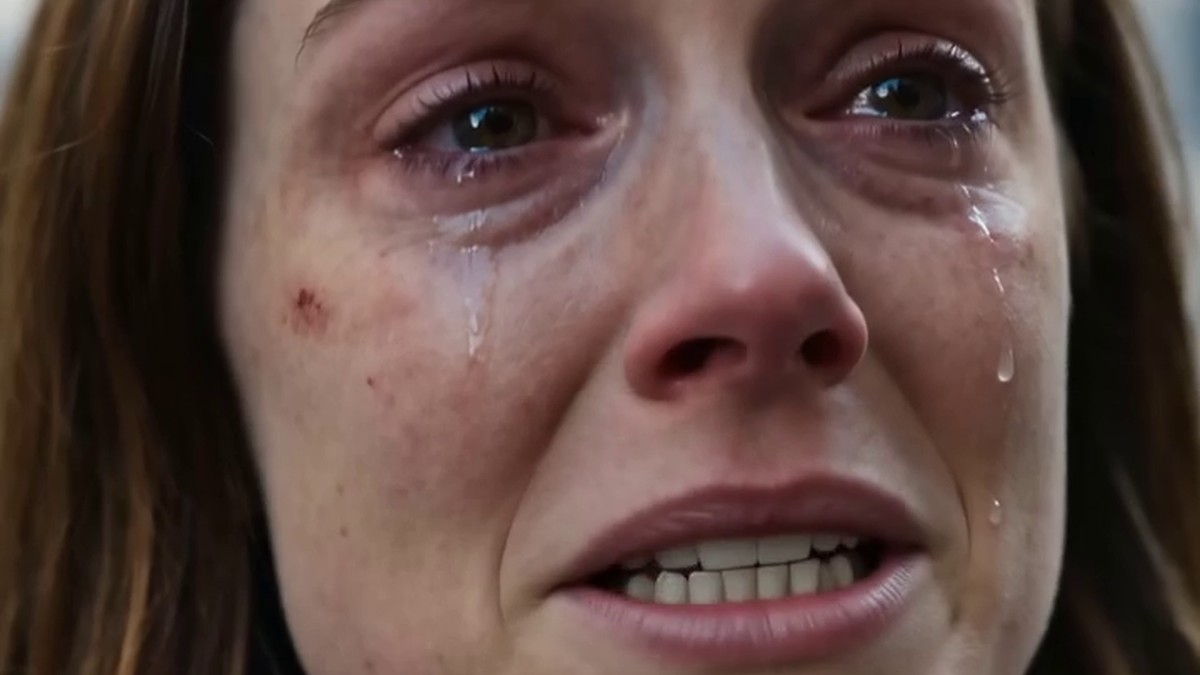
Two years. That's how long the door to that bedroom had stayed shut.
Marisol Diaz hadn't touched it—not the dinosaur nightlight, not the half-finished puzzle of the solar system on the desk, not the sneakers by the closet, one size too small now for a boy who'd be eight if he were still growing where she could see it. She lived in Sacramento, in a rented duplex off Fruitridge Road, and every day for seven hundred and some days she had walked past that door and not opened it, because opening it felt like a kind of surrender she wasn't ready to make.
The day it happened, she'd taken both boys to the farmers market near Sutter's Landing. Liam was four then, Dante was six. She'd let them walk ten feet ahead of her, the way you do when you think ten feet is nothing, when you think the world is still small and contained and yours. She turned to pay for a bag of peaches. When she turned back, Liam was standing alone by a lemonade stand, crying, holding his stuffed rabbit by one ear.
Dante was gone.
The search went on for six weeks with flyers and volunteers and a detective named Ruiz who stopped calling after the fourth month, though he never said so directly—just let the calls get further apart until they stopped. Marisol kept looking on her own. She drove down streets she had no reason to drive down. She looked at every boy who was roughly the right height. She told herself she would know him anywhere, and then doubted that, and then told herself again.
She never stopped paying the extra fifty dollars a month to keep the second bedroom as its own room instead of turning it into the home office her sister kept telling her she needed.
Her sister, Teresa, lived across town and had opinions about all of it. "You can't keep the room like a museum, Mari." She said it gently, but she said it more than once. "At some point you have to let yourself live in the house you actually have." Marisol never argued back. She just didn't change the room.
What nobody knew—what Marisol herself didn't find out until later, in pieces, from a case worker and then from a woman named Carol Jennings who ran a small nonprofit out of a strip mall near Watt Avenue—was that Dante hadn't gone far at all. A man had taken him, yes, but the man hadn't kept him long. Three weeks in, scared of what he'd done, he'd left the boy at a laundromat in Elk Grove with a story about being lost, and a retired couple had taken him in, called him by a different name because he wouldn't say his own, and eventually, through a chain of very ordinary bureaucratic failures—a misfiled report, a database that didn't talk to another database, a boy too frightened to say much of anything useful—Dante had ended up in the foster system under a case number instead of a name. He'd been in three homes in two years. The most recent one was six miles from Marisol's duplex.
She found out where he was on a Tuesday. She didn't sleep that night. She called Teresa at eleven p.m. just to say, out loud, to another person, "I think I found him," because she needed to hear if the words sounded true when she said them.
Wednesday, she drove to the address Carol Jennings had given her—a modest ranch house near a strip of stores on Watt Avenue, with a pharmacy on the corner. She wasn't supposed to approach him directly. There were supposed to be case workers, a controlled first meeting, paperwork. She knew that. She parked across the street anyway and sat there with her hands on the wheel, and then she saw him.
He was sitting on the bench outside the pharmacy. Another boy was next to him—a foster brother, she'd learn later, named Caleb—and Dante was holding the kid's hand the way an older sibling does when they've decided, without being asked, to be the responsible one.
She got out of the car. She doesn't remember crossing the street.
She went down on her knees on the sidewalk in front of the pharmacy, and the concrete was cold through her jeans, and she didn't feel it.
"Dante," she said. It barely came out as a sound at all.
The boy went still.
"I thought I lost you," she said. "I thought—" She couldn't get past it. There wasn't an ending to that sentence she could say out loud in front of a CVS. "I looked for you every single day. Your room's still there. I never changed anything in it because I couldn't—I thought if I changed it, that meant I'd given up."
He was looking at her with an expression that wasn't quite recognition and wasn't quite its absence either. Something in between. Something that had been waiting a long time to be let out.
"What's my name?" he asked.
"Dante," she said. "Dante Miguel Diaz. You're going to be eight in April. Your brother is Liam. You were born at Sutter Memorial and you weighed six pounds eleven ounces and you screamed for almost an hour and then went dead quiet and scared me so bad I made the nurse check your pulse."
Something shifted across his face.
"I was here," he said. Quiet. Flat. Like he was giving an address.
Then she broke. Not slowly—all at once, the way a dam doesn't crack, it just goes. She pulled both boys against her on that sidewalk, Liam and Dante, gripping the collar of Dante's oversized sweatshirt like letting go would undo something.
Liam stiffened for a second—the startle of being grabbed—and then melted into her. Dante stayed rigid. Not pulling back, exactly. Just not arriving. She felt the difference. She didn't squeeze harder. She just held on, steady, the way you hold someone when what they need is proof you're not leaving, not proof of how strong your grip is.
"I've got you," she said. "I've got both of you."
What came after wasn't a single afternoon of hugging on a sidewalk. It was five months of supervised visits, a family court hearing in Sacramento County, a caseworker named Dana who did not sugarcoat anything, and a boy who sometimes called her "the lady" for the first six weeks before he called her anything else.
The retired couple who'd taken him in at the laundromat, the Pellegrinos, had grown attached and initially fought the return. There was a hearing. Marisol sat in a wood-paneled courtroom with a folder of hospital birth records, old pediatrician forms, a DNA test result she'd paid six hundred dollars to rush, and Teresa beside her holding her hand so hard it left a mark. The judge looked at the paperwork for what felt like twenty minutes and then looked at Dante, who was sitting between a court-appointed advocate and Marisol's lawyer, and asked him, directly, who he wanted to go home with.
Dante didn't answer right away. He looked at Marisol first, then at the floor, then he said, "I remember the yellow blanket. On my bed." Marisol had kept that blanket folded at the foot of the bed in his room for two years.
The judge ruled that evening. Full custody restored.
The room didn't need to stay a museum after that. The first week home, Dante took the dinosaur nightlight off the shelf himself and put it in a box in the closet—not thrown out, just put away—and asked if he could paint the wall a different color. Marisol took him to the hardware store on Fruitridge the next Saturday. He picked a blue-gray, the color of a hoodie he said he liked that belonged to Caleb, the foster brother he still called sometimes.
She didn't put the extra fifty dollars toward the room anymore. She didn't need to. The room had a boy in it now, asleep most nights under a yellow blanket, occasionally still saying "the lady" when he was half-dreaming and not quite back yet from wherever two years alone had kept him. Marisol stopped flinching at that, eventually. She just answered to it, same as she answered to Mom.



La revanche au gâteau Chantilly
Thomas a reposé sa fourchette tellement fort que l'assiette a tinté contre la nappe. — Maman, hier tu as jeté...


Parkoviště u Albertu, ulice Modřínová
Jmenuju se Jitka, je mi čtyřicet pět, a dneska vám chci vyprávět o něčem, co kdyby se stalo v jiném...


Чоловік мовчки стояв поруч, поки мене перетворювали на прислугу
— Завтра кум привозить мені нові меблі, в квартирі ремонт ще не закінчено, тож я тут поживу. Днів десять, може,...


Петя заминава морето: как Елена спря да чака разрешение
– Морето се отменя, майка идва при нас! Петър обяви това два дни преди полета, без да вдига очи от...


De ster die mijn moeder nooit draagt
Het Van Rijckevorsel-pand aan de Herengracht rook naar witte lelies en te veel parfum. Mara stond bij de ingang van...


Nobody Was Looking for Him on Clement Street
Two years. That's how long the door to that bedroom had stayed shut. Marisol Diaz hadn't touched it—not the dinosaur...


Dovana, kurios niekas neprašė
Vestuvių salėje Trakuose, prie Galvės ežero, orkestras tuoj tuoj turėjo užgroti pirmąjį šokį. Aš, Danutė Vaitkienė, šešiasdešimt treji metai, stovėjau...


Puur geluk voor Sanne, zes jaar na de moord in Zoetermeer
Zes jaar lang had ik mijn moeder de rug toegekeerd. Ik was zeventien toen de rechter in Den Haag haar...