
EN
The first time Daisy clawed at the nursery wall, I didn’t think much of it.

Dogs get weird ideas sometimes.
I assumed she'd move on.
She didn't.
Morning two, she was right back at it.
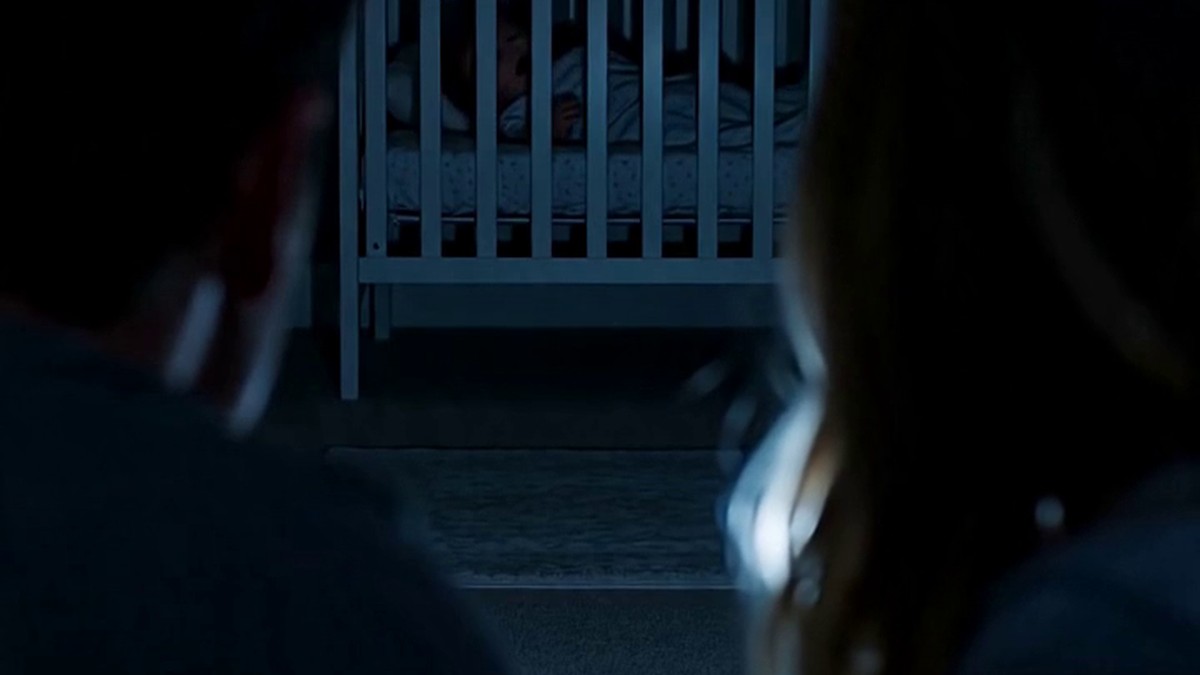
Same wall. Same corner. The one directly behind my eight-month-old daughter's crib.
Not the closet. Not the window. Not the door leading out to the hallway.
Just that wall.
She dug her nails in so hard the paint left white streaks across her paws.
By day three, the wallpaper was peeling in long, ragged strips.
By day five, the drywall itself bore the evidence — deep gouges, the kind that take force. Sustained, deliberate force.
Nothing we did made any difference.
We called her off. She circled back.
We closed the nursery door. She sat outside it and cried until we couldn't take it anymore.
We put up a baby gate. She hit it hard enough to send it skidding across the floor.
We even moved the crib to the opposite wall — thinking maybe she was drawn to the baby's scent, to the warmth of the mattress.
Daisy didn't spare the crib a single glance.
She walked straight to the same patch of wall and started again.
That's the moment I started thinking something was genuinely wrong with her.
The dog who once sprinted after tennis balls until she collapsed now sat rigid, locked onto that wall like it owed her something.
She stopped greeting people at the door.
Stopped eating with any enthusiasm.
Stopped being Daisy.
Every waking hour — that wall.
And while all of this was happening…
Our daughter was getting worse.
It started as a cough. Something small, easy to dismiss.
Then the nights turned rough. Then frightening. Breathing that didn't sound right, that sent me out of bed in the dark with my heart in my throat.
The pediatrician said asthma.
The medication didn't touch it.
Every night I sat in the glider beside her crib, listening to every exhale, bargaining with the silence for one peaceful morning.
Every morning, Daisy was at the wall.
Her paws were swollen now.
Then cracked.
Then bleeding.
Still she went back.
My patience broke on a Tuesday night.
I walked into the nursery and stopped cold.
A hole — roughly the size of a dinner plate — had opened up in the drywall. Dust settled across the carpet like fresh snow. Daisy was inside it up to her shoulders, digging like she was running out of time.
I grabbed her collar.
Pulled her back.
Told her it was over. That she'd gone too far. That this had to stop.
She turned and looked at me.
Then her eyes moved to the hole.
Then to my daughter's crib.
Back to me.
She wasn't cowering. There was no guilt in her face — none of that low-headed, tucked-tail shame I'd seen before when she'd eaten something off the counter or chewed a shoe.
This was different.
She was telling me something.
I was just too exhausted, too scared, too frayed at the edges to hear it.
I crouched down anyway.
Aimed my phone's flashlight into the gap she'd torn open.
Leaned close enough to see inside.
And my blood went cold.
Black mold.
Not a patch of it. Not a smear.
A colony.
It had spread across the interior wall stud like something alive — dark, dense, blooming outward from a burst pipe joint that had been weeping silently for God knows how long. The insulation around it had gone gray and soft. The wood behind it was dark with moisture, soft at the edges where rot had begun to set in.
I didn't move for a long moment.
Just knelt there on the nursery carpet with my phone light trembling inside the hole my dog had torn open with her bare paws.
Daisy pressed her head against my arm.
Just once. Quietly. The way she used to when I was sad.
—
I called a remediation company at 6:47 in the morning.
The man who answered didn't sound surprised when I described it. He'd heard this story before — old house, hidden pipe, slow leak behind a wall nobody opened because nobody thought to look. He said they'd come that day. He said we needed to leave immediately. He said words like "airborne spores" and "prolonged exposure" in the same flat, professional tone people use when the information is serious enough that panic won't help anyone.
I hung up and stood in the doorway of my daughter's nursery.
Looked at the crib.
Looked at the wall.
Looked at the dog sitting between them like she'd appointed herself the last line of defense.
My throat closed.
Eight months.
She'd been breathing this in for eight months.
And Daisy had known — or not known, not in the way I know things, not in words and diagnoses and lab reports — but *known*, the way animals know, with that part of them that exists below language and reason, the part that simply responds to wrong when wrong is present.
She had responded.
Over and over and over again.
Until somebody finally listened.
—
We were out of the house within the hour.
My daughter rode in her car seat wrapped in a blanket, watching the trees scroll past the window with the calm, solemn focus of someone with no idea how close things came to going differently. Her breathing already sounded easier. I told myself it was my imagination. I needed it not to be my imagination.
Daisy sat in the back beside her.
Not pacing. Not anxious.
Still, for the first time in weeks.
Her paws were wrapped in gauze that my husband had found in the bathroom cabinet and applied with shaking hands before we left. She'd let him do it without pulling away — just sat there and watched his face while he worked, patient in a way she hadn't been since this whole thing began.
I kept checking the rearview mirror.
Both of them. Dog and daughter. Daughter and dog.
Every time I looked, Daisy's eyes were open.
Watching the road.
—
The remediation took eleven days.
The pediatrician, once we told her about the mold, went quiet for a moment in a way that told me she was rearranging information in her mind. She ordered new tests. She changed the diagnosis. She used the phrase *we should have caught this sooner* in a tone that wasn't quite an apology but lived right next door to one.
The new medication worked within seventy-two hours.
My daughter slept through the night on day four.
I sat in the chair beside her temporary crib in my mother's guest room and cried so hard my ribs hurt, pressing my knuckles against my mouth to keep from waking her.
Daisy climbed up beside me and put her head in my lap.
She smelled like gauze and dog shampoo and the particular warmth of a living animal that loves you more than you've done anything to deserve.
I put my hand on her back and felt her breathe.
—
The remediation crew found three feet of compromised wall.
The pipe had been failing for over a year, they said. Slow enough that the water never pooled, never stained the ceiling, never gave us a reason to look. Just seeped. Just spread. Just did what it was going to do in the dark behind the drywall while we lived our lives on the other side of it.
The foreman showed me photographs when it was done.
I made myself look at every one.
Because I needed to know. Because I needed to hold the full weight of what almost happened, and what didn't.
Because a dog held that weight alone for weeks while I told her she was broken.
—
Daisy's paws healed.
It took longer than I expected — the skin had cracked deep enough in places that it needed actual veterinary attention, antibiotics, a cone she wore with resigned, dignified suffering while my daughter tried to stick her fingers inside it and laughed at her own joke.
The vet said dogs don't understand consequences the way we do.
They don't calculate risk. They don't weigh the damage to their own body against the value of an outcome.
They just act on what they know.
What she knew was that something was wrong on the other side of that wall.
What she knew was that the small human sleeping nearby wasn't safe.
What she knew was that no one else was doing anything about it.
So she did.
—
The nursery is different now.
New drywall. New paint — a pale yellow we picked because it felt like morning. New everything, really, down to the baseboards. The contractor who finished it said you'd never know anything had happened in here. That it looked perfect.
I put my hand against the wall the day we moved back in.
Just held it there.
Thought about all the nights I'd glared at the damage from the doorway, jaw tight, exhausted, certain something had gone wrong in the animal I'd trusted.
Nothing had gone wrong in her.
Everything had gone right.
—
My daughter is eighteen months old now.
She walks like she owns the earth, arms out for balance, moving with the absolute conviction that the floor is on her side. She has four teeth and opinions about all of them. She says the dog's name in a way that sounds like *Day-dee*, one syllable short of the truth, and Daisy comes every single time.
Every. Single. Time.
Drops what she's doing.
Crosses whatever room.
Shows up.
Like she's still on duty. Like she always will be.
Some nights I watch them from the hallway — my daughter in her crib, Daisy on the rug below her, that old familiar post. The dog's eyes are open in the dark.
Keeping watch.
Still keeping watch.
I used to think the job of protecting her was mine alone. That I was the one standing between my daughter and everything that could go wrong in this world.
I was wrong about that.
I was wrong about a lot of things.
But the one I think about most — the one that stays with me when the house is quiet and the night is long — is the week I stood in that doorway, looking at a dog I'd loved for years, and decided she'd lost her mind.
She never lost anything.
She just knew something I didn't.
And she kept knowing it, kept working on it, kept bleeding for it, until I finally got down on my knees and looked.
I'm still ashamed it took me so long.
I'm still grateful she didn't stop.



A hűséges kutya titka – Mire bukkant Fehér Zsófia a nyíregyházi sírkertben
A nyíregyházi köztemető ősszel reggelente ezüstös párába burkolózik, és Fehér Zsófia már messziről ismerte az utat a 14-es parcellához: harmadik...


Most, který se stal čtvrtí
Jmenuju se Jarmila Brabcová, jezdím po Jizeře na výletní loď už devatenáct let, a tahle trasa mezi Turnovem a Malou...


Aaron Pap és a hatezer eurós szívességem
Pap Áron és az örökség, amiről senki sem beszélt Nem akartam ott lenni azon az estén, de valahogy mindig én...


בת מהנדס, בלי בעל, ובלי שום בושה
הניילונים מהפארם של רמת-גן עדיין היו על השידה כשאמא שלי פתחה את דלת החדר בבי"ח "איכילוב" ועצרה במקום, כאילו מישהו...


Dopis, který jsem nestihla napsat včas
Mami, nemám pro to žádné hezké ani správné slovo. Jen vím, že mi po tobě chybí – a ta bolest...


Myčka na Rokycanské
Jarmila Dvořáková si otírala ruce o zástěru a dívala se přes sklo mycího boxu, jak její zeť Radek zapojuje nový...


De beton van Han Feenstra
Ik ben al negenentwintig jaar huismeester van een flat aan de Van Oldenbarneveltlaan in Zoetermeer. Loodgieter van opleiding, maar in...


Aaronas sakė: „Mama tave mėgsta, tik dar nepažįsta.
Nuo ketvirto aukšto laiptinės, kur stoviu su šluota rankoje, girdžiu beveik visą pokalbį per ventiliacijos groteles – akustika šiame name...