
З життя
Тато, познайомся, це моя наречена та твоя майбутня невістка

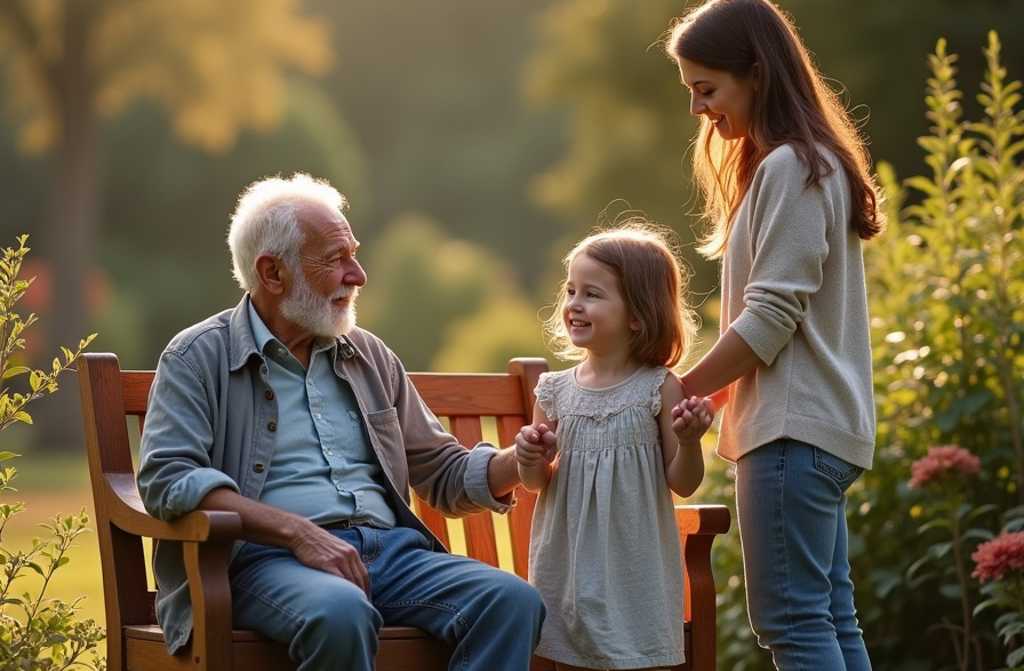
— Тату, познайомся, це моя майбутня дружина і твоя невістка, Ганна! — щасливо сяяв Борис.
— Хто?! — з подивом запитав професор, доктор наук Роман Михайлович. — Якщо це жарт, то не дуже смішний!
Чоловік із відразою дивився на нігті на грубих пальцях «невістки». Здавалося, ця дівчина не знала, що таке вода і мило. Як інакше пояснити бруд, що в’ївся під нігті?
«Боже мій! Як добре, що моя Лариса не дожила до такої ганьби! Ми ж намагалися виховати цього обалдуя з найкращими манерами», — промайнуло в його думках.
— Це не жарт! — впевнено сказав Борис. — Ганна залишиться з нами, а через три місяці ми одружимося. Якщо ти не хочеш брати участь у моєму весіллі, обійдуся без тебе!
— Добридень! — усміхнулася Ганя і по-звичному пройшла на кухню. — Це пироги, малинове варення, сушені гриби…, — перераховувала вона продукти, які дістала зі зношеної торби.
Роман Михайлович схопився за серце, побачивши, як Ганя зіпсувала білу скатертину ручної вишивки, проливши варення.
— Борисе! Опам’ятайся! Якщо ти це робиш мені на зло, не варто… Це надто жорстоко! З якого ти села привіз цю невігласку? Я не дозволю їй жити в моєму домі! — кричав у відчаї професор.
— Я люблю Ганну. І моя дружина має право проживати в моїй квартирі! — знущально посміхнувся хлопець.
Роман Михайлович зрозумів, що син просто знущається з нього. Не бажаючи сперечатися далі, він мовчки пішов до своєї кімнати.
Віднедавна стосунки з сином дуже змінилися. Після смерті матері Борис став некерованим. Він кинув університет, грубив батькові та вів розгульний безтурботний спосіб життя.
Роман Михайлович сподівався, що син зміниться. Стане, як колись, розсудливим і добрим. Але з кожним днем Борис віддалявся від нього. І сьогодні, привести в їхній дім це село. Адже розумів, що батько ніколи не схвалить його вибору, тому й привів невідомо кого…
Незабаром Борис із Ганною одружилися. Роман Михайлович відмовився бути присутнім на весіллі, не хотів приймати невістку, що йому не подобалася. Його дратувало те, що місце Лариси, чудової господині, дружини та матері, зайняла ця малограмотна дівчина, яка й двох слів не могла зв’язати.
Ганна, здавалося, не помічала поганого ставлення свекра до себе, намагалася у всьому йому догодити, але робила тільки гірше. Чоловік не бачив у ній жодної гарної якості саме через те, що дівчина була малограмотна і з поганими манерами…
Борис, награвшись у зразкового чоловіка, знову почав пити й гуляти. Батько часто чув сварки молодих і лише радів цьому, сподіваючись, що Ганна піде з його дому назавжди.
— Роман Михайлович! — забігла якось невістка зі сльозами. — Борис хоче розлучення, більше того, виганяє мене на вулицю, а я чекаю дитину!
— По-перше, чому ж на вулицю? Ти ж не бездомна… Їдь туди, звідки приїхала. А те, що ти вагітна, не дає тобі права жити тут після розлучення. Вибач, але я не стану втручатися у ваші стосунки, — промовив чоловік, в душі радіючи, що нарешті позбудеться нав’язливої невістки.
Ганна заплакала у відчаї й пішла збирати речі. Вона не розуміла, чому свекор зненавидів її з першого погляду, чому Борис погрався з нею як з песиком і викинув на вулицю. Ну і що, що вона з села? Адже у неї теж є душа і почуття…
***
Минуло вісім років… Роман Михайлович жив у будинку для людей похилого віку. Літній чоловік останніми роками дуже здав. Звичайно, цим одразу ж скористався Борис, швидко відправивши батька, щоб позбавити себе від зайвих турбот.
Старий змирився зі своєю долею, розуміючи, що іншого виходу немає. За своє довге життя він зумів тисячам людей прищепити такі якості, як любов, повагу і турботу. Йому досі приходять листи вдячності від колишніх учнів… А от рідного сина виховати людиною не зміг…
— Романе, до тебе гості приїхали, — промовив сусід по кімнаті, повернувшись з прогулянки.
— Хто? Борис? — вирвалося у старого, хоча в душі він розумів, що це неможливо. Син ніколи не приїде до нього, адже надто сильно ненавидів батька…
— Не знаю. Мені чергова крикнула, щоб я тебе покликав. Чого ж ти сидиш? Біжи швидше! — посміхнувся сусід.
Роман узяв тростину і не поспішав виходити з маленької, задушливої кімнати. Спускаючись по сходах, він здалеку побачив її і одразу впізнав, хоча й пройшло багато часу з їхньої останньої зустрічі.
— Здрастуй, Ганна! — промовив чомусь тихо, опустивши голову. Напевно, досі відчував свою провину перед тією дівчиною, щирою та простою, за яку не захотів заступитися тоді, вісім років тому…
— Роман Михайлович?! — здивувалася рум’яна жінка. — Ви так змінилися… Хворієте?
— Є трохи…, — сумно посміхнувся він. — Як ти тут? Звідки дізналася, де я?
— Борис розповів. Ви ж знаєте, він ніяк не хоче спілкуватися з сином. Але хлопчик постійно проситься то до тата, то до дідуся… Ваня ж не винен, що ви не визнаєте його. Дитині не вистачає спілкування з рідними. Ми ж удвох з ним залишилися…, — промовила жінка тремтячим голосом. — Вибачте, напевно я даремно все це затіяла.
— Постій! — попросив старий. — Який він уже, Ванюша? Пам’ятаю, востаннє ти надіслала фото, на якому йому було всього три роки.
— Він тут, біля входу. Покликати? — нерішуче запитала Ганя.
— Звичайно, доню, клич! — зрадів Роман Михайлович.
У хол увійшов руденький хлопчик, повна, зменшена копія Бориса. Ванюша несміливо підійшов до дідуся, якого ніколи не бачив.
— Здрастуй, сину! Який же ти вже великий…, — просльозився старий, обіймаючи онука.
Вони довго розмовляли, гуляючи осінніми алеями парку, що прилягав до території будинку для людей похилого віку. Ганя розповідала про своє нелегке життя, про те, як рано померла її мати і молодій жінці довелося самій піднімати на ноги сина і господарство.
— Пробач, Ганю! Я дуже винен перед тобою. Хоча й вважав себе завжди розумним, освіченим, але тільки нещодавно зрозумів, що людей треба цінувати не за розум і виховання, а за щирість і душевність, — сказав старий.
— Роман Михайлович! У нас до вас пропозиція, — усміхнулася Ганя, нервуючи та затинаючись. — Поїхали до нас! Ви самотні, і ми з сином самі… А так хочеться, щоб поруч була рідна людина.
— Дідусю, поїхали! Будемо разом на риболовлю ходити, в ліс по гриби… У нас дуже красиво в селі, і місця вдома багато! — попросив Ваня, не відпускаючи руку дідуся.
— Поїхали! — усміхнувся Роман Михайлович. — Я багато упустив у вихованні сина, сподіваюся, зможу дати тобі те, чого не дав свого часу Борису. Тим більше, я ніколи не був у селі. Сподіваюся, мені сподобається!
— Звичайно, сподобається! — засміявся Ванюша.



Michael Froze: From Behind the Tree, a Dog He’d Recognise Anywhere Watched Him with Sad, Knowing Eyes
I frozepeering from behind an old oak tree, a dog watched me with a sadness Id have recognised anywhere. Dust...


DO I REMEMBER? I CAN’T FORGET! “Polly, listen… Remember my illegitimate daughter, Anastasia?” My husband spoke in riddles, making me uneasy. “Do I remember? I can’t forget! Why?” I sat down, bracing for bad news. “Well… Anastasia is begging us to take in her daughter—my granddaughter,” he mumbled. “And why on earth should we, Alex? Where’s Anastasia’s husband? Disappeared into thin air?” I was intrigued. “The thing is, Anastasia doesn’t have much time left. She never had a husband. Her mother remarried and lives in America. They’re estranged, and she has no other family. That’s why she’s asking…” Alex couldn’t meet my eyes. “So, what’s your plan?” I had already decided. “Well, I’m asking you, Polly. Whatever you say, that’s what we’ll do,” he finally looked at me. “How convenient. You made mistakes in your youth, and now I’m to shoulder the burden of a stranger’s child? Isn’t that right?” My husband’s feebleness made me furious. “Polly, we’re a family. We should decide together,” Alex pushed back. “Oh, you remembered now! Yet, when you fooled around, did you consult me? I’m your wife!” Tears welled up and I stormed out… In school, I dated a boy named Peter, until a new boy, Alex, arrived and swept me off my feet. I broke up with Peter. Alex noticed me, walked me home, kissed my cheek, and picked flowers for me. A week later, he led me to his bed. I didn’t protest—I fell head over heels for Alex. After we graduated, he went off to serve in the army in another city. We wrote to each other for a year. Then Alex returned on leave. I was overjoyed. He promised we’d marry when he came back for good—already considered me his wife. His sweet words melted me every time, even years later: one loving look from Alex, and I’d melt like chocolate in the sun. Alex went back to the army. I waited, confident I was a betrothed bride. Six months later, a letter arrived: Alex had found “real love” in his garrison town and wasn’t coming back. But I was already carrying Alex’s baby. So much for a wedding—just as my gran warned me. When the time came, I gave birth to my son, Ivan. Peter, my old boyfriend, stepped in to help. Desperate, I accepted. Yes, Peter and I became intimate. I’d long given up hope of seeing Alex again. Then he turned up, surprised to see Peter there. “Can I come in?” Alex asked. “Come on in, since you’re here,” Peter reluctantly allowed. Sensing the tension, Ivan clung to Peter, wailing. “Peter, why don’t you take Ivan for a walk?” I was at a loss. When they left, Alex asked, “Is he your husband?” “What’s it to you? Why are you here?” I was angry and confused. “I missed you. I see you’ve made a life with Peter—you didn’t wait for me. Well, I’ll go—sorry to intrude on your happy family,” he said, heading for the door. “Wait, Alex. Why have you come—just to hurt me? Peter helps me cope with loneliness. He’s been raising your two-year-old son, by the way,” I tried to keep him there. My love for him hadn’t died. “I’ve come back for you, Polly. Will you have me?” Alex asked, hope in his voice. “Come in, dinner’s ready,” my heart leapt—he came back, so he hadn’t forgotten. Why resist? Peter was shoved aside. My Ivan needed his real father. Later, Peter married a lovely woman with two children. A few years passed. Alex could never love Ivan as his own—he was convinced Ivan was Peter’s son. Alex never really cared for Ivan. He always had an eye for the ladies. He was forever chasing after women, easily smitten, just as easily moving on—including some of my own friends. I cried but kept loving him, determined to hold my family together. It was easier for me than for him—the one who loves is always blinded by hope. I never needed to lie or invent excuses; I just loved him. He was my sun. Sometimes I wanted to leave, but then I’d scold myself: Where would I go, who could compare? Besides, Alex would be lost without me. I was wife, lover, and mother to him. Alex lost his own mother at fourteen—she died in her sleep. Maybe that’s why he always looked for lost affection elsewhere. I forgave everything. Once, after a bitter argument, I threw him out. He moved in with his relatives. Months passed—I forgot why we argued—but he didn’t return. At last, I went to his family’s house. His aunt was surprised to see me. “Polly, why do you want Alex? He said you’d divorced—he has a new girlfriend now.” I found out where she lived and paid them a visit. “Hello! Could I see Alex, please?” I asked politely. She just smirked and slammed the door in my face. I left in silence. A year later, Alex came back. By then the girl had given birth to his daughter, Anastasia. To this day, I blame myself for throwing him out—maybe that girl wouldn’t have scooped him up otherwise. I tried harder to please and adore Alex. We never talked about his illegitimate daughter. It seemed if we did, our family would fall apart. We let sleeping dogs lie. After all, what’s one stray child? It happens. I blamed the “temptresses” instead. In time, Alex settled down. Flings ended. He stayed home watching TV. Our son married early, gave us three grandkids. Then, out of nowhere… Anastasia, Alex’s daughter from long ago, reappeared—asking us to take in her daughter. How would I explain a new little girl to Ivan? He never knew about his father’s youthful escapades. In the end, we took legal guardianship of five-year-old Alina. Anastasia passed away, gone at thirty. Graves grow over with grass, but life goes on. Alex spoke to Ivan man-to-man. After hearing his father’s confession, Ivan said, “What’s done is done, you don’t answer to me. But the girl should stay—she’s family.” Alex and I breathed easier. We’d raised a kind son. Now, Alina is sixteen. She adores her Grandpa Alex, whispers secrets to him, calls me Granny, and says she’s my spitting image at her age. I never argue…
DO I REMEMBER? I COULD NEVER FORGET! Polly, darling, theres something I must tell you Well, do you recall my...


Winter had blanketed Andrew’s garden with soft snow, but his loyal dog Duke, a massive German Shepherd, was acting strangely. Instead of curling up in the large kennel Andrew had lovingly built for him last summer, Duke stubbornly insisted on sleeping outside, right in the snow. Watching from his window, Andrew felt a pang of worry—Duke had never behaved like this before. Each morning, as he stepped outside, Andrew noticed Duke watching him tensely. Whenever he approached the kennel, Duke positioned himself between Andrew and the entrance, growling softly and looking at him pleadingly, as if to say: “Please, don’t go in there.” This odd behaviour was so out of character for their years of friendship, it made Andrew uneasy—what was his best friend hiding? Determined to get to the bottom of it, Andrew came up with a plan—he lured Duke into the kitchen with a tempting piece of steak. While the dog, locked inside, barked desperately at the window, Andrew crept towards the kennel and crouched down to peer inside. His heart skipped a beat as his eyes adjusted to the darkness and he saw something that froze him on the spot… …There, curled up in a blanket, was a tiny kitten—dirty, freezing, and barely breathing. Its eyes barely opened, and its frail body shivered with cold. Duke had found it somewhere, and instead of chasing it away or leaving it to its fate, he had sheltered it. He had slept outside to avoid scaring it and guarded the entrance as if there was treasure inside. Andrew held his breath. He reached out, gently lifted the tiny creature and pressed it to his chest. In that moment, Duke raced over and nestled beside his shoulder—not growling, but gently, eager to help. “You’re a good dog, Duke…” Andrew whispered, clutching the kitten. “Better than most people.” From that day on, there were no longer just two friends living in the garden, but three. And the lovingly built kennel found its purpose again—as a little home for souls in need of saving.
Winter had blanketed Davids garden in a soft layer of snow, but his loyal dog Byron, a huge English Mastiff,...


The Little Girl Who Wouldn’t Eat: The Night My Stepdaughter Found Her Voice and Our Family Was Forever Changed
A Little Girl Who Couldn’t Eat: The Night My Stepdaughter Finally Found Her Voice and Everything Changed 8 December 2025...


A 7-Year-Old Boy, Covered in Bruises, Walked Into A&E Carrying His Baby Sister—What He Said Next Broke Everyone’s Heart
Just after one oclock in the morning, a seven-year-old boy, covered in bruises, pushed his way into the A&E at...


My Son Skipped My 70th Birthday, Claiming He Had to Work—That Evening I Saw Him on Social Media Celebrating His Mother-In-Law’s Birthday at a Fancy Restaurant
The phone rang precisely at noon, shattering the careful anticipation that hung in the air. Margaret Palmer hurried to pick...


No Place to Call Home: Nina’s Journey from Heartbreak and Loss to an Unlikely Friendship with a Homeless Gentleman in the English Countryside
HOMELESS There was nowhere left for Emily to go. Nowhere at all, in fact. Perhaps I could stay a couple...


Aunt Rita: The Story of a 47-Year-Old Londoner, a Self-Confessed Cynic, Who Finds Unexpected Purpose and Family in Helping a Struggling Young Mother and Her Children in a Tower Block, Transforming Both Their Lives and Her Own
Aunt Rita I am forty-seven years old. Just an ordinary womanone might say a bit of a plain Jane. Not...