
З життя
The Story ContinuesShe stepped onto the mist‑shrouded pier, where a lone lantern flickered, beckoning her toward the secret that would change everything.

June 12
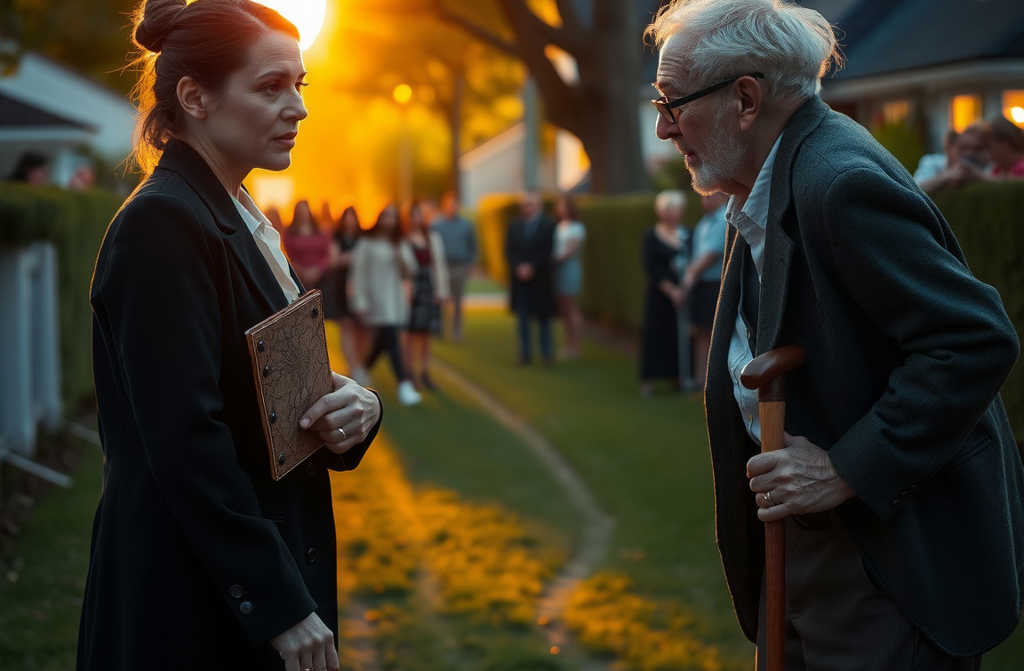
I watched Ethel glide onto the immaculate grass of Bramley Lane, her steps as measured as an actresss entrance onto a stage. Every movement was deliberate, coldly calculated. She knew this was no ordinary return; it was her reckoning.
Old Mr. Georges stare seemed to scorch the air. He clutched his cane with such ferocity that his knuckles turned white. Anger and contempt glimmered in his eyes, along with that ancient, predatory spark that had let him dominate for decades.
Buy it? he sneered. Girl, these houses belong to my line. As long as I draw breath, they stay mine.
Ethel moved a fraction closer.
Exactly why, she said softly, because you wont be here much longer.
His lips quivered. He wanted to laugh, but a cough broke through, the weight of years, drink and power finally catching up with him.
Behind the neighbours hedges, faces peered out. Everyone saw the scene, none dared intervene, yet curiosity outstripped fear.
Youve lost your mind, Ethel, the old man rasped. No one will ever give you anything.
From her bag Ethel produced a battered folder.
These are contracts, she said. Ive already bought half the street. Mrs. Mabels debts were settled, her son drowned in a loan, and Mr. Harolds business went bust. They all turned to me.
Georges eyes flashed.
Lies!
Ethel opened the folder, flashing copies.
This is only the beginning. You, George, hold secrets worth far more than these walls.
The old man wavered.
What sort of secrets?
Ethels smile was icecold.
You think I know nothing. I know how you became a widower in that year. I know my mother vanished one morning, and you claimed a heart attack took her. No autopsy, no questions. You paid off the doctors and the police.
A murmur rippled through the neighbourhood; shutters trembled behind startled eyes.
False! George roared. Everyone knows she was ill
Ill? Ethel interrupted sharply. Or perhaps her fortune was simply inconvenient for you?
He stammered, then recovered his voice.
You have no proof.
Ethel lifted a hand.
What then?
She produced a thin, worn notebook bound in cracked leather. Georges complexion turned ashen.
This
Yes. My mothers diary. I found it in an old relatives chest. It contains everythingher fears, her complaints. She wrote that you slipped medicine into her tea to make her look frail, that you forged her will.
Georges eyes widened. The cane slipped from his grasp, nearly clattering to the cobbles.
Lies all lies
Ethel shrugged.
Perhaps. But do you know what journalists love? Stories backed by paper.
A heavy silence settled over the lane, broken only by the wind rustling the trees.
George raised his hand as if to strike, but it trembled. The cane slipped, and he collapsed onto the step of his porch, dignity crumbling like old plaster. The patriarch of the clan finally appeared vulnerable.
This is my street, he wheezed, fighting for breath.
It isnt any longer, Ethel replied in a hushed tone.
She turned, heading for her car.
Then, unexpectedly, neighbours emerged from their homes. Mrs. Mabel, pale and thinhaired, clutched a crumpled paper.
Hes right! I handed him everything we couldnt keep up with the loans
Behind her, Mr. Harold stepped forward, head bowed.
My firm went under, he muttered. I signed away what I could.
The crowds murmur swelled into cries and curses. The street, once spotless, now lay under the weight of exposed falsehoods.
Ethel started her engine. In the rearview mirror she caught one last glimpse: George, motionless as a shattered idol, his family scrambling around him, trying to salvage the wreckage.
For years a pain had settled in my chest, but now it no longer gnawed at me. The ache that had once driven me to watch from the sidelines finally loosened its grip. My hands rested calmly on the wheel; I knew I wasnt returning in vain.
Thirtyfour years ago I was cast out of this lane like trash. Today I am the one who holds its future.
The street that once belonged to the George clan now lies in my hands. My revenge was not a shout or a blow, but paper, cold logic and time that finally set everything right.
*Lesson learned: Power built on lies crumbles under the weight of truth, and the most lasting triumph is the quiet certainty that justice, however delayed, will find its way.*I slipped the car into neutral and let the engine sigh, the low rumble fading into the soft chatter of the gathered crowd. The street, once a polished tableau of unchallenged authority, now trembled with the raw edges of confession and hope.
A child tugged at his mothers sleeve, eyes wide as the sun caught the dust kicked up by the overturned cane. Did we always have to be scared? he whispered, the question hanging like a promise in the summer air.
Mrs. Mabels hands trembled, the crumpled paper sliding into the folds of her coat. She looked up at me, not with hatred but with the weary resignation of someone who had finally been allowed to breathe. We were taught to obey, she said, voice cracking, but you gave us a chance to listen.
The weight of the notebook rested on my lap, its leather cracked and its pages stained with the ink of a life stolen. I opened it to the last entry, the one my mother had written on the night she sensed the inevitable betrayal. The words were faint, barely legible: *Truth is a candle; it burns, it flickers, but it never goes out.*
I slid the notebook onto the passenger seat, the leather humming against the worn fabric of the car. The evening sky deepened, shadows stretching across the houses that had once been my prison. In that dimming light, I felt the old grief loosen its grip, replaced by something steadiera quiet resolve.
The councils old oak doors loomed ahead, their iron hinges creaking as if sighing with relief. Inside, the towns leaders gathered, their faces a mosaic of discomfort and curiosity. The folder of contracts I had carried all day lay open on the polished table, each signature a thread that now wove a new tapestry.
I stepped forward, the scent of fresh rain on the pavement following me like an omen. I did not come here to annihilate, I announced, my voice steady, but to unmask the rot that ate at the heart of this lane for decades.
A murmur rose, then softened as the council members exchanged glances. The oldest among them, a wiry woman with silver hair, raised her hand. What will become of these homes? she asked, her tone both wary and hopeful.
I turned, the notebook tucked safely beneath my arm. They will belong to the people who live here, not to a single name that hoards them, I replied. We will form a cooperative, share the land, and ensure no one can ever wield such power in secret again.
A ripple of agreement spread through the room, a collective exhale that seemed to lift the oppression that had settled over the lane for so long. Outside, the wind whispered through the trees, carrying with it the faint rustle of pages turning.
I walked back to the car, the streets now alive with the soft clatter of neighbors talking, laughing, planning. The night settled, the stars blinking like distant witnesses to the moment when truth finally cut through the darkness.
In the rearview mirror, I caught one last glimpse of Georges porch. The cane lay abandoned, the old mans silhouette no longer a looming specter but a reminder of a past that had finally been laid to rest.
I turned the key, the engine humming back to life. As the car rolled forward, the lane stretched ahead, a road reborn under the gentle glow of streetlamps, each house a promise that the future would be built on honesty, not on whispered lies.
And as the road disappeared behind me, I felt the ache that had once driven me dissolve into a steady, warm pulsea reminder that the most profound victories are the ones that restore, not destroy, and that the quiet certainty of justice is a light that never truly fades.



A jászberényi diófa, amelyik hatszázezer forintot ért meg egy családnak
A jászberényi diófa, amelyik örökre megmentett egy udvart Negyedik éve dolgozom a jászberényi piacon zöldséges standnál, pont szemben azzal a...


Žentas, kuris liko: Birutės akys devynerius metus
Mane vadina nedėkingu žentu. Taip sako uošvienės draugės prie bažnyčios Pasvalyje, kai aš parvežu ją iš poliklinikos ir padedu išlipti...


האלמנה מרחוב הדקלים
היה סוף אוקטובר, בבאר שבע עוד נשבה החמסין המאוחר שחודר דרך כל בד, לא משנה מה לובשים מתחתיו. אני לבשתי...


Свекървата ми изхвърли дрехите, а мъжът ми мълчеше
Стоях във всекидневната с разкъсан найлонов плик до краката и гледах празния рафт в гардероба. — Къде е ризата ми...


Dvě stě padesát hodin, matko
Tereza seděla v kuchyni na sídlišti Lesná v Brně, byla půl čtvrté ráno, a za oknem svítila jediná rozsvícená lampa...


Konvice, co nikdy nevystydla
Jmenuji se Radka Bartošová, bydlím na sídlišti v Pardubicích, ve stejném paneláku už osmadvacet let, a naproti přes chodbu, ve...


מאה חמישים מטר על מגרש הכדורגל של בית הספר בעפולה
אני עובדת בבית הספר התיכון כבר שתים עשרה שנה, מזכירה במשרד המנהלת, ורואה הרבה דברים שהורים לא רואים. אבל את...


Il quaderno di ricette di mia suocera
Mi chiamo Massimo, ho quarantatré anni e faccio il ragioniere a Bergamo. Per dodici anni ho vissuto nella stessa palazzina...