
EN
# The Barrette from the Tightrope

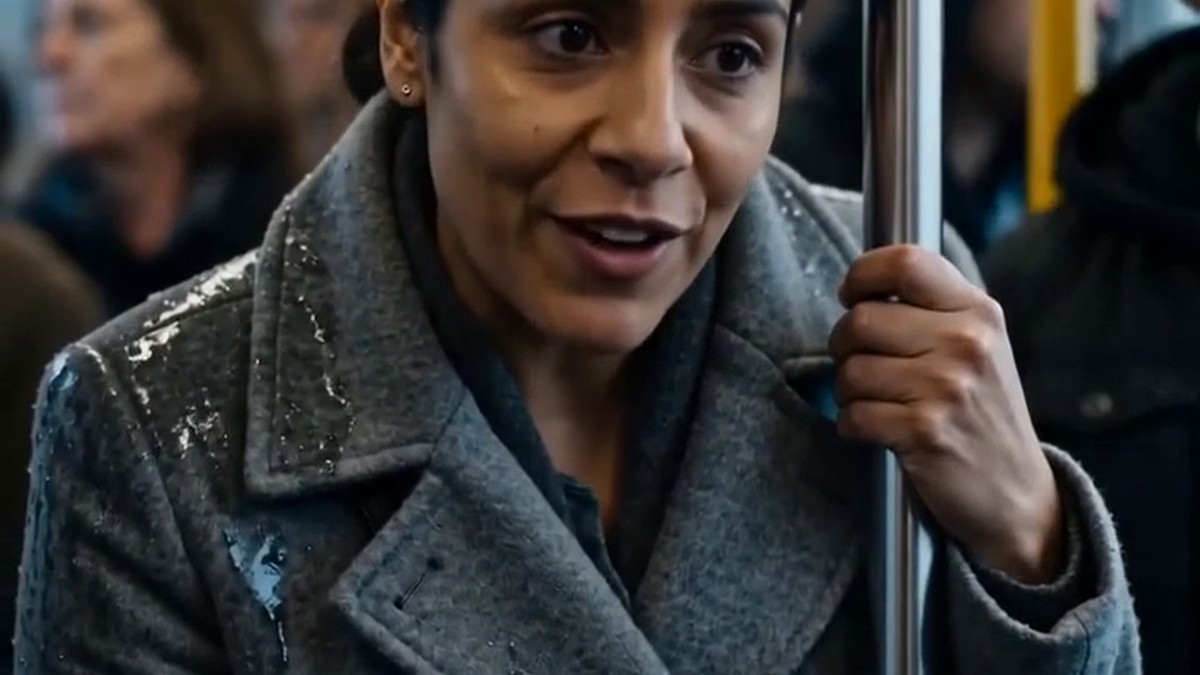
That morning I left the house at six-fifteen because the bus to downtown Columbus only runs once an hour, and by six-thirty there were already twenty people at the stop. Wind off the river drove last fall's leaves and a fine drizzle across the pavement, so everyone crowded under the shelter, and it turned out shoving was unavoidable.
I was headed to the flea market off Parsons Avenue — not to buy, to sell. In my bag I had three pairs of wool socks I'd knitted over the winter and two kids' sweaters with metallic thread woven through: my mother-in-law had handed them over, said sell these, money for medicine. She really did need it — her blood pressure had been bouncing around like crazy, and the cardiologist at the clinic on Livingston Avenue had put her on a beta-blocker, two pills a day.
I got on the bus last. More precisely, my elbow got on, and half my bag. The other half stayed on the sidewalk, pinned by the door, until the driver barked over his shoulder, "Ma'am, get in or stay put!" I sucked in two breaths and squeezed through. The bus was packed so tight you couldn't see the handrail — just people. It smelled of wet wool coats, garlic, and someone's fresh poppy-seed roll. A kid was breathing somewhere under my elbow, an old man with an empty rabbit cage pressed against my back, and in front of me stood a woman in a red headscarf with two enormous bundles tied with blue ribbon.
At the light by the old mill, six more people climbed on. The woman in the red scarf yelled that she had "live birds in here, don't squeeze, you'll crush them." You couldn't hear any birds — the bundles sat silent as spies. But she still stuck her elbow out and won herself another four inches near the driver's cab. Someone behind grumbled, "Maybe you'd like your own private car?" She didn't turn around.
We got to the turn onto Groveport Road. The bus lurched — the driver braked for a speed bump, and all of us pitched forward together, grabbing at each other like on an ice rink. That's when I felt something tugging my bag. Not stealing — just snagged. The strap pulled taut, I yanked it, and suddenly a furious falsetto siren went off right by my ear: "Where do you think you're shoving?! Oh, geez, right in my side!" It was the woman with the bundles. She stood pressed against me, and all I could see was her scarf — red with white roses — and an ear with a gold hoop earring.
"I'm not shoving," I said. "My bag got caught."
"Everybody says they're not shoving, then they're kneeing you like a mule!"
She turned her whole body toward me, and I got a look at her face: about sixty-five, eyebrows drawn in with brown pencil, tight permed curls escaping the scarf. I'd seen hundreds like her at markets over the years — they all carry some kind of relentless energy, like a truck engine idling too high.
She drew breath to say more, but at the turn the driver suddenly popped the front doors and shouted, "Groveport, this stop, let's go!" And the woman with the bundles, who'd just been holding her ground, started working her way out. A gap opened in the aisle — maybe eight inches. I don't remember how I fit into it. The crowd just exhaled, and I ended up against the rail, my back to the window, rain streaking down the glass.
The driver spun the wheel, and my eyes landed on the mirror. All I could see in it were his eyes — tired, red-veined — and a grimy bandana tied around the gearshift.
"No fare box today," he called out, to nobody in particular. "Pass it up the aisle, two-fifty. Like always."
A rustle of bills and change moved through the bus. I dug two dollars and two quarters out of my pocket and held it forward, but the man in front of me didn't move. He stood there with earbuds in, staring at his phone, some dance video flickering on the screen.
"Can you pass this up for the fare?" I asked.
No reaction. I touched his shoulder. He flinched like I'd shocked him, pulled one earbud out, and gave me an annoyed look. "What?"
"Fare, please. Two-fifty."
He took my money like I'd handed him a used napkin and passed it forward. A minute later change floated back — two quarters. I stuffed it in my wet pocket.
We reached the market in twenty minutes. Out front, vendors were already setting up folding tables — someone unloading bananas, someone else laying out packs of tights from a wholesale truck. The air smelled of smoke from a coffee trailer, wet canvas, and cigarettes. The woman in the red scarf vanished into the crowd — just a flash of blue ribbon on a bundle.
I found an open spot near the entrance, spread a plastic sheet on the concrete curb, and laid out my socks. Ten minutes later a young couple walked up. The girl turned a gray sweater with metallic thread over in her hands for a long time, asking if it itched, if it would run color. I told her the wool was from a farm sheep, dyed with onion skins by my mother-in-law, so no, it wouldn't run.
"I'll give you eighteen for it," she said, already pulling out her phone to send it through the app.
"What's your Venmo?" I asked.
She tapped at her phone, and I heard a familiar screech behind me.
I turned. By the next table over stood that same woman in the red scarf. She was selling chickens — live ones, in sacks that stirred like something boiling inside. She defended her spot with her elbows just like on the bus, but now she was on her own turf. Her voice carried down the whole row: "Fresh hens, layin' like clockwork! Eighteen bucks! Just look at her, she'll outlive you!"
The young couple turned toward the shouting. The girl handed me her phone with the transfer screen open, I typed in the amount, the money landed. I hadn't even put the phone away before she was walking off — but not before sending another eighteen to the chicken lady. Over her shoulder she called back to me, "If it runs, I'm coming back for a second pair."
I gathered up the rest of my things and realized I was thirsty. Near the entrance a kid stood with a thermos and paper cups: coffee for three, tea for two-fifty. I got the tea, not because it was cheaper, but because his coffee had cream in it and cream gives me heartburn. The tea was nearly boiling; I warmed my fingers on the cup. My wrist still had a red mark from the bag strap — as red as that scarf.
Walking back to my spot, a hand truck shot out from behind the bottle-return kiosk. It caught me behind the knees, I stumbled, tea sloshed onto my jacket. The guy hauling the cart didn't even look back. I stood there with a wet stain spreading across my chest, watching him disappear into the crowd.
Then something yanked at my bag again. Sharp, from below. I looked down: a small hand, cuff frayed, was pulling a tube of lipstick out of the side pocket. I grabbed the wrist. It was a girl, maybe twelve, thin, hair in a messy ponytail, wearing a school jacket two sizes too big. She didn't struggle. Just froze like a mouse.
"Let go," she said. "I thought it wasn't your bag."
"It's mine," I said. I didn't recognize my own voice.
She jerked once, twice, and I let go. She ran, disappeared behind the apple stands.
I sat down on the curb. The socks in front of me lay in an uneven row: gray, white, gray. One pair had slid onto the wet concrete. I looked at it but didn't pick it up. I just watched a crushed tomato spreading through a dirty puddle nearby.
Over the next hour I sold two more pairs — twelve dollars each. Sixty-one dollars total. Less than I'd hoped, but more than I needed for the beta-blocker — that ran forty-five dollars a month at the pharmacy. I packed up what didn't sell, folded the plastic sheet, and walked to the bus stop.
The bus back was empty. I sat by the window, forehead against the cold glass. Different driver this time — young guy in a beanie with a pom-pom, radio playing some talk show about gas prices going up again. I paid the two-fifty, passed it forward with no change owed. At the next stop a pregnant woman got on. I grabbed my bag and moved to the back row. She sat in my old seat, careful, one hand on the seat back, and closed her eyes.
Groveport drifted past the window: a fence with peeling paint, a corner store missing the "O" in its sign, a bus stop with a rooster painted on the shelter. At the intersection stood the same old man with the cage — except now it wasn't empty. Two baby rabbits sat inside, and he was studying them through the wire, bent so low his hat had slid over his eyes.
I thought of the woman in the red scarf. How she'd shouted, "She'll outlive you!" About a chicken.
At home I spread the socks over the radiator. My mother-in-law was asleep on the couch, a throw blanket over her, the TV murmuring. On the table sat her note: "Get bread and onions. Money's in the drawer." I opened the drawer. There was an old mint tin, and inside it, eighteen dollars in ones and change, and a white envelope. I knew what was in the envelope. Papers for the small parcel of land she'd promised to sign over to her grandson but never had. I knew that. I closed the drawer.
Then I boiled potatoes in their skins. When they were done, I sat at the table and split one carefully in half. Steam rose from the cut. I watched it dissolve under the ceiling light, and I counted. Not money. Coats in the hallway — three. Pairs of boots — four, one with a hole. Days until my mother-in-law's pension check — six. Beta-blockers in the fridge — zero. I counted that too. Then I picked up my phone and typed our household income from last month into the assistance program lookup. Turned out we qualified for a utility subsidy, but there was one condition: my mother-in-law had to transfer the utility account into my name. She had to go to the county office and sign. She was afraid I'd "trick her and cut her off the deed." I was thirty-four. I'd never tricked her. But fear doesn't listen to reason.
I stepped out onto the back porch. Between the rows of canning jars sat a bucket of boots soaking for winter. A thin skin of ice had formed over the water. I pressed my finger through it. The ice cracked and spread out in a star.
The next morning I went back to the market. This time without my mother-in-law's sweaters — just one bag with four pairs of socks and a small jar of honey from a neighbor, who'd asked me to sell it for six dollars. I got there before the market opened, sat on the same curb, and started laying things out. Next to me stood a van with "Coffee To Go" painted on the side. The same kid who'd sold me tea yesterday climbed out with his thermos. He nodded at me like an old acquaintance. I nodded back, though I didn't know his name. He poured me a tea without being asked. I handed him two-fifty. He said:
"You were sitting here till eleven yesterday. I thought you'd fallen asleep."
"No," I said. "I was waiting for the bus."
"Bus runs every hour."
"I know."
He set the cup on the hood and started wiping down the window. And I suddenly thought: why hadn't I asked for change on that ten yesterday? He'd shorted me fifty cents. I hadn't said anything. Just took the cup, burned my fingers, and walked off.
I counted the change in my pocket. Came to nineteen dollars and some. And then I did something I hadn't planned: I walked back to the coffee van and held out a twenty to the kid.
"This is for yesterday's tea," I said. "You shorted me fifty cents. It's nothing, really. Just take it."
He looked at the bill, then at me. Then he took it and handed back two quarters.
"I gave you your change," he said. "You probably didn't notice. The bills were wet, they stuck together."
I put the two quarters in my pocket. They were warm from his hand. I walked back and sat down on the curb. That day I sold everything by three o'clock. Socks for nine dollars a pair, honey for thirteen. The last customer was a woman in a gray coat who turned the white pair over for a long time, then said:
"I'll give you fourteen. You've got eyes like my daughter's when she gets home from a night shift."
I didn't know how to answer that, so I gave her the socks for fourteen.
On my way out of the market, a truck idled by the gate. In the bed sat crates of chickens — the same ones, in sacks, squawking. The driver was latching the tailgate. Next to him stood the woman in the red scarf, counting bills, tucking them into a fanny pack. She looked up.
"Neighbor," she said. "I remember you. From the bus."
"I remember you too."
"You must've really needed to get somewhere that day. You were standing right by the door, and I was watching — thought you'd either squeeze through or fall out."
"I squeezed through."
"There you go." She zipped the fanny pack shut. "Buy a chicken. Sorry for yelling at you that day. Comes from not sleeping enough. My own temper's like an illness."
"I don't keep chickens. Apartment."
"Then just come by Sunday. I'll give you some green onions. From my own garden. No charge."
I went on Sunday. Not because I needed the onions. But because she'd looked at me without the bundles blocking her face. She gave me a bunch of scallions tied with that same blue ribbon. I brought them home, chopped them into an omelet. Laid three sprigs on top of my mother-in-law's plate. She ate in silence and said I should use less oil next time. I didn't answer. Just set the plate in the sink, and the water running over it was the same icy color as that skin of ice on the porch.
That evening my mother-in-law called me into the kitchen. She sat in her robe, and on the table stood her tin box of papers — the same mint tin, with a little wooden rooster on the lid, chipped on one side. She opened it and pulled out — not the land envelope. She pulled out the consent form to transfer the utility account. Clicked her pen open.
"I'll go to the county office Wednesday," she said. "But not alone. You'll be there. Because I'm still scared. Only now I'm a little ashamed of being scared. Don't tell me I'm being foolish. Just sit next to me."
I nodded. Then I took the pen she held out and signed my line on the form. My signature came out uneven — the kitchen was cold and my fingers wouldn't cooperate. But I signed. And she signed. We sat there with the form between us, counting the lines still left to fill. There were five. Not eight, like she'd thought. Five. I said it out loud, and for the first time that evening she laughed. "I've been scared of five lines for a whole year?"
I won't say much about Wednesday at the county office. I'll say one thing: my mother-in-law held onto my elbow, and her palm was hot as a stove. She came out of the office holding two copies. She handed me one. I folded it in quarters and tucked it into my inside pocket, where the pills usually go.
Riding home on the bus, she sat by the window. Fare two-fifty each. I paid for both of us — five dollars even, no change coming back. Groveport slid past the window, and at the stop with the painted rooster stood the same old man with the cage. This time it was empty.
"Cat got him," she said. "That's how it always goes — full one day, empty the next."
I didn't answer. I was feeling for the folded copy in my pocket, thinking about what was on it — four stamps and three signatures. And a date. Today's date. March seventeenth. The day the bills finally stopped sticking together.



The Black Card Behind Her Driver’s License
My father grabbed my wrist in the courthouse parking lot five minutes after the judge signed the divorce decree. Not...


A Baby Girl for the Sandusky Vanacores
The nurse in the maternity ward at St. Rita's had a kind face, the kind that makes you trust a...


# The Barrette from the Tightrope
That morning I left the house at six-fifteen because the bus to downtown Columbus only runs once an hour, and...


El sobre que no me pertenecía
Yo trabajaba entonces en la cocina de un restaurante en Reading, Pensilvania, turno de cierre, y esa noche de octubre...


Claudia me entregó su renuncia un martes a las ocho de la mañana
Trabajábamos en una clínica dental en San Antonio. Ella era asistente, yo el administrador. Diecinueve años de casado, dos hijas,...


Nedělní oběd, který jsem si nakonec nezasloužil
Jmenuju se Tomáš, je mi čtyřicet tři a bydlím v Olomouci, kousek od tchyně Vlasty. Manželka Petra a naše dvě...


המרפאה בקומה השנייה, השם שנמחק מהלוח
מיכל אביטל בת ארבעים ושתיים, מרפאת שיניים פרטית ברחוב אבן גבירול בתל אביב. שלט הזכוכית בכניסה עדיין נושא שני שמות...


Il pergolato di zia Rosa
Alla Fiera dell'Artigianato di Faenza, tra i banchi di ceramica e il profumo di piadina fritta, Marta Colombo vende i...