
EN
The Fawn in Apartment 4B

The Fawn at the Front Desk
I've worked the front desk at Cedar Creek Animal Hospital for eight years, and I can tell when someone's lying about how they got an animal. They look past your shoulder. They talk too fast or too slow. This guy did neither. He walked in holding a cardboard box with air holes punched in the top, set it on the counter like it contained a casserole, and said, "I think something's wrong with her."
Her. A fawn. Maybe five weeks old, legs folded under her like origami that had gotten wet. She was breathing in short, shallow pulls. I could count her ribs from across the desk.
"Where did you find her?" I asked, pulling up the intake form.
"In my backyard. Near the creek. I thought she was abandoned."
I've heard that sentence more times than I can count. It's never true.
"I called," he said. "Earlier. Nobody answered, so I just brought her in. Figured you'd know what to do."
That part checked out. Our phones had been down since Tuesday because some contractor with a backhoe clipped the line out on Route 9. I'd been taking messages on my personal cell, which the owner, Dr. Patel, had explicitly told me not to do. But people kept calling the main number, getting dead air, and hanging up. I found a sticky note on the floor by the printer that just said "DEER" in Karen's handwriting. That was Tuesday. This was Saturday.
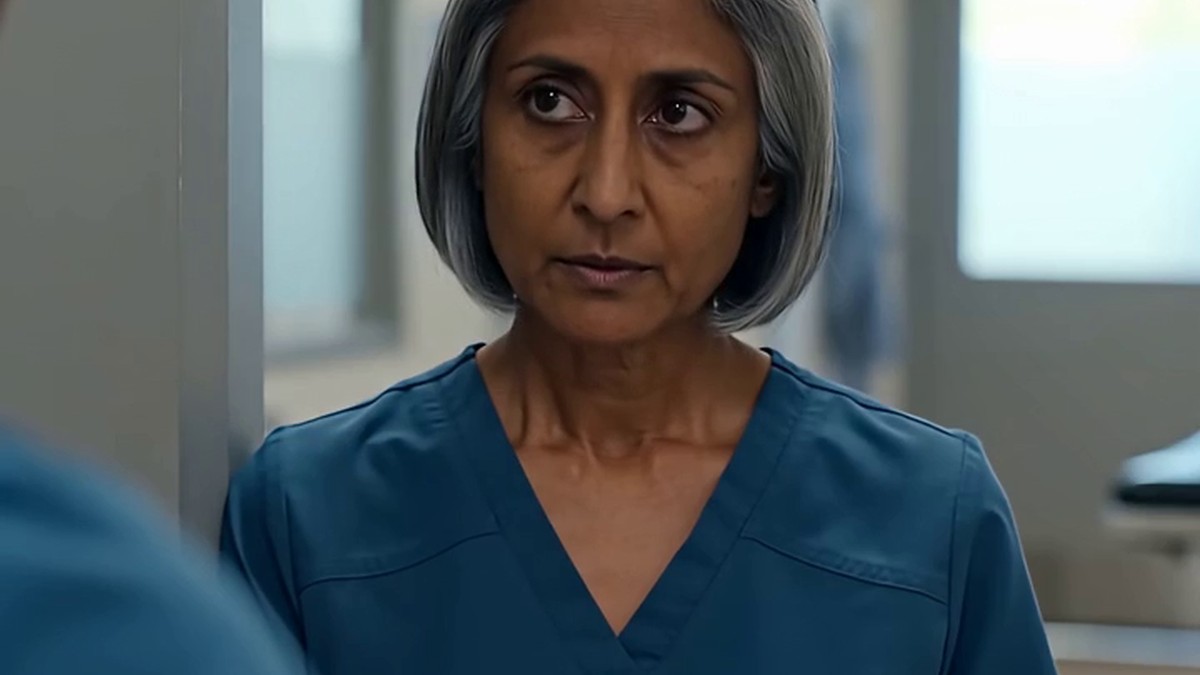
Dr. Patel came out of exam room two wiping her hands on her scrubs. She took one look at the box and her face did that thing it does when she's deciding whether to yell at me or the universe.
"How long has she been in your possession?" Dr. Patel asked.
"Two weeks," the guy said. "Almost two. We were feeding her milk from the store. The kind you give kittens. She was doing okay, running around, then yesterday she just… stopped."
The fawn lifted her head an inch and let it fall back against the cardboard. Her ears were crusted at the edges. Her eyes had a gray film over them that tells you the body is already shutting down.
Dr. Patel picked up the fawn without a word and carried her to the back. The man's face wasn't guilty, just confused, the way people look when love hasn't done what they thought it would.
I took down his information anyway. His name was Greg Hoffman. He lived off Millbrook Road, near the creek, exactly the kind of place where does bed their fawns down in the tall grass every spring and leave them for hours while they go off to browse. The fawns stay still, no scent, no sound. Predators walk right past them. But people don't. People see a fawn alone in the brush and their hearts break, and they do the worst possible thing with the best possible intentions. They pick her up.
I was off Monday and Tuesday. When I came back Wednesday, the fawn was in the isolation room. Karen told me she'd crashed over the weekend. They'd put in an IV line, which on a fawn that small is like threading a needle while someone shakes your hand. She was on fluids, antibiotics, anti-inflammatories. Dr. Patel had ordered a metabolic panel and a fecal test. The results were sitting on the counter by the coffee maker.
"Giardia," Karen said. "Loads of it. Plus a white cell count that looks like a phone number."
"She was drinking pond water before he grabbed her. Or after. Probably after."
"You don't know that."
I didn't. But I knew what happened when you pulled a fawn from the wild and fed it kitten formula for two weeks, then brought her in with her gut in rebellion and her immune system collapsing. I also knew that if Greg Hoffman had called us day one, we'd have told him to put the fawn back exactly where he found her. But he didn't. He "rescued" her. And when she started failing, he finally showed up — and by then we weren't saving anything. We were just managing a decline.
Dr. Patel came out with the bloodwork in her hand. She leaned against the counter and rubbed the bridge of her nose, a habit she'd picked up sometime after her divorce, which I'm not supposed to mention.
"How's the line on the phone?" she asked.
"Still dead."
She laughed once, without any humor in it. "Two weeks," she said. "If he'd called, we'd have had a volunteer out there in an hour. If he'd shown up the next day, we might have gotten ahead of the giardia. But now—"
"Is she going to make it?"
Dr. Patel looked at me over the top of her glasses. "She's not going to make it through the night."
I finished my shift at seven. Before I left, I looked in on the fawn. She was lying on a heating pad, wrapped in a towel donated by someone's grandmother, judging by the seashell pattern. Her eyes were open now, but she wasn't seeing anything. The IV bag was nearly empty. Karen was sitting in the corner with her phone face-down on her knee.
I thought about Greg Hoffman back at his house off Millbrook Road, probably already telling his wife they'd done everything they could. I didn't know if that was true. I only knew the fawn had deserved the creek bed and the low branches and the sound of her mother coming back through the trees at dusk. She'd deserved to never know what a human hand felt like.
I walked out to my car. The light over the dumpster was flickering, and a hundred yards past the fence line I could see the tree line where the woods started. That's where she should have been. I sat there a minute with the engine off, then pulled out my phone and typed a message for our Facebook page, the one we never posted on because nobody had the time. I wrote it fast, before I could second-guess it.
*If you find a fawn alone, leave it. The mother is nearby. Not every still shape in the grass needs saving. Call a licensed wildlife rehabilitator first. And if you've already picked one up, bring it in now — not when it stops eating. Now.*
I hit post and drove home.
The next morning, I checked the board. The fawn's file sat on top of the stack in the outbox, the word "deceased" stamped across it in red ink, which Karen always used for that and which I've told her is morbid and she keeps doing anyway.
Time of death: 11:47 p.m., May sixteenth. She'd spent maybe ten days of her life in the woods with her mother. The other fourteen were in a backyard, in a cardboard box, on a heating pad with seashells stitched into the towel.
I walked past the exam room and looked at the empty table. The towel was already in the laundry bin. The IV stand had been pushed back against the wall. I wiped down the counter, just to have something to do with my hands.
An hour later, a woman came in holding a shoebox with a baby squirrel wrapped in a dishrag. Before she could even say where she'd found it, Dr. Patel was beside me at the desk, holding out a card with the wildlife rehabilitator's number printed on it.
"Call them first," she said. "Not me. Not anyone in this room. Call them."
The woman looked down at the card, then at the squirrel shifting inside the dishrag, then back at me, waiting for me to tell her it was all right to hand it over.
I didn't reach for the box. I slid the card an inch closer to her instead and picked up my rag to finish the counter, the way I had an hour before, the way I probably would tomorrow, and the day after that, whenever the front door opened and someone walked in believing they'd found the thing they were meant to save.



The Weight of Q7
The Orchard on Blue Shutter Road Meredith Colt turned forty-four the week her marriage ended, though nobody sent flowers for...


The Parrot That Ordered a Stand Mixer on My Amazon Account
I’m a 44-year-old paralegal in Tulsa, Oklahoma. I live alone in a brick ranch house off Route 66, the kind...


The Fawn in Apartment 4B
The Fawn at the Front Desk I've worked the front desk at Cedar Creek Animal Hospital for eight years, and...


# The Apartment on Elm Street
I woke up and reached for the comb on my nightstand, the way I've done every morning for forty years....


The Locksmith on Cedar Point Lane
I never thought a hidden bank statement would end with strangers hanging curtains in my dining room, but that's exactly...


# Mr. Jason from Elmhurst and His Three Seconds of Silence
When he was eight, his teacher called his parents into school, and it wasn't about grades. She said the boy...


Uncle Zenek’s Seventieth, or the End of My Cabbage Rolls
It all started with one sentence my mother-in-law, Diane, dropped without taking her eyes off my hands. It was a...


Luca Vance Left Flynn Sterling One Voicemail Before the FBI Took Everything
Fourteen hours is a long time to sit in a C-17 jump seat. Long enough to memorize the exact pitch...