
EN
The little girl sat crumpled on the polished marble, her sobs swallowed by the hushed elegance of the boutique. Nobody moved. Nobody helped.

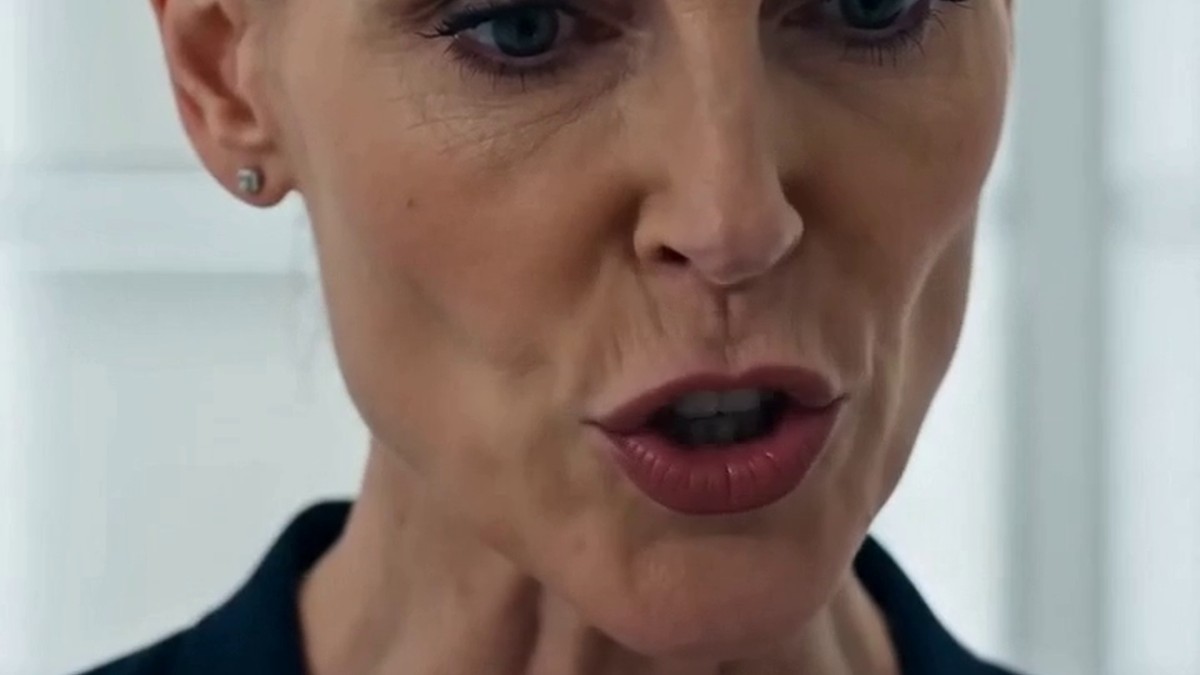
Nobody except one person.
"Security! Remove that child immediately!"
The manager's voice sliced through the store like a blade — sharp, impatient, utterly without warmth. In her eyes, the weeping girl was a stain on the pristine atmosphere she'd spent years cultivating.
One employee saw something different. She saw a frightened child who needed protecting.
She sank to her knees without hesitation, draping her own coat around the girl's shaking shoulders, angling her body to block the blinding overhead lights. A small act. A human act.
The manager's expression curdled.
"You're done here. Pack your things and go."
The employee looked up slowly, blinking against the tears she couldn't quite hold back. She had done nothing wrong. She knew that. And somehow, that made it hurt even more.
Then the doors burst open.
He entered filling the room before he'd taken three steps. Navy suit. Broad shoulders. Two bodyguards trailing behind him like dark shadows. The kind of man whose presence alone silences a crowd.
The little girl's tear-streaked face snapped upward.
"Papa!"
The billionaire didn't pause to consider the spotless floor beneath him. Didn't glance at the frozen faces surrounding him. He dropped straight to his knees, pulling his daughter against his chest with the desperate grip of a father who'd been terrified.
The room held its breath.
The manager had gone the color of ash.
Her hands were shaking now — the same hands that had just signed away the only person in the room who'd shown that child a single shred of kindness.
The girl pressed her face into his shoulder and wept — not the careful, dignified crying of someone performing grief, but the ugly, shuddering release of a child who had been very afraid and was only now allowed to feel it.
He held her. Both arms. His chin resting against the top of her head.
And then his eyes moved.
Slowly. Methodically. They moved across the manager — who had straightened herself into a rigid simulacrum of professionalism, chin lifted, hands clasped, expression rearranged into something she probably believed resembled authority. They moved across the frozen sales staff, the customers who had edged toward the walls, the bodyguards posted silently at the door.
And then they found her.
The employee. Still on her knees beside the smudge of tears on the marble. Her coat pooled around her like she'd tried to make herself smaller. Like she was already preparing to disappear.
"You," he said.
One word. No accusation in it. Something else entirely.
She looked up and met his eyes, and whatever she saw there made her breath catch somewhere between her chest and her throat.
"She was alone." Her voice came out steadier than she felt. "I didn't — I just couldn't walk past her."
He studied her for a long moment. His daughter had quieted against him, one small fist still twisted into the lapel of his jacket.
"What's your name?"
"Mara."
The name landed in the silence like something dropped from a great height.
The manager made her move. Practiced. Smooth. Two decades of managing optics had taught her that the first person to reframe a situation usually won it.
"Mr. Harwell." Her smile was architectural — load-bearing, no warmth underneath. "I can assure you that our staff take every situation involving our guests with the utmost seriousness. This employee, unfortunately, violated protocol at a critical moment and created a disturbance that — "
"Of what kind?"
The question was quiet. That was the thing about him, Mara would realize later. He didn't raise his voice when he wanted to be frightening. He lowered it.
The manager didn't flinch. She'd anticipated pushback. "The child was already being attended to by security. This employee bypassed our established procedure, which exists precisely for situations like — "
"Show me."
A beat of silence.
"I'm sorry?"
"Your procedure." He tilted his head, almost gently. "Show me the protocol that instructs your staff to call security on a five-year-old who is crying."
The manager's mouth opened. Closed. She pivoted — good instincts, Mara thought distantly, even now — and tried a different angle. "The employee's conduct was the issue. She was insubordinate on multiple prior occasions, and this simply — "
"I have it on camera." He still hadn't raised his voice. "This store has cameras. So do I."
His right-hand bodyguard held up a phone. Small screen. Footage from just outside the boutique entrance, time-stamped — the manager's sharply gesturing hand, the security guard moving toward the crumpled child, one employee breaking away from the wall to intercept. And then, a few seconds later, the manager stepping close to that employee, leaning in, speaking words the audio hadn't caught.
The manager's composure cracked at the seam. Just slightly. Just enough.
"That footage doesn't capture the full context — "
"It captures you firing the woman who helped her." He looked at Mara now. "Immediately after she helped her."
"I assure you the timing was — "
"She is five years old." His voice did not change. "She lost sight of her nanny in the crowd and she was frightened and she was crying. And you treated her like an inconvenience."
The store was so quiet Mara could hear the air conditioning.
The manager's machinery was world-class, but it had no purchase here. The camera had seen everything. The marble had heard everything. The little girl was sitting in her father's arms with tear tracks dried to salt on her cheeks, and the evidence was in every line of it. There was nothing left to reframe.
"I —" the manager started.
"Don't." He finally stood, lifting his daughter with him, her legs wrapping automatically around his waist. He looked down at Mara. "Please get up."
She did. Her knees ached from the marble. She became aware, suddenly, of how she must look — eyes red, mascara running, her coat still bundled in her arms where she'd retrieved it without quite thinking.
She also became aware that she no longer worked here. That fact had not changed. The anger of the moment had not rehired her.
"I was told to leave," she said quietly. Not challenging. Just honest. "I should — "
"You were told to leave by someone who no longer has the authority to tell you anything." He glanced at the manager. Once. The glance said everything a glance can say. "I own this building."
Somewhere behind Mara, someone dropped a hanger, and the clatter was very loud.
The manager's face had moved through ash and arrived somewhere beyond it. A gray that didn't have a name.
"The holding company that leases this space to your parent corporation," he said, with the patience of a man reading from a document he has long since memorized, "is Harwell Property Group. It has been for eleven years." He tilted his head. "I suggest you familiarize yourself with your lease agreements."
The manager said nothing.
The salesgirl near the back put her hand over her mouth.
Mara stood very still, trying to decide if she was dreaming — not in any whimsical way, but in the desperate way you do when reality has stopped obeying its own rules.
The little girl had twisted in his arms to look at her. Her eyes were enormous, still wet at the corners, but steady in the way children's eyes are steady when they've decided something.
"You stayed," the girl said.
Mara's throat tightened. "Yeah." She managed a small smile. "I stayed."
"Everybody else walked away."
"I know."
The girl seemed to accept this. She pressed her face back into her father's shoulder, and he rubbed her back in slow circles, and for just a moment the whole architecture of power and confrontation fell away and there was only a father and his daughter and a woman who had knelt on a marble floor for no reason except that it was right.
He looked at Mara over his daughter's head. Something in his expression had shifted — the controlled edge still there, but something else underneath it. Recognition, maybe. The kind that doesn't need an explanation.
"I'd like to offer you a position," he said. "With my household. My daughter's nanny gave notice last week — that's how she came to be here alone today." A pause. "It isn't retail. The salary is real and the work is steady and — " he hesitated, which was clearly not something he did often — "she needs someone who doesn't walk away."
The offer sat between them, as improbable as anything Mara had ever heard.
She looked at the girl, who had turned her head just enough to watch her with one eye, waiting with the intensity of a five-year-old who already knows what she wants.
She looked at the manager, diminished somehow — still standing, still present, but reduced. A figure in a background. Already becoming irrelevant.
She looked down at the coat in her arms.
And then she almost said no.
Not because she didn't need the work — she did, badly. Not because the girl hadn't already claimed a small corner of her chest in the last ten minutes. But because there was something frightening about being rescued, about having your next chapter handed to you by a man who owned buildings and sent lawyers to renegotiate leases, about saying yes to something you hadn't chosen so much as fallen into. Her mother had warned her about that once, years ago. *Mara, be careful whose kindness puts you in debt.*
"Can I ask you something?" she said.
He waited.
"Why does it have to be me? You don't know me. I could be terrible with children. I could be — " she gestured vaguely — "anyone."
Something shifted in his expression. Not annoyance. Closer to respect.
"You could be," he said. "But my daughter is currently holding onto my jacket with both hands and watching you like you're the most important person in this room." He glanced down at the girl, then back. "I've learned to take that seriously."
Mara looked at the girl again. The girl looked back, patient and certain and five years old.
It wasn't a reason that held up to logic. It wasn't a reason her mother would have approved of. But it was a reason.
"Okay," Mara said.
Just okay. Quiet and a little unsteady and entirely her own.
The girl made a small sound against her father's jacket — something between relief and satisfaction.
He nodded once — not the nod of a man who got what he expected, but of one who is glad to have been surprised. He turned toward the exit, bodyguards falling into position, then paused at the threshold and looked back at the manager with the calm, level gaze of someone closing a chapter.
"I'll have my legal team contact yours about the lease terms," he said. "I'd like to revisit them."
He walked out into the afternoon light.
Mara followed, still holding her coat, the marble cold and gleaming behind her, the boutique's hushed elegance undone and reassembled into something it had never quite intended to be: the place where a small girl wept, and one person stayed, and everything changed because of it.
The door swung shut.
Outside, the city was loud and real and indifferent, traffic pouring past in both directions, pigeons picking at the corner, the world running at its usual relentless pace.
The little girl reached out from her father's arms and took hold of Mara's hand.
No preamble. No asking. The uncomplicated certainty of a child who has already decided the matter is settled.
Mara held on.
She still didn't know if it was the right choice. She suspected she wouldn't know for a while. But the girl's hand was warm, and the afternoon was bright, and she had made the choice herself — which, she thought, was the only way any choice worth making gets made.



A hűséges kutya titka – Mire bukkant Fehér Zsófia a nyíregyházi sírkertben
A nyíregyházi köztemető ősszel reggelente ezüstös párába burkolózik, és Fehér Zsófia már messziről ismerte az utat a 14-es parcellához: harmadik...


Most, který se stal čtvrtí
Jmenuju se Jarmila Brabcová, jezdím po Jizeře na výletní loď už devatenáct let, a tahle trasa mezi Turnovem a Malou...


Aaron Pap és a hatezer eurós szívességem
Pap Áron és az örökség, amiről senki sem beszélt Nem akartam ott lenni azon az estén, de valahogy mindig én...


בת מהנדס, בלי בעל, ובלי שום בושה
הניילונים מהפארם של רמת-גן עדיין היו על השידה כשאמא שלי פתחה את דלת החדר בבי"ח "איכילוב" ועצרה במקום, כאילו מישהו...


Dopis, který jsem nestihla napsat včas
Mami, nemám pro to žádné hezké ani správné slovo. Jen vím, že mi po tobě chybí – a ta bolest...


Myčka na Rokycanské
Jarmila Dvořáková si otírala ruce o zástěru a dívala se přes sklo mycího boxu, jak její zeť Radek zapojuje nový...


De beton van Han Feenstra
Ik ben al negenentwintig jaar huismeester van een flat aan de Van Oldenbarneveltlaan in Zoetermeer. Loodgieter van opleiding, maar in...


Aaronas sakė: „Mama tave mėgsta, tik dar nepažįsta.
Nuo ketvirto aukšto laiptinės, kur stoviu su šluota rankoje, girdžiu beveik visą pokalbį per ventiliacijos groteles – akustika šiame name...