
EN
The Rope You Stopped Pulling On

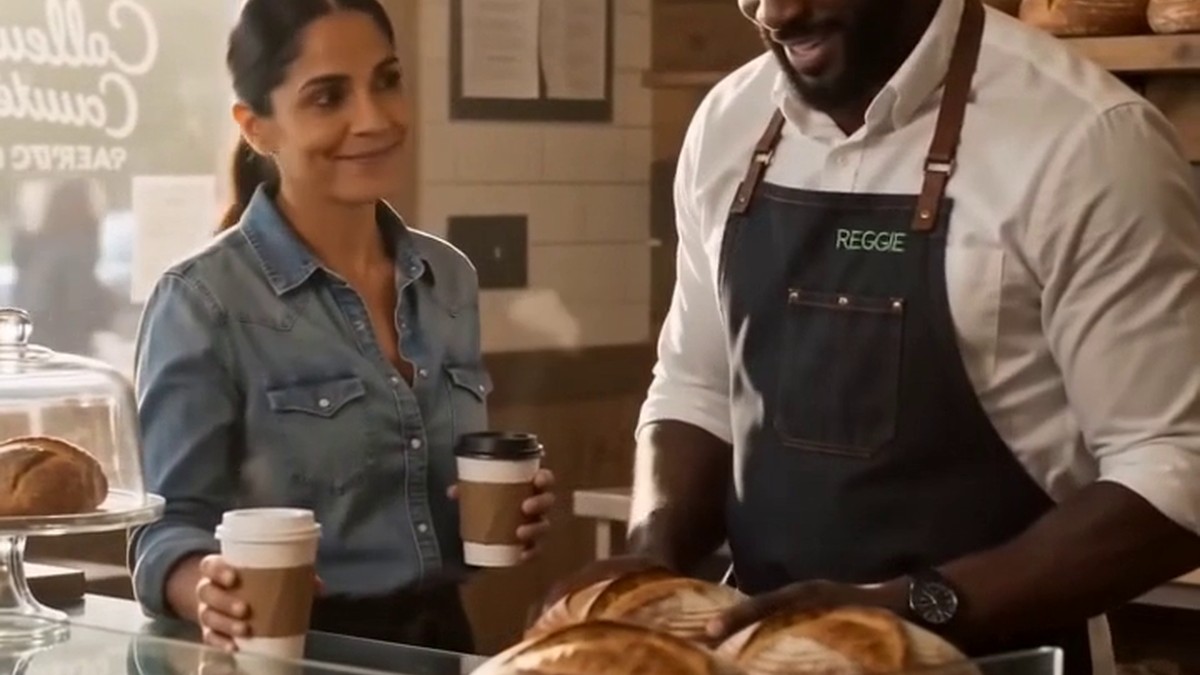
Reggie Calloway had been the head baker at Milbrook's Family Diner in Asheville, North Carolina, for eleven years before he ever said the word "no" to Denise Falk.
Denise owned the place. She'd inherited it from her father in 2003, along with his habit of walking into the kitchen at 6 a.m. and rearranging things Reggie had already set up the night before. She never yelled. She didn't have to. She'd just stand by the flour bins with her arms crossed and say, "That's not how my dad did the cinnamon rolls," and Reggie would quietly redo the batch.
It started fourteen years ago, back when Reggie was twenty-four and had just gotten the job, terrified of losing it. He'd suggested adding a sourdough loaf to the morning lineup — his grandmother's recipe, the one that used to fill her kitchen in Knoxville with a smell like wet stone and yeast. Denise had tasted a slice, made a face, and said, "Nobody in this town wants bread that sour. Stick to what works." He never brought it up again. Not once, not in fourteen years, even as the diner's laminated menu yellowed and cracked and three new bakeries opened within a mile, all of them selling sourdough for six dollars a loaf with lines out the door.
His wife Carla noticed it before he did. She ran the books for a dental office downtown and had a habit of noticing what didn't add up.
"You made that joke again," she said one night in October, over a supper of leftover meatloaf. "About the sourdough. 'Nobody wants it, Denise said so.' You've said that same line for years, Reg. Like a rule of the universe."
"It's not a joke," he said. "It's a fact."
"It's a fact from when Clinton was in office."
He didn't answer. Outside their kitchen window, the neighbor's beagle was barking at the recycling truck, the same way it did every Thursday morning, rain or shine, and the sound was so familiar he barely registered it anymore — the way he'd stopped registering Denise's rules, too.
Three days later, everything cracked open. Reggie found out — from the part-time cashier, not from Denise herself — that the diner was being sold to a regional franchise. Denise had signed papers the week before. The new owners wanted to gut the kitchen and bring in a corporate baking supplier out of Charlotte. Everyone on staff, Reggie included, would be let go by January 1st, with two weeks' severance and a form letter thanking them for their service.
He confronted her in the walk-in cooler, of all places, both of them standing between crates of eggs and a case of bruised peaches, her breath fogging in the cold.
"Eleven years, Denise. You couldn't tell me yourself?"
"I'm telling you now," she said. "It's business. The offer was too good."
"And the rest of us?"
"You'll land somewhere." She said it the way she used to say the thing about the sourdough — final, closed, not up for discussion. And for a second, standing there with cold air prickling the back of his neck, Reggie felt exactly like he had at twenty-four. Small. Overruled before he'd even opened his mouth.
Then something shifted. He thought about the rope.
He'd read about it years back, some story about elephants in India tethered by nothing but a thin cord because as calves they'd learned the rope couldn't be broken — and never tested it again, even fully grown, even strong enough to snap a truck axle. He'd forwarded the article to Carla once and forgotten about it. Standing in that cooler, it came back to him whole.
He walked out of Milbrook's that afternoon, drove to the credit union on Merrimon Avenue, and asked to see a loan officer about a business line of credit. Then he called his cousin Pete, who'd been trying to get him to co-sign a lease on a vacant storefront near the farmers market for two years running. Then he went home and, at the kitchen table, wrote out his grandmother's sourdough recipe from memory — the hydration ratio, the starter feeding schedule, the temperature she always eyeballed by holding her palm an inch above the dough.
The diner closed for renovation on December 28th. Reggie's last shift ended at 2 p.m., no cake, no card, just Denise handing him a check and saying, "Good luck out there," already looking past him at the contractors measuring the dining room.
He opened Calloway's Sourdough eleven months later, in a five-hundred-square-foot space with one oven and a hand-lettered sign Carla painted herself. He priced the loaves at seven dollars. The first Saturday, he sold out by 9 a.m.
Denise came in that following spring — he recognized her before she recognized him, still favoring the same navy raincoat. She stood at the counter a long moment, looking at the case, at the line of people waiting behind her, at Reggie's name stitched onto his apron in green thread.
"This is yours," she said. Not a question.
"Fourteen years I let you tell me it wouldn't sell." He wrapped a loaf, taped the paper closed, set it on the counter between them. "Turns out the rope broke a long time ago. I just never pulled on it."
She paid for the bread. She didn't come back.



La maison silencieuse, étés 2007
J'habite au deuxième étage, juste au-dessus de l'appartement de la famille Lambert, rue des Tilleuls, dans le quartier de la...


The Rope You Stopped Pulling On
Reggie Calloway had been the head baker at Milbrook's Family Diner in Asheville, North Carolina, for eleven years before he...


La cuerda que ya no la sostenía
Rosa Elena Castellanos llevaba diecinueve años sin tocar un piano que no fuera el suyo, el viejo Yamaha vertical que...


Ce que Bastien a compris trop tard sur la forêt de Rambouillet
J'avais quarante-trois ans, un GPS professionnel dans mon sac à dos et douze ans d'expérience comme guide de randonnée. Alors...


# La deuda que se venció
Antes pensaba que lo peor que un hombre podía hacerle a su esposa era ignorarla en una fiesta. Ahora sé...


Next.
— The Debt My Father Never Told Me About The rain hadn't stopped since Tuesday, and by the time they...


# La clé qu’elle n’a jamais rendue
« Vous avez jusqu'à vendredi. Après, on change la serrure. » Élise Beaumont a répété cette phrase deux fois, comme...


Заголовок для звіту
**Три тижні на милицях: як весілля з тридцятьма гостями стало для одного одеського чоловіка найважчим уроком у житті** Я двадцять...