
EN
Widow’s Table

My name is Eleanor Voss. I'm seventy-six, I live alone in a Craftsman bungalow in Spokane, Washington that my husband Walter built with his own hands back in 1974, and I have spent the last five Thanksgivings setting a table for people who are never coming home.
Walter's been gone eleven years now — heart, in his sleep, no warning, no goodbye. That I could live with, eventually. What I couldn't was losing my son Michael, his wife Dana, and my two grandbabies, Josh and little Ruthie, all in one evening five years ago, on I-90 just outside Coeur d'Alene, driving over to spend the holiday with me. A semi-truck jackknifed on black ice. The sheriff who came to my door that night still sends me a Christmas card every year. I think it's guilt as much as kindness.
Since then, my family out here has consisted of a cemetery plot at Fairmount and whatever casseroles the church ladies drop off out of pity.
Last Thanksgiving, I told myself I'd keep it simple. A turkey breast, not the whole bird — nobody to feed but me and the quiet. Instant potatoes. Cranberry sauce straight from the can, the kind with the ridges still pressed into it, because Josh used to laugh at those ridges. I ate half of it standing at the counter. Then I drove to the cemetery with a bouquet of white chrysanthemums, the way I do every year, snow already starting to come down sideways off the mountains.
That's where I found him.
A boy — well, a young man, maybe twenty — curled up on the frozen grass two rows over from my family's stones, no coat, no hat, no gloves, shaking so hard I could hear his teeth from ten feet away. His lips had gone the color of a bruise.
"Are you all right?" I asked, though it was obvious he wasn't.
He opened his eyes halfway. "I'm fine," he mumbled. "Just… nowhere to be tonight, is all."
Nobody deserves to freeze to death on Thanksgiving. I didn't think twice — I know that's the part everyone shakes their head at later, I know it. "Come home with me," I said. "Get warm. Get something hot in you."
He hesitated, looked at me like he was deciding whether I was a trick or a mercy, and then he came.
At the house, I gave him one of Michael's old wool sweaters out of the cedar chest — navy blue, moths had gotten one sleeve — and made him a mug of tea with honey. He wrapped both hands around it like it was the first warm thing he'd touched in days. Said his name was Derek. Said he'd been staying in his car, a rusted-out Pontiac Grand Am, until it got towed from a Walmart lot. Didn't say much else, and I didn't push.
"You didn't have to do any of this," he said, eyes on the mug.
"No," I agreed. "I didn't."
He gave me a small, strange smile for that. "I won't forget it."
I made up the sofa bed in Walter's old study, told him the bathroom was down the hall, and went to bed myself a little after ten, feeling — God help me — less alone than I had in months.
I woke at 1:47 in the morning. I remember the time because I looked right at the clock radio, because something had pulled me up out of sleep like a hand on my shoulder.
Footsteps. Slow. Deliberate. Carpet doesn't creak, but floorboards under carpet do, and I know every one of them in that hallway — Walter built that house, I could draw you the studs from memory.
A shadow stopped outside my bedroom door. Then the door swung open.
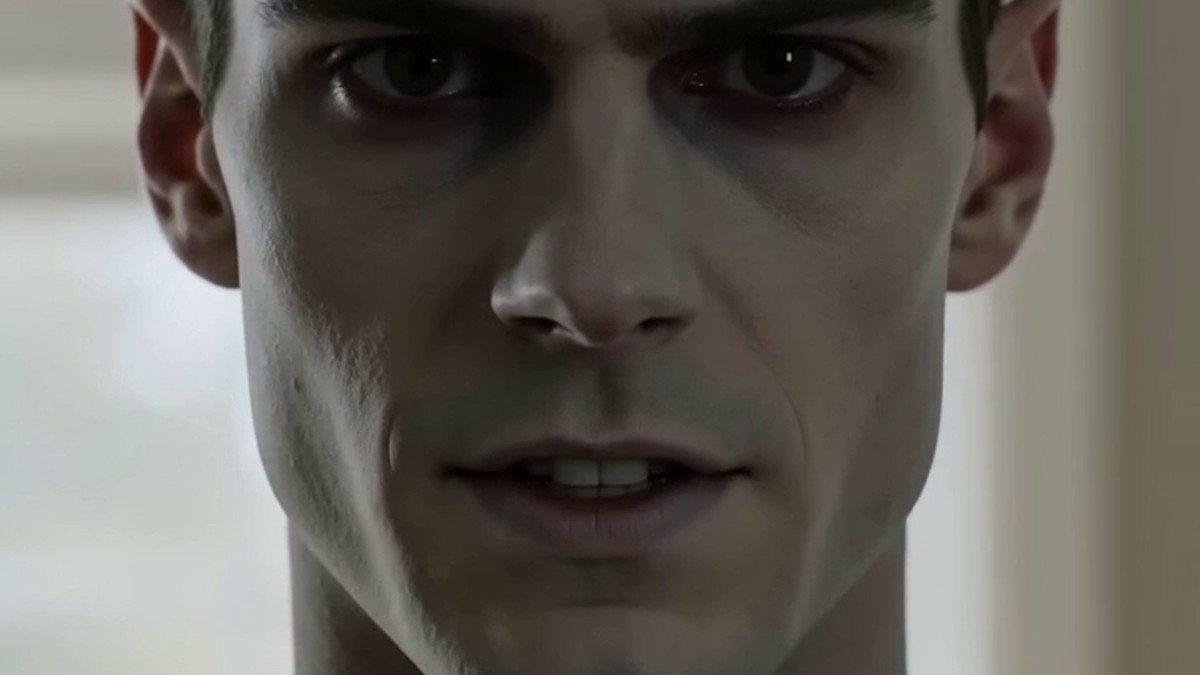
He stood in the frame, backlit by the hall nightlight, and his face wasn't the face of the boy who'd thanked me over tea. It was flat. Empty. He took one step into the room, toward the bed, toward the nightstand where my purse sat open from where I'd set it down carelessly after the cemetery.
My heart went up into my throat.
"STOP! WHAT ARE YOU DOING?!" I screamed, and my own voice came out cracked and old and furious, nothing like me at all.
He froze mid-step. For a second neither of us moved — I had one hand already closing around the brass lamp on my nightstand, the only weapon within reach, and he just stood there with his hand half-raised toward my purse, caught.
"I just — I needed —" he started.
"Get OUT," I said. "Get out of this house right now."
He didn't argue. He grabbed his shoes from by the front door, not even his coat, and he was gone into the snow in under a minute, the door banging against the frame behind him. I sat on the edge of my bed with the lamp still in my hand until the sun came up, too shaken to call anyone, too embarrassed, honestly, to explain to a 911 dispatcher that I'd invited a stranger off a grave into my home.
I didn't call the police that night. I called them three days later, when I went to the little dish on my dresser to put on Walter's wedding ring the way I do some mornings — just to hold it a minute, not to wear it — and my fingers found nothing but the china. Derek hadn't just reached for my purse. He'd already been through the house once while I slept off the turkey, found that ring, and come back a second time for whatever else he could carry.
Officer Dale Pruitt took the report. Older guy, patient, didn't make me feel foolish for what I'd done, which I appreciated more than he probably knew. "Happens more than you'd think," he told me. "People take advantage of exactly this kind of kindness, ma'am. Doesn't mean you were wrong to be kind. Means he was wrong to use it."
Six weeks went by with nothing. I'd made peace with the ring being gone, the way you make peace with most things at seventy-six — you don't forgive it, you just stop waiting on it.
Then in January, Officer Pruitt called. Derek had been picked up in Coeur d'Alene trying to pawn a ring he couldn't produce a receipt for. The shop owner, a sharp woman named Connie Osei who'd taken over the place from her father, had flagged it before he even finished talking — "Soon as he said he 'found' it, I knew," she told me later, arms crossed over her cardigan, "found rings don't usually fit a stranger's story that well." She'd already called it in. Turned out he'd tried three other pieces under a fake name too — a silver bracelet, Walter's old pocket watch — and Connie's paper trail was clean enough that the whole thing came apart in a day.
I drove down to the shop myself before the court date. I needed to see it with my own eyes before I'd believe any of it. Connie unlocked the case without a word and set the ring down on the glass between us, still wearing its little orange evidence tag. I picked it up. My hand was shaking too hard to get it over the knuckle the first try, and Connie just waited, didn't say anything, until I slid it onto my right hand — the left still belonged to Walter, eleven years gone or not.
At the hearing in February, the judge gave him ninety days on top of a second charge. I didn't ask for more than that. What I did ask to see was the paperwork — the list of everything he'd sold, with Connie's receipts stapled behind each line. I read down it standing in the courthouse hallway afterward: the ring. The bracelet. Walter's watch. And then a line I hadn't reported at all — forty dollars, cash, from the coffee can I kept in the pantry. I hadn't even known it was gone until I saw it typed out in someone else's handwriting.
That spring I called a lawyer two blocks from downtown, a calm, no-nonsense woman named Patricia Reyes in a gray blazer who kept a box of tissues angled toward my side of the desk the whole meeting, like she already knew. I had her draw up papers putting the house into a trust for my niece Carol's two kids in Boise — the only family I have left who still call me on my birthday. I signed on a Tuesday in April and mailed Carol a copy with a note: this is yours when I'm gone, and I never want you to have to guess.
This Thanksgiving I drove to Fairmount again with the chrysanthemums, same bundle, same ribbon from the grocery store on Division. The ground was bare this year, no snow yet, and there was no one curled up two rows over from Walter's stone. I stood there a minute anyway, turning his ring around on my finger, and then I got back in the car and drove home to a turkey breast I'd eat standing at the counter, same as always.



Вона принесла документи. У мене були свої
Я сиділа на ґанку з чашкою кави, коли під двір заїхав позашляховик моєї дочки Карини. Двигун затих, і вона якусь...


Widow’s Table
My name is Eleanor Voss. I'm seventy-six, I live alone in a Craftsman bungalow in Spokane, Washington that my husband...


Het medaillon van haar moeder
Op de avond van de voorjaarsgala in het Conservatorium Hotel aan de Paulus Potterstraat zat Marieke van Dongen op een...


Диамантът, който дъщерята на Божидар не намери в сейфа
На седемдесет и две години Снежана Арабаджиева за втори път облече бяла рокля. Не в катедралата, където би искала —...


Il tavolo di Chiara a Bologna
— Senza panico: tua sorella non viene a vivere con noi — disse Chiara, ferma. — E nemmeno Davide, e...


**הדבר האחרון שקודה ידעה**
דלת הפלדה נסגרה מאחוריו בקול שמתיישב בעצמות השיניים. דוד כהן עמד במרכז החדר, חליפת הכתום הבלויה שלו צונחת מכתפיים שהצטמקו...


Üres karosszék a Vajdahunyad-kastélyban
Dávid Kőrösi gyűlölettel érkezett a budapesti esküvőre. Gyűlölte a Mátyás-templom harangjainak hangját, ami úgy szólt a Hess András tér felett,...


Zlatý prsten s čipem
Svatební hostina na zámečku Žinkovy vypadala jako z módního magazínu. V sálu s křišťálovými lustry a mramorovou podlahou se míhali...