
EN
The Brass Key on My Keychain

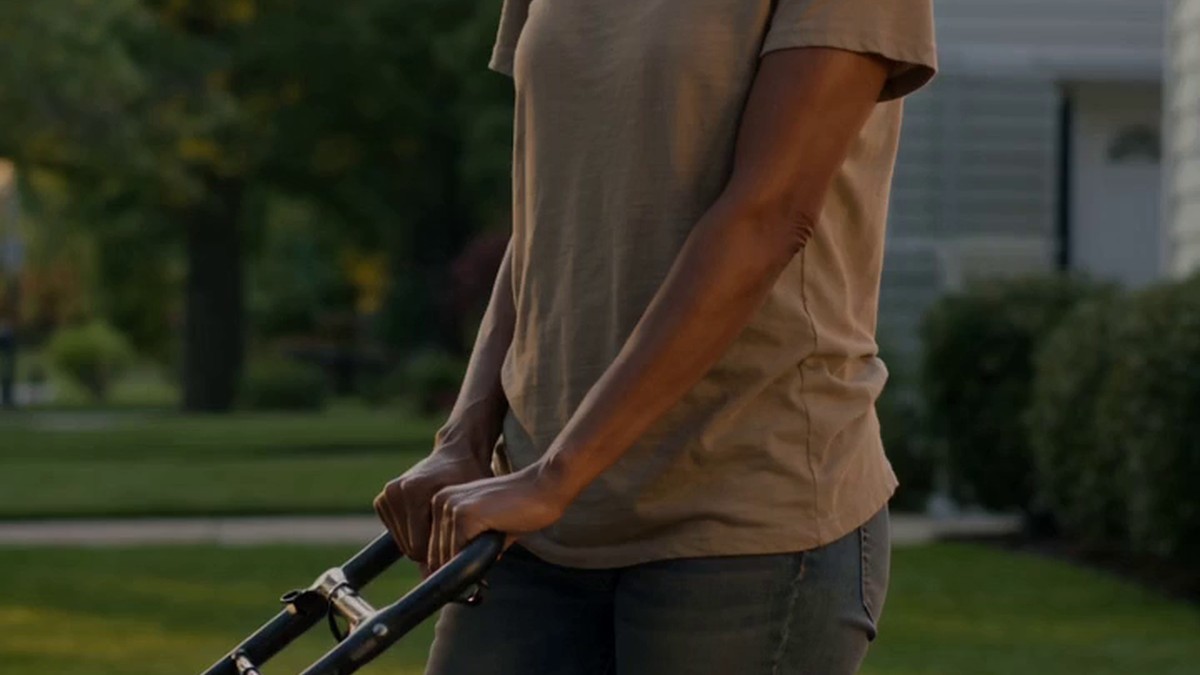
The first Saturday after Edith passed, her lawn kept growing. In Asheville, the grass pushes up through any crack it can find, and that morning it pushed through the sidewalk seams like it didn't know any better. Her porch sat empty. No kettle whistled through the open kitchen window. I stood on the driveway with my hand on the mower, and the truth settled in: this yard wasn't mine to cut anymore.
Across the street, the neighbor's beagle barked at a squirrel. The morning fog off the Blue Ridge hadn't burned off yet. I could smell rain on the pavement from the night before.
My daughter Zoe came out in her pajama bottoms and a hoodie. She stopped on the bottom step and looked across the street at Edith's house. "Mom, are you still forgetting?"
I looked at the dandelions near the mailbox. The flower beds lay bare under the morning sun. "Sometimes, honey."
"Especially on Saturdays?"
I didn't answer. I just squeezed the mower handle.
Eight years earlier, Edith moved in next door with three cardboard boxes, a green suitcase, and a framed photo pressed against her chest. She was seventy-eight. Her husband Frank had died four months before. She had a way of lifting the corners of her mouth at everyone before asking a question, just to keep them talking. "How are the kids?" "Do the hydrangeas like this much shade?" It took me a while to figure out she wasn't just making conversation. She was stretching every visit, because nobody waited inside her house to continue it.
One Saturday I heard her old mower sputtering across the yard — a rust-spotted Toro that had to be twenty years old. She was fighting grass up to her ankles, the machine coughing and dying every few feet. I crossed the driveway. "Let me finish that." She wiped her forehead with the back of her glove. "I'm capable, dear." The mower died again. She exhaled through her nose. "Fine. I can recognize bad timing." I laughed, took the mower, and finished the yard. It took forty minutes. When I was done, she came out with two folded twenties in her hand. I shook my head. "Keep it." She studied me for a second, then tucked the bills back into her apron pocket. "Alright. Then let an old woman thank you properly." That's how I ended up on her porch with a glass of sweet tea and a slab of apple pie, still warm enough to fog the fork.
We talked for two hours. She told me about Frank, who whistled when he fixed things even when he had no idea what he was doing. She told me she'd spent forty-one years arguing with him about whether cinnamon belonged in coffee. "It does," she said, and her laugh sent a bird off the porch rail.
The next Saturday, the grass barely needed cutting. I cut it anyway. The tea came after. Then the pie. Then the stories. Without ever saying it, we fell into a routine. Every Saturday morning, around nine, I rolled the mower across the driveway. Edith opened her windows, set the kettle on, and pretended she hadn't baked the pie until after I arrived.
Two years in, she started leaving half the lawn unmowed. I'd show up and find the front half done, the back half waiting. She'd say the mower was acting up again. Or she'd claim she felt stubborn. I never thought twice about it.
My son Leo, five years old back then, decided he was a detective. Every Saturday he spent looking for Edith's reading glasses. They were always in the same apron pocket. He'd lift them up like a trophy. "Found them!" Edith would press a hand to her chest. "How extraordinary. Have you considered government work?" Leo never got the joke, which is why she never hid them anywhere else.
Edith came to school concerts. She came to birthday parties. She planted sunflowers by the back fence for Frank. The year Zoe turned eleven, Edith pressed one more seed into the ground. "This one's for someone else," she said, and turned away before I could ask.
Three weeks ago, Zoe went over to borrow Edith's chicken pot pie recipe. She called me from Edith's kitchen, her voice thin and fast. Edith sat in her favorite chair. She had died sometime in the night. No warning. Her heart stopped between the porch light going off and the sun coming up.
At the funeral, distant relatives took the front rows. They knew where she was born. They knew she married Frank in 1956. But when the minister talked about her laugh, they looked down at the programs in their hands. I knew that laugh. I knew she read the last page of every mystery novel before the first. I knew she saved the pie crust crumbs for the last bite.
After the service, I stood by the grave with a small bunch of sunflowers. A man in a dark suit came up behind me. "Maya?" I turned. "I'm Mr. Harmon. I handled Edith's affairs." He reached into his coat and handed me a cream envelope, sealed. My name written in Edith's handwriting. My hand shook enough that I nearly dropped it. I looked at him. "What is this?" He turned his head toward the road, where Edith's house sat behind the trees. Then he met my eyes. "She knew it belonged to you."
I didn't open it that day. It didn't feel right. Edith had given me eight years of Saturdays. Waiting a little longer felt like the least I could do. So I left the envelope on the kitchen table until the next morning.
At seven, I poured coffee and spilled a little across the counter, my hand not quite steady. Zoe sat by the window in her robe, watching Edith's porch. Leo climbed onto a chair and put his ear close to the envelope. "You think there's treasure inside, Mom?" I laughed. "What kind?" He tapped the envelope. "Metal thing?"
I broke the seal. A brass key slid into my palm. Smooth from years of use, warm from my hand. Zoe leaned over. "Is that Ms. Edith's house key?" I didn't know. I unfolded the letter inside. Two pages, in Edith's handwriting, the ink a little heavier where she'd pressed down hard.
The first line hit me like a punch to the sternum: "If you're holding this, my porch has gone quiet."
I looked out the window. Her windows were dark. For eight years they had never been dark on a Saturday morning.
The letter continued: "Please don't be angry that I left without saying goodbye. At my age, goodbyes become greedy. They ask for words people can't say without breaking."
"Now, before you decide I've left you the house, let me save you the trouble. I didn't. The house goes to my family. The furniture gets divided. Mr. Harmon has instructions for all of it."
I turned the page.
"This key belonged to my back door. Frank gave it to me the day we moved into our first home, on Sycamore Street, back in 1962. He said a key wasn't proof that you owned a place. It was proof that someone trusted you to come inside."
"I'm giving it to you because for eight years I slept better knowing you lived ten steps away."
I set the letter down flat on the table and pressed both palms against it, like I could keep the words from moving. Then I picked it back up.
"You probably thought you saved me from mowing the lawn."
A pause between the lines.
"Maya, you saved me from Saturdays."
Outside, the wind moved Edith's sunflowers. One leaned toward the other.
"Saturdays belonged to Frank. He made the coffee too strong. He cut the grass in crooked lines. He always complained about my pie crust and ate two slices. After he died, Saturday was the longest day of my week."
"That first morning you crossed the driveway, I really did need help. The second Saturday, maybe I didn't. The third, I realized something I was too proud to admit."
I already knew what the next sentence would say.
"Every Friday, I leave part of the lawn unfinished, so there will always be a reason for you to come back."
I looked up. Zoe pressed her sleeve against her mouth. Every small detail snapped into place. The half-finished lawns. The weeks when the grass barely needed cutting. The tea already made before I arrived. Edith never needed help with the yard. She needed a reason to wait for Saturday.
"I hope you don't think I was dishonest," she wrote. "Lonely people sometimes hide invitations inside ordinary problems."
Leo looked at me. "Was Ms. Edith lonely?"
"Sometimes, buddy."
"Even with us?"
"Not when she knew we were coming."
I went back to the letter.
"You gave me more than company. You gave me people in the yard. Birthdays to remember. Concerts to attend. A little boy who found my glasses every week, even when I made the job embarrassingly easy."
Leo grinned, wiping his nose on his wrist. "I knew they were in her pocket."
"Of course you did."
The letter went on.
"Zoe gave Frank a second sunflower. Your daughter, God help her, knows how to water a flower bed without drowning it. And you gave me the one thing I stopped expecting after Frank died. You made me feel awaited."
I set my head down on the table. Zoe's hand landed on my back, small circles, the way I used to do for her.
A long moment passed. Nobody spoke.
Then Zoe slid her hand into mine.
I read the last paragraph.
"This key no longer belongs to my house. It belongs to whatever door you decide to knock on next."
Below that, Edith added one last note.
"Before you go back inside, look at the house two doors down from mine, the one with the blue shutters. His name is Walter. He buried his wife last spring. His grass is past his ankles and nobody's crossed his driveway yet."
I stood and walked to the window. Two doors down from Edith's, an old man sat alone on his porch beside an overgrown lawn. I had seen him dozens of times. I just never paid attention.
The letter ended: "Thank you for every Saturday, Maya. Now go ruin somebody else's excuse for staying lonely."
Without a word, Zoe got up. She wrapped what was left of the pie in a clean dish towel — half a pie, maybe, still on Edith's own plate. Leo went to the garage. "I'll get the gas can, Mom."
I folded Edith's letter and clipped the brass key to my keychain. It landed next to the key to our house with a soft metal click.
Then I rolled the mower across the driveway. We passed Edith's porch. The blue kettle still sat behind the kitchen window. The porch swing swayed in the wind.
Walter looked up as we approached. He seemed unsure, almost confused by the overgrown yard.
I stopped at the bottom of his steps. "Morning! I'm Maya, I live across from Edith. Mind if we do something about that grass?"
He lifted a hand slowly. "Morning." He looked at the mower, then at Leo dragging the gas can, then back at me, and something in his shoulders came down an inch. "I wouldn't say no."
His face changed, like a dark room filling with light when someone finally opens the curtains.
A few months later, Zoe noticed the brass key still hanging from my keychain. We stood by Edith's sunflowers, collecting seeds for the next spring, dropping them into an old jam jar.
"Why do you still carry it?" she asked.
I knelt down and pressed the key into her palm, closing her fingers over it.
"This key doesn't unlock anything anymore, honey."
"Then why keep it?"
"So I don't forget what it opened."
Zoe looked over at Walter's porch. Leo sat beside him on the steps, pretending not to know exactly which pocket held Walter's glasses. I set a fresh pitcher of tea down on the railing next to a pie still cooling, and Walter cut it before it was even fully set, the way Frank used to.
Zoe pressed the key back into my hand and closed my fingers around it.
"When I grow up, can I be the next one?"
I wiped my eye with the back of my wrist before I answered. "I was hoping you'd ask, honey."



Il contratto che Daniele non sapeva di aver già perso
Quella mattina ho fatto una cosa che Chiara non si aspettava: le ho lasciato il caffè pronto prima di uscire,...


Tėvo rankos sode Zarasų pakraštyje
Pro Petro Vilkausko namo langą matosi Zarasų ežeras — rudenį jis pilkas, kaip skalbinių vanduo. Gyventojai sako, kad spalį čia...


Жълто-зелената пътна чанта на Деми
Деси Вълчева остави телефона на плота с екрана надолу, сякаш искаше да му попречи да зазвъни отново. В кухнята на...


Nebylainis mokesčių skolininkas: ką Gabija man pasakė apie savo mamą ir pinigus
Mano uošvė sulaužė dantį pirmadienį, o ketvirtadienį jau nebeturėjau pinigų, kuriuos devynis metus siunčiau be klausimų. Taip tiksliai pasakyčiau, iš...


Dílna po Vladimírovi a mlčení, které Petr neslyšel
Ivana měla čtyřicet sedm let a dvacet tři z nich vedla účetnictví v autoservisu na Dobrovského ulici v Olomouci. Dílnu...


Il bagno delle nove e un quarto a Sabaudia
Faccio il bagnino allo stabilimento da sei stagioni, e di solito alle nove e un quarto del mattino la spiaggia...


Kréta a kapualjban
Pontosan két hete történt, szerda reggel, amikor hazaértem a műszakból, és ott álltam a lépcsőház előtt, mint egy idióta, mert...


Котката на Марин Петков
Тя драска, значи го мрази — така си мислех първите седмици. Казвам се Марин Петков, на четиридесет и три съм,...