
EN
The Jar From Millbrook Farms

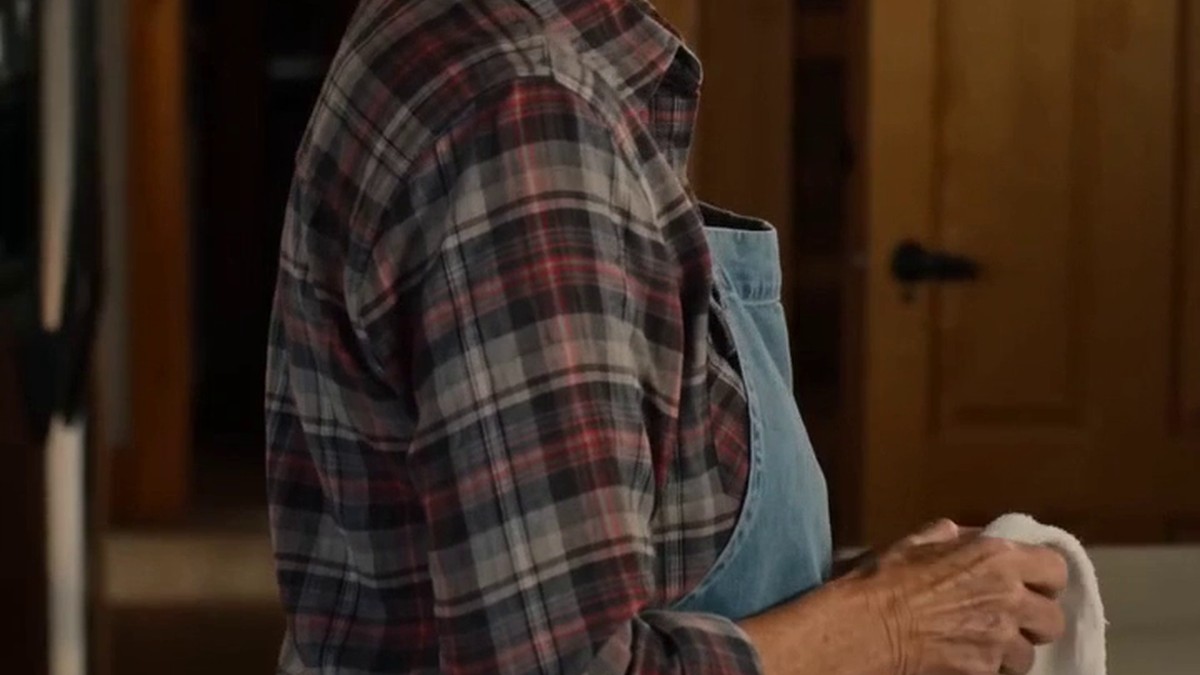
My son married a woman who thinks a fourteen-dollar jar of pickles is proof she's evolved past me.
My name's Carol Ann Hutchins, I'm sixty-one, and I've been putting up cucumbers in my cellar in Millbrook, New York, since before my daughter-in-law was born. Dill from the garden, garlic, a grape leaf for crunch, well water with just enough salt — my mother taught me, and her mother taught her, on a stoneware crock that's been sitting in my basement since Frank and I bought this house in 1988. Frank's been gone six years now. The crock stayed.
My son Danny married Whitney three years ago. She's smart, she runs a social media consulting business out of their spare bedroom in Poughkeepsie, and she's genuinely good to my granddaughter Josie. I don't dislike her. I just can't stand the way she talks to me like I missed a memo everybody else got.
It started with the pot roast. Second Thanksgiving after the wedding, I brought over a Dutch oven of short ribs I'd braised all afternoon. Whitney thanked me, then two days later Danny called, careful, the way he gets: "Mom, Whitney's trying to keep things clean for Josie — no MSG, you know?" MSG. In my short ribs. I laughed until I realized she meant it.
Then it was the honey. I've bought raw honey from the same beekeeper outside Rhinebeck for fifteen years — Earl, who labels his jars with a Sharpie and a shaky hand. I brought them a quart for Christmas. It sat on their shelf, unopened, while a jar of "single-origin ethical honey" from some farm stand sat on the counter, seven dollars a pop. "Yours is probably pasteurized, Carol," Whitney told me, smiling. "No live enzymes." I thought about Earl, who doesn't own equipment to pasteurize anything even if he wanted to. I didn't say a word.
Then came the pickles.
Last August I put up my usual haul — thirty jars of dills, cabbage for sauerkraut, cherry preserves, the whole cellar smelling like brine and garlic for three days straight, my hands cracked and stinging from the salt. Danny came by, took ten jars home. Next day he calls: "Mom, Whitney really appreciates it, but she'd rather you not make so much. She's buying artisanal ones now, from a place that does proper fermentation cultures. She says it's night and day."
I sat at my kitchen table and looked at my hands a long time. Turmeric-stained nails. A scar on my thumb from blanching tomatoes back in '95. Hands that had fed this family for forty years, apparently no longer good enough.
I didn't cry. That's not something I do. But something ached, low, under the ribs — the same place it ached when Frank used to tell me, "Carol, you never let anything go." He was right. I didn't let it go this time either.
For Whitney's birthday in October, I brought five jars from my best batch — crisp, snappy, a cherry leaf tucked at the bottom of each. While I was in her kitchen I found an empty jar from her "artisanal" brand — dark green glass, a retro label, the kind you'd photograph. I transferred my pickles into it. Added a splash of my own brine. Set it in the fridge next to the hummus.
Guests started arriving around six. Whitney had the table done up nice — cloth napkins, a charcuterie board, those olives she likes at nine dollars a jar. And my pickles, sitting in her jar. I didn't say anything. I ate my carrot cake — the one thing at that party she hadn't yet swapped for something "small-batch" — and I watched.
Her sister went back for thirds. A coworker asked where she bought them. Danny grabbed two, said with his mouth full, "Whit, these might be your best batch yet." And Whitney — my daughter-in-law, the one with the certified cultures — nodded, took a bite with some bread, and said, "You can taste the fermentation quality, right? Homemade just can't compete."
My neighbor Denise, who knows everything about everybody on our street, cornered me by the coat closet later. "Carol. Tell her. What are you doing?" But I didn't want to. What would it change? Whitney would be embarrassed, Danny would be stuck in the middle, and Thanksgiving would be unbearable for years. Meanwhile I've got my cucumbers, my crock, my cellar. I've got peace.
Since that birthday I've had a system. Every other week Danny stops by for groceries — I hand him a bag, and tucked inside, wrapped in dish towels, are my jars. I tell him to put them in the fridge. He doesn't ask, doesn't look. Whitney buys her fancy brand, decants it into little bowls, brings it to client meetings so people can admire it. But at home, day to day, she reaches for mine. Because they're already open. Because they taste better. Because they disappear faster.
Some nights I think I should just tell her. That this is a kind of lie, even a small, quiet, pickle-shaped one. That I'm fooling my daughter-in-law, maybe fooling myself too, pretending this doesn't sting when it does. It stings when she says "homemade can't compete." It stings when she looks at me like I'm someone who hasn't caught up with the times.
Then I sit down in my kitchen at night, fill the pot, measure the salt, drop in the dill and garlic. The cellar smells like damp stone and fermentation. And I think: maybe this is my answer. Not with words. With cucumbers.
Last Tuesday, Whitney called me herself — first time in months she'd called just to talk. "Carol, I've been thinking. I'd actually love to learn how to can, for real. Would you show me sometime?" I went quiet for a second. Half a breath, I almost told her everything — the jar, the birthday, the year of feeding her my brine while she bragged about someone else's.
Instead I said, "Of course, honey. Come by Saturday."
She showed up right on time, ten in the morning, a six-pack of empty mason jars under her arm like she'd raided a craft store. I had the crock out already, the cutting board, the dill fresh-cut from the yard that morning — the same yard where Frank used to complain the neighbor's beagle dug up his tomato bed every June, and where that dog's grandson still comes sniffing around my fence line to this day.
I didn't lecture her. I showed her how much salt, how to layer the garlic, how to press the cucumbers down so no air pockets formed. She asked good questions. She wrote nothing down, which surprised me — I figured a marketing person would want notes, a system, a plan for content. Instead she just watched my hands.
When the jars were packed and sitting on the counter to cure, she leaned against the sink and said, out of nowhere, "You know that jar from your birthday party for me? Danny told me last month. About all of it — the groceries, the towels, everything."
I kept my hands moving, wiping down the counter, not looking up right away. "He wasn't supposed to say anything."
"He felt guilty," she said. "He's felt guilty for months."
I finally looked at her. She wasn't smiling that pitying smile anymore. She looked, honestly, a little sick. "Carol, I'm sorry. I was such a snob about this. I built half my business page around 'small-batch' and 'artisanal' and I couldn't even taste that it was you the whole time."
I didn't need an apology, not really — but I took it, because it was hers to give and mine to accept. What I did instead was walk to the hall closet and come back with a manila folder I'd printed out two days earlier, after Danny let it slip on the phone that Whitney had finally found out. Inside was one page: my recipe, typed up, measurements exact, plus a supply list with Earl's number on it and the name of the feed store in Rhinebeck where I buy my pickling salt by the twenty-five-pound bag for six dollars less than the grocery store charges.
"Take this," I said. "You want to do it right, do it your own way, with your own hands. Not mine in your jar."
She took the folder like it weighed something. Then she asked if she could keep coming on Saturdays until she got it right. I said yes. Two weeks later, she posted a photo — her own crock, her own hands, a jar with a handwritten label instead of the retro-print kind. The caption read: "Learning from the actual expert. Turns out it was in the family the whole time." Forty comments. Her sister wrote: "Wait, so THOSE pickles at your birthday…" Whitney answered underneath, plain: "Yeah. My mother-in-law's. I owe her an apology and a lot of salt."
I read that on my phone at the kitchen table, the crock simmering water on the stove behind me for the next batch, and I didn't feel triumphant. I felt like a woman whose hands, finally, had been given credit under her own name.



Wyprowadzka z Sandomierza o piątej rano
Nigdy nie sądziłam, że wyprowadzę się z własnego mieszkania, zostawiając na kuchennym stole klucze i kartkę z numerem konta. A...


Místo u kamen jsem si nevybral já
Táta mi řekl, že když matka umře, dům připadne mně. Že je to tak napsané. Jedenáct let jsem kvůli tomu...


Le mariage aux frais d’Yvonne, la villa de Cassis et le silence de Gérard
Yvonne est rentrée du restaurant en boitant, un escarpin à la main, l'autre resté quelque part sous une table. Elle...


Il cuore sordo di Bruno da Città di Castello
Bruno Bartoli aveva trentadue anni quando il medico dell'ambulatorio di via Angeloni posò i referti sulla scrivania e disse che...


The Jar From Millbrook Farms
My son married a woman who thinks a fourteen-dollar jar of pickles is proof she's evolved past me. My name's...


Котаракът, който диктуваше пиесите на Радко от улица „Гурко“
Радко Стайков подреждаше папки в кантората на нотариус Балабанов вече осемнайсет години. Всяка сутрин в осем без петнайсет отваряше същата...


Ta žena odnaproti nahlásila můj plot, že je o dva centimetry vyšší, než povoluje vyhláška. Dopadlo to tak, že nakonec stála na ulici a brečela.
Paní odnaproti nahlásila můj plot, že je o dva centimetry vyšší, než povoluje vyhláška. Dopadlo to tak, že nakonec stála...


Le rosbif de Gloria n’a jamais été servi
Je vais vous raconter ce qui s’est passé ce dimanche-là. De mon point de vue, celui du mari qui a...