
EN
The Butterfly in 7A

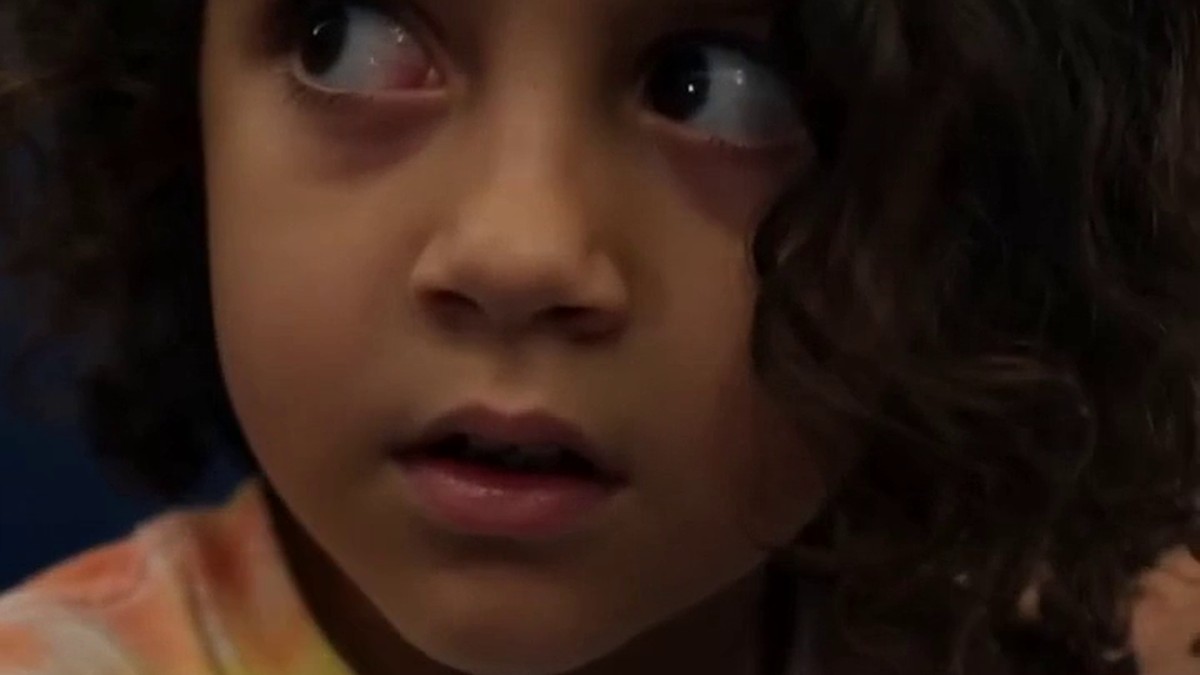
The gate agent at Denver International had a voice like a coffee grinder, and when she called Group 4, the crowd lurched forward like someone had yanked a cord. A woman in a beige blazer cut in front of us, her roller bag clipping my ankle. I let it go. Olivia's hand was in mine, her sensory bag thumping against my hip, and I had exactly enough energy to get us to row 7 without shattering.
Olivia is six. She's autistic, and flying—her first time since Jack died—was a Hail Mary. I'd booked 7A and 7B months ago. The window, the wing, the way clouds drift past like slow whales: that was the plan. It kept her grounded when everything else came apart. Jack knew that. He was a first officer for United, gone seventeen months now in a crash over the Rockies. We were flying to his mother's place in Boise, a trip I'd been dreading and promising her for a year.
When we reached row 7, the woman in beige was already in 7A, earbuds in, neck pillow fluffed, scrolling her phone like she'd leased the airplane. She looked maybe forty-five, with sunglasses perched on her head that cost more than my rent.
I checked my boarding pass. 7A. I checked again. "I'm sorry—I think you're in our seat."
She didn't move. "I have 7A too. The system screwed up. The flight attendant already asked me to switch. I'm not moving."
A flight attendant named Miles appeared, tablet in hand. He couldn't have been older than twenty-three, with a nervous smile and a tie knotted too tight. He'd clearly tried reasoning with her already. "Ma'am, there's another window seat open in row 12. I can reseat you both there, but this passenger is refusing the same offer."
The woman in 7A looked at me, then at Olivia—who was starting to rock, a low hum building in her throat. "Your kid's needs aren't my issue," she said, and went back to her screen.
I could feel the stares, the judgment, the whole cabin holding its breath. I could have made a scene. But Olivia's hum was climbing, and I knew that sound meant we were thirty seconds from a meltdown. I buckled her into the middle seat and pressed my thumb into her open palm, tracing slow circles the way the therapist had taught us, until my eyes burned.
The cabin door clunked shut. The safety demo played. And then, right after the "doors to manual" chime, the cockpit door opened. The captain stepped out—silver hair, ramrod straight, a man built from decades of crosswinds and checklists. He held a small indigo box, like something from a jewelry store.
He walked to row 7. The cabin went still. "Passenger in 7A," he said, his voice carrying that measured flight-deck cadence. "We have a special delivery for you."
Her face lit up. She smiled, a quick, smug thing, probably expecting an upgrade or a thank-you card from some executive. She took the box and opened it.
Inside: a pair of child-size noise-canceling headphones, a tiny die-cast 737 in United livery, and a photograph. The photo showed the captain, younger, in a crisp uniform, holding a boy about Olivia's age. On the back, in ballpoint: *My son had the same needs as the girl whose seat you just took.*
The woman's smile cracked and fell. Her cheeks went the gray of old oatmeal.
Then the captain reached into his pocket and pulled out a paper butterfly—folded from a faded navigation chart, its wings creased and soft at the edges, the same shape Jack had folded for Olivia the night before his last flight. I'd searched every drawer in our house for that butterfly after the funeral and never found it. I'd told myself the wind must have taken it, that day at the cemetery, and made peace with losing it.
He held it up. "I knew Jack Callahan," he said, his gaze sweeping the cabin and landing on me. "He was my first officer for three years. Best hand on the yoke I ever flew with. This butterfly—he showed it to me on our last layover together, still folding the wings. I found it in his flight bag after the accident, and I've carried it every trip since." He glanced toward the cockpit. "I saw the name Callahan on today's manifest and hoped it was you." He knelt in the aisle, right there, until he was eye level with Olivia. "You must be Livvy. Your dad talked about you every single flight."
The hum in Olivia's throat stopped. She stared at the butterfly, then at him, and she reached out, not for my hand, but for that piece of paper.
The woman in 7A had become a statue. Miles, the flight attendant, touched her shoulder. "Ma'am, I think you'll be more comfortable in 12A." He said it like a coordinate, not a request.
She didn't argue. She didn't make a sound. She gathered her neck pillow, her purse, her phone, and shuffled aft, her eyes fixed on the carpet. Passengers pulled their knees aside like she was contagious.
I lifted Olivia—butterfly clutched to her chest—and sat her in 7A. The window was a sheet of gold, the wing stretching into a sky so clean it hurt. She pressed her nose to the glass.
The captain, back in his seat, keyed the PA. "Folks, we've got a very special passenger on board today. Livvy, this one's for you." The engines spooled up, and we lifted off.
Miles came by during the drink service. He handed me a napkin with a number written on it. "Captain's personal line. He's got a box of Jack's things at the crew base—flight logs, a few photos, that model plane's twin. He's kept it seventeen months, hoping for a flight like this one."
I folded the napkin and tucked it into Olivia's bag, next to the butterfly. She didn't let go of it the whole two hours to Boise. When we touched down, she turned to me, her fingers still pressed flat against the folded wings, and said, clear as the chime: "Daddy's home."



Il contratto che Daniele non sapeva di aver già perso
Quella mattina ho fatto una cosa che Chiara non si aspettava: le ho lasciato il caffè pronto prima di uscire,...


Tėvo rankos sode Zarasų pakraštyje
Pro Petro Vilkausko namo langą matosi Zarasų ežeras — rudenį jis pilkas, kaip skalbinių vanduo. Gyventojai sako, kad spalį čia...


Жълто-зелената пътна чанта на Деми
Деси Вълчева остави телефона на плота с екрана надолу, сякаш искаше да му попречи да зазвъни отново. В кухнята на...


Nebylainis mokesčių skolininkas: ką Gabija man pasakė apie savo mamą ir pinigus
Mano uošvė sulaužė dantį pirmadienį, o ketvirtadienį jau nebeturėjau pinigų, kuriuos devynis metus siunčiau be klausimų. Taip tiksliai pasakyčiau, iš...


Dílna po Vladimírovi a mlčení, které Petr neslyšel
Ivana měla čtyřicet sedm let a dvacet tři z nich vedla účetnictví v autoservisu na Dobrovského ulici v Olomouci. Dílnu...


Il bagno delle nove e un quarto a Sabaudia
Faccio il bagnino allo stabilimento da sei stagioni, e di solito alle nove e un quarto del mattino la spiaggia...


Kréta a kapualjban
Pontosan két hete történt, szerda reggel, amikor hazaértem a műszakból, és ott álltam a lépcsőház előtt, mint egy idióta, mert...


Котката на Марин Петков
Тя драска, значи го мрази — така си мислех първите седмици. Казвам се Марин Петков, на четиридесет и три съм,...