
EN
Marlene’s Nine Thousand Dollar Gift

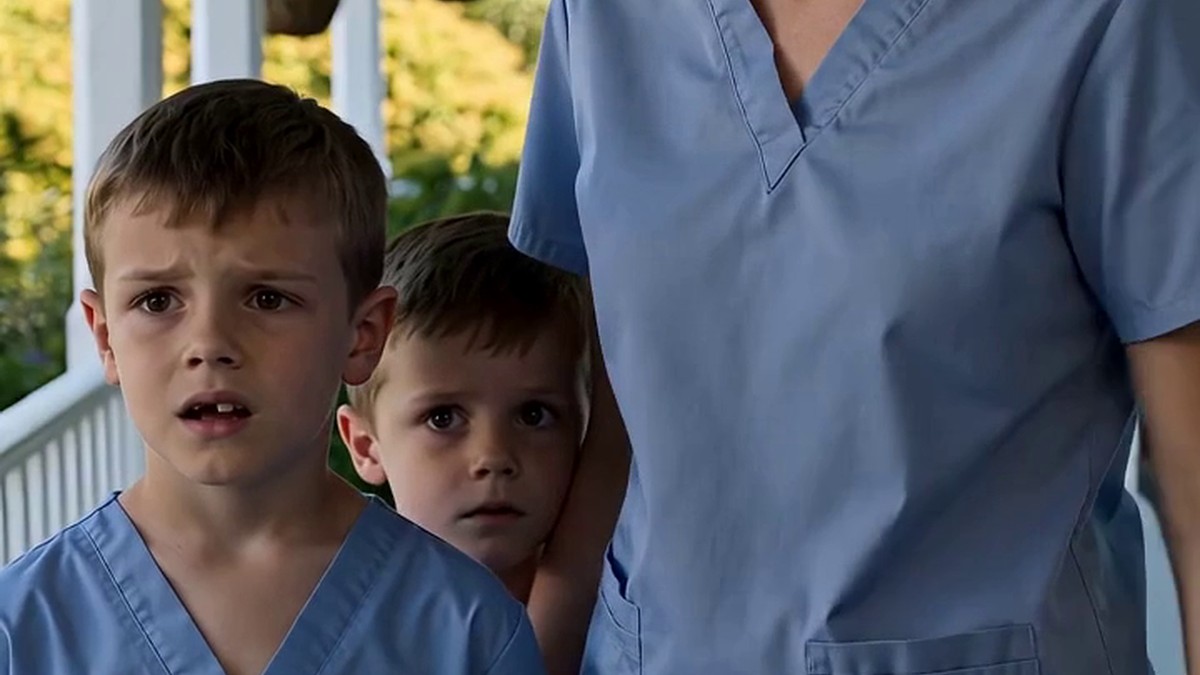
Marlene Doyle counted register drawers for a living, thirty-one years at the Piggly Wiggly on Route 9 outside Macon, Georgia, and she could tell you to the penny what a shift should look like before she ever touched the cash. So when her daughter Renee started treating Saturday mornings like a line item — free, recurring, no negotiation — Marlene noticed the math before she noticed the hurt.
It started small. A Tuesday here, a half-day there, always with the same text: *Can you take the boys? Something came up.* Marlene would glance at her phone during her break, the fluorescent lights humming over the break room's one vending machine, and type back *sure* before she'd even finished her coffee. She loved those boys — Caleb, eight, gap-toothed and loud, and Theo, five, who still needed his shoelaces double-knotted or he'd trip over them by the mailbox. She wasn't the problem. The pattern was.
By spring it wasn't Tuesdays anymore. It was Monday through Friday, six-thirty a.m. drop-off, sometimes six p.m. pickup, sometimes later if Renee's boyfriend Dustin had "a thing." Marlene was fifty-eight, still clocking forty hours a week at the store, still on her feet checking inventory in aisle six with her knees aching by Thursday. She'd started requesting the early shift specifically so she could be home in time for the boys — which meant she was up at four-fifteen, at the store by five, and running the whole operation on the kind of exhaustion that sits behind the eyes like sand.
Renee never asked how the arrangement felt. She announced it. "You're off Wednesdays anyway," she said once, not looking up from her phone, standing in Marlene's kitchen in her scrubs — she worked at the urgent care in town — like Marlene's day off was a resource waiting to be claimed rather than the only twenty-four hours a week she had to herself.
The detail that stuck with Marlene longest wasn't a fight. It was smaller than that. One evening in April she'd sat on her porch step with a glass of sweet tea sweating a ring onto the wood, watching the Hendersons' beagle next door lose an argument with a squirrel in the yard, and she'd done the arithmetic she did at work without thinking: six days a week, forty weeks so far, at what a sitter in this county actually charged — twelve dollars an hour, she'd looked it up — and she was somewhere north of nine thousand dollars deep into free labor since January. Nobody had asked if that number was fine with her. It just was, because it always had been.
The break came on a Thursday in June, the kind of Georgia heat that makes the asphalt in the Piggly Wiggly parking lot go soft at the edges. Marlene had asked for that Thursday off six weeks in advance — her sister's fiftieth wedding anniversary lunch, out at a restaurant in Warner Robins, the whole family driving in from three states. She'd told Renee about it twice. She'd written it on the calendar on her own refrigerator, the one Renee looked at every single time she dropped the boys off.
At six twenty-eight that morning, her phone buzzed. *Running late, be there in 10, thanks mom u r a lifesaver.*
Not a question. A thanks-in-advance for something Marlene had never agreed to.
She stood in her bathrobe in the kitchen doorway and looked at the message for longer than it took to read it. Then she looked at the calendar — the anniversary lunch circled in red marker, eleven a.m., her sister's handwriting from Christmas still faint underneath where Marlene had written the date. She thought about her mother, gone nine years now, who used to say that people will keep taking a road as long as you keep paving it.
She didn't cancel the anniversary lunch. She didn't answer the text either — not for two hours, not until she was already dressed, until the coffee had brewed and gone cold in the cup, until Renee's car had pulled into the driveway and Caleb and Theo were standing on the porch with their backpacks, expecting the door to open the way it always did.
Marlene opened the door. She was wearing the blue dress she'd bought for the lunch, her hair done, her purse already on her shoulder.
"I can't today," she said. "I told you six weeks ago. It's on the fridge."
Renee's face did something complicated — surprise sliding fast into something meaner. "You're seriously doing this now? I have a shift in forty minutes."
"I have a lunch in two hours," Marlene said. "I'm not canceling it. You'll need to figure something out."
"Figure something out — Mom, you're retired basically, you have all the time—"
"I'm not retired. I clock in at the Piggly Wiggly five days a week same as you clock in at that clinic. I've watched these boys thirty-one days out of the last thirty-five, and I did that because I love them, not because it's my job."
Theo was already halfway to the porch swing, unbothered, but Caleb had gone still on the steps, watching his mother's face the way kids do when they know something is happening even if they can't name it.
Renee's voice cracked into something closer to panic than anger. "So what, I'm supposed to just not go to work?"
"I don't know," Marlene said, and she meant it — she wasn't withholding an answer to be cruel, she genuinely didn't have one handed to her daughter anymore. "That's yours to solve. It's been mine for six months."
She stepped past Renee, down the porch steps, toward her Buick parked at the curb. Behind her she heard Renee on the phone already, voice pitched high, calling the urgent care to say she'd be late, and underneath that, quieter, calling Dustin's mother, and getting no answer either.
Marlene didn't look back to see how it resolved. She drove the forty minutes to Warner Robins with the windows cracked, the radio on low, and she sat at a table with her sister and three cousins she hadn't seen since Easter, and for two and a half hours nobody needed anything from her at all.
Renee called eleven times that day. Marlene saw the notifications light up her phone on the table between the bread basket and the anniversary cake, and she let each one ring out.
She called back that night, once the lunch was long over and she was home with her shoes off and her feet up on the ottoman. Renee answered on the first ring, exhausted, the boys audible in the background arguing over the television.
"I had to bring them to Dustin's mom's," Renee said, flat, like a confession. "She wasn't happy about it either."
"I'd imagine not," Marlene said.
There was a long stretch of static-quiet on the line, the kind where you can hear someone deciding whether to be angry or honest.
"I didn't think about it as — as a job," Renee finally said. "You never charged me anything. You never said no."
"I know," Marlene said. "That's on me too. I'm saying no now."
She didn't yell. She didn't bring up the nine thousand dollars, though she'd thought about it more than once that week. What she did, the following Monday, was open the Notes app on her phone and type up an actual schedule: two mornings a week, Tuesday and Thursday, seven to noon, the hours she was willing to give and could afford in her own body. She printed it at the store on the break room printer and taped it to Renee's own refrigerator, right under the calendar, the way you'd post store hours on a door.
Renee hired a sitter for the other three days — a woman named Priya two streets over who charged fourteen dollars an hour and showed up on time. It came out of Renee and Dustin's budget, not Marlene's Tuesdays.
Caleb still spends Thursday afternoons with his grandmother, eating grilled cheese cut into triangles the way he likes it, telling her about school in the run-on sentences of an eight-year-old. Theo still needs his shoelaces double-knotted. Marlene still works the early shift at the Piggly Wiggly, still counts her drawer down to the penny before she clocks out — and now, for the first time in a year, she counts her own hours the same careful way.



Дървото на живота на улица „Шипка” №14
Залата на читалището в Карлово беше претъпкана с балони и цветя. Камери щракаха, бащи плачеха зад усмивките си, а аз...


Jak jsem přišel o firmu, protože jsem podcenil vlastní ženu
Ten den jsem koupil náramek s brilianty za sto dvacet tisíc korun. Zlatnictví na Příkopech, prodavačka mi ho ještě zabalila...


Dort, kde slunce vypaluje louky u Blatné
Grilujeme, kde slunce vypaluje louky u Blatné Vypadal jsem jako idiot, s tím kleštěmi na uhlí v ruce, zatímco Hanka...


Gel, který táhl vodu ze vzduchu Hané
V šest ráno se Tereza probouzí ještě potmě, natahuje se po mobilu a než ho rozsvítí, ví to z toho,...


Dort, kde slunce vypaluje louky u Blatné
Grilujeme, kde slunce vypaluje louky u Blatné Vypadal jsem jako idiot, s tím kleštěmi na uhlí v ruce, zatímco Hanka...


Le pendentif qui s’est ouvert devant tous les invités
Sur le front de mer de Biarritz, face à une plage où les vagues brisent la dernière lumière du jour,...


Pokoj, kde čeká kufr
Jmenuju se Marek Vorel, je mi čtyřicet dva a dvanáct let jezdím jako údržbář výtahů po celé Praze. Ten den...


Matka se mu ohlásila ve čtyřicíti — a to, o co ho poprosila, ho ohromilo
Matka se mu ohlásila ve čtyřiceti — a to, o co ho poprosila, ho ohromilo Nevím, proč právě teď. Možná...