
Connect with us

З життя

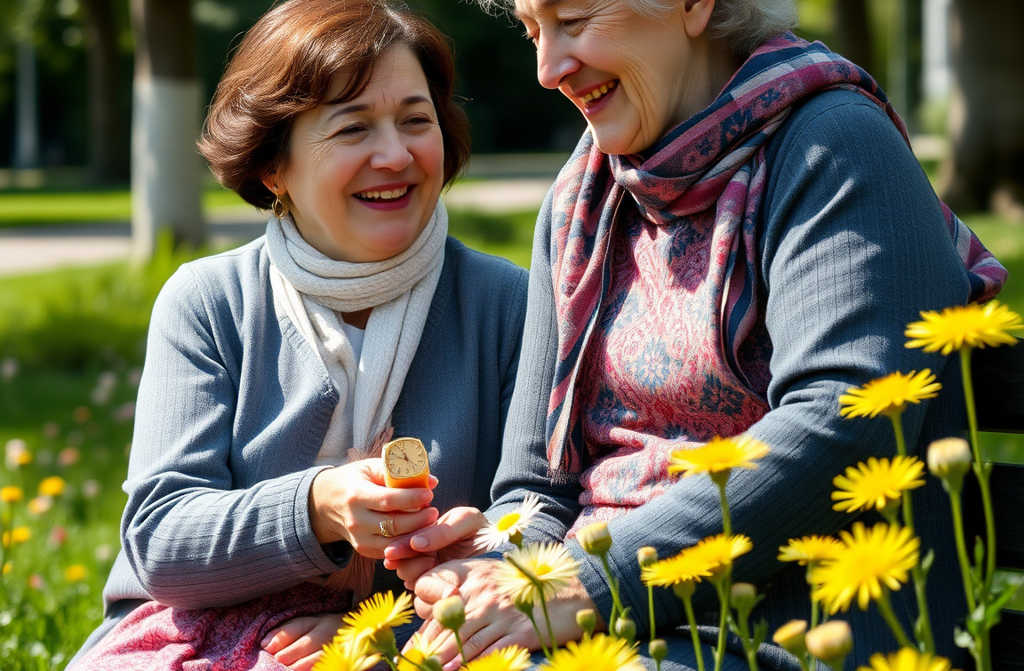
Dandelion Jam A gentle and snowy winter has passed, and with spring’s arrival in our small English town, Taissa finds herself yearning for green leaves and colourful blooms. From her third-floor window, she gazes out at the awakening city where lorries rumble, the market buzzes, and people shed their winter wear for brighter coats. Birds sing before alarms; spring brings new energy, and soon, summer will be even better. Taissa, long settled in her five-storey block, now lives with her granddaughter, Vera, a lively Year Four pupil whose parents—both doctors—left for a work contract in Africa, entrusting their daughter to her grandmother. “Gran, we’re giving you Vera to look after, just for a while,” her daughter had said. “She’ll be happier with you than traipsing across the world.” Taissa, now retired, was delighted for the companionship. Each day is filled with routine: shopping, chatting with her neighbours on the chilly bench outside—the ever-watchful Mrs Simmons from downstairs, always mysterious about her age, and the cheerful, well-read Mrs Valentine. Together, they swap news, share stories, and complain about health, their bench a hub of local gossip. Life continues: Taissa spoils Vera with treats for her good grades, welcomes her home from school, listens to her tales, and beams with pride at Vera’s dedication to dance lessons. One bright afternoon, as Taissa awaits Vera’s return, she’s joined by Mr Edward, a widower from next door, who talks about the daffodils and coltsfoot carpeting the lawns like tiny suns. Spring’s beauty is in full bloom, and with Vera’s lively mischief, their days are warm and busy. Edward and Taissa begin to meet regularly—reading the papers, walking in the park, discussing recipes, and sharing snippets of their lives. Edward’s own story is bittersweet: he raised his daughter, Anne, alone after losing his wife, and despite his efforts, Anne’s grown distant, raising a son on her own in another city. Unexpectedly, Anne arrives with austere intentions: she insists her father sell his beloved flat and move in with her for “company’s sake”. Edward resists, unwilling to leave his home and his quiet, independent life. Anne, noting his friendship with Taissa, confronts Taissa with suspicion, accusing her of ulterior motives regarding Edward’s property. The harsh words sting, but Anne soon leaves in anger, severing ties with her father. Taissa, embarrassed by the scene, grows distant from Edward—until one day, he waits for her outside, dandelions in hand, apologising for his daughter’s behaviour. He gifts her a wreath of dandelions and offers a jar of his homemade dandelion jam, extolling its health benefits and inviting her to try it in a salad. Together, they share tea with dandelion jam and laughter, and in the quiet evening, stroll to the park with a fresh issue of their favourite magazine. Sitting beneath their old lime tree, their conversation flows, and all worries melt away. For Taissa and Edward, the springtime brings sweet new beginnings—and the simple joys of dandelion jam. Thank you for reading, subscribing, and supporting my stories. Wishing you happiness in life!

Published

on

Dandelion Jam

The snow finally melted away; this year, the frost hadnt been harshjust a gentle, snowy winter. Yet, as all winters do, it had overstayed its welcome, and the yearning for green leaves, vibrant colours, and the chance to shed heavy coats grew stronger by the day.

Spring arrived quietly in a small English town, a typical Midlands borough with rows of sturdy brick terraces and the hum of distant train tracks. Edith loved springshe always waited impatiently for natures awakening. Peering out of her third-floor window, she mused aloud to herself:

With these warm spring days, the towns come alive, like its just woken up from a long slumber. Even the double-decker buses rumble differently, and the market is bustling again. People striding about in their bright raincoats, the birds rousing us before the alarm ever would. Ah, spring is wonderfulbut summer will be better still

Edith had lived in her five-storey block for ages, and now shared her home with her granddaughter, Daisy, who was in Year Four at the local primary. Daisys parentsboth doctorshad left for a years contract in Botswana, and Daisy stayed behind with grandma.

Mum, were leaving Daisy in your careit makes no sense to bring her along. We trust you to look after your favourite granddaughter, Ediths daughter had said.

Of course Ill watch over her. Itll be much more lively for me in retirement. Off you go; Daisy and I will manage just fine, Edith replied.

Hooray, Granny! Well have the best time. Well go to the park all the time. Mum and Dad are always too busy for me, Daisy cheered.

After breakfasting Daisy and sending her off to school, Edith puttered about the flat, time slipping by unnoticed.

Ill pop to the shopsitll be quick. Daisy will be home before I know it, she thought, straightening her skirt and picking up her shopping bag.

She stopped at the entrance, where two neighbours were already perched on the bench, cushions tucked firmly beneath them as the seat was still cold. Mrs Simmons, an ageless widowmaybe seventy, maybe more, she never saidlived alone in a compact ground-floor flat. Then there was Mrs Valentine, seventy-five, lively and full-figured, the towns unofficial historian, always laughing and altogether the opposite of Mrs Simmons, who found fault with everything.

Just as the sun returned and snow faded, this bench was never empty. Mrs Simmons and Mrs Valentine were regulars, watching every passer-by, their eyes sharp enough to catch a wayward sparrow.

Edith would sometimes sit with them, mulling over the latest gossip, who was in the paper, which programme was on telly. Mrs Simmons would always take the opportunity to discuss her blood pressure.

Morning, ladies, Edith called, her face lighting up. On duty already?

Morning, Edith. Wouldnt miss it. Otherwise, theyll mark us absent, Mrs Simmons chuckled, clocking Ediths shopping bag. Heading for the shops?

Thats right. Need to get Daisy a sweet treat for her good marks, Edith said, not lingering.

The day rolled on as usualshe welcomed Daisy home, cooked for her, watched Daisy settle down to her homework, then watched a little telly herself.

Granny, Im off to dance! Daisy called.

She already had her backpack, phone in hand. Daisy had been dancing for six years, starring at every community event, and Edith was fiercely proud.

All right, Daisy, off you go, she said softly, seeing her out.

Edith sat outside on the bench, waiting for Daisys return from dance class.

You look lonely, said Mr George, the neighbour from the second floor, sitting down beside her.

Is it possible to feel lonely on a day like this? Edith replied. Spring is here, weathers lovely.

Absolutely. The sunshines warming up, birds are singing, everythings turning green, and the towns yellow with buttercups. Those little flowers look just like tiny suns. He smiled, and Edith agreed.

Just then, Daisy dashed up and flung her arms around Edith, shouting:

Woof! Woof!

You little rascal, you scared me half to death! Edith laughed breathlessly.

Goodness, dont start talking about death yet, George teased, giving her shoulder a friendly pat.

Come along, Daisy. I grated some carrots and sprinkled sugar on top, knowing youd be tired after all that dancing. Ive cooked your favourite fishcakes too, Edith said, her voice warm.

George stood to go along with them.

Why are you heading in so soon? Edith asked, surprised.

You made those fishcakes sound deliciousIve made myself hungry. Ill have a bite. We can meet on the bench or maybe go for a stroll later, George smiled.

No promises; theres always something to do. But well see

That evening, Edith did find herself back on the bench, bidding George goodnight, smiling quietly to herself before heading inside with Daisy, who giggled:

Granny, I think Mr George is sweet on you!

Oh, nonsense, Edith waved her off.

Ive seen the way he looks at you, Granny. If only Tom from the year above looked at me that way, all the girls at school would be envious! Daisy twinkled, rolling her eyes.

Sit yourself down, you observant thing. Well see about Tom, Edith smiled.

Again, Edith went out to the bench that evening, and found George waiting. Surprisingly, the regular ladies were missing.

Mrs Simmons and Mrs Valentine just left for supper, George told her brightly.

From then on, Edith and George met often, sometimes taking a stroll in the park across the road, reading the local Gazette, sharing recipes, reminiscing about film stars and trading stories.

Georges life hadnt been kind. He had a wife, a daughter, and grandson once. He lost his wife young, raised daughter Alice as best as he could, working two jobs so that Alice never lacked anything, even if time with her was shortleaving early, returning late.

Alice grew up, married, moved away, had a son. She visited a few times, then stopped altogether. Even during those rare visits, she was distant and cool. She split with her husband after fifteen years, raising her son alone.

Edith, Alice rangshes coming in two days. Cant imagine why, its been years, George confided, now on first-name terms and sharing everything.

Maybe she misses you. At our age, family matters more, Edith suggested.

Perhaps, but Im not sure

Alice arrived, unchangedstern and unsmiling, clearly with something planned.

Dad, Ive come about something. Lets sell your flat, and youll move in with us. Itll be much niceryou, me, and my boy together, she insisted, barely disguising the fact the decision was already made.

George felt unease climbing up inside him, unwilling to leave his home for the arms of a daughter who barely showed warmth. He politely refused, saying he preferred to live alone.

Not satisfied, Alice found out about Georges friendship with Edith and went straight to her kitchen. Accepting tea and biscuits, she began.

I hear you and my father are very close, Alice said. Would you help persuade him? Its important.

What exactly do you mean? Edith inquired.

Help me convince him to sell his flat. He doesnt need all that spacecant he think of others for once? she finished sharply.

Edith was taken aback by Alices bluntness and scheming, replying with a firm refusal. Alices face reddened with fury as she shrilled:

Oh, I see now! Maybe you want the flat yourselffor your granddaughter, crowning her with an inheritance. You cuddle up on benches, strolling about, babbling about dandelion benefits. Two old dandelionshow apt! Done the paperwork at the registry office yet? I warn you, you wont get away with itnothing will come of it, you old hag! she shrieked, slamming the door behind her.

Edith felt mortified, hoping the neighbours hadnt overheard. Soon, Alice was gone. Edith began avoiding George, ducking away if she glimpsed him, hurrying home.

And yet, life always has a way of sorting things out. One afternoon, Edith returned from the shop to find George outside with a fistful of dandelions, weaving a crown.

Edith, dont run off, he said softly. Sit a moment. Im sorry for everything Alice saidI know she visited, said terrible things. Weve talked, and Ill always help my grandson, but what she did that isnt right. She left, said she had no father anymore. I well George fell silent, then held out the half-made crown. For you. And Ive made dandelion jamso good for you, and delicious. You must try it, and the saladdandelions are brilliant in salad, he smiled.

So they tried the dandelion salad together, and tea with Georges homemade dandelion jamEdith was delighted. That evening, they strolled into the park again.

Ive got the latest issue of our favourite magazine, George grinned, lets read it together under the old lime tree by the bench.

Edith sat beside him and laughed; conversation flowed, and the two of them forgot about everything else. Life was good for themtogether.

Thank you for reading, subscribing, and supporting me. Wishing you luck in life!

Click to comment

Leave a Reply

Ваша e-mail адреса не оприлюднюватиметься. Обов’язкові поля позначені *

12 − 1 =

Також цікаво:

З життя1 хвилина ago

I Don’t Understand Why I Became His Wife We Married Just Recently—I Thought My Husband Was Madly in Love With Me, Until One Mysterious Incident Changed Everything. It Wasn’t Infidelity, But Something Even Stranger and More Serious. Looking Back, I Realize I Probably Loved Him Too Much—Forgiving Everything, Putting Him On a Pedestal, and Hoping My Devotion Would Make Him Cherish Me. He Got Used to My Adoration, Became More Self-Assured, and Started Thinking Any Woman Would Worship Him at the Snap of a Finger—even Though He’s Not Really Admired by Others. Shortly Before Our Wedding, He Wanted to Be Alone and Go on Holiday—to Prepare Himself for Marriage, So He Said. I Accepted It and Let Him Go. Later, He Told Me He’d Gone to the Mountains to Escape Civilization—No Internet or Phone, Just Nature. I Stayed Behind, Missing Him Madly and Counting the Minutes Until He Returned. A Week Later, He Came Back—It Was the Happiest Day of My Life. I Welcomed Him With All the Warmth and Love I Had, Cooking His Favourite Meals. But the Next Day, Things Started Getting Weird. He Kept Rushing to the Hallway or Another Room and Soon, Began Leaving the House Several Times a Day With Different Excuses. One Day, On My Way to the Shop, I Found a Letter in Our Mailbox—Addressed to Me, From Him, Sent While He Was Away. What Was Written Inside Left Me Trembling: “Hello. I Don’t Want to Lie to You Anymore. You’re Not the Right Person for Me, and I Don’t Want to Spend My Life With You. There Won’t Be a Wedding. Forgive Me—Don’t Search For Me or Call Me, I Won’t Be Coming Back.” So Short, So Brutal… Only Then Did I Realize He’d Been Checking the Mailbox Constantly. Silently, I Destroyed the Letter, Saying Nothing, Never Letting Him Know I Knew. But How Can I Live With Someone Who Doesn’t Want to Be With Me? Why Did He Marry Me and Pretend Everything Was Fine?

I cant understand why I became his wife. We were married only recently. I had believed my husband was passionately...

З життя1 годину ago

Dandelion Jam A gentle and snowy winter has passed, and with spring’s arrival in our small English town, Taissa finds herself yearning for green leaves and colourful blooms. From her third-floor window, she gazes out at the awakening city where lorries rumble, the market buzzes, and people shed their winter wear for brighter coats. Birds sing before alarms; spring brings new energy, and soon, summer will be even better. Taissa, long settled in her five-storey block, now lives with her granddaughter, Vera, a lively Year Four pupil whose parents—both doctors—left for a work contract in Africa, entrusting their daughter to her grandmother. “Gran, we’re giving you Vera to look after, just for a while,” her daughter had said. “She’ll be happier with you than traipsing across the world.” Taissa, now retired, was delighted for the companionship. Each day is filled with routine: shopping, chatting with her neighbours on the chilly bench outside—the ever-watchful Mrs Simmons from downstairs, always mysterious about her age, and the cheerful, well-read Mrs Valentine. Together, they swap news, share stories, and complain about health, their bench a hub of local gossip. Life continues: Taissa spoils Vera with treats for her good grades, welcomes her home from school, listens to her tales, and beams with pride at Vera’s dedication to dance lessons. One bright afternoon, as Taissa awaits Vera’s return, she’s joined by Mr Edward, a widower from next door, who talks about the daffodils and coltsfoot carpeting the lawns like tiny suns. Spring’s beauty is in full bloom, and with Vera’s lively mischief, their days are warm and busy. Edward and Taissa begin to meet regularly—reading the papers, walking in the park, discussing recipes, and sharing snippets of their lives. Edward’s own story is bittersweet: he raised his daughter, Anne, alone after losing his wife, and despite his efforts, Anne’s grown distant, raising a son on her own in another city. Unexpectedly, Anne arrives with austere intentions: she insists her father sell his beloved flat and move in with her for “company’s sake”. Edward resists, unwilling to leave his home and his quiet, independent life. Anne, noting his friendship with Taissa, confronts Taissa with suspicion, accusing her of ulterior motives regarding Edward’s property. The harsh words sting, but Anne soon leaves in anger, severing ties with her father. Taissa, embarrassed by the scene, grows distant from Edward—until one day, he waits for her outside, dandelions in hand, apologising for his daughter’s behaviour. He gifts her a wreath of dandelions and offers a jar of his homemade dandelion jam, extolling its health benefits and inviting her to try it in a salad. Together, they share tea with dandelion jam and laughter, and in the quiet evening, stroll to the park with a fresh issue of their favourite magazine. Sitting beneath their old lime tree, their conversation flows, and all worries melt away. For Taissa and Edward, the springtime brings sweet new beginnings—and the simple joys of dandelion jam. Thank you for reading, subscribing, and supporting my stories. Wishing you happiness in life!

Dandelion Jam The snow finally melted away; this year, the frost hadnt been harshjust a gentle, snowy winter. Yet, as...

З життя1 годину ago

After I Told My Wife That Her Daughter Isn’t My Responsibility, the Truth About Our Family Was Revealed

After telling my wife that her daughter wasnt my responsibility, the truth about our family came out For a long...

З життя2 години ago

My Husband Refuses to Give Our Flat to Our Daughter: Should We Let Her Move In or Split the Proceeds Equally Between All Our Children?

The flat in question was left to my husband by his aunta modest place tucked right in the heart of...

З життя2 години ago

She Didn’t Want To – But She Did: How Vasilisa’s Desperate Gamble Led to Love and Redemption in a Quiet English Village

Didnt Want To, But Did Lucy never really learned how to smoke, but she was convinced it helped settle her...

З життя2 години ago

You Simply Don’t Understand Your Own Happiness — Half a million? — Karen stared at the phone notification, rereading it three times before the numbers made sense. — You took out a loan for half a million pounds? David was on the sofa, fixated on his smartphone, not even looking up. — Oh, that… Yeah, it’s nothing really, just for Mum’s house repairs. You know her pipes are leaking, floors warped, wallpaper peeling… — Hold on. — Karen sank onto the edge of the armchair, legs refusing to hold her. — You got a loan. For half a million. And gave all of it to your mother. Without saying a word to me? David finally looked up. His face showed only genuine confusion, as if his wife was asking something entirely obvious. — Karen, it’s my mum. She lives alone, her pension’s tiny. Who else is going to help her? — And you couldn’t discuss it with me? — Karen yelled, unable to stop herself. — Ask my opinion? At least warn me? — You would’ve argued, — David shrugged. — And Mum needed it urgently. Four years. Four years she’d put up with the woman who called every evening to check what David had for dinner. Who’d arrive unannounced and critique their cleaning, who’d orchestrate family dinners so Karen ended up at the far end of the table. — Don’t make a mountain out of a molehill, — David kept his calm tone. — We’ll be fine. Pay it off fast, it’s not much. It’s family. Hot, angry tears streamed down. Karen wiped them with the back of her hand, smearing mascara. — Family? Am I family? Or just an add-on? Remember when your mum decided it was time for a new car and you sold ours without asking me? Or when she cleared my things out of the guest room because she “couldn’t sleep surrounded by strangers’ junk”? Or how on my birthday, you left with her to buy her a fridge? — It’s nothing, — David waved her off. — You’re just tired, you need a break. Karen looked at this man—tall, gentle features, dimples she once thought cute. Now she saw only a thirty-year-old boy who couldn’t cut the cord. — We’ll get through this, — he repeated like a mantra. — Love conquers all. Karen rose without a word and went to the bedroom. Two large duffel bags sat in the closet—the same ones she’d moved in with. She dragged them out, tossed them on the bed, and began opening cupboards. David appeared at the door twenty minutes later, just as one bag was stuffed full. — What are you doing? Karen, this is ridiculous. You’re not serious? She didn’t answer, quietly folding jumpers, jeans, underwear. Took down the jewellery box—gifts from her parents and friends, she wouldn’t take anything from him. — Where will you go? To your mum? She’s up in Manchester! Zipping the second bag. Checking her purse—passport, bank card, the keys to her mum’s flat she’d always kept “just in case.” — Karen, say something! You can’t just leave me. I love you! She looked him in the eye, sharp and long. Then picked up her bags and walked out. …Next morning, Karen stood in line at the registry office, clutching her completed divorce papers. Rain drizzled outside, grey clouds low over rooftops, but inside she felt a strange calm. The decision was made. The first call came at half past two in the morning. Karen jumped awake on the sofa at her friend Leah’s, not immediately sure where she was. — We need to talk, — David’s rapid breathing, scattered words. — I get it now, I’ll change. Please, give me a chance. She hung up. Twenty minutes later, the phone rang again. — Karen, I can’t live without you. You are my whole life. By morning, there were forty-three messages. Each one long, tearful, full of promises and threats. “If you don’t come back, I don’t know what I’ll do.” “Mum says you’re just being difficult.” “I’ll wait for you, forever.” A week later, David began appearing outside her office. Karen would leave for lunch and there he’d be, hovering by the coffee kiosk. She’d head to the Tube—there he was, across the street. — Just passing by, — he insisted when Karen demanded an explanation. — I wanted to see you. One evening, there was a knock at Leah’s door. Karen opened it, not checking the peephole—she was expecting the pizza delivery. David stood on the doorstep, clutching a bouquet of red roses. — Just one chance, — he whispered. — I ask for nothing more. Karen quietly closed the door. He stayed outside for two hours, until the neighbours threatened to call the police. She learned to live with it—the way you learn to live with chronic pain. Don’t read the texts, don’t answer unknown calls, don’t look back in the street. Switched to remote work at a new firm, moved to a suburb where David would never “happen” to be. The divorce was finalised three months later. Karen left court with the official papers clutched tight and cried on the steps—not for grief, but relief. The first months of freedom were frighteningly empty. Karen had gotten used to checking every decision with someone, even if they’d always do as they wished. Now she could buy any yoghurt in the shop, without wondering if Mrs Davies would approve. She could watch any film, and wouldn’t hear “normal women don’t watch that.” She could breathe. She signed up for English courses—her long-time dream, which David had dismissed as “foolish expense.” Began attending early morning yoga before sunrise, when the city was just waking up. Took a solo trip to Brighton for the weekend, wandering the streets and eating doughnuts. Six months later, the calls stopped. The texts too. Karen waited for the catch another month, then another, and finally understood she could relax. She landed a job at a marketing agency—bright office, young team, exciting projects. Life was moving on. …She met Andrew at a work event her colleague Maddy insisted she attend. — This is our lead developer, — Maddy introduced a tall guy in thin-rimmed glasses. — Andrew, this is Karen from marketing. He shook her hand—firmly, but gently. Smiled—just a plain, genuine smile. — Escaping from the karaoke too, I see? — he nodded toward the stage, where the Finance Director was butchering “Wonderwall.” — Saving my nerves, — Karen nodded. They talked most of the night—about books, travel, the oddities of life. Andrew listened more than he spoke. Asked questions, actually waited for answers, never interrupted. Never tried to lecture or explain how she should live. When he found out she was divorced, he just nodded and changed the subject. …Half a year later, they moved in together, picking a flat in the city centre. Small, light-filled, high ceilings, overlooking a quiet courtyard. — Are you sure you like this flat? — Karen asked, as they viewed it before signing. — Maybe we should see some more? — Do you like it? — Andrew turned to her. — Yes. Very much. — Then let’s take it. Small things—the right to have an opinion, and be heard—meant more than any declarations of love. He proposed on the roof of their building, as the sun sank below the skyline, painting the sky pink and gold. He pulled out a tiny box, opened it—inside shimmered a diamond ring. — I’m not much for speeches, — Andrew admitted. — But I want to wake up next to you every day. If you don’t mind my snoring and my addiction to terrible coffee. Karen laughed through tears and nodded. …That May evening began like any other. Andrew was late at work—a looming deadline, an urgent bug. Karen was making pasta, humming along to the radio, when a sharp, insistent knock came at the door. She glanced through the peephole—and jumped back. It was David. Pale, dark circles under his eyes, crumpled shirt. Two years. Two years of silence—and now he was here. — Karen, open up! — his fist hammered the door. — I know you’re there! We need to talk! She grabbed her phone, dialled Andrew. The line was busy. — We love each other! — David shouted through the door. — You can’t be with someone else! It’s wrong! The door shuddered—he was throwing his weight against it. Karen pressed her back tight against the door, feet braced. — Get away, — she yelled. — I’ll call the police! — You’re my wife! — his voice climbed to a shrill pitch. — You were mine and you’ll always be mine! I waited two years for you to come to your senses! Two years! — We’re divorced! It’s over! — Nothing’s over! — he shoved again, and she barely held the door. — I’ve changed! Mum says you just don’t understand your own happiness! Open up, let’s talk! Through the peephole, his face was twisted, possessed. Nothing like the man she’d once shared a bed with. Karen dialled 999. — David! One click and the police will be here. Leave. Now. David froze. A few seconds passed. Then he spun around and strode to the stairs. Downstairs, the front door banged. Karen slid to the floor against the wall, dizzy. After half an hour, she managed to stand and call Andrew. The police took her statement the next day. The officer, an older bloke with a mustache, took notes, nodded. — We’ll deal with it. We’ll have a word. Whatever he said to David, Karen never found out. But after that, her ex never appeared again. No calls, no messages, no accidental run-ins. …She and Andrew held their wedding in early June—a small country restaurant, twenty guests, just close friends. No fuss, no groom’s relatives demanding old traditions. Karen stood across from Andrew in a simple white dress, holding his warm hands. Outside, birch trees rustled, the air scented with flowers and freshly cut grass. — Do you take… — began the celebrant. — I do, — Karen cut in, making the guests laugh. Andrew slid the ring on her finger—thin gold, engraved inside: “Always with you.” Karen looked up at the man who would be her husband. Not a mummy’s boy, not an obsessed stalker. Just a man who knew how to listen, respect, and love. Ahead lay a life where her voice mattered…

You just dont understand your own happiness Fifty thousand pounds? Emma scanned the notification flashing on her phone three times...

З життя3 години ago

The Stillness of New Year’s Eve

New Years Quietude November hung over me like a damp blanketgrey, wet, hopelessly dismal, just as ever. The days dragged...

З життя3 години ago

You Simply Don’t Understand Your Own Happiness — Half a million? — Karen stared at the phone notification, rereading it three times before the numbers made sense. — You took out a loan for half a million pounds? David was on the sofa, fixated on his smartphone, not even looking up. — Oh, that… Yeah, it’s nothing really, just for Mum’s house repairs. You know her pipes are leaking, floors warped, wallpaper peeling… — Hold on. — Karen sank onto the edge of the armchair, legs refusing to hold her. — You got a loan. For half a million. And gave all of it to your mother. Without saying a word to me? David finally looked up. His face showed only genuine confusion, as if his wife was asking something entirely obvious. — Karen, it’s my mum. She lives alone, her pension’s tiny. Who else is going to help her? — And you couldn’t discuss it with me? — Karen yelled, unable to stop herself. — Ask my opinion? At least warn me? — You would’ve argued, — David shrugged. — And Mum needed it urgently. Four years. Four years she’d put up with the woman who called every evening to check what David had for dinner. Who’d arrive unannounced and critique their cleaning, who’d orchestrate family dinners so Karen ended up at the far end of the table. — Don’t make a mountain out of a molehill, — David kept his calm tone. — We’ll be fine. Pay it off fast, it’s not much. It’s family. Hot, angry tears streamed down. Karen wiped them with the back of her hand, smearing mascara. — Family? Am I family? Or just an add-on? Remember when your mum decided it was time for a new car and you sold ours without asking me? Or when she cleared my things out of the guest room because she “couldn’t sleep surrounded by strangers’ junk”? Or how on my birthday, you left with her to buy her a fridge? — It’s nothing, — David waved her off. — You’re just tired, you need a break. Karen looked at this man—tall, gentle features, dimples she once thought cute. Now she saw only a thirty-year-old boy who couldn’t cut the cord. — We’ll get through this, — he repeated like a mantra. — Love conquers all. Karen rose without a word and went to the bedroom. Two large duffel bags sat in the closet—the same ones she’d moved in with. She dragged them out, tossed them on the bed, and began opening cupboards. David appeared at the door twenty minutes later, just as one bag was stuffed full. — What are you doing? Karen, this is ridiculous. You’re not serious? She didn’t answer, quietly folding jumpers, jeans, underwear. Took down the jewellery box—gifts from her parents and friends, she wouldn’t take anything from him. — Where will you go? To your mum? She’s up in Manchester! Zipping the second bag. Checking her purse—passport, bank card, the keys to her mum’s flat she’d always kept “just in case.” — Karen, say something! You can’t just leave me. I love you! She looked him in the eye, sharp and long. Then picked up her bags and walked out. …Next morning, Karen stood in line at the registry office, clutching her completed divorce papers. Rain drizzled outside, grey clouds low over rooftops, but inside she felt a strange calm. The decision was made. The first call came at half past two in the morning. Karen jumped awake on the sofa at her friend Leah’s, not immediately sure where she was. — We need to talk, — David’s rapid breathing, scattered words. — I get it now, I’ll change. Please, give me a chance. She hung up. Twenty minutes later, the phone rang again. — Karen, I can’t live without you. You are my whole life. By morning, there were forty-three messages. Each one long, tearful, full of promises and threats. “If you don’t come back, I don’t know what I’ll do.” “Mum says you’re just being difficult.” “I’ll wait for you, forever.” A week later, David began appearing outside her office. Karen would leave for lunch and there he’d be, hovering by the coffee kiosk. She’d head to the Tube—there he was, across the street. — Just passing by, — he insisted when Karen demanded an explanation. — I wanted to see you. One evening, there was a knock at Leah’s door. Karen opened it, not checking the peephole—she was expecting the pizza delivery. David stood on the doorstep, clutching a bouquet of red roses. — Just one chance, — he whispered. — I ask for nothing more. Karen quietly closed the door. He stayed outside for two hours, until the neighbours threatened to call the police. She learned to live with it—the way you learn to live with chronic pain. Don’t read the texts, don’t answer unknown calls, don’t look back in the street. Switched to remote work at a new firm, moved to a suburb where David would never “happen” to be. The divorce was finalised three months later. Karen left court with the official papers clutched tight and cried on the steps—not for grief, but relief. The first months of freedom were frighteningly empty. Karen had gotten used to checking every decision with someone, even if they’d always do as they wished. Now she could buy any yoghurt in the shop, without wondering if Mrs Davies would approve. She could watch any film, and wouldn’t hear “normal women don’t watch that.” She could breathe. She signed up for English courses—her long-time dream, which David had dismissed as “foolish expense.” Began attending early morning yoga before sunrise, when the city was just waking up. Took a solo trip to Brighton for the weekend, wandering the streets and eating doughnuts. Six months later, the calls stopped. The texts too. Karen waited for the catch another month, then another, and finally understood she could relax. She landed a job at a marketing agency—bright office, young team, exciting projects. Life was moving on. …She met Andrew at a work event her colleague Maddy insisted she attend. — This is our lead developer, — Maddy introduced a tall guy in thin-rimmed glasses. — Andrew, this is Karen from marketing. He shook her hand—firmly, but gently. Smiled—just a plain, genuine smile. — Escaping from the karaoke too, I see? — he nodded toward the stage, where the Finance Director was butchering “Wonderwall.” — Saving my nerves, — Karen nodded. They talked most of the night—about books, travel, the oddities of life. Andrew listened more than he spoke. Asked questions, actually waited for answers, never interrupted. Never tried to lecture or explain how she should live. When he found out she was divorced, he just nodded and changed the subject. …Half a year later, they moved in together, picking a flat in the city centre. Small, light-filled, high ceilings, overlooking a quiet courtyard. — Are you sure you like this flat? — Karen asked, as they viewed it before signing. — Maybe we should see some more? — Do you like it? — Andrew turned to her. — Yes. Very much. — Then let’s take it. Small things—the right to have an opinion, and be heard—meant more than any declarations of love. He proposed on the roof of their building, as the sun sank below the skyline, painting the sky pink and gold. He pulled out a tiny box, opened it—inside shimmered a diamond ring. — I’m not much for speeches, — Andrew admitted. — But I want to wake up next to you every day. If you don’t mind my snoring and my addiction to terrible coffee. Karen laughed through tears and nodded. …That May evening began like any other. Andrew was late at work—a looming deadline, an urgent bug. Karen was making pasta, humming along to the radio, when a sharp, insistent knock came at the door. She glanced through the peephole—and jumped back. It was David. Pale, dark circles under his eyes, crumpled shirt. Two years. Two years of silence—and now he was here. — Karen, open up! — his fist hammered the door. — I know you’re there! We need to talk! She grabbed her phone, dialled Andrew. The line was busy. — We love each other! — David shouted through the door. — You can’t be with someone else! It’s wrong! The door shuddered—he was throwing his weight against it. Karen pressed her back tight against the door, feet braced. — Get away, — she yelled. — I’ll call the police! — You’re my wife! — his voice climbed to a shrill pitch. — You were mine and you’ll always be mine! I waited two years for you to come to your senses! Two years! — We’re divorced! It’s over! — Nothing’s over! — he shoved again, and she barely held the door. — I’ve changed! Mum says you just don’t understand your own happiness! Open up, let’s talk! Through the peephole, his face was twisted, possessed. Nothing like the man she’d once shared a bed with. Karen dialled 999. — David! One click and the police will be here. Leave. Now. David froze. A few seconds passed. Then he spun around and strode to the stairs. Downstairs, the front door banged. Karen slid to the floor against the wall, dizzy. After half an hour, she managed to stand and call Andrew. The police took her statement the next day. The officer, an older bloke with a mustache, took notes, nodded. — We’ll deal with it. We’ll have a word. Whatever he said to David, Karen never found out. But after that, her ex never appeared again. No calls, no messages, no accidental run-ins. …She and Andrew held their wedding in early June—a small country restaurant, twenty guests, just close friends. No fuss, no groom’s relatives demanding old traditions. Karen stood across from Andrew in a simple white dress, holding his warm hands. Outside, birch trees rustled, the air scented with flowers and freshly cut grass. — Do you take… — began the celebrant. — I do, — Karen cut in, making the guests laugh. Andrew slid the ring on her finger—thin gold, engraved inside: “Always with you.” Karen looked up at the man who would be her husband. Not a mummy’s boy, not an obsessed stalker. Just a man who knew how to listen, respect, and love. Ahead lay a life where her voice mattered…

You just dont understand your own happiness Fifty thousand pounds? Emma scanned the notification flashing on her phone three times...