
EN
The Cat Who Kept the Old Man’s Secret

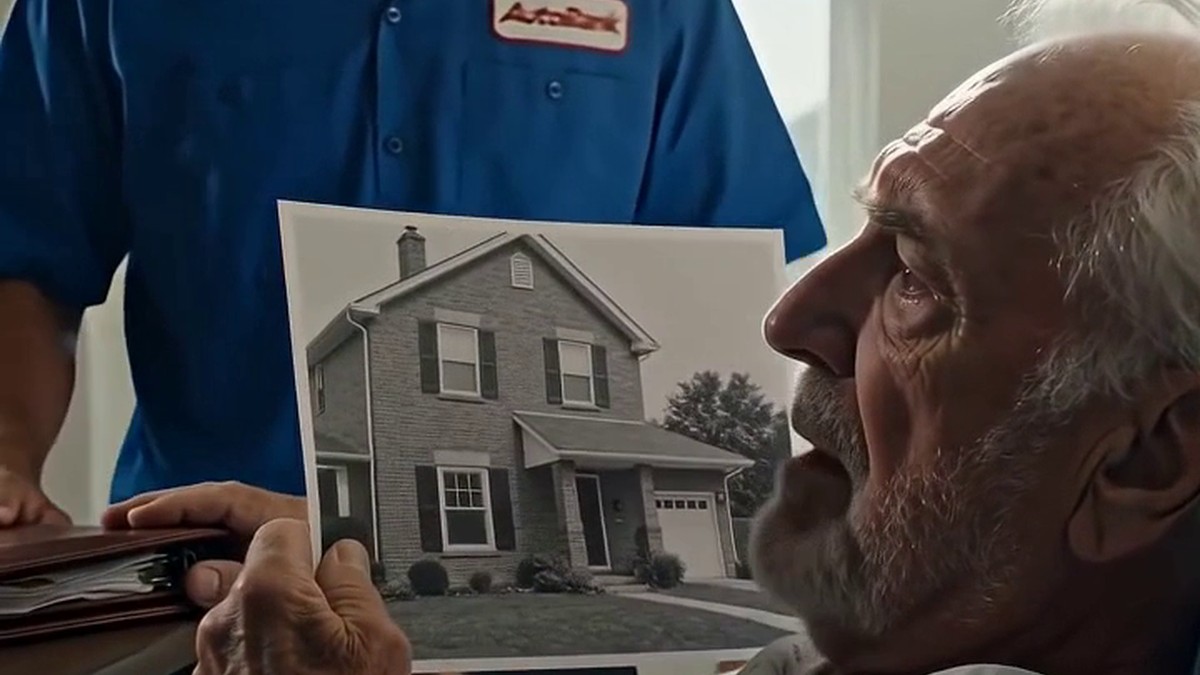
My name doesn't matter much here — I'm the guy who runs the coffee cart outside St. Vincent's Medical Center in Toledo, Ohio, and I've been pouring drip coffee at that same spot for eleven years. You see things in that job. People at their best, right after a baby's born. People at their worst, standing in the hallway outside room 214 with a folder they didn't want anyone to read over their shoulder. This is about the second kind of morning.
I first noticed the old man back in October, three blocks from my cart, outside a shuttered flower shop on Adams Street. He had a folding table with a few jars of homemade pickles, some hand-carved wooden spoons, and bundles of dried sage tied with kitchen string. Most people walked past without looking at him twice. Next to his chair sat an enormous orange tabby with a torn left ear and eyes that seemed to actually track you, which unsettled some of the regulars on their way to the bus stop.
The man's name, I'd later learn, was Walter Grunwald. The cat was named Rusty, though his coat was closer to the color of an old penny than actual rust. Walter talked to that cat the way some people talk to a spouse of forty years — low, steady, like he was finishing a conversation that had been going on for a long time before I ever showed up.
A regular of mine, a young guy named Deshawn who worked nights at the AutoZone on Monroe, used to buy Walter's pickles even though he didn't eat pickles. He told me once he just didn't like watching the old man count change with hands that shook too much to do it right. One cold morning in early November, Deshawn finally sat down next to him and tried to overpay for a jar. Walter counted out the correct change anyway and handed it back. "I don't take charity," he said. "Long as I've got something to sell, I'm not a beggar."
That was the last week Walter's table showed up at its usual spot.
Deshawn told me — because by then he'd started telling me things, the way people do when they're carrying something too heavy to hold alone — that he'd followed Walter one evening out of plain worry. Walter had packed up his unsold jars into a duffel bag, wrapped Rusty in a moving blanket that had seen better decades, and walked toward the rail yard behind the old Norfolk Southern spur near the river. He was sleeping in a storage shed back there. Not a shelter. Not a relative's couch. A shed with a busted latch and a gap under the door wide enough for the wind.
Deshawn showed up the next day with soup in a thermos and a bag of cat food from the Kroger on Bancroft. Walter about took his head off. "Who told you to follow me? I didn't ask anybody to check on where I sleep." Deshawn said something about how nobody should be out there in that cold, and Walter cut him off — said the shelters wouldn't take Rusty, and he wasn't leaving that cat, end of conversation. Deshawn mentioned the county, mentioned Lucas County Animal Services, mentioned a caseworker. Walter shut every door before it opened. He wasn't scared of being poor. He was scared of somebody taking that cat, and more than that — Deshawn noticed — scared of somebody getting near a small leather folder he kept tucked inside his coat, even while he slept.
The cold snap that hit Toledo that week was bad, one of those stretches where the news keeps flashing wind-chill warnings. Walter's table didn't show up on Adams Street for four straight days. Deshawn went looking and found him in the shed running a fever, barely tracking who was in front of him, with Rusty planted on his chest hissing at anyone who got close. EMS took Walter to St. Vincent's. The cat bolted the second the siren wailed, gone between two boxcars before anyone could grab him.
That's actually where I come into it directly, not secondhand. Deshawn spent that whole night down by the rail yard, and the next morning he came through my line looking like he hadn't slept, asking if I'd seen a stray orange cat anywhere near the hospital. I hadn't. I gave him a coffee on the house and told him to check the loading dock behind the ER, since strays sometimes bed down near the vents there for warmth. He did. No cat. Not yet.
Inside the hospital, the first thing out of Walter's mouth once the fever broke enough for him to talk wasn't a question about his own blood pressure — it was "where's Rusty." When they told him the cat had run off at the tracks, Walter turned his face to the wall and didn't say another word for a long while. Eventually he asked Deshawn to go back to the shed and pull a leather folder out from under a broken floorboard.
"That's not just papers," Walter told him when he brought it back. "That's proof Rusty's got a home. I'm just not sure I've still got the right to go back to it."
Inside were photographs of a modest brick house on the west side, a stapled stack of veterinary records for Rusty going back years, and a notarized deed — Walter Grunwald listed as sole owner. Clipped on top of all of it was a typed statement, signed by his own daughter, claiming her father was mentally unfit and asking the court to hand her control of everything he had.
The daughter's name was Colette. She showed up the next morning in a camel-hair coat that probably cost more than my cart takes in a month, and she talked to her father like he was an overdue invoice rather than a person. She dropped a fresh binder of paperwork on his tray table and told him to sign the power of attorney, or she'd make sure a judge declared him incompetent by the end of the week.
"That house is coming to me either way," she said, still standing, not even bothering to sit down. "And don't worry about the cat. If animal control picks him up, they'll handle it."
Walter's hands tightened on the blanket. No anger crossed his face. No fear either. Just the kind of hurt I've only seen on people who've lost not a possession, but the last person who was ever supposed to be theirs.
That's when the yowling started in the hallway. A nurse hollered that a filthy orange cat was tearing through the corridor and nobody could catch him. Rusty shot into the room, cleared the bed rail in one jump, and pressed himself against Walter's neck. Colette stepped back like something had touched her that shouldn't have.
She shoved the binder toward her father and looked straight at Deshawn instead, like he was the one who needed convincing. "Sign it now," she said, "or I promise you, by tonight, the two of them will never be together again."
Deshawn looked down at the paperwork, then at the leather folder still sitting open on the blanket, and he understood — finally, all at once — exactly why Walter had spent weeks refusing help from anyone who came near him. He wasn't stubborn. He was guarding the one thing his daughter wanted gone.
He didn't say anything to Colette. He pulled out his phone and called Legal Aid of Western Ohio — a number he'd gotten off a flyer at the shelter intake desk months earlier, back when he was trying to help a different regular of mine who'd lost his apartment. An attorney named Priya Bhatt picked up on the third ring, and within the hour she was standing in that hospital room with a folder of her own: the notarized deed, dated eight years earlier, naming Walter sole owner of the house on record — a deed that predated any petition Colette could file, and that named no co-owner, no conditions, nothing for her to inherit early.
Priya laid it out plainly, right there with Colette still in the room. Guardianship petitions require documented incapacity, not an unsigned form shoved at a man on painkillers. Walter had never been declared unfit by any physician, and the attending doctor, standing near the door, confirmed as much on the spot. Colette's binder wasn't a power of attorney. It was a bluff.
Walter didn't shout. He didn't need to. He asked Deshawn to hand him a pen, and instead of signing Colette's form, he signed something else — a quitclaim revocation Priya drew up right there, formally striking Colette's name from any future claim to the property, and a separate document transferring guardianship of Rusty, in writing, to Deshawn, should anything ever happen to him again.
Colette stood by the window with her arms crossed while Walter read the papers back to make sure the language was right — every clause, out loud, unhurried. Then he asked her, without looking up, "You came here for a house. I hope it was worth it." She left without another word. The binder stayed on the tray table.
Six days later, Walter was discharged. Deshawn drove him — in his own beat-up Civic, heater running full blast — to the house on the deed, a little brick place on Bronson Street with a chain-link fence and a maple tree in the yard that hadn't lost all its leaves yet. Walter hadn't set foot in it in over two years. He stood on the porch a long moment before he put the key in the lock, Rusty already weaving figure-eights around his ankles like he knew exactly where they were.
I still see Deshawn most mornings. He tells me Walter sets up his folding table again sometimes, same spot on Adams Street, jars of pickles lined up neat as ever — not because he needs the money anymore, but because he says a man ought to have something to sell. Rusty still tags along, torn ear and all, curled at his feet like he never intends to let that shed happen again.



Dceřina bouda u Orlíku
Jmenuju se Radek Vomáčka, je mi padesát čtyři a nejradši bych vám řekl, že žádná z těch šesti ztracených dětí...


Il nonno che ha pagato i miei debiti con la pensione e non me l’ha mai detto
Mi chiamo Enzo Ricci, ho diciannove anni e faccio il terzo anno all'istituto tecnico di Pordenone, sezione meccanica. Se oggi...


Прежда, която не лъже
Инвентарният номер беше четиристотин шейсет лева — цялото ѝ спестяване, което остана след погребението на Румен. Яна Бакалова стоеше в...


Non ti dico niente io, racconto solo quello che ho visto da vicino
Mi chiamo Edoardo Ferretti, ho trentaquattro anni e per sei anni sono stato il direttore operativo della Lindqvist Energia, una...


Pes ze Smíchovského hřbitova
Každou neděli ráno jsem jezdila tramvají číslo 12 až na konečnou a odtamtud pěšky na hřbitov, s kyticí žlutých sedmikrásek...


Il contratto che Daniele non sapeva di aver già perso
Quella mattina ho fatto una cosa che Chiara non si aspettava: le ho lasciato il caffè pronto prima di uscire,...


Tėvo rankos sode Zarasų pakraštyje
Pro Petro Vilkausko namo langą matosi Zarasų ežeras — rudenį jis pilkas, kaip skalbinių vanduo. Gyventojai sako, kad spalį čia...


Жълто-зелената пътна чанта на Деми
Деси Вълчева остави телефона на плота с екрана надолу, сякаш искаше да му попречи да зазвъни отново. В кухнята на...