
EN
# The House With the Turntable in Toledo

Nobody in Toledo believed Marisol Vance when she said her husband used to open for touring bands out of a garage on Dorr Street. That garage smelled like WD-40 and cold pizza, and Warren Blackwood spent his twenties there spinning warehouse techno for maybe forty people who came for the free beer and stayed for the bass. Marisol, meanwhile, filled the Huntington Center twice a year with a voice that made grown men cry into their $14 beers. Their son, Julian, wanted none of it. Julian liked Fall Out Boy and thought both his parents' music was, in his words, "a lot."
The Blackwood house on Scottwood Avenue turned into a dance floor more nights than anybody would guess from the outside — just a green two-story with a chipped porch swing and a rescue mutt named Biscuit who howled along whenever the bass got too heavy. In the living room sat Warren's old turntable, a scarred Technics he'd hauled out of that garage on Dorr Street twenty years earlier. It hadn't been touched in six months.
That was the part nobody in Toledo knew either.
It started, of all things, on a film set. Marisol met Warren in the fall of 1990, shooting a low-budget crime picture in Cleveland called *Wrong Side of Midnight*. She'd just come out of a relationship that gutted her — living out of a Marriott off I-90, eating room service alone, calling her sister at midnight just to hear a voice that wasn't a hotel operator's. Warren played the villain, a guy who threatened people with a tire iron in a parking garage. Off camera, he couldn't stop making the crew laugh between takes. She kept inviting him to dinner. He kept showing up.
His proposal matched the man. He laid out four antique rings on a hotel bedspread — one supposedly from a Rajasthani royal collection, another etched with a tiny figure of Cupid. Marisol picked the plainest one: a Victorian "regard ring," two faces in profile turned toward each other. Then, before she'd give him an answer, she made him get down on one knee himself. He did, laughing the whole time. They married on a Tuesday in April 1991 in a rented hall behind a Unitarian church in Ann Arbor, folding chairs and all.
Julian arrived on a Thursday in October 1996. Marisol was forty-one, and her whole world shrank down to bottle temperatures and nap schedules and the particular exhaustion of 4 a.m. feedings while snow piled up outside the window.
Six weeks after Julian was born, Marisol stopped getting out of bed before noon.
She didn't have a name for it then. She just knew that she'd look at her son and feel nothing where the nurses had promised her something enormous would be, and then she'd hate herself for feeling nothing, and the hating was the only thing that felt like anything at all. Warren would come home from the studio to find bottles unwashed in the sink and Marisol sitting on the porch swing in her coat, not oiled yet, creaking, staring at the street.
"I need you to sing something," he said one night in January, standing in the doorway of the nursery with Julian asleep on his shoulder. "Anything. I don't care what."
"I can't."
"You can't, or you won't?"
She didn't answer. He set Julian down in the crib and stood there a long moment, then went downstairs. She heard the turntable start up — one of his old warehouse mixes, low, just enough bass to come through the floorboards. It wasn't a fix. It was just a thing to listen to instead of the silence.
For three more months it went like that. Warren canceled two DJ sets he'd booked for money they needed. He started answering her label calls himself, telling them she wasn't available, not saying why. Marisol's sister flew in from Detroit twice. And somewhere in March, Marisol picked a fight over nothing — a coffee mug left on the counter — and it turned into the real fight, the one that had been sitting under the floorboards since October.
"You keep managing me," she said. "Like I'm a tour date you have to reschedule."
"Somebody has to manage something. You won't even hold him some days."
"That's not fair."
"It's what's happening, Mari."
Biscuit left the kitchen. They didn't. They sat at the table until two in the morning, and somewhere in there Marisol finally said the thing she'd been circling for months — that she was scared she didn't know how to be both people, the one on the marquee and the one in this house, and that trying to be both felt like being cut in half. Warren didn't try to fix it. He just said, "Then let's figure out which half needs you more right now," and got up and made coffee neither of them drank.
The next week she called her label and turned down a Nashville session. The week after that, an arena run — six figures, the kind of tour that doesn't come around twice. She told them Julian needed her home, which was true, but the truer thing was that she needed to be home, needed to find out if the woman who changed diapers and burned toast was still in there somewhere under the one who filled the Huntington Center.
It took most of that year. There was no single morning where the fog lifted. But there was an afternoon in August when Julian was ten months old and pulling himself up on the coffee table, and Marisol caught herself laughing — really laughing, not performing it — because he'd face-planted into a couch cushion and come up looking personally offended. Warren was in the kitchen and heard it and didn't say anything, just stood very still at the sink so as not to break whatever was happening in the next room.
That night she asked him to put on the turntable. He did. She didn't sing along. She just sat on the floor with Julian in her lap and let the bass come up through the boards, and Warren watched her from the doorway with a dish towel still in his hand.
The years afterward were not a straight line either, but they had a shape to them now. Warren became what she called the family's ballast. When her label sent her to Nashville, Austin, sometimes overseas for three weeks at a stretch, he kept the house running — packed lunches, parent-teacher conferences, the whole unglamorous machine of raising a kid. Sometimes Julian flew out and sat sidestage during soundcheck, doing homework on an amp case. Other times he wanted to stay home, and that was fine too.
Julian grew up allergic to both his parents' music on principle, which Marisol found privately hilarious, since he'd absorbed all of it anyway — her stubbornness down to the last cell, Warren's habit of needing bass under everything, even his own opinions. He'd argue a point into the ground just because he could, same as her, and when he started borrowing Warren's headphones to listen to whatever he swore wasn't techno, nobody in that house believed him either.
Marisol got protective — not secretive, protective — about what happened in the rooms of that house. She'd do the interviews, sign the autographs outside the venue, but certain doors on Scottwood Avenue stayed closed to anyone holding a camera, and the year she didn't get out of bed stayed a private thing between her and Warren and, eventually, a version of it she told Julian once he was old enough to understand why his father used to cancel gigs for no reason he was ever given.
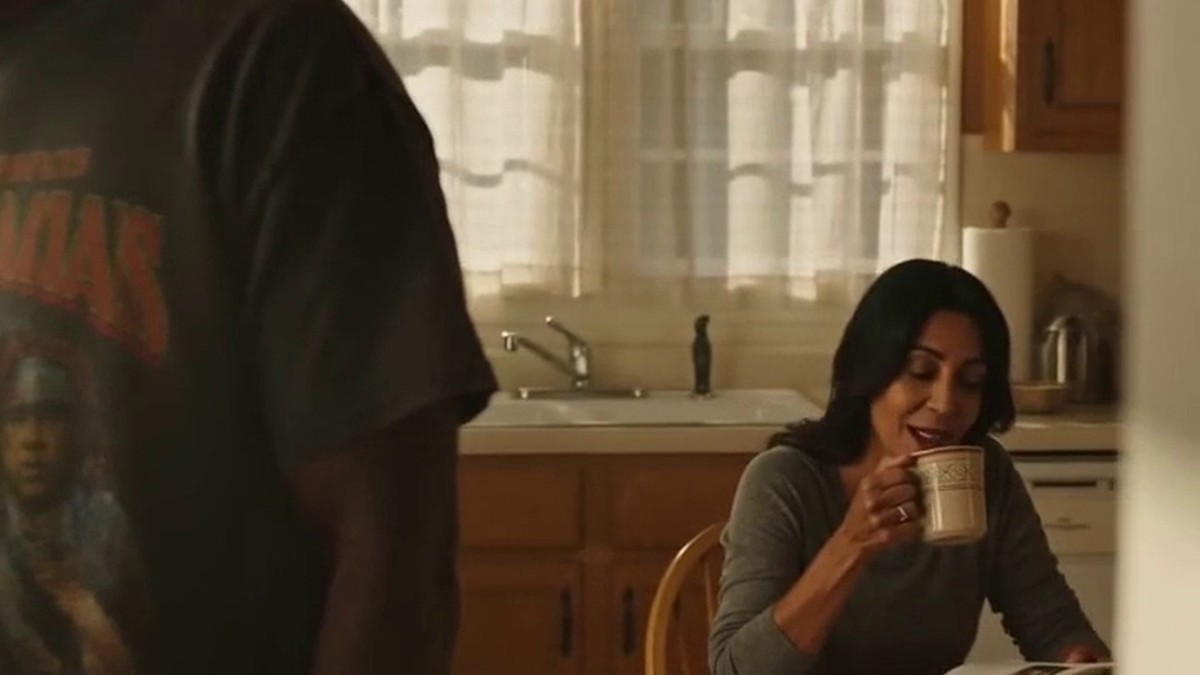
On a Sunday morning this past spring, Warren was making eggs and reached for the turntable out of habit, the way he had every week for thirty years. He hesitated with his hand on the arm, then looked over at Marisol, who was reading something at the kitchen table and hadn't asked him to put anything on.
"Go ahead," she said, not looking up. "Loud."
He did.



Il contratto che Daniele non sapeva di aver già perso
Quella mattina ho fatto una cosa che Chiara non si aspettava: le ho lasciato il caffè pronto prima di uscire,...


Tėvo rankos sode Zarasų pakraštyje
Pro Petro Vilkausko namo langą matosi Zarasų ežeras — rudenį jis pilkas, kaip skalbinių vanduo. Gyventojai sako, kad spalį čia...


Жълто-зелената пътна чанта на Деми
Деси Вълчева остави телефона на плота с екрана надолу, сякаш искаше да му попречи да зазвъни отново. В кухнята на...


Nebylainis mokesčių skolininkas: ką Gabija man pasakė apie savo mamą ir pinigus
Mano uošvė sulaužė dantį pirmadienį, o ketvirtadienį jau nebeturėjau pinigų, kuriuos devynis metus siunčiau be klausimų. Taip tiksliai pasakyčiau, iš...


Dílna po Vladimírovi a mlčení, které Petr neslyšel
Ivana měla čtyřicet sedm let a dvacet tři z nich vedla účetnictví v autoservisu na Dobrovského ulici v Olomouci. Dílnu...


Il bagno delle nove e un quarto a Sabaudia
Faccio il bagnino allo stabilimento da sei stagioni, e di solito alle nove e un quarto del mattino la spiaggia...


Kréta a kapualjban
Pontosan két hete történt, szerda reggel, amikor hazaértem a műszakból, és ott álltam a lépcsőház előtt, mint egy idióta, mert...


Котката на Марин Петков
Тя драска, значи го мрази — така си мислех първите седмици. Казвам се Марин Петков, на четиридесет и три съм,...