
EN
Owen looked away from the window. Back toward nothing.

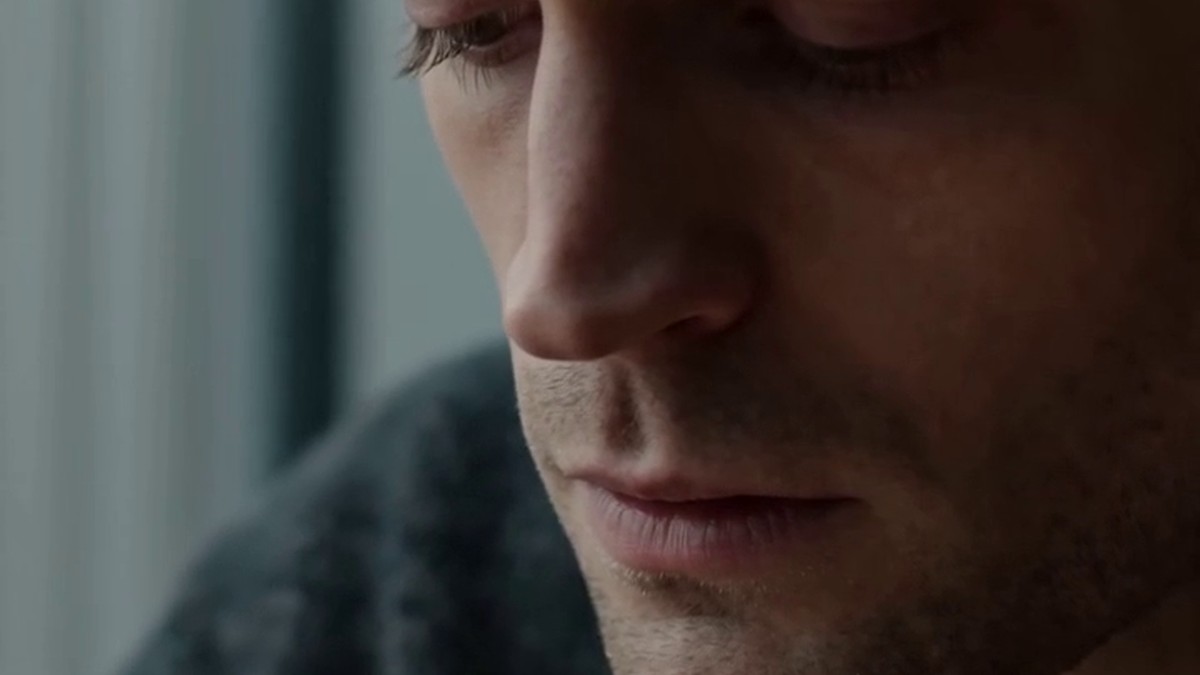
"I don't want anything," he said.
Clara nodded, as if that were a perfectly reasonable answer and not one that broke her heart a little.
"Okay," she said. "But if you did. Hypothetically."
He didn't respond for a long moment. Then, so quietly she had to lean forward slightly to catch it: "Red velvet cake."
Clara glanced at the untouched tray of eggs and toast and sensible orange juice.
"That's not on the menu today," she said.
"No," Owen agreed. "It never is."
She left the room without pushing further. Without hovering. Without the particular brand of desperate cheerfulness that sick people learn to dread, the kind that asks them to perform hope for someone else's comfort.
That afternoon, Clara found Mrs. Ellis in the kitchen.
"Does the house have a stand mixer?"
Mrs. Ellis stared. "Mr. Whitmore prefers everything catered."
"I'm not asking Mr. Whitmore."
There was a pause. Then Mrs. Ellis opened a lower cabinet and produced a red KitchenAid that had never been removed from its box.
Clara baked for three hours.
She did not use a recipe card. She did it from memory, the way her own mother had taught her, with buttermilk and real cocoa and a cream cheese frosting that had to be made slowly or it turned. The kitchen filled with a warmth it had probably not held in years. Two of the housekeepers drifted in from other rooms, not to help, just to stand near something that smelled like a home used to.
At five o'clock, Clara cut a single slice, placed it on a white plate, and carried it upstairs.
Owen was exactly where she had left him.
She set the plate on the small table beside his chair. Said nothing. Sat back down in her chair by the window.
The maple tree had gone gold in the late light. Almost orange. The kind of color that knew it was temporary and burned brighter for it.
Owen stared at the plate.
Clara watched the tree.
After four minutes, he picked up the fork.
He ate the whole slice.
He didn't say anything about it. But when he set the fork down, something in his posture had changed — a fraction, barely visible, like a door not quite as far closed as it had been before.
"My mother made it for my birthday," he said. "Every year. Even when she was sick herself. She made it three days before she died."
Clara was very still.
"She must have loved you past all reason," she said.
Owen's jaw tightened. He looked at his hands.
"She did," he said. And his voice cracked on those two small words in a way that held everything in it — the fort made of sofa cushions, the lake he was going to sail across, all twenty-five years of a life that had once seemed infinite.
Clara did not move toward him or offer comfort he hadn't asked for.
She simply sat with him inside it.
—
Nathan came home at nine that night.
He stood in the downstairs hallway, loosening his tie, and Mrs. Ellis handed him a whiskey he hadn't asked for.
"Owen ate today," she said.
Nathan looked up.
"He ate a full slice. New girl made him a cake."
Nathan turned the glass in his hand. Something moved behind his eyes that he did not know what to do with.
"Which new girl?"
"Clara Bennett."
He nodded slowly. Set the glass down half-finished. Walked to the base of the staircase and stood there for a moment, looking up toward the second floor the way a man looks at something he doesn't know if he deserves to approach.
Then he went to his study and closed the door.
—
Clara came back the next morning with a second slice wrapped in parchment.
Owen was sitting up slightly straighter.
"You didn't have to," he said.
"I had leftover frosting. It would've been a waste."
He almost smiled. Not quite. But close enough that she could see the shape of who he might have been before the world narrowed down to this room, this chair, this window.
"Why are you still here?" he asked. "The others didn't stay."
Clara considered this honestly.
"Because you're still here," she said. "And that means something. Even when it doesn't feel like it does."
Owen was quiet for a long time.
The maple tree moved in the wind outside, shedding two red leaves that spiraled down together and vanished into the grass.
"I used to want to sail across Lake Michigan," he said.
"Used to?"
He looked at her.
"It's November," Clara said. "Lake's not going anywhere."
He stared at her like she had said something either very foolish or very brave.
Maybe both.
"I have two weeks," he said. Not angry. Just factual. The way a man states a thing he has made his peace with.
"You have today," Clara said. "And today you ate cake and talked about sailing. That's more than yesterday."
Owen turned back to the window.
But he didn't argue.
And the next morning, he asked her to open it — just a little — so he could feel the air.
—
By the end of the first week, Owen was eating twice a day.
Not much. Not enthusiastically. But he was eating.
Clara read to him in the afternoons. Not from anything instructive. She found a copy of Steinbeck's *Cannery Row* in the house library and started it without asking permission. Owen listened with his eyes closed, and she could not always tell if he was asleep or not, so she kept reading either way.
On Wednesday, he asked her a question in the middle of a chapter.
"Were you ever sick?"
She kept her finger in the page.
"Not like you," she said. "But I lost someone. My brother. Three years ago."
Owen opened his eyes and looked at her properly for the first time.
"How do you stand being in a house like this?" he asked. "Watching someone—" He stopped.
"I don't stand it," Clara said. "I sit with it. There's a difference."
He thought about that.
"What happened to your brother?"
"Car accident. He was twenty-two." She looked at the bracelet on her wrist. "His name was Charlie."
Owen nodded.
Not the performative nod of someone filling silence. A real one. The kind that acknowledges one grief with another without trying to measure which was larger.
"I'm sorry," he said.
"Me too," she said. And meant it in both directions.
—
Nathan passed the open doorway on Thursday afternoon and heard Clara's voice carrying through. Steinbeck. Something about a marine biologist and tide pools and men who lived without apology.
He stopped in the hall.
Owen was laughing.
It was a small, brief sound — rusty from disuse, barely qualifying as a laugh at all. But it was real. Nathan stood against the wall outside his son's room and pressed his hand flat against the plaster and could not move for almost a full minute.
He had not heard that sound in fourteen months.
He had paid every expert he could locate and none of them had produced that sound.
A twenty-six-year-old woman with a worn coat and a dead brother and a recipe she carried in her memory had walked into this house and in six days done something Nathan Whitmore, with all his money and all his power and all his ruinous, terrified love, had not been able to do.
She had given Owen a reason to be present in a room.
Nathan walked back downstairs. Poured the whiskey. Stood at the window in his study overlooking the back garden and looked at the Japanese maple his wife had planted and felt, for the first time in a very long time, something he did not immediately try to manage or monetize or survive.
He felt it.
Just that.
—
On Friday, he knocked on Clara's door before she headed upstairs.
She stopped.
"Mr. Whitmore."
"I wanted to—" He paused. Nathan Whitmore, who negotiated with senators, who had never in forty-eight years been caught without the right word, paused. "I heard him laugh yesterday."
Clara waited.
"I don't know what you're doing," he said. "But whatever it is—"
"I'm not doing anything special," she said. "I'm just not pretending he isn't still here."
Nathan looked at her.
She held his gaze without flinching, without the deference people usually performed for him, without apology.
"He talks about his mother," she said. "He talks about the lake. He talks about things he wanted to do." She paused. "You could talk to him about those things too."
Nathan's face tightened.
"It's not that simple."
"No," Clara agreed. "But it's not impossible either."
She went upstairs.
Nathan stood in the hallway for a long time afterward. Long enough that Mrs. Ellis came by twice and pretended to adjust a painting.
—
That evening, Nathan climbed the stairs.
He stood outside Owen's door for longer than he had stood outside any boardroom, any courtroom, any moment in his professional life that had required courage.
Then he knocked.
"Come in," Owen said, sounding mildly surprised.
Nathan opened the door.
Owen was in the wheelchair by the window. The room was dim now, the maple tree a dark silhouette against a blue-gray sky. The monitors hummed softly behind their carved panels.
On the small table beside Owen's chair sat an empty plate with cream cheese frosting on the rim.
Nathan pulled a chair over — the same chair Clara used, though he didn't know that.
He sat down.
He looked out the window at the maple tree.
"Your mother planted that the year you were born," he said. His voice came out rougher than he intended.
"I know," Owen said.
"She was furious at the landscaper because he put it four feet to the left of where she wanted it. She made him move it." A pause. "It was a Tuesday. You were eleven days old. She had you in a sling against her chest while she directed the whole operation."
Owen was very still.
"I never heard that," he said.
"You were eleven days old," Nathan said. "You weren't taking notes."
And there it was. The shape of a joke. Awkward and unpracticed, but real.
Owen laughed — a little, just a small exhale of surprise — and Nathan heard it from eighteen inches away this time instead of through a wall, and it cost him something to hold his face still against it.
They sat together.
The maple tree moved in the dark.
"I should have been here more," Nathan said. He did not explain or qualify it. He had spent his whole adult life explaining and qualifying. Not now.
Owen was quiet for a moment.
"You're here now," he said.
It was not forgiveness, exactly.
But it was an open door.
Nathan stayed until Owen fell asleep in the chair. He did not call a nurse. He sat in the dim room beside his son and listened to him breathe and watched the maple tree and stayed inside the feeling without trying to fix it or survive it.
He just stayed.
—
Three weeks later, Owen was still alive.
The doctors had no clean explanation. His numbers were not good. They were not the numbers of a man who would sail across a lake or live to be fifty. But they were marginally better than two weeks prior, and when they checked him on a Tuesday morning, he had gained two pounds.
He was eating.
He was talking.
He had asked Clara, the week before, to help him write a letter — to an old friend he had lost touch with, to a professor who had shaped him, to his father. He had not given Nathan that last letter yet. It sat folded in the drawer of the side table, waiting for the right moment, which Owen was now, cautiously, starting to believe might actually arrive.
Clara still came every day.
She brought the book. She brought the cake — not every day, but often enough. She sat in the chair by the window and was simply, consistently, unflinchingly present.
On a Wednesday afternoon when the sky outside had gone the pale silver of early winter, Owen said, "I want to see the lake."
Clara looked at him.
"Okay," she said.
"I can't exactly—" He gestured at himself. The wheelchair. The oxygen line.
"I didn't say you were swimming across it," Clara said. "I said okay."
She arranged it quietly. A medical transport, a van with ramp access, a nurse to manage the equipment. She told Mrs. Ellis. She did not ask Nathan's permission, though she told him afterward, matter-of-factly, as though it had simply been the next logical thing.
He had stood in his office listening to her explain it, and then he had said: "I want to come."
—
They went on a Thursday.
Lake Michigan in November is a particular kind of merciless. The water was iron gray, heaving with cold swells that threw white foam against the breakwater. The wind came off the surface like a wall. The sky pressed down low and flat and enormous.
Owen sat in his wheelchair at the edge of the lakefront path, wrapped in three layers, his face tipped up into the wind.
Nathan stood beside him.
Clara stood slightly back, hands in her coat pockets, giving them the space.
"It's bigger than I remembered," Owen said.
"It always is," Nathan said.
Owen was quiet for a moment. The water moved and moved and did not stop.
"I used to think I'd sail across the whole thing."
"I know," Nathan said. "You told me at twelve years old. I told you it was impractical. Your mother told me to shut up."
Owen smiled. A full one, this time. It reached his eyes.
"She was usually right," Owen said.
"Almost always," Nathan agreed.
The wind came off the water and hit them both and neither moved away from it.
Clara watched the two of them from behind — the dying young man and his wreck of a father standing at the edge of something enormous and cold and indifferent, not speaking now, just present beside each other — and she felt the bracelet on her wrist and thought about Charlie, who had loved water too, who had never gotten to be twenty-five.
She did not cry.
She just let herself feel it standing up.
Like she had learned.
—
Owen did not sail across Lake Michigan.
He did not recover in the way the word *recovery* promises when it's used in movies.
What he did was live longer than fourteen days.
He lived long enough to read the rest of *Cannery Row*. To eat cake on his twenty-sixth birthday, which arrived six weeks after the doctors had said it wouldn't. To give Nathan the letter from the drawer. To sit with his father in the evenings without either of them needing to perform anything.
He lived long enough to ask Clara, one afternoon, if she thought his mother would have liked her.
Clara thought about it seriously, the way Owen had learned to expect from her.
"I think she would've stolen my recipe," Clara said. "And claimed she made it better."
Owen's face broke open into something luminous.
"Yeah," he said. "She absolutely would have."
—
What Nathan Whitmore learned, in the end, was not a lesson money could have purchased or a deal could have closed.
He learned that presence is not the same as provision.
That love, kept too long behind productivity and grief and the terrible armor of competence, still finds ways to starve the people it meant to feed.
He learned it sitting in a chair by a window watching his son breathe.
He learned it from a twenty-six-year-old woman with a worn coat and sad, upright eyes and a recipe she carried in her chest like a second heartbeat.
And what Clara Bennett learned — or maybe confirmed, in the deep place where grief and purpose had fused into something that could hold weight — was that showing up is not a small thing.
It is, sometimes, the only thing.
It is, sometimes, everything."
Owen died on a Tuesday.
Not the Tuesday the doctors had circled in their minds when they first said *two weeks*. That Tuesday had come and gone like all the others — the cake, the book, the window cracked open to the November air. This was a different Tuesday, six weeks after the one that was supposed to be the last, and it was quiet the way some endings are quiet: not dramatic, not cruel, just the slow stopping of a thing that had been running on something other than medicine for longer than anyone had measured.
Clara was there.
She had come at her usual time, seven-thirty, coat still cold from the walk, the book tucked under her arm. Owen had been asleep when she arrived, and she had sat in the chair and opened to the page where they'd left off and read to him anyway. She had done this before. She did not know, and would never know, whether he had heard any of it.
She liked to think the Steinbeck had landed somewhere.
Nathan came upstairs when Mrs. Ellis knocked on his study door. He came without his jacket, without his armor, and he sat in the chair on the other side of Owen's bed and took his son's hand and stayed. There were no speeches. No negotiations. No last words dramatic enough to be remembered in the way that last words rarely are.
Owen opened his eyes once, near the end.
He looked at the window.
The maple tree was bare now, stripped clean by December, its branches fine and dark against a white sky. But the shape of it was the same — the same tree his mother had moved four feet to the right, the same tree that had gone gold and then red and then let it all go, the way things that are rooted deeply can afford to.
He looked at it for a long time.
Then he looked at his father.
Nathan's jaw was working in the way it did when he had no words left and no will to find them, and he held Owen's hand in both of his like something he was afraid of dropping.
Owen's mouth moved.
Later, Nathan would tell Clara he thought it was *the lake*. Or maybe *the light*. He was not sure. He held onto both.
—
Clara walked home that afternoon.
It was a long walk, longer than was practical, and the cold came through her coat the way December cold does — patient and thorough, getting into everything. She walked along the lakefront path without planning to, and she stood at the railing where they had brought Owen in November and looked at the water.
Lake Michigan in December is not gentle.
The swells came in long and gray and indifferent. The wind off the surface tasted like iron. The sky was the color of something spent.
Clara put her hands on the cold iron rail and looked out and let herself feel it — all of it, the full weight of it — without trying to stand up straight inside it, without performing composure for anyone's benefit.
She cried, briefly and without elegance, the way grief demands when you have been holding it in a professional posture for long enough.
She touched the bracelet on her wrist.
*Charlie.*
And then Owen.
And then all the people who go too soon with too much unlived inside them.
She stood there until it passed — not away, grief never passes away, but through. Until she was standing on the other side of the wave, still upright, still breathing.
The lake moved and moved and did not stop.
—
Nathan called her two days later.
She was at home, at her own small table, drinking coffee, looking at nothing in particular. His name on her phone screen surprised her less than she expected.
"Clara."
"Mr. Whitmore."
A pause. Long enough that she wondered if the connection had dropped.
"I wanted to say—" He stopped. Started again. "The letter. The one he wrote." Another pause. "I've read it four times."
Clara wrapped both hands around her mug.
"He was — he said things I should have said to him. Things I didn't. Things I kept thinking there was still time—" Nathan's voice broke, briefly, on the edge of the word *time*, and then he reassembled himself in the way she had watched him do all autumn, the practiced fusing of the crack before anyone could see the damage.
Except she already had.
She had watched him learn to stop doing exactly that.
"Nathan," she said. She hadn't used his first name before. It came out naturally, the way things do when the formality has been burned away by something larger. "He knew."
Silence.
"He knew you were there," Clara said. "He knew you sat with him. The letter — that wasn't him telling you what you missed. That was him giving you what he had left."
She heard Nathan breathe on the other end.
In.
Out.
The way a man breathes when he is choosing, very deliberately, not to protect himself from a feeling.
"He asked me," Nathan said finally, "to do something with the boat."
Clara blinked. "What boat?"
"The — he had a boat. Small thing. He bought it when he was nineteen, had this idea he'd restore it, sail the lake. He never—" Nathan stopped. "He never got to it."
The boat that was going to cross Lake Michigan.
Clara felt something tighten in her chest and then open, the way the best and worst things both move.
"He wanted me to take it out," Nathan said. "Just once. He said I didn't have to cross anything. Just get on the water. He said I'd understand when I did."
Clara looked out her window. The sky was low and white and enormous.
"Will you?" she asked.
The pause this time was different. Not the silence of a man reaching for words. The silence of a man making an actual decision.
"In the spring," Nathan said. "When the lake is—" He paused. "I was hoping. If it's not too much of an imposition."
Clara understood before he finished.
"I'll come," she said.
—
Spring came.
The way it always does, indifferently and then all at once — the ice off the lake, the light returning to that particular sharp gold of early April, and the Japanese maple in the back garden of the Whitmore house putting out its first red leaves.
Nathan sold the house.
Not immediately. Not coldly. But it was a house that had been built for a family that no longer existed in the shape the walls had been designed to hold, and he understood, finally, that money spent on absence is still just absence.
He bought something smaller. Something with a kitchen that had already been used.
Mrs. Ellis came with him, because some things you don't dismantle.
—
They took the boat out on a Saturday in late April.
The lake was still cold, still more gray than blue, but the sky above it had gone the color of something beginning. The boat was small and slightly battered and had clearly been loved in theory more than in practice — Owen's one true project left unfinished, waiting in a storage slip for a resolution nobody had planned.
Nathan had learned, quietly and badly, the minimum required to get it out of the harbor.
Clara sat in the bow, face into the wind, not helping, not hovering, just being there the way she had learned mattered most.
The city went small behind them.
The lake went large.
Nathan gripped the tiller and looked out at the open water — the swells long and even, the surface catching the April light in pieces, enormous and cold and indifferent and somehow, also, not.
"He was right," he said.
Clara looked at him.
Nathan's face was unguarded in the wind, the way faces get when there is nothing to perform for and nowhere to manage.
"About the lake," he said. "He said I'd understand."
"What do you understand?" she asked.
Nathan looked at the water for a long time.
"That it doesn't care," he said. "And that's the point. It doesn't care whether you make it or you don't. Whether you're ready or you're not. It just — is." He was quiet. "He wanted to cross it. And he couldn't. And it didn't make him smaller. It just—" He shook his head. "He was still here. Right up until he wasn't. That's what he was telling me."
The boat moved on the water.
The city was very far away.
Clara touched the bracelet on her wrist and looked at the horizon, which was the particular pale line between lake and sky that could make you feel, if you let it, the actual size of the world.
She let it.
Nathan turned the boat slightly, not toward the far shore — he had no such ambition and Owen had never asked it of him — but parallel to the coast, moving through the water the way the living move through days: not crossing, not conquering, just going.
Just present.
Just here.
—
She did not take another case right away.
She needed the spring, first. Her own green and ordinary spring — coffee at her own table, walks along streets where nobody was waiting for her with grief they didn't know how to hold. She planted something on her windowsill. Something small and impractical and likely to require more light than her apartment received.
She watered it anyway.
She thought about Owen.
She thought about Charlie.
She thought about the way two people can sit in a room together and not fix anything and not need to, because sometimes the most honest thing you can offer someone is the plain fact of your presence — *I am here, you are not alone, this is real and I will not look away.*
She had learned that from her mother, who had learned it from hers.
She had carried it like a recipe. Like a second heartbeat.
She had given it to Owen.
She had given it to Nathan.
And it had not cost her anything she could not replenish — not by being full, not by being immune, but by returning to the source of it again and again: the grief that had made her, the love that was still operational inside it, the knowledge that showing up is not a small thing.
On the first warm evening of May, she sat at her window with the coffee going cold beside her and watched the light go pink over the rooftops and thought about the maple tree going gold in the late afternoon, burning brighter for knowing it was temporary.
She thought about Owen turning his face to the wind through the cracked-open window.
She thought: *You have today. And today you ate cake and talked about sailing. That's more than yesterday.*
She thought: *Yes.*
She opened her laptop.
She accepted the next case.
She put on her coat, which was still worn at the left cuff and still exactly adequate, and she walked toward someone else's grief with her eyes open and her hands empty and her whole, unremarkable, necessary self intact.
This is what love looks like when it learns to stay standing.
This is what showing up means.



A hűséges kutya titka – Mire bukkant Fehér Zsófia a nyíregyházi sírkertben
A nyíregyházi köztemető ősszel reggelente ezüstös párába burkolózik, és Fehér Zsófia már messziről ismerte az utat a 14-es parcellához: harmadik...


Most, který se stal čtvrtí
Jmenuju se Jarmila Brabcová, jezdím po Jizeře na výletní loď už devatenáct let, a tahle trasa mezi Turnovem a Malou...


Aaron Pap és a hatezer eurós szívességem
Pap Áron és az örökség, amiről senki sem beszélt Nem akartam ott lenni azon az estén, de valahogy mindig én...


בת מהנדס, בלי בעל, ובלי שום בושה
הניילונים מהפארם של רמת-גן עדיין היו על השידה כשאמא שלי פתחה את דלת החדר בבי"ח "איכילוב" ועצרה במקום, כאילו מישהו...


Dopis, který jsem nestihla napsat včas
Mami, nemám pro to žádné hezké ani správné slovo. Jen vím, že mi po tobě chybí – a ta bolest...


Myčka na Rokycanské
Jarmila Dvořáková si otírala ruce o zástěru a dívala se přes sklo mycího boxu, jak její zeť Radek zapojuje nový...


De beton van Han Feenstra
Ik ben al negenentwintig jaar huismeester van een flat aan de Van Oldenbarneveltlaan in Zoetermeer. Loodgieter van opleiding, maar in...


Aaronas sakė: „Mama tave mėgsta, tik dar nepažįsta.
Nuo ketvirto aukšto laiptinės, kur stoviu su šluota rankoje, girdžiu beveik visą pokalbį per ventiliacijos groteles – akustika šiame name...