
EN
Where the Line Is

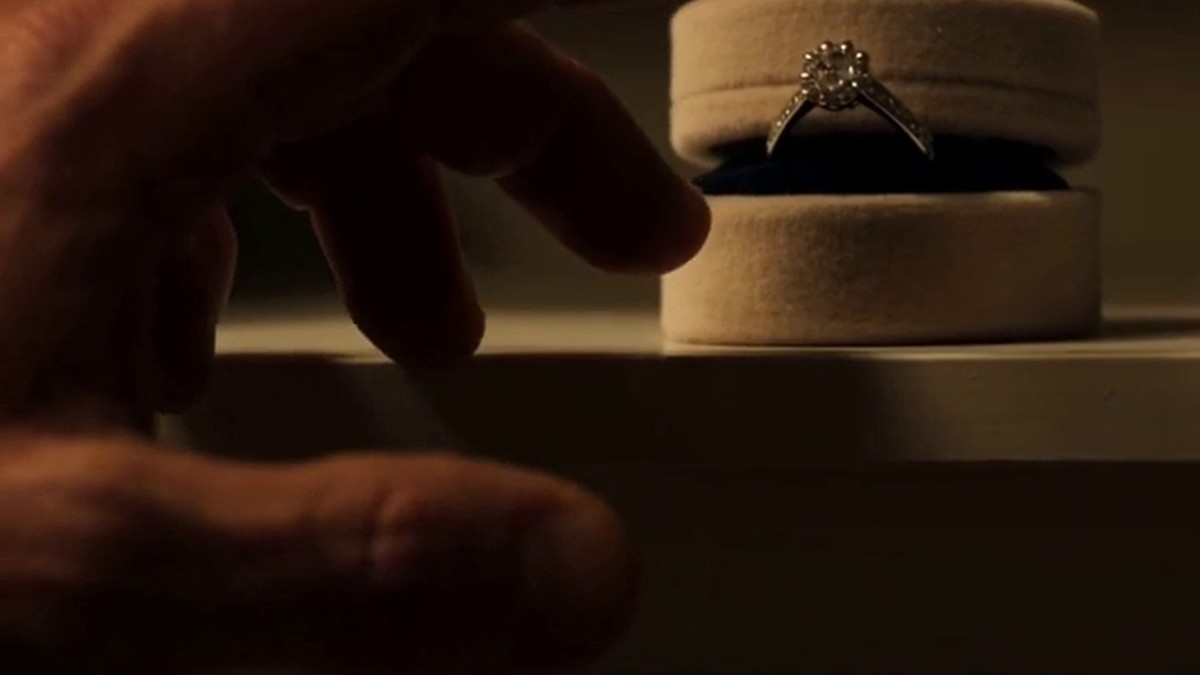
The first thing Diane Reyes noticed when she pulled her earrings box down from the closet shelf in her Scottsdale condo was the dust on the lid. Fourteen months since she'd opened it. She wasn't a jewelry person, never had been. But that box held the only thing left of her mother — a pair of sapphire drop earrings and a heavy gold bracelet, appraised once at eleven thousand dollars, insured for even less because the insurance agent said nobody would believe the provenance without paperwork that didn't exist anymore.
She was holding that box on a Tuesday in October when her mother-in-law let herself in with the spare key.
"Diane. Good, you're here." Carol Whitfield set her purse on the kitchen island like she owned it — she'd bought the island, technically, as a housewarming gift, and never let anyone forget it. "I've been thinking about Tyler's situation. I have a plan."
Tyler was Carol's grandson, her son Mark's boy from his first marriage. Nineteen, built like a linebacker, hadn't cracked a textbook since sophomore year of high school. He'd applied to exactly one school — Arizona State — gotten waitlisted, then rejected when he didn't bother sending the requested essay. Community college was on the table. Nobody in that family wanted to say the word "community college" out loud, like it was a diagnosis.
"Your mother's jewelry," Carol said, nodding at the box still in Diane's hands. "The sapphire set. I had it appraised once, remember, at Sarah's wedding — I asked, just out of curiosity. Eleven thousand, easy. That covers his first two semesters at the private college in Tempe, the one with the good business program."
Diane didn't set the box down. "Whose jewelry?"
"Yours, obviously. But it's just sitting there, Diane. Nobody's using it. And there's a child's future at stake."
Mark was at the kitchen table, laptop open, very focused on an email that did not exist. He'd developed a talent over six years of marriage for becoming furniture the moment his mother raised her voice.
"Mark," Diane said. "Say something."
He didn't look up. "Mom's not wrong that Tyler needs help. And — I mean, when do you even wear that stuff? It's just sitting in a box. We'd replace it. Once things settle down financially."
There it was. The two of them had already had this conversation without her. Probably at Sunday dinner, probably while she was in the kitchen loading the dishwasher, probably with Carol doing most of the talking and Mark nodding along because agreeing was easier than the alternative.
Something cold settled into Diane's chest, and it didn't move for a long moment. When she spoke, her voice came out flatter than she expected.
"My mother worked twenty-six years as a dispatcher for the Phoenix Fire Department. Double shifts most winters. She bought that bracelet one piece of overtime at a time. She didn't do that so Tyler could pay for skipping a college essay."
"That is an incredibly cold thing to say about a nineteen-year-old," Carol snapped, two spots of color rising on her cheeks. "He made a mistake. Kids do that. Meanwhile Mark works himself to the bone for this family and you won't even part with some old rocks."
"Works himself to the bone." Diane turned to her husband. "Mark, why don't you tell your mother where your last two bonuses went."
Mark's jaw tightened. "Diane, don't."
"No, let's actually do this." She set the jewelry box on the counter, finally, and folded her arms. "Carol, your son sends four hundred dollars a month above child support to his ex-wife. For Tyler's 'extras.' He paid for your cataract surgery in March. He covered the Sedona trip for your birthday in June. I haven't said one word about any of it in six years, because we agreed his paycheck was his to manage. But my inheritance isn't part of that arrangement. It was never on the table."
Carol's mouth opened and closed. She looked at her son the way a woman looks at a vending machine that just ate her dollar.
Mark stood up so fast his chair scraped the tile. "I'm not doing this. You two figure out your own mess." He grabbed his gym bag off the hook by the garage door and left without his keys, which meant he'd be back within the hour, but the exit still landed the way he wanted it to. The door didn't slam so much as it clicked shut with enormous, deliberate restraint.
Carol left ten minutes later, her heels sharp against the tile, her Coach bag hitting the doorframe on the way out. She didn't say goodbye. Diane stood in the kitchen alone, and through the wall she could hear the neighbor's dog barking at something — a delivery truck, probably, the UPS guy came around three most days — and the sound of it, ordinary and stupid, was oddly steadying.
Mark came home at nine, smelling like the gym he clearly hadn't gone to, and climbed into bed without turning on the light.
"You didn't have to embarrass her like that," he said to the ceiling.
"I didn't embarrass her. I told the truth."
"She had good intentions."
"People with good intentions sell their own things. They don't sell other people's."
He sat up. "You've never even worn that jewelry. Not once in six years. What's the actual point of hoarding it?"
"The point is it's mine to hoard." Diane reached over and clicked on the lamp. "You want to talk about points? We paid for a year of SAT tutoring for Tyler out of our joint account. I said nothing when that meant no vacation last summer. Now he bombed the exams anyway, and I'm supposed to hand over my mother's bracelet?"
"I told you I'd pay it back—"
"With what, Mark? You're already stretched between the ex, your mother's bills, and the car payment. Where does the money for that come from?"
"So now I'm the villain. Bad husband, bad father, everybody just uses me and the second I need something everyone disappears."
"Nobody's using you. You let Renee ask for more every single time because it's easier than telling her no. You let Tyler believe someone else fixes his problems. This is what that looks like now." Diane kept her voice level. "Let him get a job. DoorDash, a stockroom, anything. A year of that and he'll understand what four hundred dollars actually costs. Maybe he studies harder next time."
"He's not going to deliver food for strangers."
"Then the National Guard's an option. At least the room and board's covered."
Mark threw the blanket off and crossed to the closet before Diane had finished the sentence. He yanked the door open and reached for the shelf where the jewelry box sat, half-hidden behind a stack of old shoeboxes.
Diane didn't move from the bed.
"Take that box down," she said, quiet, "and start packing a bag while you're at it."
His hand stopped three inches from the lid.
"You're throwing me out of my own place?"
"Half of this condo is mine. I pay the mortgage same as you. But I'm not living with someone who thinks he's entitled to take what isn't his." She watched his shoulders, the way they'd gone rigid. "If you open that box and walk out with it, you're not my husband making a hard call. You're a man who stole from his wife. Go ahead, Mark. Open it. Let's see what that actually looks like."
The silence went on long enough that the refrigerator kicked on somewhere down the hall, that faint hum traveling through the wall.
His hand dropped. He shut the closet door harder than necessary and stood there a second with his forehead nearly touching the wood.
"Keep the damn earrings," he muttered.
"Thank you," Diane said, and turned off the lamp.
He slept on the couch that night, and most of the next week.
Carol called four times over the following two days. Diane let it ring through to voicemail each time — this was between mother and son now, not her fight to referee. By Friday, Tyler's tuition problem solved itself the way these things usually do: nobody stepped up to pay it, so there was nothing left to argue about. Renee called Mark screaming about a private loan he should co-sign; he said no, flatly, for the first time Diane could remember, mostly because the auto loan on his truck already had him underwater. Tyler took a job at a warehouse off the 101 loading pallets on the overnight shift.
Carol stopped showing up uninvited. Her calls thinned out to once a week, then less. Mark sulked through the back half of October — eating cereal standing at the counter, avoiding her at dinner, performing wounded dignity with real commitment — but frozen burritos three nights running wore him down faster than his pride held out. By November he was back in the bedroom, back to saying good morning like a person who lived there.
The jewelry box still sits on the top shelf, behind the shoeboxes, exactly where it's always been. Diane doesn't open it much. She doesn't need to. She knows what's inside, and now, so does everyone else in that family — what's hers stays hers, and asking twice won't change the answer.



Il contratto che Daniele non sapeva di aver già perso
Quella mattina ho fatto una cosa che Chiara non si aspettava: le ho lasciato il caffè pronto prima di uscire,...


Tėvo rankos sode Zarasų pakraštyje
Pro Petro Vilkausko namo langą matosi Zarasų ežeras — rudenį jis pilkas, kaip skalbinių vanduo. Gyventojai sako, kad spalį čia...


Жълто-зелената пътна чанта на Деми
Деси Вълчева остави телефона на плота с екрана надолу, сякаш искаше да му попречи да зазвъни отново. В кухнята на...


Nebylainis mokesčių skolininkas: ką Gabija man pasakė apie savo mamą ir pinigus
Mano uošvė sulaužė dantį pirmadienį, o ketvirtadienį jau nebeturėjau pinigų, kuriuos devynis metus siunčiau be klausimų. Taip tiksliai pasakyčiau, iš...


Dílna po Vladimírovi a mlčení, které Petr neslyšel
Ivana měla čtyřicet sedm let a dvacet tři z nich vedla účetnictví v autoservisu na Dobrovského ulici v Olomouci. Dílnu...


Il bagno delle nove e un quarto a Sabaudia
Faccio il bagnino allo stabilimento da sei stagioni, e di solito alle nove e un quarto del mattino la spiaggia...


Kréta a kapualjban
Pontosan két hete történt, szerda reggel, amikor hazaértem a műszakból, és ott álltam a lépcsőház előtt, mint egy idióta, mert...


Котката на Марин Петков
Тя драска, значи го мрази — така си мислех първите седмици. Казвам се Марин Петков, на четиридесет и три съм,...