
EN
The Ledger of Small Kindnesses

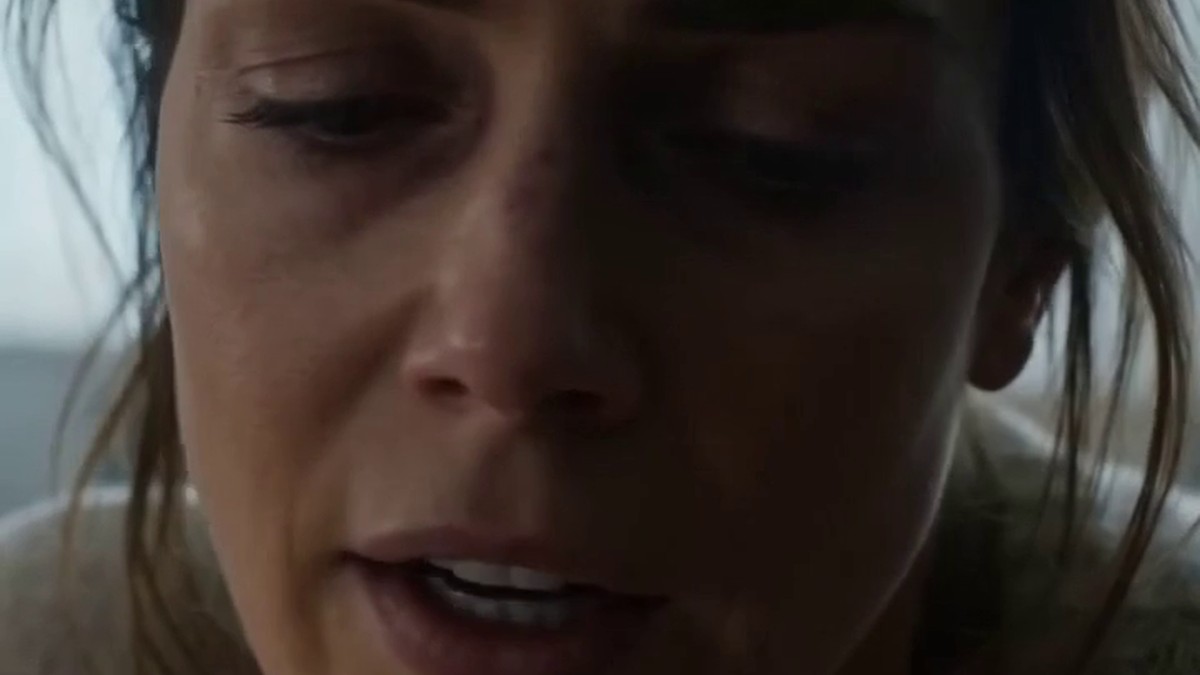
"You've let yourself go, Renee. I need to breathe again."
Curtis stood in the bedroom doorway with the leather duffel she'd bought him for his forty-second birthday, the one with his initials stamped near the handle. He'd made partner at the insurance brokerage that spring, and lately he smelled like the cologne counter at the Nordstrom on Route 9 instead of like himself.
Renee was still in her scrubs from the dialysis clinic, hair scraped back, a mug of coffee gone cold in her hand. She didn't set it down.
"Breathe," she repeated. "Fourteen years, Curtis. I work doubles on Tuesdays. I haven't slept eight hours since the twins started middle school. So yes, I gained thirty pounds. Yes, I look tired. I thought that's what a marriage survives."
"A marriage should feel like something," he said, straightening a collar that didn't need straightening. "You've turned into logistics. Grocery lists. Copays. Whitney is different. She makes me feel like I can still want things."
The front door didn't slam. It clicked shut, soft and final, the way a hospital door closes on a room nobody's coming back to check on.
**Part One: The Neighborhood Takes Over**
Renee doesn't remember much about that first week except that she kept giving the wrong insulin doses to the wrong charts in her head and had to double-check everything twice. She'd come home to the split-level on Larch Street, sit at the kitchen table under the flickering fluorescent bulb Curtis never got around to replacing, and stare at the backyard until it got dark.
The street didn't stop for her, though. Somebody was always mowing a lawn, walking a beagle, complaining about the recycling schedule.
Dot Feldman noticed first. Dot had lived three doors down since Renee was in diapers, ran the little free library box on the corner, and had opinions about everybody's business whether they wanted them or not.
"Renee Ann." Dot flagged her down from her porch, a garden trowel still in one gloved hand. "You've been walking around like somebody stole your dog. Spill it."
"Curtis left, Dot. Said I got fat. Said I got old."
Dot set the trowel down on the railing with a clank you could hear across the cul-de-sac. "That man mowed exactly one lawn in the entire time I've known him, and it wasn't even his own grass — I distinctly remember you doing it in your work clothes. Listen to me. You are not going to sit in that kitchen and rot. You go see Dr. Ahn over at the family clinic on Route 9. Man's a saint. He'll get your numbers sorted. Weight's not carved in stone, honey. It comes off same as it goes on."
Dr. Marcus Ahn's exam room smelled like rubbing alcohol and the peppermints he kept in a chipped mug on the counter. He was maybe thirty-eight, tired around the eyes in a way that made people trust him instantly, and he listened to Renee for eleven straight minutes before he said a word.
"Cortisol's through the roof," he said finally, tapping her chart. "Classic stress pattern — the swelling, the fatigue, probably some of the weight too. Husband walked out, you said?"
"Yesterday."
"Good riddance, honestly. Not my place to say, but I said it." He scribbled a referral. "Right now the job is protecting your heart, not fixing your jeans size."
His nurse, Pam Osei, stuck her head in mid-sentence, clipboard against her hip, hair pulled into a bun that had clearly survived three shift changes. "Dr. Ahn, room four's backed up again — oh, Renee, honey, why the long face?" She didn't wait for an answer. "I heard about your fella. My sister-in-law does the books over at his firm. Says he's already parading around with some gal from marketing, lips like she got stung by a whole hive of bees, walks in heels like she's on stilts. Don't you worry. What goes around comes around on Route 9 same as anywhere else. Send her to Carol, Doc. Carol'll straighten her out."
Carol Whitfield ran the books for the county housing authority and had been Pam's best friend since community college. She approached the rescue of Renee Ann Doyle with the precision of a woman who balanced five-figure ledgers before her first cup of coffee. That Saturday she showed up at the split-level with a mesh bag of Honeycrisp apples, a bundle of celery, and a leather planner.
"Okay, friend." Carol laid a calculator on the kitchen table like she was setting up for battle. "We're going to run the numbers on your life. Husband was a liability. High overhead, zero return, cost you a fortune in dry cleaning for those shirts. We're writing him off. Now — assets. You're forty-one, sharp, own half this house outright. Time to reinvest."
**Part Two: A Schedule for a New Life**
Renee's days took on a shape somebody else had drawn for her. Dot rapped on the kitchen window every morning at 6:15 sharp. "I already swept the sidewalk clean, Renee Ann, no excuse not to use it! Feet on pavement, let's go!" And Renee walked, then jogged, hating it for the first two weeks and then, without noticing exactly when, not hating it anymore.
Dr. Ahn adjusted her thyroid panel twice and checked her numbers every three weeks. Pam dragged her over on Thursday evenings for what she called "the anti-misery rubdown," which left Renee sore and, eventually, noticeably leaner through the shoulders. Carol rewrote her grocery list entirely — no more gas-station donuts on the way to work, just protein and greens, tracked in a notebook with more discipline than most people bring to their taxes.
By September, four months in, Renee looked like a different woman, though not the airbrushed kind from a billboard. She looked lived-in and alert. Her cheekbones came back. Her patients at the clinic started saying she seemed lighter — quicker to laugh, quicker to hand out the good stickers to the kids who behaved during their treatments.
**Part Three: The Gilded Cage**
Across town, in the glass-walled high-rise off the interstate where Curtis had rented a two-bedroom for his new muse, the fairy tale was curdling fast.
Whitney Pruitt really was striking — veneers, lash extensions, a figure that hadn't touched a carbohydrate since the Obama administration. What Curtis hadn't accounted for was the price tag on all that polish, or the fact that Whitney had never once, in her adult life, operated a washing machine.
"Whit, what's for breakfast?" he asked one Saturday, rubbing his eyes in a kitchen that gleamed because nothing in it had ever been cooked.
"I ordered a celery-and-spirulina cleanse, babe, DoorDash's like forty minutes out." She didn't look up from her phone. Her robe was silk. Her makeup had taken two hours.
"I wanted eggs. Or pancakes — Renee used to make—"
"Curtis." Whitney's lip curled. "Pancakes are basically carcinogens. Do you want me getting cellulite? Also you said you'd Venmo me eleven hundred for the lymphatic drainage package, and we've got the reservation at eight, I already booked it. Cooking at home is for people who don't have options."
His paycheck, which had felt generous back when he split it with Renee and two kids' orthodontist bills, was evaporating like April slush. Whitney didn't cook, didn't do laundry — everything she owned needed "special care," which meant a dry cleaner three exits away — and the apartment stayed buried under delivery boxes and skincare packaging.
Worse was how little she actually cared about him. The week his firm nearly lost the Hartwell account and he came home gray with a migraine, she barely glanced up.
"Ugh, don't dump your negativity on me, it messes with my energy. Anyway I need money for my lip filler touch-up."
Curtis sat on a couch that cost more than his first car and looked at this polished, hollow woman, and thought of Renee with a clarity that made his stomach turn. Renee pressing a cool washcloth to his forehead. Renee making him chicken soup with the good noodles when he had the flu. Renee laughing until she cried over some sixth-grader's essay about "why my dog should run for president."
*You've let yourself go.* He heard himself say it again in his head and felt sick. She hadn't let herself go. She'd been carrying the whole house — him included — and nobody had ever once carried her.
**Part Four: What Comes Back Doesn't Always Get to Stay**
Seven months after the door clicked shut, on a warm October evening with the smell of somebody's fireplace already drifting down Larch Street, Renee walked home from a community theater matinee with Carol and Dr. Ahn — who, it turned out, had been a widower for three years and had spent the last several months quietly, patiently driving Renee home from her shifts and leaving grocery-bag bunches of white lilacs on her porch without ever making it a thing.
They were laughing about something when a figure stepped out from the shadow of the maple tree by the driveway.
Curtis looked worn down. His shirt was creased — Whitney sent things to the cheapest cleaner she could find, saving her real money for her serums — and there were new lines around his eyes.
"Renee," he said quietly.
Carol squared up like she was about to file an audit. Dr. Ahn touched her elbow. "Carol. Let's give them a minute."
Renee stayed by the mailbox. Dot, watching from her porch three doors down, gripped her garden trowel like a weapon she was fully prepared to use.
"Hi, Curtis," Renee said, even.
She was wearing a fitted trench coat, a new haircut, and something floral and light instead of clinic soap. She didn't look like a magazine cutout. She looked like a woman who'd started sleeping again.
Curtis couldn't stop looking at her. "You look — you look incredible."
"Thanks. I started sleeping. Eating real food. Cut some things out of my life that weren't good for me."
"Renee, I was an idiot." He took a step, hands half-raised like he wanted to reach for her and didn't dare. "Whitney's — there's nothing there. No warmth, nothing real. I get it now. I want to come home. I'll do anything. Start over. I love you, Ren."
She looked at him and waited to feel the old lurch in her chest. It didn't come. What was left was something smaller and quieter — pity, mostly, the kind you feel for a patient who ignored every instruction and is surprised the numbers came back bad.
"You left because you decided I'd gotten ugly," she said. "You only ever loved the picture, Curtis. And when the picture got tired, you didn't ask what was wrong with it. You just left it on the curb."
She glanced back at the house — porch light on, Dot's silhouette still visible three doors down.
"Dot got me out of bed every morning for four months. Dr. Ahn fixed what stress had wrecked in my body. Pam gave up her Thursday nights. Carol taught me how to actually take care of myself instead of just everybody else. Those are ordinary people, Curtis. They're the ones actually holding things together. And they loved me exhausted, heavy, and puffy-eyed. Your love came with a waist-size clause."
"But I'm sorry — I really am—"
"You're sorry because your life got inconvenient," she said. "I already filed the divorce paperwork through Legal Aid two months ago, by the way. Judge signed off last Tuesday. It's done — you'll get the certified copy in the mail this week. I kept the house. You kept the car and whatever's left of your 401(k) after you finish paying for Whitney's lip filler."
She turned toward the porch steps.
"Renee—" he called after her.
Dot materialized at the end of the driveway with the trowel raised like a gavel. "You heard the woman. Get walking, Romeo. Some of us have HGTV to watch."
Curtis stood there a moment, shoulders down, then turned and walked back toward his car, alone under the streetlight.
Up on the second floor, the kitchen window glowed warm and yellow. Renee, Carol, and Marcus Ahn sat around the table with mugs of chamomile tea, laughing about something on Carol's phone, already talking about next weekend's plans. Ordinary. Unhurried. Entirely hers.



Suknelė per pusvalandį iki altoriaus Trakuose
Iki ceremonijos liko keturiasdešimt minučių. Kieme, senoje Trakų pilies parko pakrantėje, jau rikiavosi šimtas dvidešimt svečių. Kvepėjo kavos sausainiais ir...


Тортата, която изпекохме за двамата
Ключът не искаше да влезе до край. Елена Радева го натисна, завъртя още веднъж, и в същия момент резето отвътре...


A fátyol alatt
Öt évvel azután, hogy eltemettem a feleségemet, a hétéves kislányommal egy esküvőre mentünk Debrecenbe – és ott, az oltár előtt,...


**De map in de zwarte Mercedes**
Ik had al veel echtscheidingen gezien op dat mediationkantoor in Utrecht. Mensen die huilden, papieren weggooiden, elkaar uitscholden. Maar die...


Namas Vilniaus Antakalnyje, kurio raktų niekas neturėjo paklausti
Antausis atskrido greičiau nei žodžiai. Galva atšoko į šoną, ausyse sužvimbė. Visas svetainės kambarys sustingo kaip stop kadras. Taurės su...


Dluh na pekárně
Když jsem vešla do kuchyně dcery na okraji Brna, nejdřív jsem uslyšela pláč. Teprve pak jsem uviděla ji. Petra stála...


Весілля Марти Ковальчук
Лисяче хутро впало їй на коліна, як ганчірка. Марта відчула, як ворс лоскоче долоню, і їй стало гидко від самого...


Momenti felici — il cane che Elisa non ha lasciato morire sulla provinciale
Elisa quella sera tornava più tardi del solito. L'autobus da Perugia si era fermato per un controllo sulla statale, e...