
EN
Woman Steals Seat 14A From My Son on Flight 2274—Then the Captain Called Her Name

Woman Steals Seat 14A From My Son on Flight 2274—Then the Captain Read Her Name Off the Manifest
My son Caleb is seven, and he was diagnosed with autism when he was three. I'm his mom, Danielle Ruiz, thirty-four, and until last spring I worked the front desk at an urgent care clinic outside Phoenix. I'm telling this part because everybody already heard how it looked from the outside. Nobody's heard it from where I was sitting — three rows back, watching a stranger raise her voice at my kid like he was the one who did something wrong.
We were flying out of Sky Harbor to Orlando for four days. My husband Marcus deploys with the Air National Guard, and he'd been gone eight months this stretch. I'd been saving Southwest gift cards since Christmas — birthday money from my mother-in-law, a bonus from work, whatever I could scrape — because Caleb had never once seen the ocean, and he'd been asking about it since he watched some nature show on repeat for a month straight.
I paid the forty-dollar upcharge for seat 14A. Window seat. I knew exactly why I needed it — Caleb regulates by watching things move outside a window. Clouds, wing flaps, runway lights. It's not a preference, it's basically medicine. I put him in 14A and myself in 14B, and I remember feeling almost proud walking down that jet bridge, like I'd pulled off something big just by getting us both dressed and through security without a meltdown.
There was already a woman in 14A.
She had a gray cardigan folded over her lap and reading glasses pushed up into her hair, and she didn't even look up when I said, "Excuse me, I think that's actually our seat — 14A."
"I don't think so," she said. "I paid for the window."
I showed her my boarding pass. She barely glanced at it. "Well, I'm not moving. I get sick if I'm not by the window."
A flight attendant named Priya came over — I remember her name because she wore it on a little enamel pin shaped like a sunflower, which struck me as a strange thing to notice in the middle of all that. She checked both passes on her handheld scanner and told us gently that the aircraft had been swapped that morning, some seats got reassigned in the system, and there'd clearly been a duplicate booking error. She asked the woman if she'd mind taking an open seat four rows back instead.
The woman's face did something ugly. "Absolutely not. I am not being punished for the airline's mistake. Find them somewhere else."
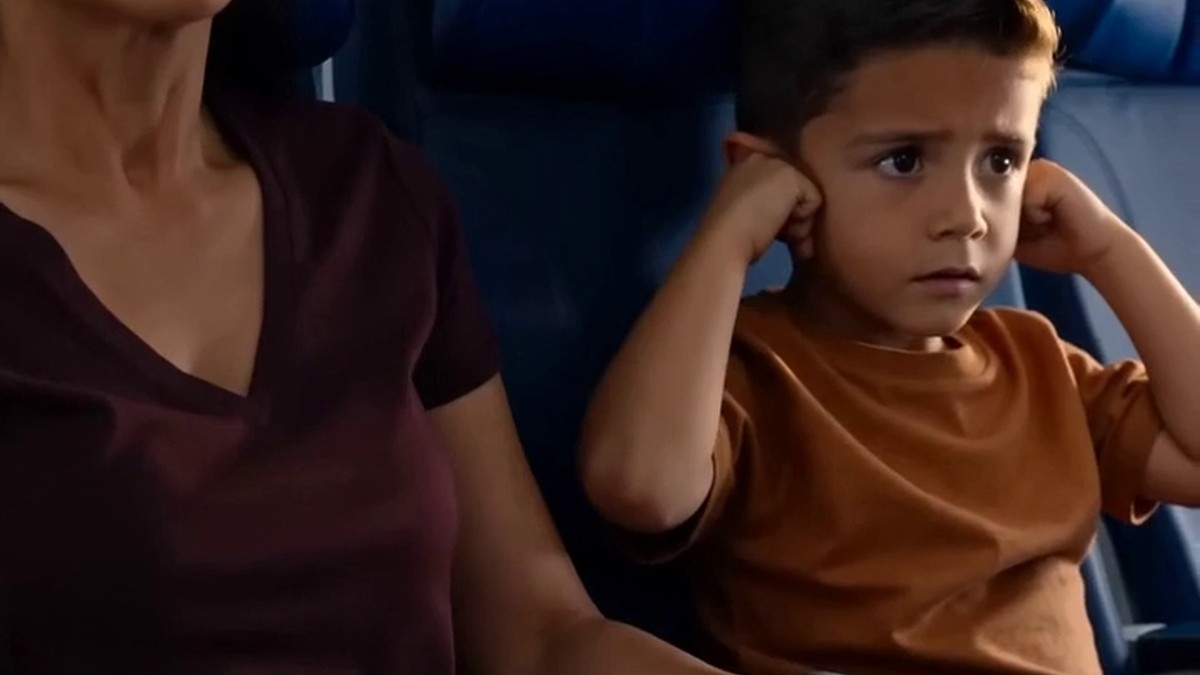
I said, low, because Caleb was already starting to rock a little in the aisle, hand flapping against his ear, "Ma'am, please — my son is autistic, he needs the window, it's not really optional for him."
She looked at Caleb like he was a stain on the carpet. "That's not my responsibility. Everybody's got something."
I didn't argue. I've learned you don't win arguments in a jet bridge line with forty people behind you and a kid about to go under. I took Caleb's hand, we found two seats in row 18, middle and aisle, and I spent the next twenty minutes doing the thing where you talk low and even and pretend your own heart isn't hammering, while he pressed his forehead against the seatback in front of him because there was no sky to look at.
Priya kept glancing back at us as she worked the aisle, and at one point she crouched by my elbow and asked, quiet, if Caleb was doing okay, and whether I wanted her to flag it to the captain before push-back so it was logged. I said yes. I didn't expect much to come of it — I figured it'd sit in some file nobody reads.
Somewhere over New Mexico, the captain came on the intercom. Ordinary stuff first — altitude, weather in Orlando, thanks for flying with us. Then he said, "Folks, before we continue our descent prep, I need a moment with a passenger. This happens sometimes when a flight gets a last-minute aircraft swap — seat assignments don't always carry over clean, and I want to get it sorted properly rather than let it sit."
A minute later, the lead flight attendant — an older man named Robert who'd been working the back galley — walked up the aisle with a printed passenger manifest folded in his hand. He stopped at row 18 and read a name off the page, quiet enough that only the woman and I could hear it clearly: "Linda Foss? The captain would like a word up front, if you don't mind stepping up with me."
She stood slower than she needed to, cardigan bunched in one fist, and followed him up the aisle. I didn't hear what was said at the cockpit door — nobody did, it wasn't a show, just two people talking low near the flight deck for maybe ninety seconds. When Robert walked her back, he didn't stop at 14A. He walked her straight to 18C and said something short about the seating record showing an accommodation flag on 14A that should have transferred with the aircraft swap, and that the airline would be following up with her about the booking once they landed.
She sat down without a word. Nobody made a scene of it. Robert came to our row next, crouched down so he was eye level with Caleb instead of me, and said, "Hey, buddy. 14A's yours whenever you're ready."
Caleb didn't answer him. He doesn't always. But when I walked him up front and got him buckled by the window, he pressed his palm flat against the glass and stayed like that for probably ten minutes, watching the wing catch the light, and I felt my whole chest unclench for the first time since we'd left the house that morning.
The woman — Linda, I guess, though I never spoke to her again — sat in 18C for the rest of the flight with her arms crossed, staring at the seatback pocket. I didn't look back there much. I was too busy pointing out cloud shapes to Caleb and answering the same question about wing flaps nine times in a row.
We landed in Orlando forty minutes late. At baggage claim, Robert found us near the carousel — he must have deadheaded off a different exit — and handed me a folded printout with a customer relations number on it. "For the record, in case you need it for anything down the road," he said. "Doctor's note, insurance, whatever. Just call that line and reference today's flight number." Then he shook Caleb's hand, formal as anything, and Caleb let him, which almost never happens with strangers.
I called Marcus from the rental car line and told him the whole thing, twice, because he kept asking me to back up and explain the seat number part again. He was quiet on the other end for a second, then said, "Tell him Dad's proud of him," and I did, right there in the parking garage, and Caleb didn't look up from the airplane on his tablet screen, but he smiled — just a little, just at the corner — and that was enough for me.



**Six Years of Silence: The Rescue Tape That Grounded Leandro’s Helicopter**
I've worked the overnight desk at Cedar Point Medical Center in Spokane for eleven years, and I thought I'd seen...


Sarah’s Heart Cost $364,800, and Her Parents Chose Row 12
The EMT was pressing the leads onto my chest when I called my mother. My daughter Ruby, twenty-two months old,...


Woman Steals Seat 14A From My Son on Flight 2274—Then the Captain Called Her Name
Woman Steals Seat 14A From My Son on Flight 2274—Then the Captain Read Her Name Off the Manifest My son...


Claire Reeves in a Sacramento Suburb Divorce, Age 34, from Ethan’s Side
I used to think Claire overplanned everything because she didn't trust me. That's not what I believe anymore, but back...


The Forty-Minute Notice
Barbara Kowalczyk kept a key to her son's house on a hook by her own front door in Erie, Pennsylvania,...


Grandma Halina’s Tuesdays at Holy Cross NICU
I've been the overnight security guard at Holy Cross Hospital in Silver Spring, Maryland for eleven years, and I thought...


**My Name Is Helen Wozniak, I’m a Home Health Nurse in Plattsburgh**
Twenty-two years on the same route. I drive to my patients in an old Honda Civic with a box of...


Skambutis, kurio taip ir nesulaukiau
Mama, aš vis dar kartais tau parašau žinutę. Žinau, kad telefonas tavo seniai išjungtas, o SIM kortelė greičiausiai jau priklauso...