
EN
# The 4:10 to Albany

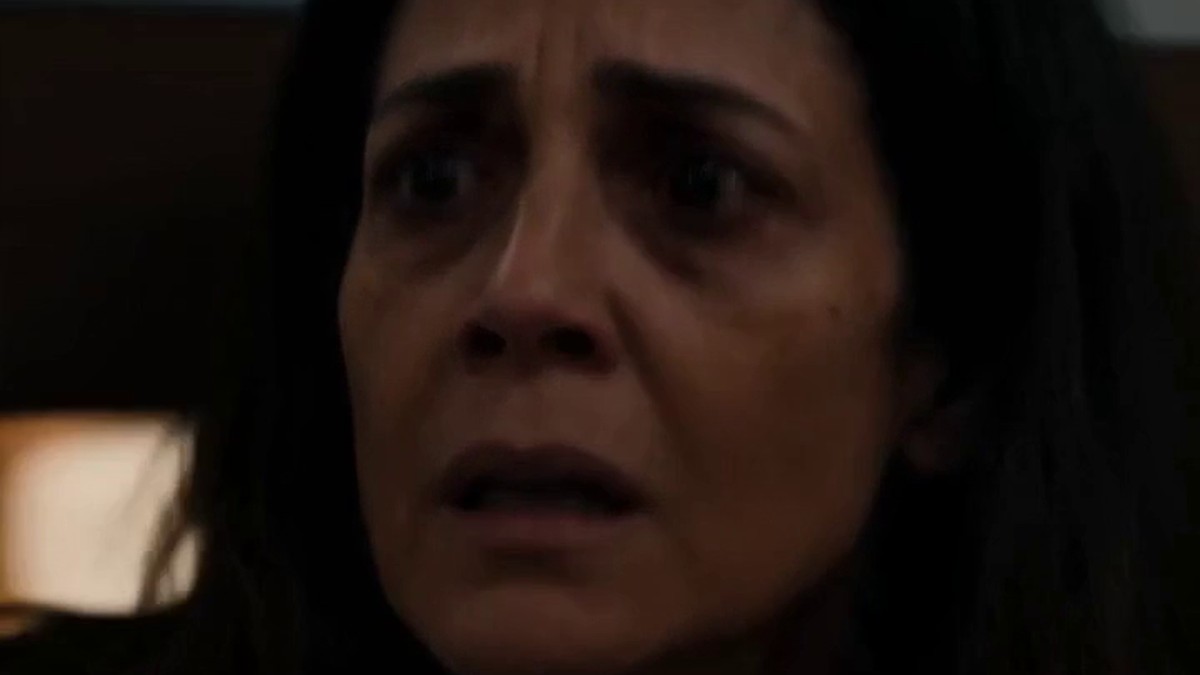
I've worked the reservations desk at Penn Station for nineteen years, and I've seen every version of the fight over a seat. Business travelers who paper-cut each other with their elbows over an armrest. College kids who think a printed ticket is a suggestion. But the night I'm telling you about, I wasn't behind a counter. I was riding the sleeper car home to Syracuse after my sister's hip surgery, off duty, in seat 14, minding my own coffee.
The woman in 12 was named Renata. I only know that because her son kept saying it — "Mom, Mom" — in the small, worn-down voice kids get when they've been told to be quiet one too many times.
Across from her sat a woman maybe sixty, silver hair cut close, reading glasses on a chain, a canvas tote with a paperback poking out. She'd introduced herself to the conductor as Diane. Not loud about it. Just the kind of woman who says her name once and expects you to remember it, because she'll remember yours.
The trouble started before I even looked up from my phone. Renata's boy — eight, maybe nine — was stretched out on the lower berth, the one with Diane's overnight bag already tucked underneath it. Diane's ticket said Berth 3, lower. Renata's ticket said Berth 4, upper. Simple as that.
"He's tired," Renata said, like tired was a legal document. "He gets migraines if he doesn't lie flat."
"Then he can lie flat on his own berth," Diane said. Not sharp. Just final, the way you'd correct a math problem.
"Do you have any idea what it's like traveling alone with a sick kid? You don't have children, do you. You wouldn't understand."
I watched Diane's face do something interesting — not anger, more like she was recalculating a route. "I raised two boys on this railroad's schedule for a decade," she said. "That's not the question. The question is whose berth this is."
That's when I noticed the suitcase.
It was wedged against the window, hard-sided, navy blue, with a strip of yellow tape across one corner that read RAIL STAFF — DO NOT OPEN. The kind of label Amtrak crew actually use on equipment carts, not luggage. And the adhesive on that tape looked fresh — no scuffing, no curled edges, like somebody had pressed it on in the last hour.
Diane clocked it too. I watched her eyes move from the boy, to the bag, to Renata's hands, which had gone very still on the handle.
"That your suitcase?" Diane asked.
"Yes."
"What's the tag for?"
Renata's mouth opened and nothing came out for a second. "It's — a mix-up. From when I checked it."
"You didn't check anything. This is a coach sleeper. Nobody checks bags."
The conductor — a heavyset guy named Marcus, maybe fifty, who I recognized from the Empire Service line — stepped into the doorway of the roomette right about then. He'd clearly gotten a call from the crew chief.
"Evening, Diane."
Renata's head snapped up. "You two know each other?"
"Twenty-some years," Marcus said, and I swear the temperature in that little compartment dropped five degrees.
"Of course," Renata said, voice climbing. "Of course you'd take her side. You people always cover for each other."
Diane held up a hand, calm as anything. "Marcus, I'm not asking as a former employee. I'm a paying passenger. My berth was reassigned without my consent, and I'd like it documented. And I want that tag checked against the manifest."
Marcus nodded and got on his radio.
Renata laughed, but it had no air behind it. "This is insane. It's a suitcase."
"Then showing the baggage claim slip should take ten seconds," Diane said.
Renata didn't move.
The boy — I heard him called Tyler later — was sitting very still with a tablet pressed to his chest like a life vest. He wasn't watching his cartoon anymore. He was watching his mother's hands.
Marcus came back with the onboard security officer, a younger woman named Priya who I'd trained myself, years back, back when I still did those ride-alongs. She asked for ID. Renata handed over her license, her ticket, and then spent a long minute scrolling through her phone looking for something that wasn't there.
"The claim slip?"
"I don't — I might've lost it."
"Ma'am, this tag is registered to a passenger manifest number. It's not yours."
That's when the boy spoke, quiet, to nobody in particular. "Mom said the man told her to bring it to the next station."
Renata's face went the color of the tag itself. "Tyler—"
"What man?" Priya asked, gentle, like she does this every week. Maybe she does.
"Nobody," Renata said. "He's confused."
"I'm not confused," Tyler said, smaller now. "You told me not to say."
I'll admit, sitting there with my coffee going cold, I felt for that kid more than anybody else in the car. He didn't ask to be sitting on a lie somewhere between Poughkeepsie and Albany-Rensselaer.
Priya stepped out to make a call. When she came back, she had that particular stillness people get when the news is worse than they expected.
"The tag's registered," she said, "but not to anyone riding in this car. It belongs to a passenger three cars up — and he already filed a lost-item report twenty minutes ago."
Renata sat down like her legs had simply stopped being interested in holding her up.
"So what happened," Diane asked, not unkindly, "is that somebody handed you a stranger's bag."
It came out slow, over the next twenty minutes, in the little galley kitchen where Priya took Renata to talk without an audience. A man on the platform at Poughkeepsie — nobody Renata knew — had asked her to carry the suitcase two cars down and hand it off at the next stop. Said he'd pay her forty dollars for the favor. Said it was "just clothes." She took it because she was traveling alone with a kid and forty dollars is forty dollars when your rent's due on the first.
What she couldn't explain, what actually mattered, was why she'd claimed the bag as hers the second Diane asked. And why, once questioned, she'd spent fifteen minutes trying to keep anyone from looking at the tag instead of just telling the truth in the first place.
Nobody ever told me what was inside that suitcase. I didn't ask. Some things, being a railroad employee for two decades teaches you, are not yours to know, and asking just makes you the next person holding the bag, figuratively speaking.
What I do know is that Renata was pulled off the train at Albany-Rensselaer along with her son, met by two Amtrak police officers on the platform, and that the original owner of the suitcase — a man in his forties, according to what I overheard from Priya — was waiting there too, along with a supervisor and, from the look of the second car that pulled up outside the window, somebody from the county.
Before she left, Renata came back through our car one more time. Stopped by Diane's seat.
"I was wrong," she said. "About the berth. About yelling. About all of it."
"Good that you can see that now," Diane said. Not cold. Just even.
Tyler lingered a step behind his mother, tablet still hugged to his chest.
"Ma'am?" he said to Diane.
"Yes?"
"Can I sit up top? On my own bunk? Before we go."
Diane looked at him for a second, like she was deciding whether an eight-year-old's question deserved a real answer or just a nod. She gave him the real one. "Absolutely. It's yours."
He climbed up, and for the first time all night, something in his shoulders let go.
I never found out the man's name, the one who'd lost the suitcase — I only caught him from behind on the platform, arms crossed, waiting while an officer wrote something on a clipboard. Renata stood a few feet from him with Tyler's hand in hers, not looking at anyone.
Diane stayed in her berth. I watched her from across the aisle as the train started rolling again, the platform lights sliding past the window, then the dark stretch of the river, then nothing but her own reflection in the glass. She didn't say a word about winning anything. She just pulled her jacket over her shoulders, checked that her tote was where she'd left it, and closed her eyes on the berth that had been hers all along.
My stop was next. I gathered my coat, my cold coffee, and thought about how many times in nineteen years I'd heard somebody say "I'm a mother" like it was a boarding pass that upgraded you past every rule on the train. It never has. It never will. The kid doesn't make the lie true. It just makes it harder to watch.



Dceřina bouda u Orlíku
Jmenuju se Radek Vomáčka, je mi padesát čtyři a nejradši bych vám řekl, že žádná z těch šesti ztracených dětí...


Il nonno che ha pagato i miei debiti con la pensione e non me l’ha mai detto
Mi chiamo Enzo Ricci, ho diciannove anni e faccio il terzo anno all'istituto tecnico di Pordenone, sezione meccanica. Se oggi...


Прежда, която не лъже
Инвентарният номер беше четиристотин шейсет лева — цялото ѝ спестяване, което остана след погребението на Румен. Яна Бакалова стоеше в...


Non ti dico niente io, racconto solo quello che ho visto da vicino
Mi chiamo Edoardo Ferretti, ho trentaquattro anni e per sei anni sono stato il direttore operativo della Lindqvist Energia, una...


Pes ze Smíchovského hřbitova
Každou neděli ráno jsem jezdila tramvají číslo 12 až na konečnou a odtamtud pěšky na hřbitov, s kyticí žlutých sedmikrásek...


Il contratto che Daniele non sapeva di aver già perso
Quella mattina ho fatto una cosa che Chiara non si aspettava: le ho lasciato il caffè pronto prima di uscire,...


Tėvo rankos sode Zarasų pakraštyje
Pro Petro Vilkausko namo langą matosi Zarasų ežeras — rudenį jis pilkas, kaip skalbinių vanduo. Gyventojai sako, kad spalį čia...


Жълто-зелената пътна чанта на Деми
Деси Вълчева остави телефона на плота с екрана надолу, сякаш искаше да му попречи да зазвъни отново. В кухнята на...